
Movie Review: “The Bride!” is Dead on Arrival, Then Reanimated And Killed Again

4/12 ForReel Score | 1.5/5 Stars
It hasn’t even been six months since Guillermo del Toro’s lifeless adaptation of Frankenstein, and yet we return to the slab with a remake of the Monster’s companion. Maggie Gyllenhaal‘s The Bride! — an update on 1935’s The Bride of Frankenstein — is a far more operatic telling of this monstrous duo’s story than del Toro’s, but where Gyllenhaal succeeds in drama, she falters in storytelling. The Bride! isn’t boring, it’s merely incomprehensible.
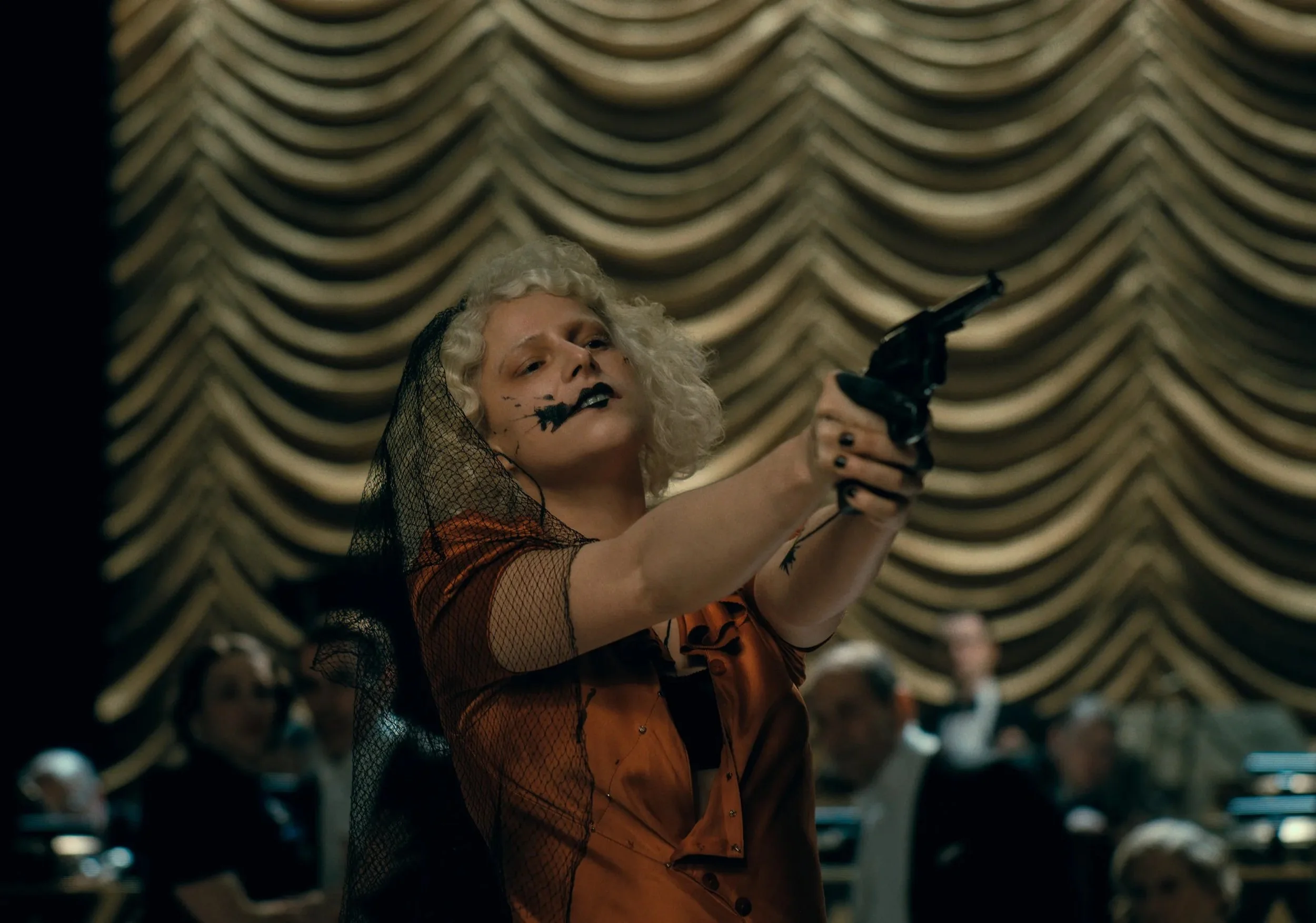
The Bride! is less a remake of The Bride of Frankenstein and more a soft retelling of Bonnie and Clyde. Set across 1930s America, Gyllenhaal’s monsters are two lovers on the run, scorned by the public, hunted by the police. Christian Bale plays Clyde, a.k.a. the Monster, a.k.a. Frankenstein, while Jessie Buckley plays our titular heroine. Bale is a far cry from the soft lumbering giant that Jacob Elordi is currently Oscar nominated for, but in comparison to his bride, he is practically placid; Buckley, meanwhile, is gigantic.
Jessie Buckley, who has been dominating the moviegoing conscience this year for her Oscar nominated performance in Hamnet (an Oscar she will surely win), spits venom in this film. In every way that her portrayal of Agnes Shakespeare is quiet, layered, and emotionally devastating, her portrayal of the Bride is the opposite: loud, simple, and utterly stunted. While I have no desire to psychologize the characters of The Bride!, Gyllenhaal makes the psychologizing of the Bride the core framing device of the film. The film opens with Jessie Buckley standing shadowed in a black-and-white void as a narrator inside of the Bride’s head, except this narrator isn’t the Bride, but rather Mary Shelley, the author of Frankenstein. Shelley returns throughout the movie, pushing the Bride into increasingly destructive and criminal acts, until she ultimately subsumes her.
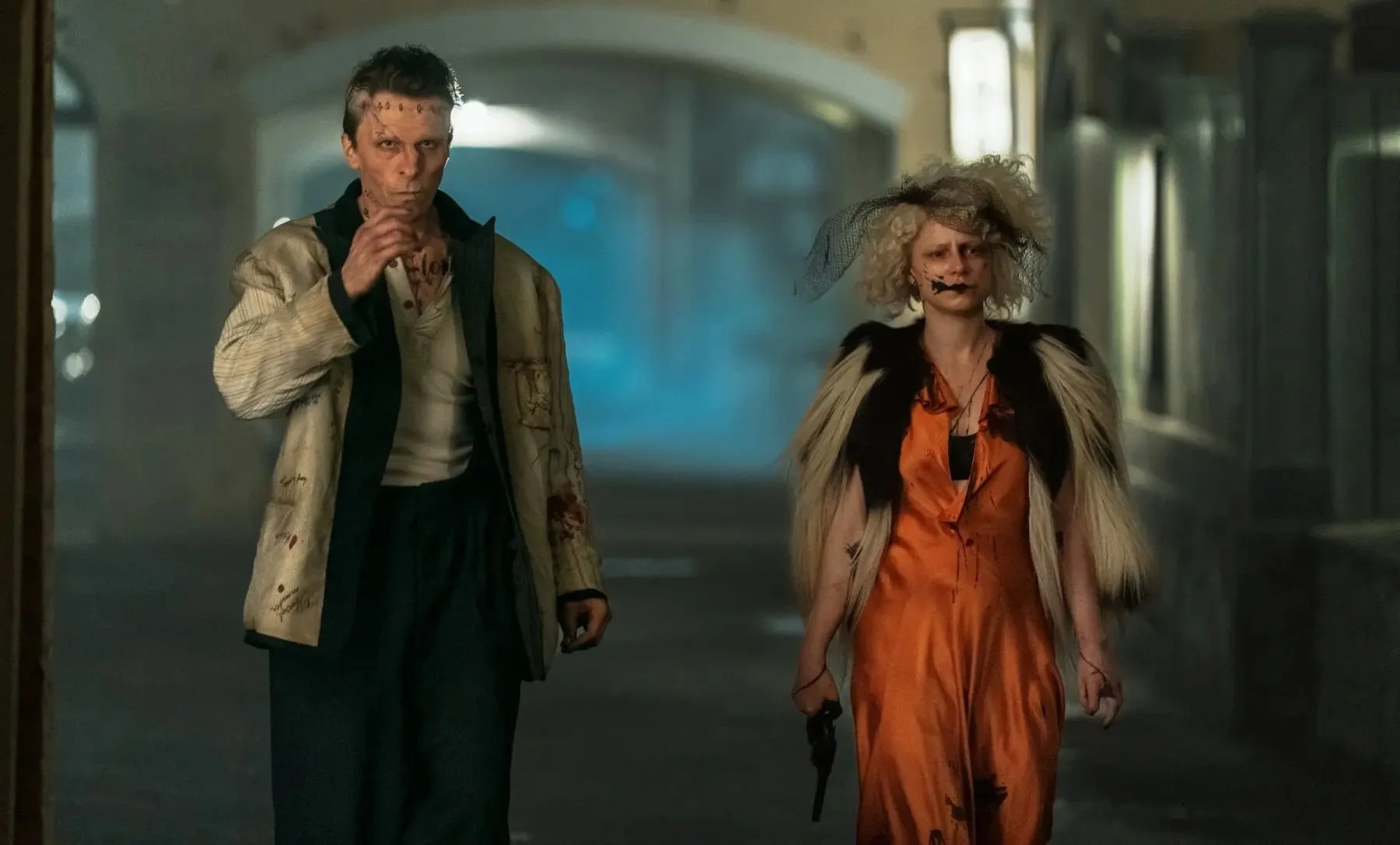
Is it supposed to be that Mary Shelley is God? Or a cruel and omnipotent Devil? An inventor who has lost the plot of her creation? The actual author of Frankenstein? Maybe she is all of them simultaneously. Maggie Gyllenhaal’s screenplay lacks the finesse to answer such a complex self-imposed question. It’s clear she wants the Bride — Ida, before her death — to be a “complicated woman.” Unfortunately, the verbal tics of the script and the framing of Mary Shelley in the Bride’s head makes our protagonist come off as genuinely schizophrenic. I’m all for women inciting a revolution against men, though how that stems from a possessed Jessie Buckley shouting, “Brain attack!” is beyond me.
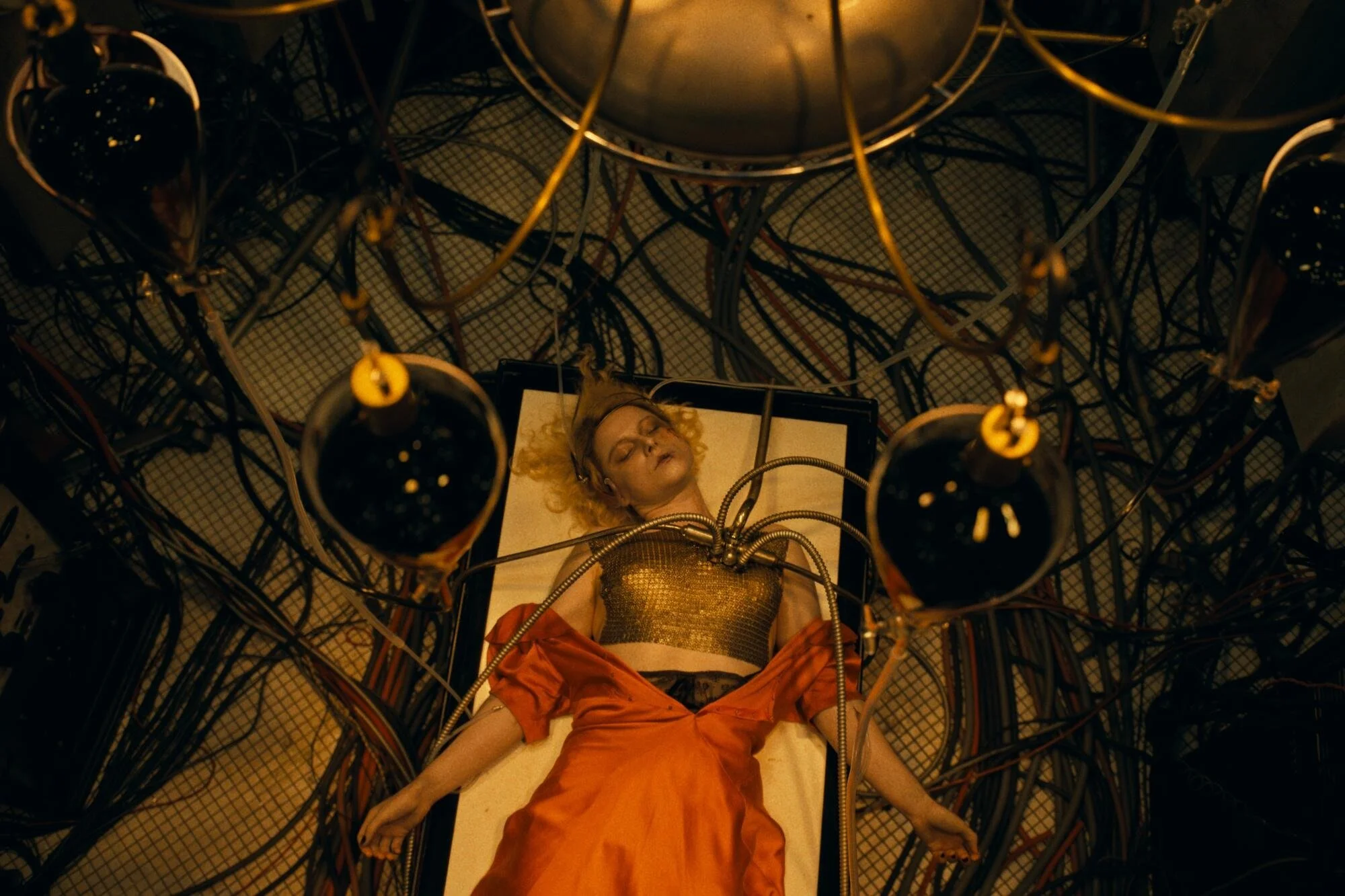
If the writing failures ended with Buckley, the film could be forgiven. It is stylish enough to remain captivating. This unwieldy world is anchored by strong production design, and the hairstyling, costuming, and makeup are, undeniably, first rate. If only the words those beautifully painted lips were saying made a lick of sense. Unfortunately, they do not. It is obvious, increasingly so as the film plays on, that The Bride! went through numerous rewrites and reshoots.
There is a whole subplot involving two Chicago detectives (Peter Sarsgaard and Penélope Cruz) that seems entirely detached from the rest of the film. Insofar as it does work its way into the plotting of the film, their character dynamic continually indicts the gender politics the rest of the movie is signalling at. (Nothing says, “Women don’t need men,” like having an overly competent and strong willed woman relentlessly adhering to her incompetent male coworker’s advice.) Slinking around in the background of many scenes is John Magaro, an overqualified actor with literally nothing to do but crouch and crawl. There is also a verbose Annette Bening, whose brilliant scientist also ultimately bends her principles to appease a man; an uncanny-Valley Jake Gyllenhaal pretending to be Fred Astaire; and numerous scenes of Zlatko Burić sitting in a diner. The film feels, at times, to be a randomly generated series of tangentially related vignettes.
This sporadicity makes for not only a punishing viewing experience, but a complete failure of tone and messaging. When the titular hero comes off as mentally ill, rather than ideologically driven towards radical feminism, and when the side characters continually conform to the patriarchy (albeit smugly), and when the creator of this very universe, Mary Shelley, is portrayed as a chaotic mind virus, the messaging goes from messy to incoherent. That isn’t good for feminism. That isn’t camp. (Something looking good, having fun, and being bad does not make it camp.) That isn’t what the world of Frankenstein is supposed to represent. If this is all The Bride! could be, she should have been left to rest in peace.
Acting and Casting - 1 | Visual Effects and Editing - 1 | Story and Message - 0 | Entertainment Value - 1 | Music Score and Soundtrack - 1 | Reviewer’s Preference - 0 | What does this mean?