
Sundance 2026 | Movie Review: "Josephine"; Beth de Araujo Delivers A Tough Watch With Assured Storytelling Sensibilities
Josephine was one of the first films I saw this year at Sundance and it stayed with throughout the entire festival. The film follows a young girl named Josephine (an incredible Mason Reeves) who witnesses a rape. In the wake of the incident, she must navigate making sense of her trauma, the victim’s trauma, and the legal system as her parents, Channing Tatum and Gemma Chen, struggle to align with how to handle the situation.
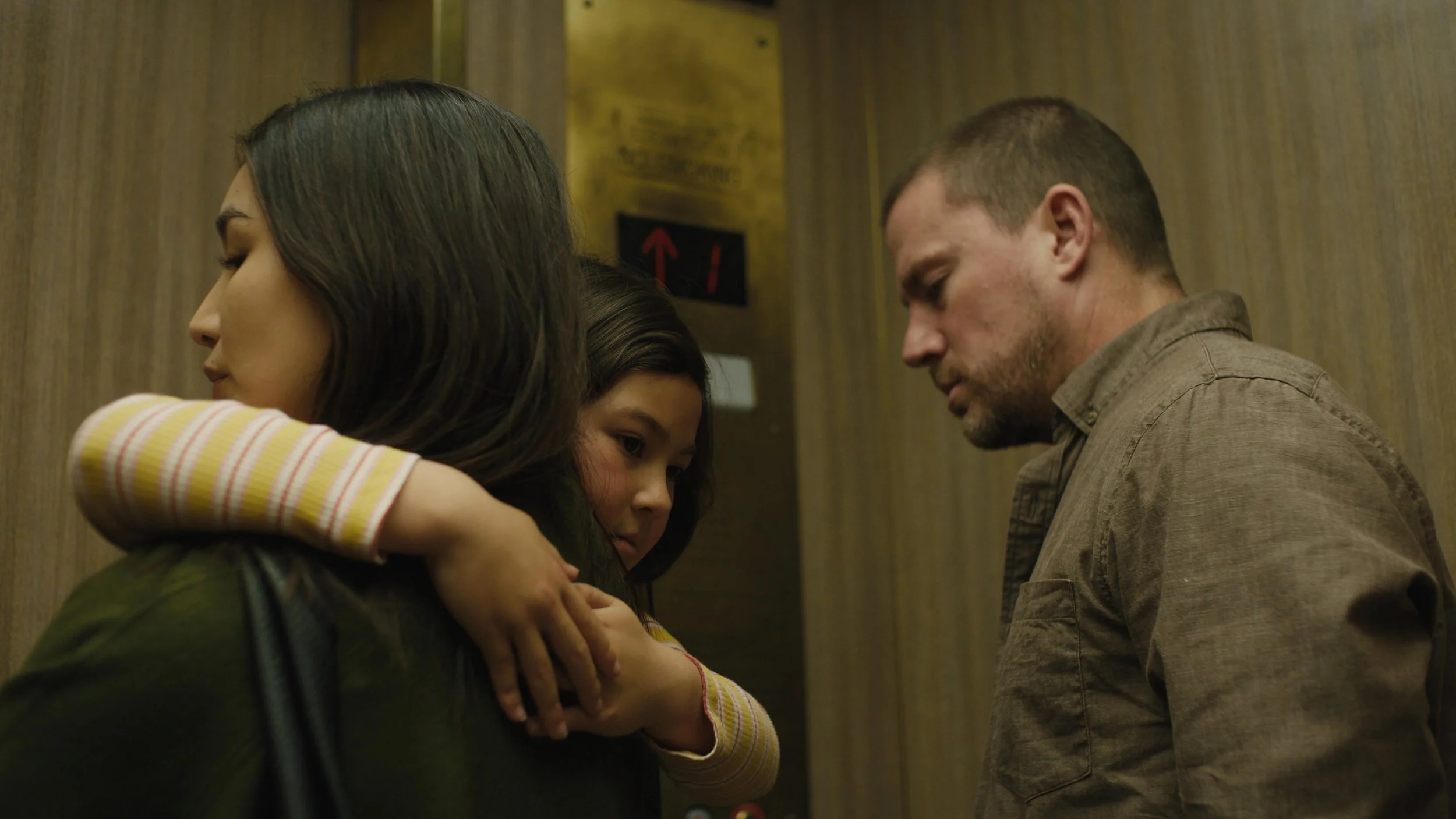
Genre-wise, Josephine is a drama, but it’s also really a terrifying watch because you have to live in an unthinkable period of this family’s life for 2 hours through the lens of a child. Josephine conjures the image of the sexual predator throughout the film as it haunts everywhere in her waking life.
The film also shows the perspective of her parents Claire (Gemma Chan) and Damien (Channing Tatum) trying to both comfort their daughter while parenting her at the same time with, at some times, divergent views. Her dad takes the tougher approach of teaching his daughter how to fight back, which makes her more aggressive, attacking a fellow classmate. Is this approach worsening the issue? Meanwhile, her mother takes the more gentle, therapy-based approach, leading her daughter to flee the backseat of the car on a whim while her mother was driving. Is this approach repressing Josephine’s actual needs? Josephine finds herself in a perpetual state of fight or flight, and everyone involved - the audience included - has to engage the uncomfortable truth: we really don’t know yet what’s best for Josephine.
And that is ultimately what is most interesting from the director (Beth de Araujo) in her second feature. Josephine does not give audiences many answers, if any at all. This is a film that really lets the audience find conclusions for themselves: what the right parenting style might be and how to feel about the situation as they witness how deeply troubling the trauma is for this little girl - a performance, by the way, that is absolutely remarkable from Mason Reeves.
Reeve’s proficiency with on-screen presence culminates to a climax that works in large part because of her performance. It’s a sequence that everyone seems to be talking about: the denouement of the film in the courtroom. Arguably the most frustrating scene in years, Josephine must engage with the defense attorney as a witness in an exchange that really tests the audience’s patience. Josephine navigates the interaction with anger, but it feels like justified anger, especially as the attorney tries to trip her up with legalese and emotional manipulation. It’s a worthy climax to the film because Reeves handles the emotional complexity of this moment with perfection.
Josephine, therefore, is a movie that is easy to recommend, but with critical disclaimers. The film is remarkably told, acted, and directed - audiences seeking a compelling story will find much to ponder, question, and discuss after the credits roll if they are prepared for the heavy subject matter and the considerations it may ignite for their own family. It takes a special kind of storyteller to deliver such a complex and poignant story this well, and I see a bright future for de Araujo.