
10 Year Retrospective: POV On "Hardcore Henry"
For the opening scene of Kathryn Bigelow’s 1995 masterpiece Strange Days, Lightstorm Entertainment (the company of Bigelow’s ex, James Cameron) developed wearable cameras to simulate the effect of first-person POV. Bigelow drops you headfirst into her world, as the three-minute oner follows adrenaline junkies (often the case for Bigelow) robbing a Chinese restaurant in Los Angeles. With takes cut together via whip pans, Strange Days’ opening sequence became a landmark of POV action filmmaking, later influencing the work of Russian filmmaker Ilya Naischuller. Ten years ago today, before reaching Hollywood success with Nobody and last year’s Heads of State, Naischuller directed a low-budget POV action film called Hardcore Henry, which has since become one of the few modern cult classics.
Four important factors bridge the gap between Strange Days and Hardcore Henry: first-person shooter games, Russian meme culture, the invention of the GoPro, and Timur Bekmambetov’s success. Hardcore Henry taps into a hyperspecific mid-2010s gamer culture obsessed with Russian aesthetics, particularly memes like “Rush B, cyka blyat,” Counter-Strike: Global Offensive, and “No Russian” from Call of Duty: Modern Warfare 2. The State Anthem of the Russian Federation became its own meme around the same time, launching Russia into a spotlight that wouldn’t have met the same fondness 20 years prior. Additionally, there were the “Slav squat” and the “In Soviet Russia” memes, creating an (entirely Westernized) post-Soviet perception of Russia being the craziest place on Earth. And, in the case of Hardcore Henry, it is.
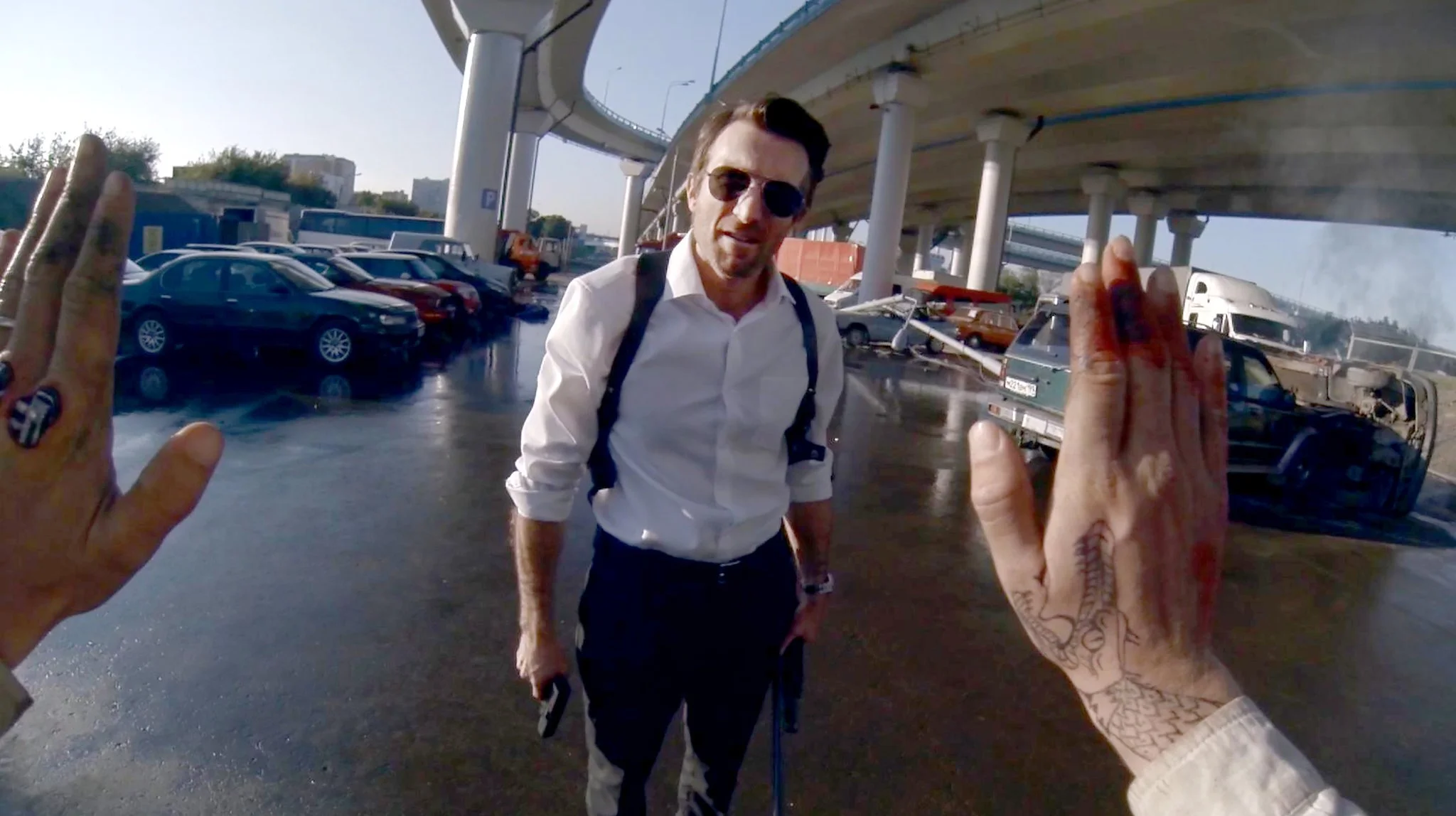
As a visual exercise, Hardcore Henry might be the greatest camera advertisement the world has ever seen. Shot entirely on the GoPro Hero3, Hardcore Henry’s nauseating camerawork is a cross between the gunplay of Call of Duty and the fast-paced parkour of Mirror’s Edge. As digital cameras started to increase in quality while decreasing in price (hence the rise of prosumer filmmaking), the GoPro became the go-to for athletes trying to etch their names into the hall of fame. Ilya Naischuller bought his first GoPro for snowboarding, but started shooting music videos with it for his band Biting Elbows. Naischuller’s action-packed first-person music videos for songs “The Stampede” and “Bad Motherfucker” not only went viral but also turned heads in the film industry, particularly Timur Bekmambetov.
Reaching local success in the Russian film space with Night Watch and its sequel, Day Watch, Soviet-born Kazakh Timur Bekmambetov became Russia’s very own Steven Spielberg. A student of legendary low-budget producer Roger Corman, Bekmambetov was the first Russian filmmaker to top the box office since the Soviet Union’s collapse, catching the eyes of audiences at home and abroad. Bekmambetov’s Hollywood debut, Wanted, catapulted him into the Hollywood space, though his directorial outings (his latest, Mercy, was abhorrent) have only shown diminishing returns since. Bekmambetov has now become a Corman-like producer in his own right with the production company, Bazelevs. After reaching out to Naischuller on Facebook following “Bad Motherfucker,” Bekmambetov backed the domestic production of Hardcore Henry (with an assist from Indiegogo supporters) under the title Hardcore.
As with many films, Hardcore Henry’s original concept was a far cry from the end product. Naischuller initially wanted the film to be “a Cold War-set, slow-burn psychological thriller,” though Bekmambetov saw untapped potential in what could’ve been. Though it’s not the first film to be entirely shot in POV (that title goes to Robert Montgomery’s 1947 Philip Marlowe noir Lady in the Lake), it’s definitely more insane of the two. Loaded with hidden whip-pan cuts similar to Strange Days, Hardcore Henry’s nutso energy has the intense immediacy (and narrative thinness) of games like Superhot and the bullet ballets of John Woo, all while having an unabashedly Russian tongue-in-cheek playfulness. For some, it’s a motion-sickness speedrun. For others, it’s a bona fide facemelter.
Simplicity is what makes Hardcore Henry so good yet quite limited. The “save the girl, kill the bad guy” setup is as video-gamey a movie’s conceit can get (this is basically Super Mario with guns), though Hardcore Henry’s plot is mostly periphery. Filmmaking is usually a vehicle for narrative, but, in the case of Hardcore Henry, the narrative is the vehicle for the filmmaking. Naischuller never wanted to “go crazy in terms of story,” veering Hardcore Henry into the realm of visual experiment rather than narrative feature. The titular Henry is a non-character, serving as a heightened audience surrogate to guide you along Naischuller’s 90-minute metaphysical rollercoaster. Is Hardcore Henry equal to Shakespeare? No. Could Shakespeare make Hardcore Henry? Absolutely not.
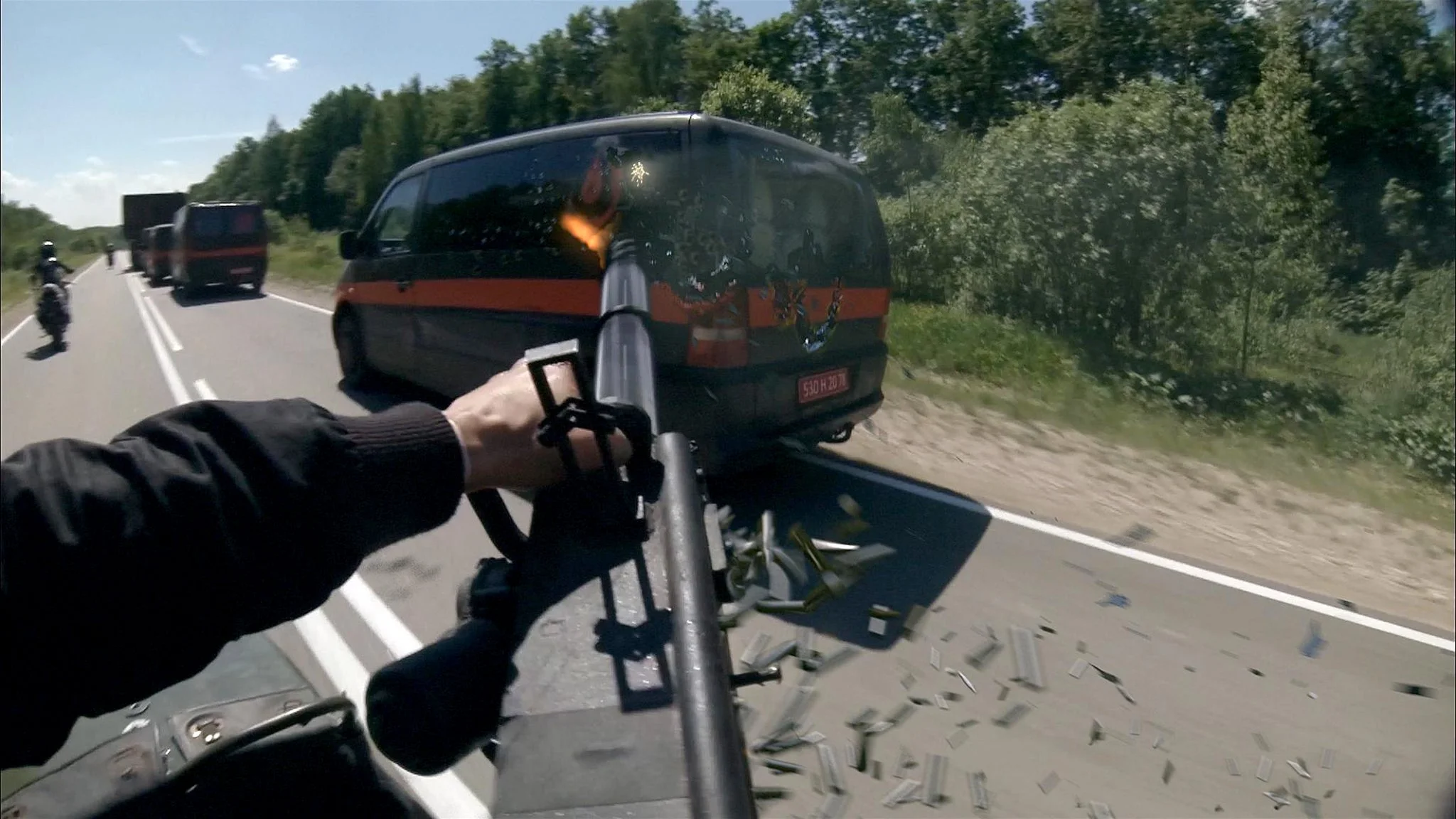
Shooting in POV is one thing, but making that POV as exciting as possible is another. It shares the same breakneck ferocity as Strange Days’ opening sequence, but with a runtime multiplied by thirty. The less cumbersome GoPro (the 35mm camera mounts on Strange Days weighed roughly eight pounds) allowed for faster, more athletic action sequences, creating a potent sense of fluidity that permeates throughout Hardcore Henry. It’s not exactly an “every frame a painting” type of movie, though everything moves so fast that it’s hard to stop and smell the roses. Even the most ludicrous action movies will give you breathing room, but Hardcore Henry is a near-suffocating affair of straight carnage and mayhem. One (I) could even dub it a cornerstone of post-cinema.
Aesthetics aside, Hardcore Henry’s longevity comes from what Ilya Naischuller does with the first-person POV. Whether it’s a Biting Elbows music video or Nobody (Naischuller’s crowning achievement), Naischuller knows what Buster Keaton and Charlie Chaplin knew so well: action is comedy. It’s not enough for a grenade to blow someone’s leg off; it must be accompanied by both a visual gag and a Wilhelm scream. Gruesome as it is, Hardcore Henry’s memorability comes from essentially being a live-action episode of Looney Tunes. The film’s best and most cherished moment comes in the form of its motorcycle chase, where Henry mows through vans of goons before using an exploding van as a springboard. It’s pure cinematic nutcasery, and I wouldn’t have it any other way.
In the ten years that’ve come and gone, Hardcore Henry has carved a cult following amidst the intersection between gamers and cinephiles. When the film was still titled Hardcore, Naischuller took home the Midnight Madness People’s Choice Award at the 2015 Toronto International Film Festival, canonizing itself straight out of the gate and accruing a dedicated audience of midnight moviegoers and genre aficionados. For better or worse, Hardcore Henry’s legacy isn’t in the form of gold statues, but in the form of reposted clips on social media with boatloads of comments reading “what movie is this?” Fate has yet to decide whether that’s a good thing or not, but, for me, Hardcore Henry is a gem of independent action filmmaking nonetheless.