
The Halloween Horror Hootenanny III | Weekly Roundup No. 1
Some time back in 2024, I thought it’d be a wonderful idea to try and see 31 horror movies throughout the month of October. I had such a great time with this that I then did it all again the very next year, both times failing to hit that 31 milestone thanks to a myriad of issues including “having a social life” and “moving house.” This time however (in part as a means of forcing myself to get back into the groove of movie watching instead of video game playing) I am fully committed to seeing a new batch of 31 films through.
I hope you’ll enjoy accompanying me through these terrifying and maddening steps into all that horror has to offer in THE HALLOWEEN HORROR HOOTENANNY III: SEASON OF THE WITCH.
Day 1 - Possession (1981)
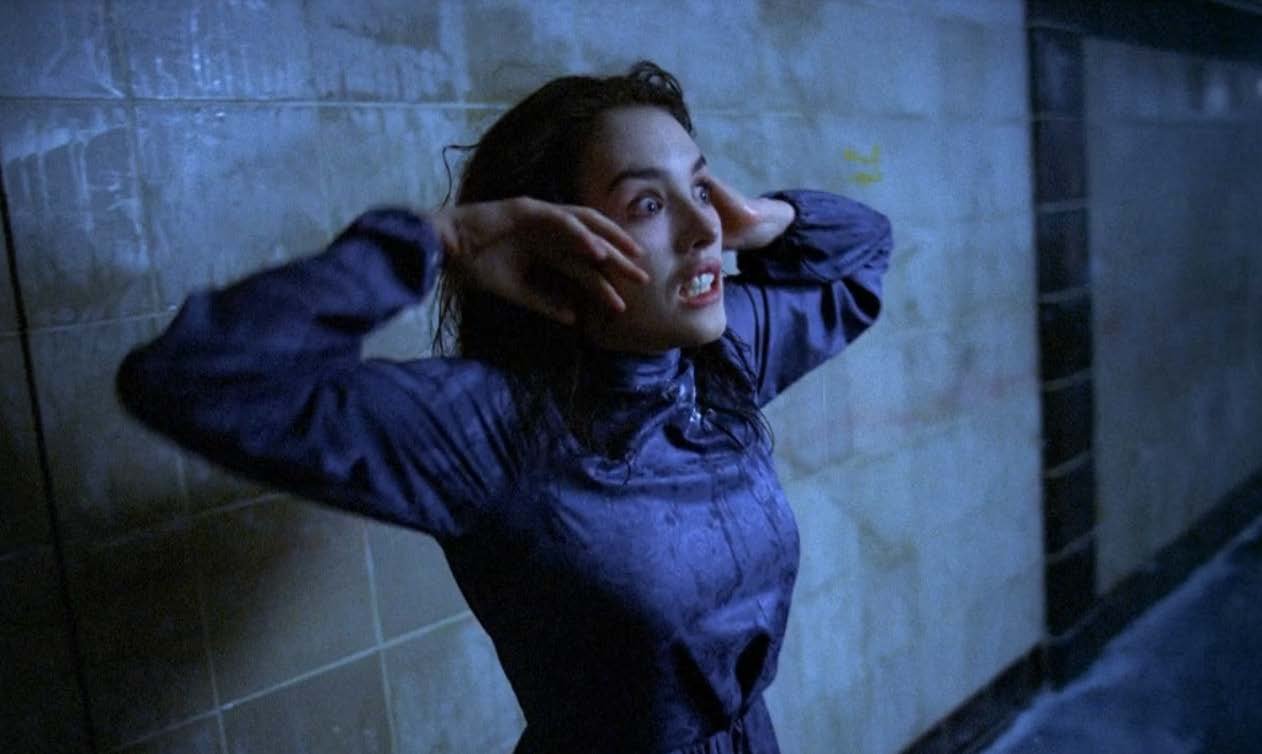
Possession is a great ideas movie, there's a lot of big weird ideas here. I don't think it has the ability to make them cohere in any thematically resonant way however. There's abuse and coercion and post-war Berlin and Cold War Berlin and sex and death, and all those fractured pieces of a whole could be argued as essential to the film's focus on a fractured cultural identity represented in a fractured relationship, but it does leave me wanting more with every individual idea.
Sam Neil is awesome in this though, absolutely magnetic in that I was studying his every move like a hawk. Isabelle Adjani's performance is one that I immediately understood the admiration for. She's got eyes like an open doorway to the soul and deftly occupies spaces both delicate and violent in her movement. The core tension between Possession’s two leads are wonderfully explored by Neil and Adjani, with their screaming matches always containing an underlying sadness as their relationship waxes and wanes.
I think I'd probably have gotten much more out of this had I seen it at a slightly younger and more impressionable age. I liked Possession but didn’t quite love it, nevertheless it’s a very strong start to the month!
Day 2 - 10 Cloverfield Lane (2016)
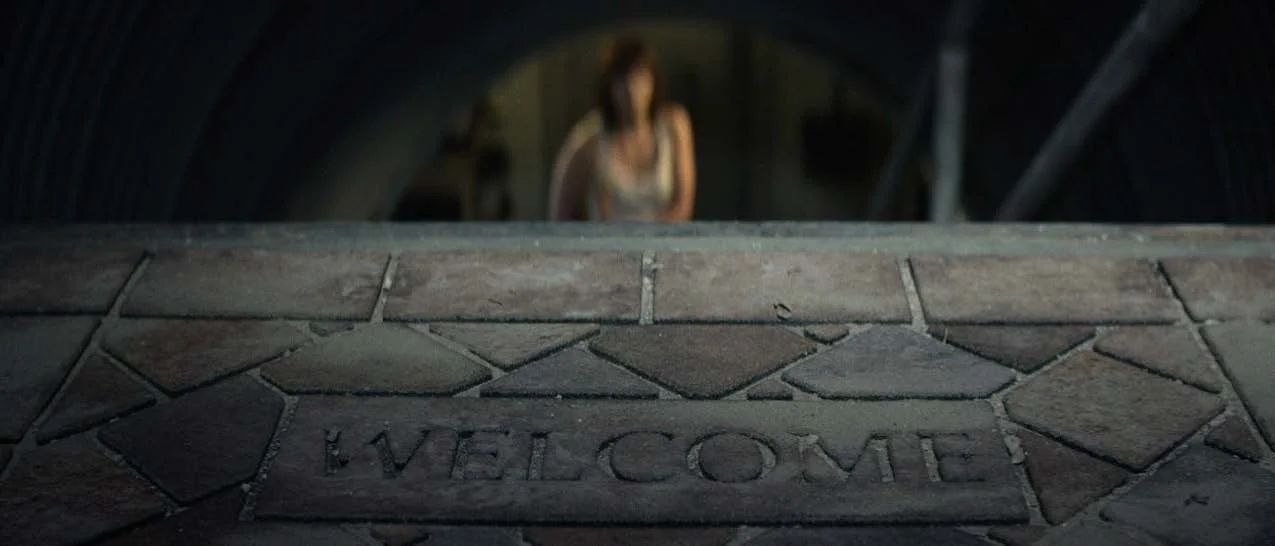
Sci-fi horror is a genre which absolutely thrives when confined to a single location. The icy outpost of The Thing, holidaymakers roaming a diamond planet called Midnight, a crew being picked apart one by one aboard The Nostromo. These places breed so much dramatic tension as they capitalise on the pitfalls of human nature, throwing brief glimpses toward an otherworldly terror that exists in the margins. 10 Cloverfield Lane joins that canon with grace.
I've been a huge fan of Trachtenberg's ever since I first saw Prey in 2022 and coming out of this, I completely get why he got that gig. He makes a meal out of scraps, beautifully rendering the claustrophobic interiors of this bunker and relishing in the dynamic action that terrifying foes provide. A project like this must have been a dream for him and given the performances he gets out of this miniscule cast, it must have been a dream for them too.
Michelle has all the makings of a fantastic horror protagonist, with a troubled past and a developing sense of autonomy before a threat is even on screen. Mary Elizabeth Winstead brings all of that world-weariness to the forefront right from the word go, as her gears are visibly whirring with so few lines spoken. She's reactive and resourceful in all the ways that matter, but particularly in her judgement and later manipulation of Howard's true nature.
Howard (John Goodman) is a character who we, much like our lead, continue to cast doubt on throughout. His past as a naval crewman is one that manifests in his paranoia and isolationist tendencies, while his taking in of Michelle represents his opportunistic side. Disturbed and disturbing, Howard lears over both Michelle and Emmet (John Gallagher Jr.) throughout, consuming the space as an exertion of control. Goodman's presence as a physical force is felt greatly in nearly every scene and there's a constant awareness of this through his breathiness and parental cadence. It all serves to conjure small glimpses of his treatment of his former victims as they, much like the alleged invasion above, remain unseen.
I wasn't actually supposed to watch this film today, as I had 2012's The Bay scheduled for the list, but after struggling to find an English copy of that, I figured I might as well check this out to continue on from last year's viewing of Cloverfield. I am very glad I made that choice!

Day 3 - House (1977)
Truly one of one. Every single shot is either the most audacious shit you’ve ever seen or just downright beautiful. Gripping characters notwithstanding, House just kinda has everything you’d really want out of a film. Fellow ForReel writer Luca noted the dadaist elements of House as a particularly strong component and given that movement’s roots in post-war malaise, it loops in rather wonderfully with my own read on the piece.
In keeping with dadaism, the young girls in House are all reduced to mere descriptors. “Gorgeous”, “Sweet”, “Kung Fu”, etc. They don’t have dimensionality as the world that consumes them sees no value beyond what they may offer to the matriarch. The Auntie (and the house by proxy) feeds on them to sustain its own decaying walls, its own lost future. In spite of all the formal insanity, it is a true Haunted House narrative in that it centers stagnation and societal rot. “The Greatest Generation” sees itself lioninsed in perpetuity thanks to its voracious consumption of youth.
The children of post-war Japan do not get to have anything that isn’t owed to their decrepit elders. This extends to the final victim too, with the Step-Mother — a figure whom we only experience at arms length thanks to her emotional distance from Gorgeous — attempting to meet with the Auntie in good faith, just like the children, only to be consumed just like them.
The tragedy of these victims is that the House truly has no means of granting the Auntie her one desire, to see her husband. He is long since dead, just as she is, yet the place continues to parade her spirit around in perpetuity. In this sense, it locks all parties in a motionless state and reflects a culture unable to move on from its past.
I liked it when the guy said “HOUSE” and the Kung Fu music played when Kung Fu did Kung Fu.
Day 4 - Dead Ringers (1988)
It's pretty much tradition at this point that I knock off a Cronenberg every Halloween and Dead Ringers might be the most informative of his works in relation to his own psychology that I've seen to date.
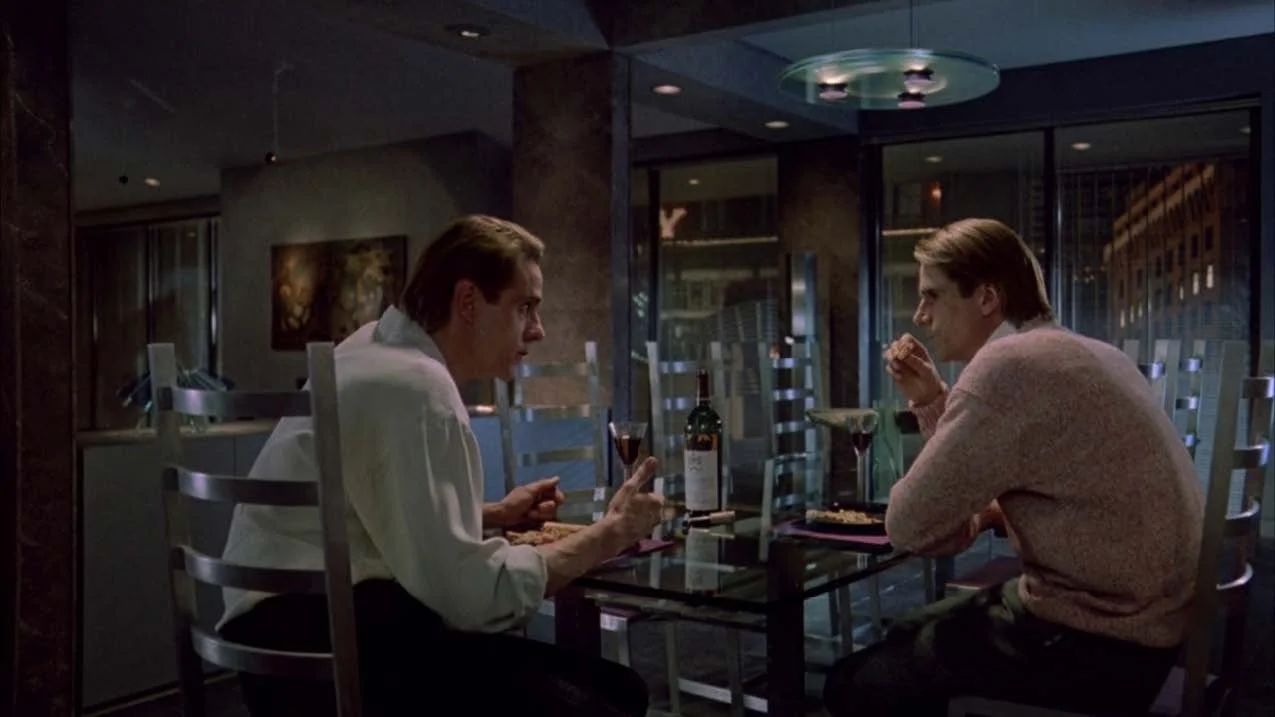
Dead Ringers has a rather simple set-up. Following twin brothers that operate an independent gynaecology clinic that specialises in fertility, much of the early drama stems from the ways in which the Mantle brothers operate as one unified being. From work life to sex life, they've acted this way their entire lives, with most of their peers often struggling to distinguish the two of them apart.
That baseline sees itself crumble rather quickly however, as Beverly (Jeremy Irons) finds that his love life is unable to be shared with his brother Elliot (also Jeremy Irons) when he falls in love with actress Claire Niveau (Geneviève Bujold). Beverly can't share this person with his brother as she is the only person to recognise the differences between the two and it drives a wedge between the brothers as their previous status quo is shattered.
While definitely lacking in more obvious “horror” elements, Dead Ringers manages to unsettle viewers through it's exploration of the psychosexual tension present in its leads. The film is fundamentally about the mirrors we see in our siblings and the struggle to separate from them as we embrace adulthood — a time where shared experiences are no longer the driving tether in familial relationships. Given the Mantle's fully symbiotic relationship through to adulthood, it presupposes that the split may only become harder and more volatile the later it is embraced. The madness initially experienced by Beverly sees itself transferred onto Elliot as time marches on. In their view, it's an attempt to control their deviating experiences and an attempt to reach a kind of equilibrium.
Of course this dogmatic view of the way their lives has to be will ultimately end in tragedy. Beverly is mentally disturbed by dreams of a shared body with Elliot and begins to take his sex life into work, with new tools crafted for “mutant women” in a traumatic response to his current partner's cervical anomalies that prohibit her from having children. Being fundamentally unable to navigate emotional entanglements that relate to his professional life, we see in his relationship with Claire a glimpse at the psychological damage Bev's unified experiences with Elly have wrought on both their lives.
The character work in Dead Ringers is nothing short of phenomenal and through it, Cronenberg explores states of arrested development and medical misogyny with the kind of horror and tragic romanticism he's become best known for. Underneath all the character drama and the long stretches of lacking body horror, there's a truly terrifying piece here that reminds us of just how isolating codependency can be.
Day 5 - Train to Busan (2016)
Being in the kind of film circles I’m in, I’d heard nothing but raves for this one. Train to Busan released in the perfect window for many younger cinephiles, with it being the kind of international genre film that you could parade around as a signifier that you were above western fare, while still being able to relish in all the tropes and trappings that zombie media provides.
The story really is the same as it ever was with Train to Busan. Civilians are caught in the early stages of a zombie pandemic. Panic turns to fear and fear turns to paranoia as the infection spreads throughout the nation. Where the film distinguishes itself from the likes of 28 Days Later and World War Z is in it’s central conceit of this well-worn structure occurring almost entirely on a train. It’s a fun and unique spin on the genre, utilising two cinematic staples (the train and the zombie) to create a potent cocktail that breeds tension and demands pragmatic problem solving from it’s characters.
Like all good zombie media, Train to Busan contains a healthy amount of social commentary to bolster the narrative. South Korean films of the last decade have often included heavy emphasis on class as their economy has waned in the wake of the 2008 financial recession. Filmmakers like Bong-Joon Ho (Parasite, Snowpiercer) and Park Chan-wook (No Other Choice) have led the charge in this wave, with films that center on the barbarism that blossoms in the rat race to achieve perpetual financial security. Writer director Yeong Sang-ho’s exploration of these themes of class is far less layered than the aforementioned examples, but he does allow for more to chew on in the midst of Train to Busan’s locomotive-based carnage.
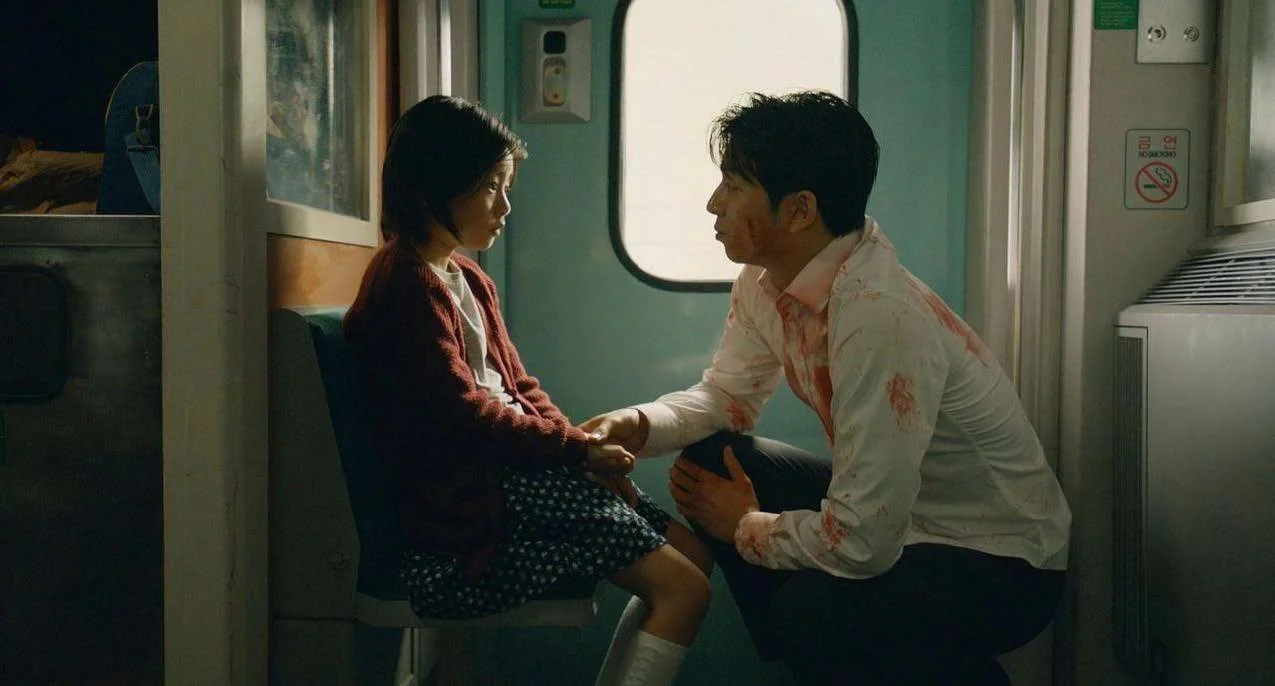
Following a middle manager caught in the chaos, there are several instances where protagonist Seok-Woo (Gong Yoo) finds his loyalties tested, each interaction with the other travellers revealing who can truly be trusted when the chips are down. He comes face to face with a wide variety of individuals from an unnamed homeless man (Choi Gwi-hwa) right the way up to a high ranking C.O.O. (Kim Eui-sung) and it is in these interactions and budding relationships that his pre-conceived notions of the social strata are flipped on their head.
Filled with a wonderful cast of diverse characters, brimming with intensity and brevity, Train to Busan’s near-universal acclaim is incredibly easy to understand. It takes a little while to get moving, but when it does, the film stands apart from the zombie pack with it’s smart social commentary, thrilling action and surprisingly moving emotional core of a father finally being able to prove his worth right as the world comes tumbling down.
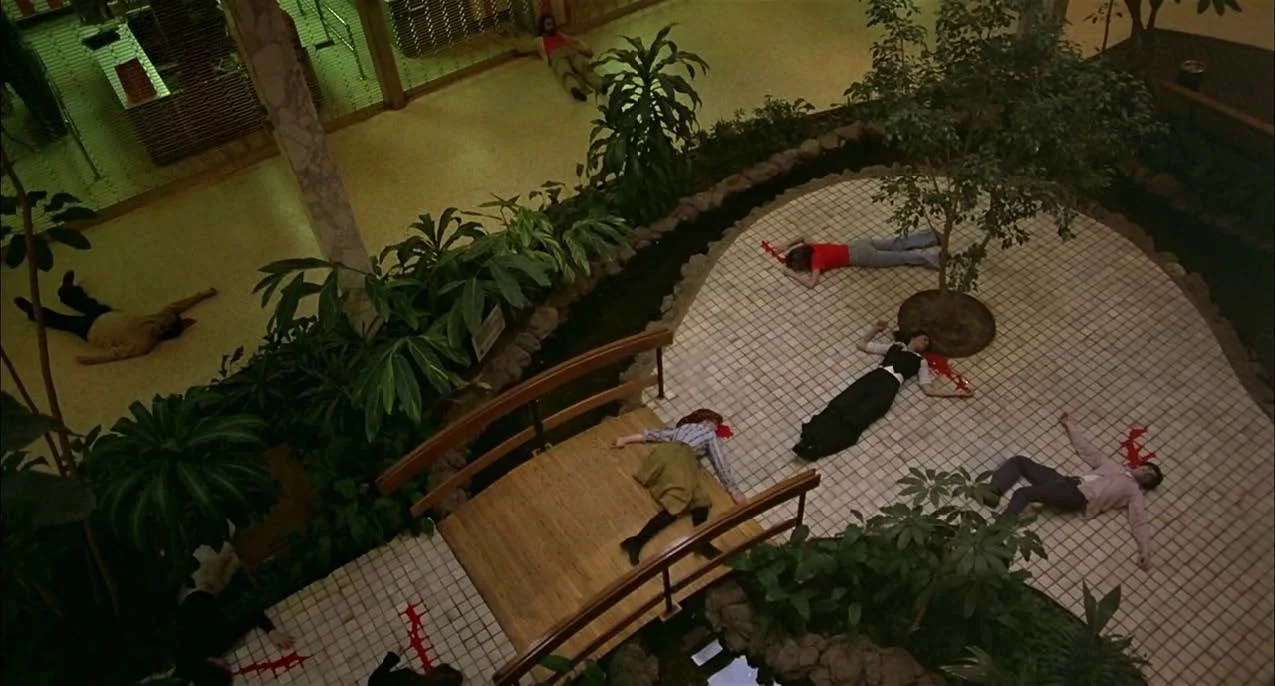
Day 6 - Dawn of The Dead (1978)
Most of the time, these marathons follow a rather loose and completely structureless schedule, but when the situation arises to chain films based on content and culture, I leap at the opportunity to do so. Last year, I did this with George A. Romero’s Night of the Living Dead and Julius Avery’s Overlord. It is a pleasure to return to the world of the master with Dawn of the Dead.
Unlike the more unassuming and quiet opening of it’s predecessor, Dawn of the Dead opens on a nation at DEFCON 1 from the jump. A panicked news set, a SWAT raid on an apartment block, it’s an exercise in escalation as our leads grapple with threats both human and inhuman. One of the central themes of Dawn of the Dead that ripples through all zombie media is the notion that the monstrous threat poses a danger rivaling man, and here we see that extrapolated through incompetence and abhorrent violence until finally all parties have to concede to the reality of the situation.
With regards to tone, I found myself most taken aback by how funny Dawn of the Dead is. Night of the Living Dead is a very grim and exhausting story, taking itself seriously at all times while Dawn of the Dead sees a central cast that largely gets along with one another, attempting to make the most of the dire circumstances they are faced with. They find a kind of normalcy within the apocalypse and as such, the lighter tone slots rather nicely into it’s narrative.
Ultimately, the bathos of Dawn of the Dead serves to disarm the viewer, the setting pacifying it’s inhabitants and it’s audience with all the distractions capitalism provides. Long stretches of time are spent indulging in simulacra, slowly whittling down the mood of the cast as the hollowness becomes inescapable. It is, in the end, an empty life. This isn’t to say that Dawn of the Dead endorses conflict as a more beneficial path for humanity — as it is chock full of senseless violence — but the barbarity of it’s violence in fact only illuminates how futile both modes of being are, as death in this world only begets more death.
Dawn of the Dead is a film full of rich exploration of the troubles that plagued America then (and today) but it doesn’t provide the viewer with any easily digestible answers. There’s no escape to be found in the comforts of capital and the unending hordes of undead mean that every bullet fired is only delaying the inevitable. Perhaps these are the only two ways that America will fall, gorging on vapid excess and finding itself incapable of creating a world where the cycle of violence can end.
Day 7 - Iron Lung (2026)
Likely the newest film I will watch this month, 2026’s Iron Lung is the cinematic debut from popular online creator “Markiplier” (Real name Mark Fischbach). Iron Lung finds itself sandwiched between two of the biggest trends of the year with it being both a video game movie and a film made by an online creator.
Released in February of this year, Iron Lung actually predates both Kane Parson’s Backrooms and Curry Barker’s Obsession. All three of these filmmakers come from vastly different online backgrounds, with Parsons creating animated short films and Barker being a sketch comedian and both being relative newcomers to the scene. Fischbach meanwhile hails from the “golden age” of content creation on YouTube, beginning his career in the early 2010’s with “Let’s Play” style content and coming up at around the same time as figures like Jacksepticeye (Sean McLoughlin) and PewDiePie (Felix Kjellberg). Most of his fame was accrued through his reactions to and heavy involvement with burgeoning indie game franchises like Five Nights at Freddy’s and with this in mind, it becomes rather obvious why he chose to tackle a video game adaptation for his feature length debut.
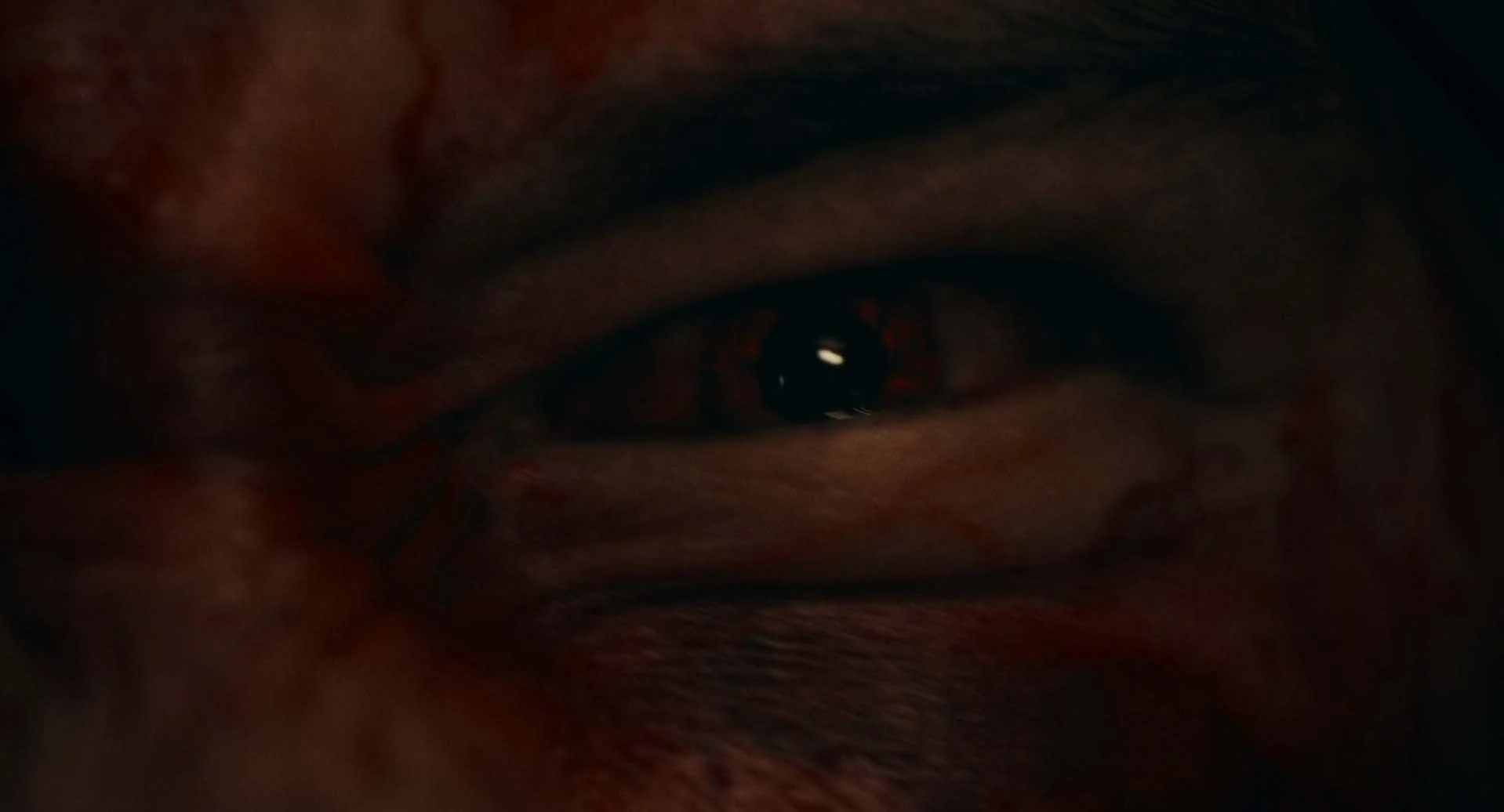
While I was initially concerned by it’s 2 hour runtime (the game is actually shorter than the film, at around 90 minutes to complete) I found myself pleasantly surprised by just how well Fischbach held my attention both in front of and behind the camera. As a performer, he does a remarkably good job of selling the desperation and claustrophobia the film’s submersible setup entails and this thankfully extends to the visual presentation of the piece too. The closest stylistic comparisons I could make are to Sam Raimi’s Evil Dead and Panos Cosmatos’ Mandy, the former for it’s scrappy spirit and inventive camera work and the latter for it’s hallucinogenic and dark visuals. Both of these films also contain fountains of fake blood and Iron Lung has no shortage of that as the film frequently drowns it’s protagonist in gallons of the stuff.
There’s a real sense of craft present in Iron Lung. Not skimping out on any of it’s makeup, costuming or set design, they all sell the final steps of humanity with tattered clothes and beaten people and places. The rust of the ship the Convict (Fischbach) is welded into already has the appearance of dried blood, echoing the cover art for Nine Inch Nails’ The Downward Spiral as it gradually fuses sinew and steel. The rotted industrial locale incorporates design elements from the game rather wonderfully too, with comically large and overly simplistic levers and buttons that shunt and snap with every activation.
Writing, directing, editing and starring in the film, Fischbach’s debut isn’t perfect by any stretch of the imagination. It is a little overlong and perhaps too didactic in it’s thematic content but the good here far outweighs the bad and Iron Lung is a very promising start to his filmmaking career.
Closing Thoughts
As a start to the marathon, this week has contained a rather excellent lineup! To pick a favourite, I’d probably have to go with House and as far as the weakest (not worst) goes, I’m leaning towards Possession. I truly can’t complain too much with those innings and I hope you’ll accompany me for the next recap as we kick off the week with Kiyoshi Kurosawa’s Cure.