
VIFF Dispatches 2026: Parent Traps
It turns out that parenting is not easy. Moreover, becoming a parent to your own parents is not easy. This hardship was a common theme at this year’s Vancouver International Film Festival. From tender English comedies, to graphic novel adaptations, to the Palme d’Or winner, these are a few of the boldest parenting films from this year’s VIFF.
Club Kid
11/12 | 4.5/5
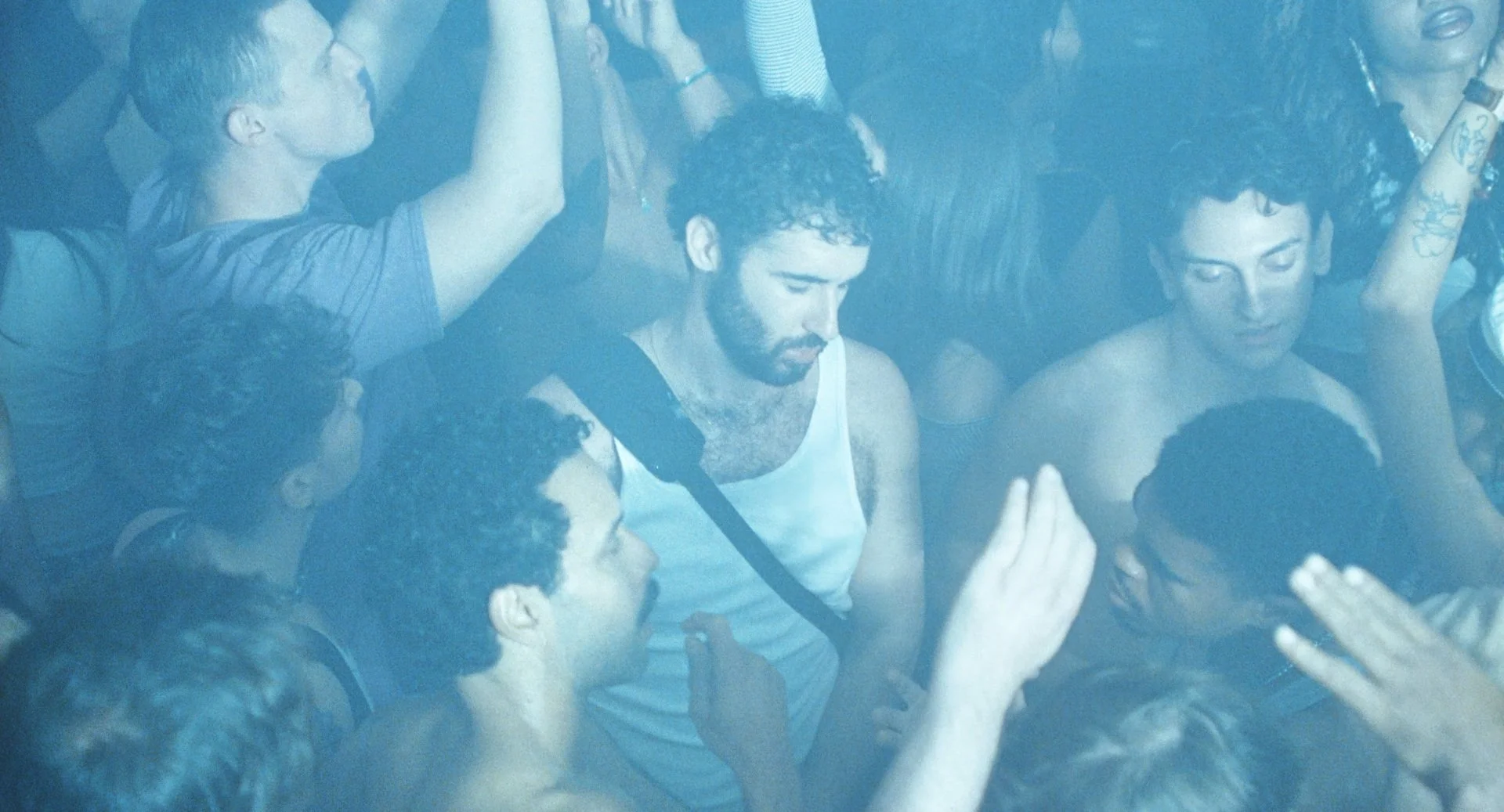
Allow me to start with my favorite film of the festival: Jordan Firstman’s debut feature and an absolute ton of bricks to get hit with, Club Kid. Firstman — writer, director, and star — focuses his feature on a gay club promoter whose ten year old son (he didn’t know existed) falls into his lap as his life rapidly approaches rock bottom. It is, for my money, the most heart warming, heartbreaking, gut punch film of the year.
I will admit to being biased towards stories of gay parents, as both the child of a gay parent and a queer person myself, who has been thrust into a "parenting" role over the years. However, biases aside, the balance of heart and humor that Firstman is able to achieve in his screenplay is outstanding. Likewise, his performance is one of the year’s finest, as are the performances from the ensemble, including Diego Calva, Colleen Camp, and newcomers Eldar Isgandarov and Reggie Absolom.
While there are flashes of unevenness in its plotting, when Club Kid is operating at its highest level — such as one particular Ethel Cain-inspired scene — it is pure electricity. And if a movie can shock some joy into my heartless atria, then it must be special.
Elephants in the Fog
9/12 | 3.5/5
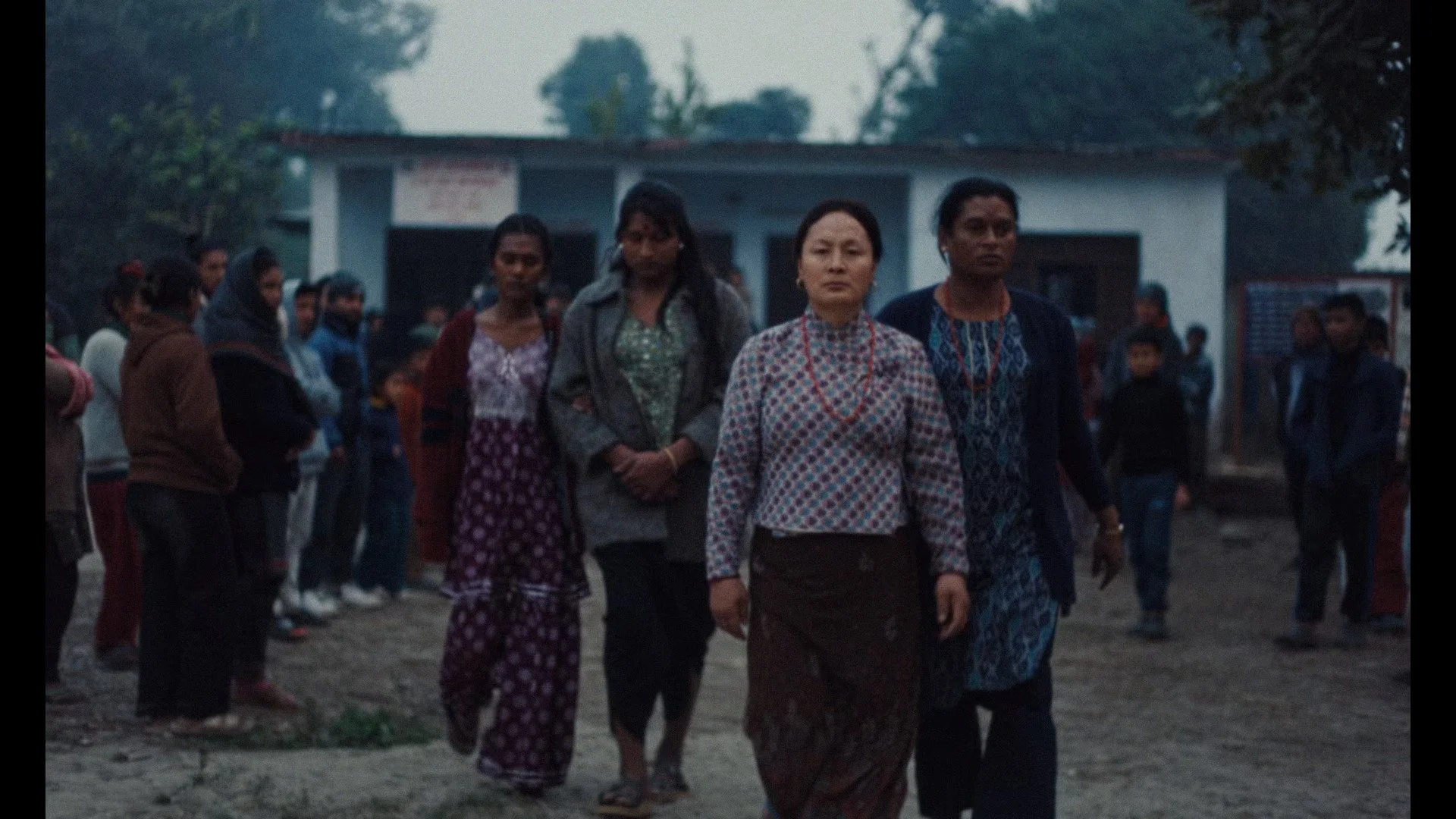
On the other side of the world from Jordan Firstman’s queer-coded New York, lies a Nepalese Kinnar (trans-/third gender) community undergoing a missing person crisis in Abinash Bikram Shah’s debut, Elephants in the Fog. Anchored by an excellent performance from Pushpa Thing Lama as a Kinnar matriarch struggling to reconcile her responsibility to her community with the “normal” life she wants to run away to, Elephants in the Fog is an identity study, more than a character study.
In juggling a community size cast of stories, the film struggles to find great depth in its characters, opting for breadth of storylines instead. However, the construction of a village under threat from the titular elephants, and one that tolerates — though certainly doesn’t accept — the Kinnar community amongst them is remarkable. There is a real feel for world building and character creation that elevates this film. What is done with those characters and that world in the second half of the film leaves something to be desired, but a triumphant finale leaves an indelible mark.

Everytime
9/12 | 3.5/5
There is a shot in the opening of Sandra Wollner’s debut, Everytime, that will stay with me for the rest of my life. It, much like the rest of the movie, is the kind of feat that can only be achieved through the medium of film. In that sense, Everytime is as unforgettable a film about memory as there can be. At least, in parts.
Following a tragic loss, a mother, daughter, and teenage boy are brought together for a trip to Tenerife and through their memories of a shared loved one. And while that may sound, more or less, like a conventional family drama, most of Everytime is anything but ordinary. The first act plays with cinematic form in some remarkably cool ways (drone shots from an in universe drone, extended Minecraft sequences, etc.), but it’s the third act that synthesizes a total upheaval of form and function. It is rare to see something put on celluloid that you can truly say you’ve never seen before. Everytime accomplishes that in the final act.
Unfortunately, the second act lags between its two marked bookends, which makes for a stilted viewing experience. Wollner has crafted one of the best portraits of grief in recent memory, if only in fits and starts.
Fjord
10/12 | 4/5
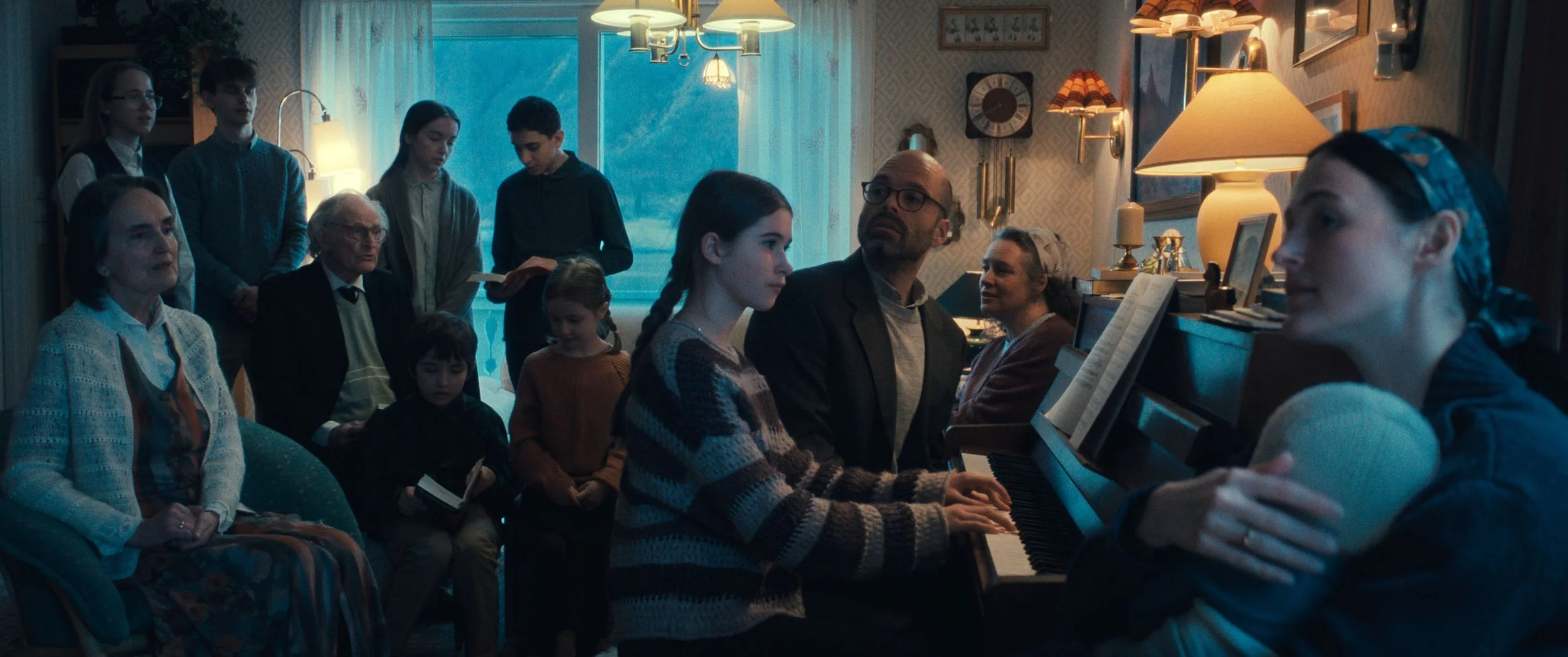
There is something Protestant in the parenting pool. If the moral quagmire of Christian parenting from Mike Flanagan’s revival of Carrie isn’t enough for you, Cristian Mungiu has you covered with Fjord. The Palme d’Or winner follows a conservative Cristian family, reared by the wonderful reunion of Renate Reinsve and Sebastian Stan, who move from Romania to small town Norway. There, the local community clashes with conservative parenting tactics of the recently arrived family, setting off a chain reaction that’s meant to leave you wondering if it’s actually a chain overreaction.
There has been a fair amount of criticism and praise heaped onto Fjord for its “both-sidesing” of the hot button issues the film hones in on (namely: Christianity, government overreach, and the loss of civil liberties). This is a reasonable misread of what is essentially cinematic proof of the horseshoe theory. There is no “both-sidesing” present in the film. Mungiu makes no great efforts to cast aspersions at the right or Cristian parenting, but he does an impressive job of showing a fascistic society from the left (i.e. the side most of his audience, myself included, sympathize with). Mungiu is trusting audiences — always a risky endeavor — to bridge the horseshoe’s gap in his allusions of fascism. Threats of surveillance, questionable pretenses for family separation, persecution of immigrants’ religious beliefs: these are indictments of many governments… and they are not the socialist ones.
In releasing Fjord out into a more polarized world than ever, Cristian Mungiu is risking a great misunderstanding. But that is, after all, what Fjord is all about.
Tangles
11/12 | 4.5/5
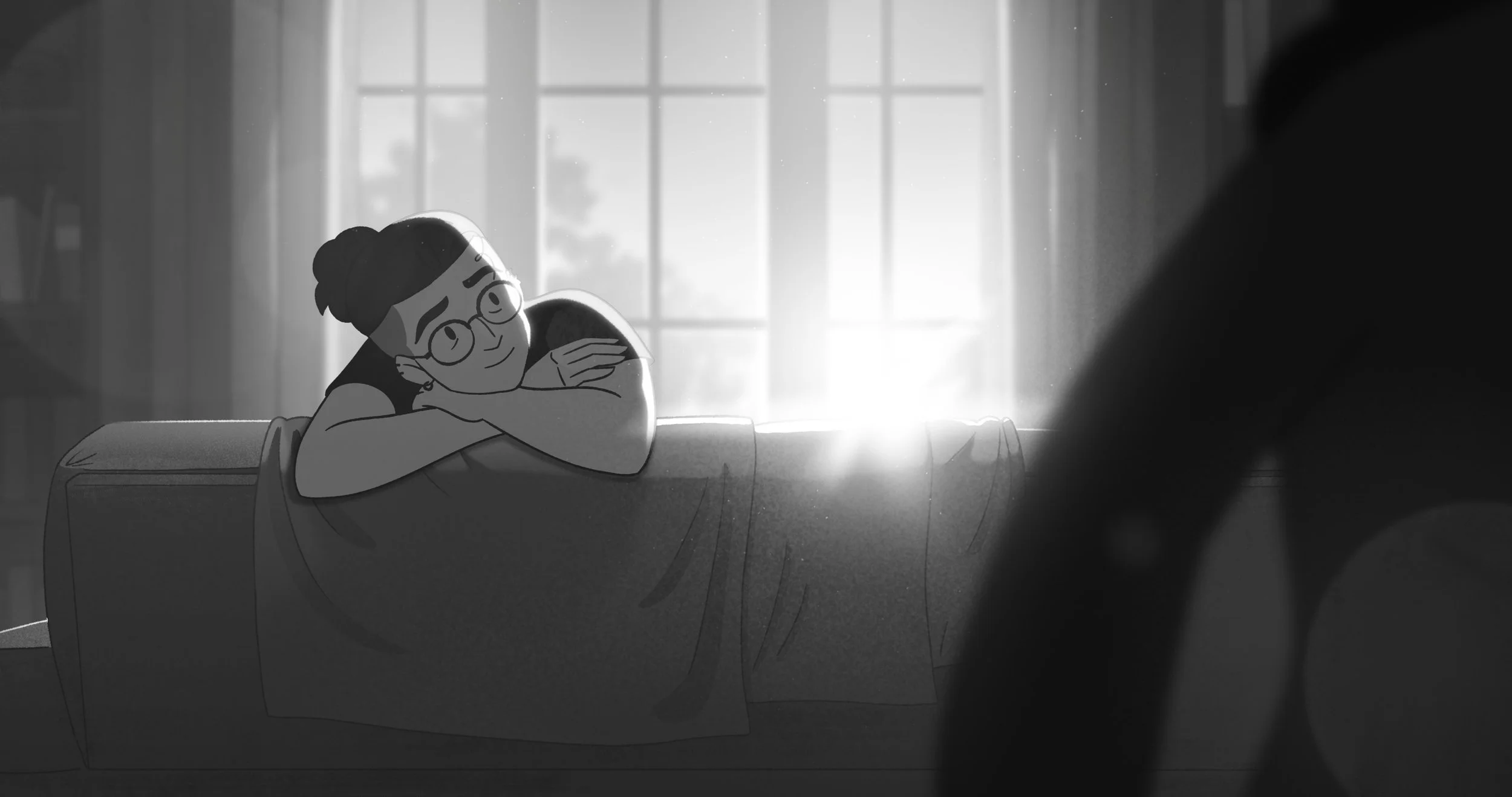
The Vancouver International Film Festival is wonderful for many reasons, but first and foremost for its ability to highlight local Canadian — and further, British Columbian — talent. Oftentimes that talent remains locally loved, but sometimes, it explodes into a global sensation (e.g. Blue Heron, a BC film that premiered at last year’s VIFF). No local film from this most recent edition of the festival deserves that more than Leah Nelson’s hand-drawn gem, Tangles.
Its namesake — the 2010 graphic memoir written by cartoonist Sarah Leavitt, who is now a professor at the University of British Columbia — is an emotional examination of a family coming to terms with the loss of their matriarch to Alzheimer’s disease. The film (like the memoir) is, very simply, devastating. Leavitt’s mother was diagnosed when she was 52, and Leavitt was living across the continent, but nonetheless was forced to begin the multi-year grieving process, where every day drags you back up the dotted timeline to the start of grieving all over again. Tangles captures that erosion of Mother’s mind and familial spirit with shattering precision.
And while there is much to be said about other aspects of the film (from phenomenal voice acting to the buoyancy of young queer love), I’d like to focus on what it does best: feeling. What it elicited from me — and I have to imagine every audience member with a beating heart — was an overwhelming, full body upswell of longing for my mother. It strums that heartstring that is singularly attached to her. My mother is 52 years old; and I too live across the continent from her; and I’m so, so scared of losing her. Mama, I love you. More than anyone can love anything.
I hope the entire world sees this movie. I hope the entire world calls their mom.

Tender Loving Care
7/12 | 3/5
For all the ways that Tangles is the heartbreaking story of a woman grappling with becoming a parent to her own, Tender Loving Care is the heart warming version. On the other side of the pond, Mike Leigh says farewell with his sweetest movie in nearly two decades. The British film master, now 83, says this comedy — or dramedy, as they always are in Britain — is more than likely his last project due to health complications, even if he has “100 more movies” he wishes to make. His forced retirement adds a crestfallen quality to Tender Loving Care that, if not elevates, certainly deepens the film.
The film follows Amy and Rosie, a pair of social workers (the most common job for characters at VIFF this year), as they tackle work, love, and all the common maladies of encroaching middle-agedom. For most of its runtime, the characters flit around gossiping and dunking biscuits in tea, while a marimba-based score keeps things upbeat. After the sweet comes the bitter however, as one of the pair, Amy (Kate O’Flynn in a wonderful follow up to Widow’s Bay), struggles with the sudden downturn of her father’s health.
Amy’s strain is shared beautifully by her mother (played by Leigh mainstay Marion Bailey). Tender Loving Care proves itself to be, above all else, a testament to the binding power of grief. While it isn’t a perfect swan song for Mike Leigh, it is a beautiful ballad to bow out on. And there is no shame in simple beauty.