
1976 Retrospective: Bloodshed with a Broadcast; How Harlan County USA Tells a 250 Year American Story
When Barbara Kopple set out for Washington D.C. in 1972, she did so with the aim of capturing the fall of Tony Boyle. Boyle was, unknowingly, nearing the end of his tenure as the President of United Mine Workers of America (UMWA), the United States’ premiere mining union. Maybe Kopple knew his end was coming — his position had grown precarious as union power declined in the late sixties and early seventies, and his constituents (as in, the salt of the earth miners powering America) had grown tiresome of his two-faced politicking — or maybe this was just hopeful thinking on Kopple’s part. After all, facing down “Tough” Tony Boyle, a man with a malevolent power that matched the permanently downturned eyebrows that gave his face its wrathful scowl, was no small task. The last man to have tried it, Joseph Yablonski, was gunned down in his bed on New Year's Eve, 1969. The assassins, hired by a hard-pressed and angry Boyle, left fingerprints all over the house and were caught within days. But the damage had already been done: Tony Boyle remained in control of UMWA, at the cost of Yablonski, as well as his wife and daughter, who were also killed in their beds that fateful New Year’s Eve.
Like any good documentarian — especially in the fledgling era of “true crime” — Kopple knew to chase the blood trail upstream to its source. So, she was there in Washington D.C., priming herself for a potentially dangerous (and probably undemocratic) union election in June of 1973, when news broke that miners at the Brookside Mine in Harlan County, Kentucky had gone on strike against Duke Power Company. Their demands: higher pay, safer working and living conditions, and a contract to join UMWA. Naturally, Kopple couldn’t turn down the opportunity to see the strike for herself.
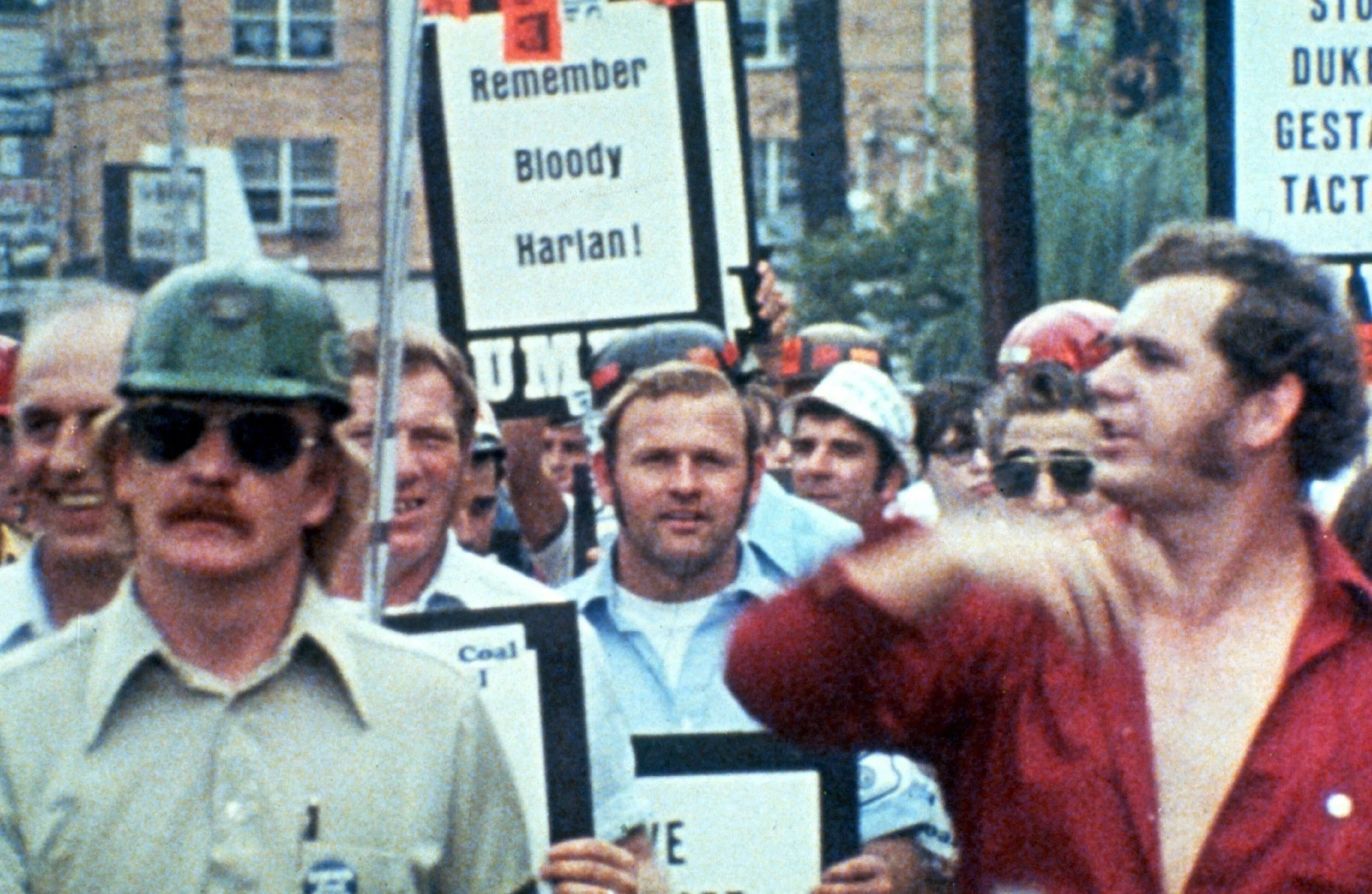
Kopple’s impromptu trip to eastern Kentucky unexpectedly derailed her focus from Tony Boyle. Instead, she stayed in Kentucky, covering the 13-month strike from the frontlines. Her detour ultimately produced Harlan County USA, the landmark documentary that doesn’t just capture a single strike, but tells the story of America.
The opening frames of Harlan County USA exude a pride that is common to — oftentimes exclusive to — blue collar labor. A conveyor belt meant to drag coal from the depths of darkness is thrown in reverse and mounted by a stream of stern-faced (though not unsmiling) miners clocking in for a day of acceptably inhumane manual labor. But as these men sweat through their jobs in crypt-like pits hundreds of feet underground, they do so with a bootstrap toughness synonymous with the American identity.
From the start, Kopple captures that uniquely American value: a pride in our own exploitation. The difference in Harlan County is that these workers have an understanding of their exploitation not often found — nor taught — in rural America. There is nothing experimental about the form of Harlan County USA, but there is something exceptional about the clarity in which the documentary’s interviewees speak about their own exploitation. “They're treating us like we're animals, dogs. Well, we aren’t. We’re American citizens. And they are violating our constitutional rights,” says one miner in the first few minutes of the film, and in saying so sums up the throughline of American history.
There is a general acceptance — regardless of party or persuasion — that the whole of the United States was built on the backs of the bled and the beleaguered. From the Wampanoag of Plymouth Rock to Alligator Alcatraz, here is a country that excels at for-profit systemic oppression. Duke Power’s control over Brookside Mine was no different. Kopple notes that as profits for Duke Power jumped over 170% in 1973, wages for miners couldn’t even keep up with the rising cost of living (4% and 7% increases respectively). Harlan County, boiling over with blue collar pride and economic tension, was an isolated case study for the whole of America’s contentious class consciousness.
Kopple, along with her elite team of cinematographers and editors, is able to capture what happens when that tension finally snaps. Harlan County USA is constantly evolving, as the prolonged strike it documents ebbs and flows with the hardships of its miners. Support for the strike swells and dwindles, and one can tell where the tide is simply by the feeling captured by her cameras on the street.
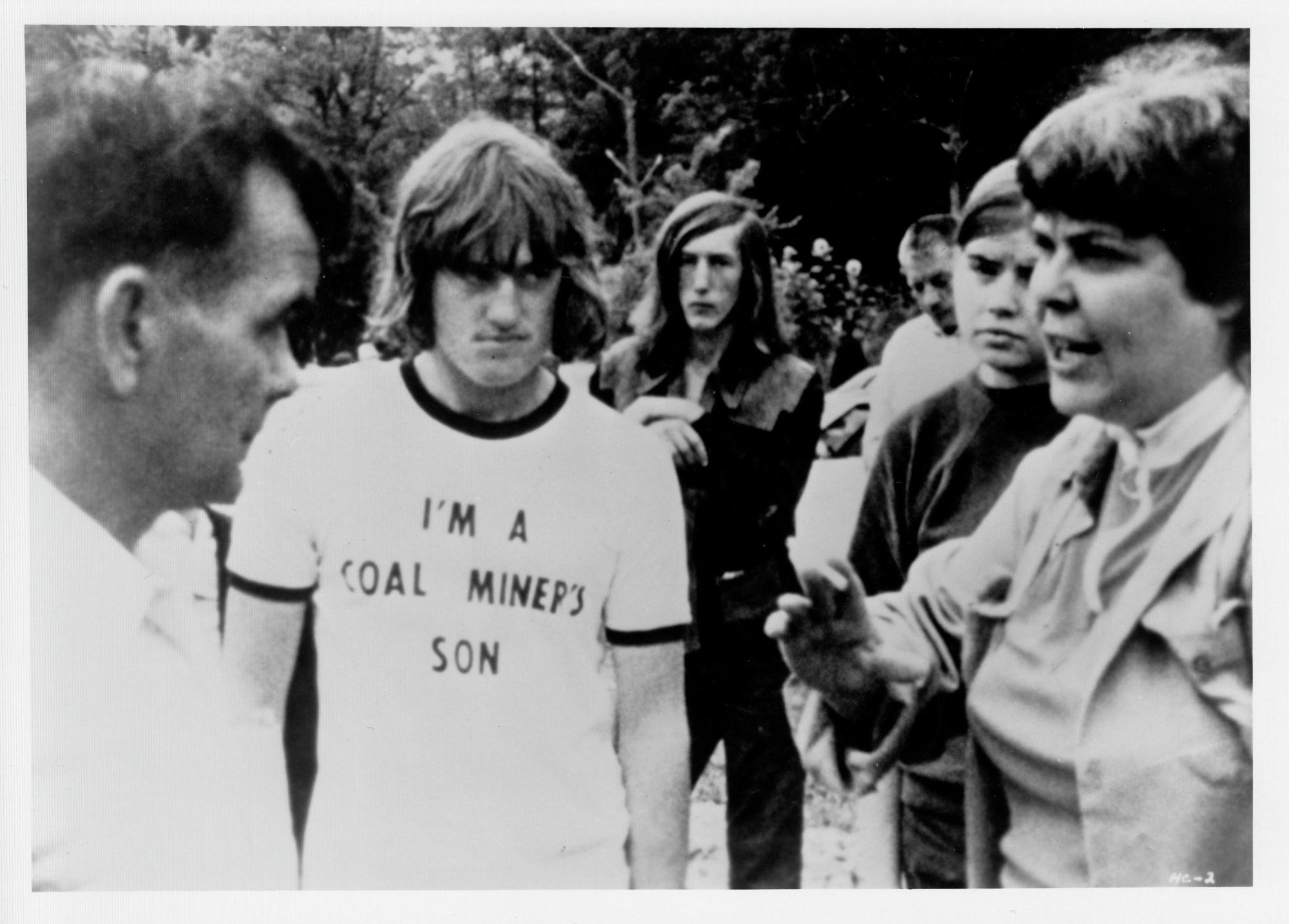
In the backrooms, amongst diehard strikers and UMWA supporters, is where the documentary finds its own voice, and that is the voice not of burly, black-lunged men, but of their wives, sisters, and mothers. Because despite how male-dominated the mines were — nearly 100%; coincidentally though, 1973 saw the first woman join UMWA — the miner’s labor movement in Harlan County was driven by women. Harlan County USA, helmed, produced, shot, and edited by women, naturally reflects this femininity. Without overcompensation or hyperbole, Kopple spotlights the Kentucky women who served as both the backbone and frontline of the labor movement.
It is these women who do the mind-numbing organization of bodies on the morning picket lines, who give the fiery speeches that inspire thousands, who stand in the line of fire as things intensify between strikers and scabs. And that intensity comes quickly and fiercely. Despite Kopple’s cameras — though they, by all accounts, saved countless lives — there was plenty of bald-faced violence in the streets of Harlan County. Few people have ever come off as innately despicable as head strikebreaker Basil Collins, who openly brandishes revolvers, shouts racial slurs, and tries to mow down strikers with his truck.
In the film’s climax — though, as the heartbreaking months of protest string along, it is difficult to describe any single moment as a “climax” — the strikers, led by their wives and mothers, clash with Collins in the streets after successfully surprising the scabs with a morning blockade. Though it is far from a typical scene of American triumph, it does evoke a strange sense of patriotism to see a group of brusque housewives deliver a warrant to the Harlan County sheriff for Basil Collins’ arrest. Moral victories, as Harlan County USA magnifies though, hardly ever correlate with substantive victories in real life David-versus-Goliath battles. While the strikers are successful on that particular day, Collins is back and blood thirstier than ever soon after. The end result: his scabs kill a young striker, with a shotgun to the head. The miner, Lawrence Jones, left his infant child and teenage wife, as well as a hauntingly distraught mother. His funeral is one of the hardest watches of a documentary with nowhere easy to rest.
This bloodshed was not unknown to Harlan County, nor any county in working class America for that matter. A similar — though much deadlier and longer — conflict had plagued the area four decades prior, in an intrastate war known as Bloody Harlan. The results in 1974 were different. Jones’ death sparked a deliberate and anticlimactic end to the strike. Duke Power capitulated. The Brookside miners won. The contractual details that had long held Duke Power back, especially the inclusion of UMWA unionship, were ironed out with sudden ease. History showed that bloodshed bothered them little. But bloodshed with a broadcast? That’s bad for business.
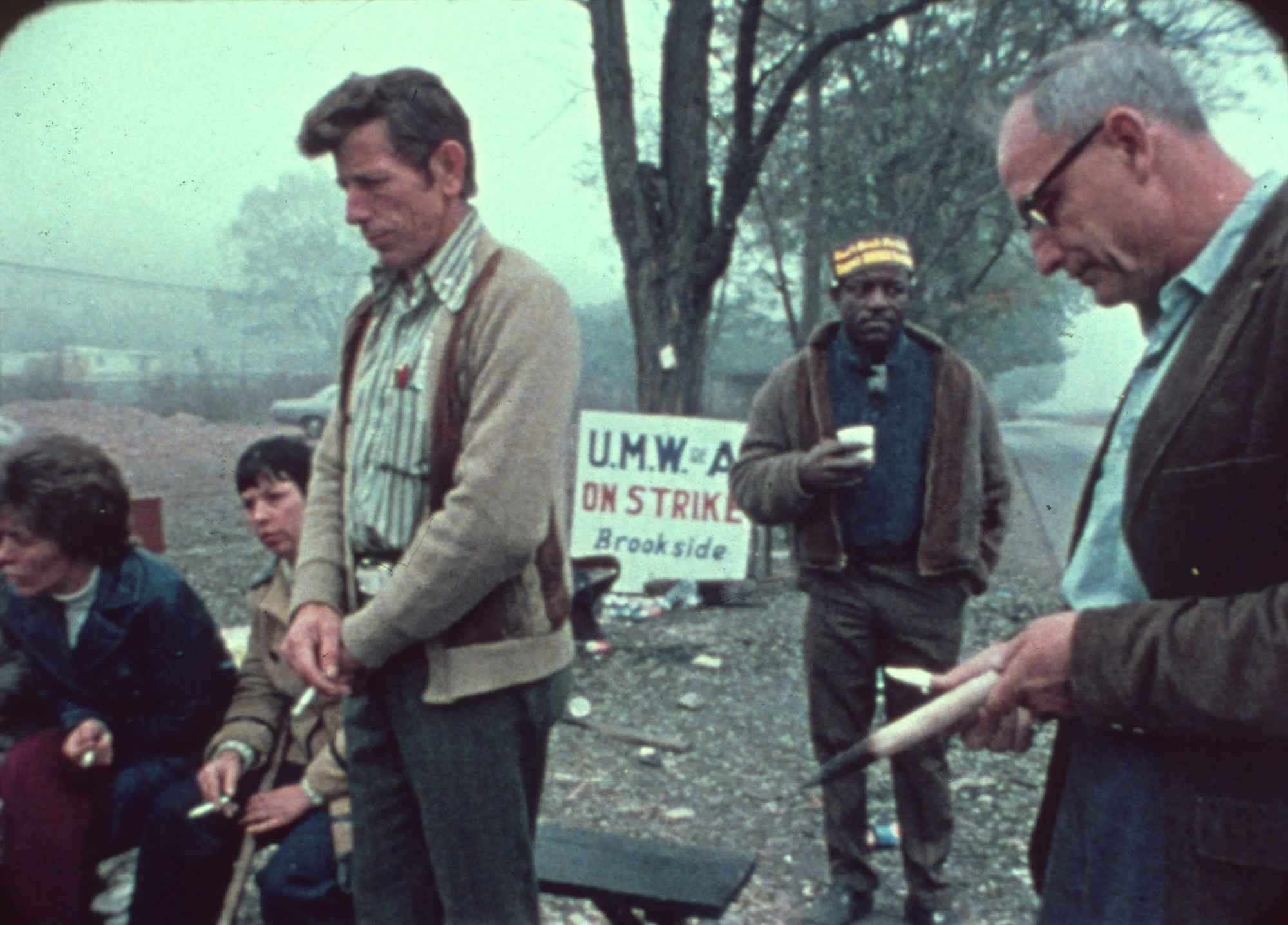
In the end, the Brookside Mine strike was a success. But like most success stories for the little guy in America, it only went so far. Within two years of unionization, UMWA ratified a new nationwide contract that disallowed local strikes, without which Harlan County would have still been living under wage slavery. For the Brookside miners and their wives, daughters, and families, all of whom had just spent over a year fighting every day to join a union that then told them they couldn’t fight that way, this was the first of many crippling blows. In the decades that followed Harlan County USA, coal miners and the unions that were supposed to protect them grew weaker. The oil companies bought out the coal companies, and weaned the world further off of coal and onto petroleum. Then, the miners were squeezed from the other side by scientists and environmentalists with groundbreaking insights about the black lung-like impact of coal on the atmosphere. Eventually, coal became as toxic a brand as it is an energy source.
Of course, the world still — in large but diminishing part — runs on coal. But for the miners of Harlan County who died for it, and the women who fought for it, those moral victories don’t outweigh the substantive losses incurred in the fifty years since Barbara Kopple’s documentary shook the world.
Watching Harlan County USA in 2026, the 250th anniversary of this country, I wonder: is that not the story of America? A ragtag group of men and under-credited women being trampled by the Forces that Be, treated like animals, their constitutional rights violated, only to lose more in battle than they gain in victory. To then have their small victory quickly undone by the tides of a change they cannot control. All of this while under the watchful eye of a photographic lens. Their exploitation, exploited further for our education and entertainment. What’s more American than that?