
Retrospective: "The Fast and the Furious" - A Quarter Century at a Time
Rob Cohen’s The Fast and the Furious (2001) followed stoic street racer Dominic Toretto (Vin Diesel) and his doomed encounter with conflicted undercover cop Brian O’Conner (Paul Walker). Late ‘90s and early ‘00s car culture was summarized by Gary Scott Thompson and Erik Bergquist with David Ayer coming in to move the entire story to LA as the cherry on top. To his credit, the city of LA felt like it was as much of a character as anyone behind the wheel of a car in this. It took Kenneth Li’s 1998 vibe article Racer X (Based on Rafael Estevez' New York street racing career) and turned it into a sentimental crime thriller where a man of the law is deconstructed by the life and principles of a family of criminals. What started as a story of two unstoppable forces coming head to head is now a nearly two and a half decade-spanning epic about love, loyalty, and family.
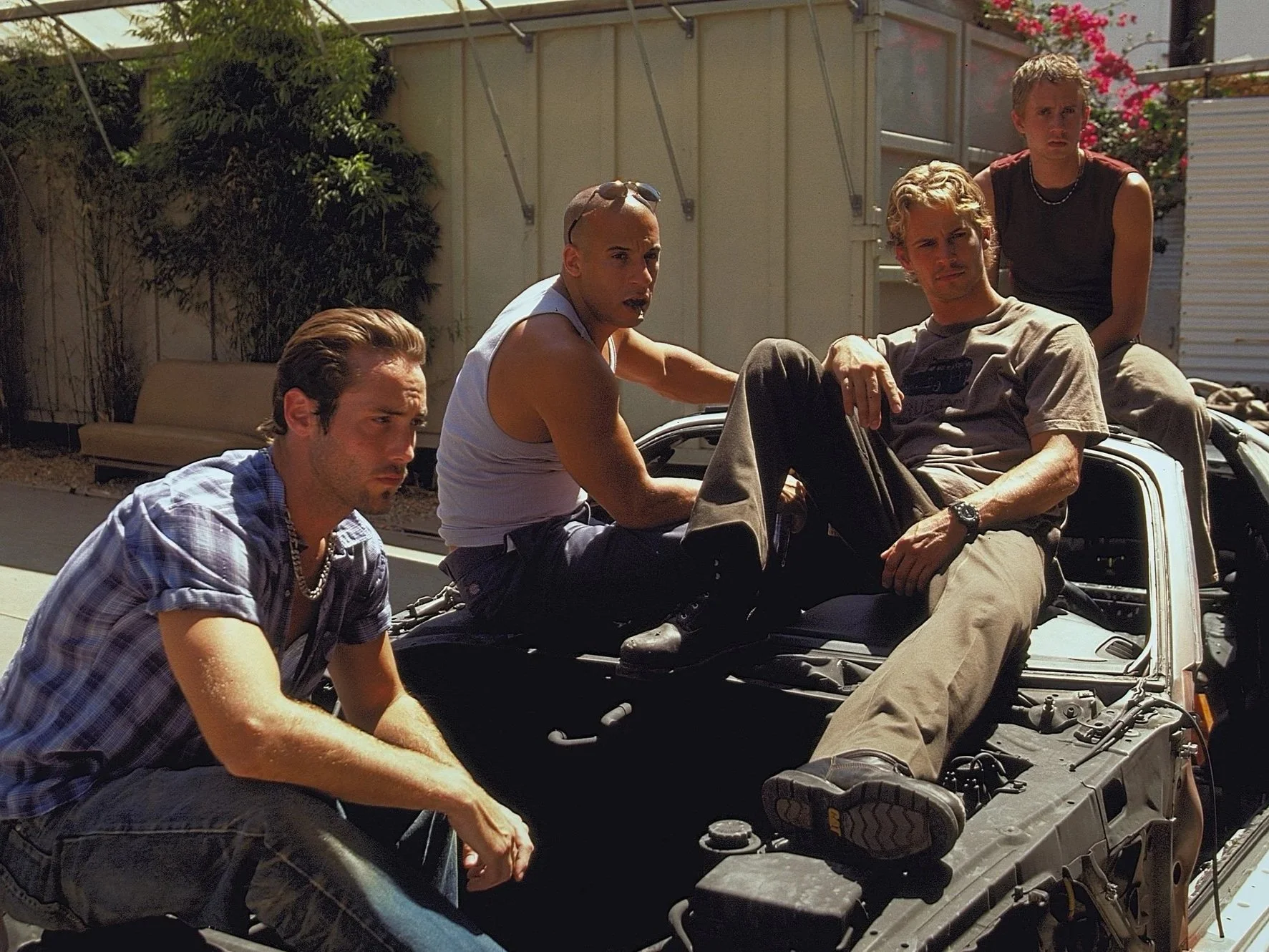
Kenneth Li was investigating a car theft operation when he became enamored in the world of illegal underground racing. It was an entire culture that was planting itself firmly into the streets of not just LA, but the east coast as well. Custom cars and JDMs were all that were on anyone’s minds. Li followed that only to come across New York City’s own Rafael Estevez. Estevez was a street racer from Washington Heights and he was a true force to be reckoned with. Seeing him in action is what pushed Li to write Racer X. Hollywood caught wind of the popular story and it made it to director Rob Cohen. He had previously worked on Dragon: The Bruce Lee Story as well as 2000’s The Skulls starring eventual The Fast & the Furious star Paul Walker. A deal with Li was made and Racer X was being made with Gary Scott Thompson penning the script.
The film originally had a darker tone with it seemingly being more focused on following the general vibe of the scene rather than the characters and their relationships to it. It was meant to be a sort of Romeo and Juliet story, but with cars and plenty of shootouts. The script was looking good, but ultimately had to be changed in the aftermath of the Columbine shooting. Needing to find their footing again, they hired David Ayer to help completely overhaul the whole thing. His contributions essentially gave us the franchise that we know today. The setting was moved to LA, the characters were deeper and given stronger voices, and the core themes were starting to take shape. It turns out, that (as well as one too many Point Break rewatches) was the NOS that blasted the script to the finish line.
There was a little licensing to be done due to the title being used in the 50’s for a Roger Corman produced B movie, but The Fast and the Furious was finally what they landed on. Paul Walker and Vin Diesel were chosen to play the leads with Michelle Rodriguez and Jordana Brewster rounding out the main four. Paul Walker played an undercover LAPD officer named Brian O’Conner who has been tasked with infiltrating the street racing scene and taking down a group of truck robbers led by Diesel’s Dominic Toretto. Brewster played Toretto’s sister, Mia, and Rodriguez was his ride or die, Letty Ortiz. These four together brought an unmatched electric and natural chemistry to the table that almost definitely helped to make the movie the hit that it was.
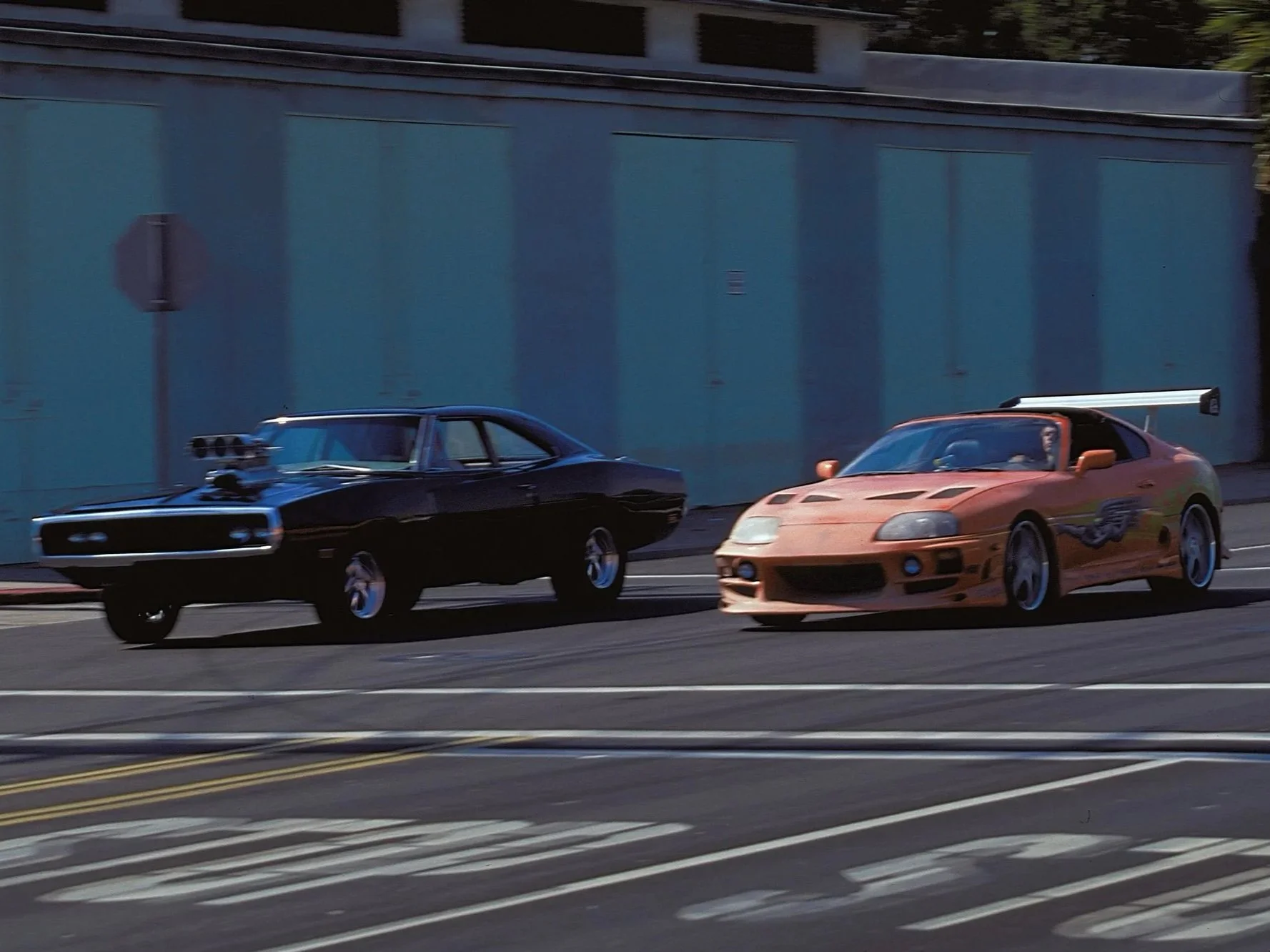
The film hit theaters on June 22nd, 2001 and grossed just over $200 million in its theatrical run, more than quintupling its budget. It was a ten second hit that instantly tapped into that tuner/racer demographic they were targeting. It was a miracle it worked, and an even bigger one that it was successful.
The Fast & the Furious is essentially a modern western. You follow the unwanted newcomer in town who’s almost immediately at odds with this crew of would-be train robbers. You’re sort of dragged from group to group and O’Conner’s reluctance in nailing Toretto grows. One second it’s him, the next it could be a rival racing gang on motorcycles headed by Rick Yune’s Johnny Tran. He keeps making up reasons to spare Toretto, and his descent proves to be one of the most interesting parts of the entire movie.
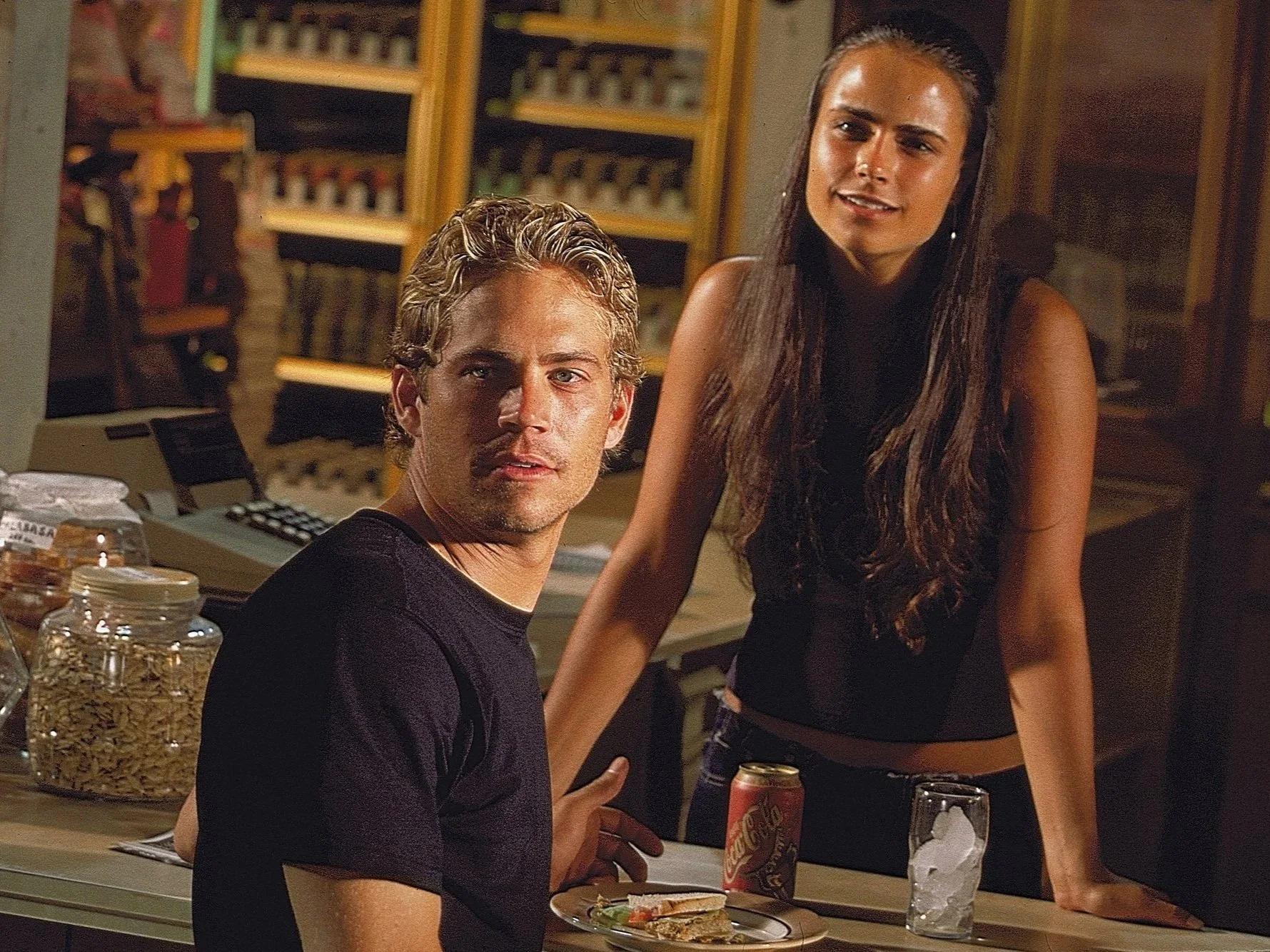
That tone sticks around until the end, but you can also dig through that to fish out the remains of Thompson’s love story between Brian and Mia. Brian encounters Toretto and the rest of his crew for the first time at the Toretto family sandwich shop where Brian comes to visit Mia every day, ordering an awful tuna sandwich. This encounter of course ends in a scuffle between O’Conner and a gearhead from Toretto’s crew: Matt Schulze’s Vince. Vince was an interesting character because he helped bump up the already astronomical testosterone levels of the entire thing. He served as a more tangible villain for Brian’s love story with Toretto still operating behind the scenes as the true mastermind of the criminal affair. That’s part of what the film did so well. It layered all the characters and their interpersonal conflicts well enough for the viewer to still care about the characters and not just the cars; it’s not about the cars, it’s about who’s behind the wheel.
The characters and the cars were the main focus, but what really sells the movie is the killer score and intense, fast-paced editing. Composer BT, Brian Transeau, brought another character into the mix in the form of the crazy techno score. It was music that perfectly matched the speed and feeling of the races in the film, making us feel that we as the audience were truly keeping up. It was a revolutionary score where all the percussion was actually done on car parts that they had hung up in the studio to make it all sound more natural, fitting the action packed sequences better. Mix that with the cinematography of Ericson Core (who, funny enough, went on to direct the 2015 remake of Kathryn Bigelow’s Point Break) and you have an intense enthralling score placed over these well composed shots that really just nail the whole thing. It’s all brought together by the editing of Peter Honess and Dallas Puett. If there’s anyone else to credit for the film’s success, it’s these two. The four minute buildup of Brian and Dom getting their cars ready after arriving at the race’s starting line is unmatched. You’re dragged in closer and closer until they can finally blast off, taking us to a shot of the inside of Dom’s car that shows us the whole thing kickstarting. You feel like you’re in it, and you’re there.
Kenneth Li stated that the film was actually more what he wanted his original story to look like. His ideas had come to life and had thrusted audiences into the world of street racing. The Fast & the Furious inadvertently kicked off a franchise that would go on to gross over $7 billion dollars across all 10 films and a spinoff flick. It has ventured into the world of video games, television shows, and even theme park rides - the newest of which, Fast & Furious: Hollywood Drift at Universal Studios Hollywood, is a fully themed multi-launch spinning roller coaster that cost more to build than any of the first four movies cost to film. F. Gary Gray became the first ever African American director to have made a billion dollar movie with the eighth installment in the franchise: The Fate of the Furious. The eleventh and potential final main film, Fast Forever, is currently in active development as well.
As a franchise that can’t seem to stop making money and permeating pop culture, the world of The Fast & the Furious is still going strong 25 years later. While some may argue that it has strayed too far from its simple roots, you could always retort that the core ideas and themes remain, and have never faltered: love, loyalty, and family.