
Movie Review: No New Threads in “Enola Holmes 3”

6/12 ForReel Score | 2.5/5 Stars
Enola Holmes 3 ends with a montage of the romance between Enola (Millie Bobby Brown) and Tewkesbury (Louis Partridge) that spanned across the three films, and it suggested to me the horrifying notion that people have already started to feel nostalgia for 2020. The first Enola Holmes made a perfect pandemic viewing as it provided breezy escapism in its charming cast and old-fashioned England setting. Then the second one came along and I felt the fun wearing out. And now comes the third one, which feels - other than some solid direction - depressingly perfunctory.
The movie opens with Enola’s wedding, which in typical quirky heroine fashion, she is late for. She tells us she is busy juggling between duties of a wife and a detective, as she is working with her brother Sherlock (Henry Cavill, in a role that grows increasingly stale between installments). Sherlock is deep in one of his new cases, and is violently abducted, but not before carefully leaving Morse code in the form of fingerprints on a mirror.
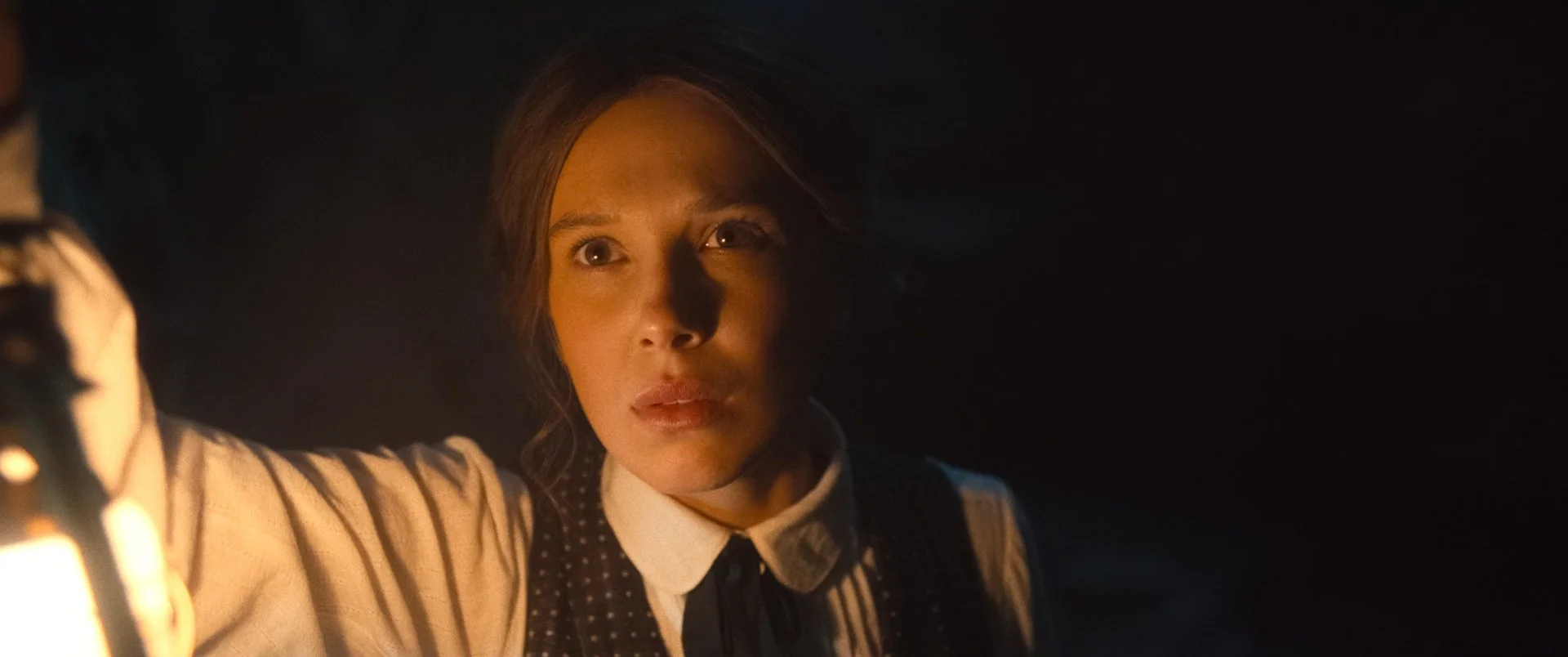
Image courtesy of Netflix
The routine of Enola picking up the hints Sherlock left behind and solving the mystery is delivered with grating narration, which employs the traditional schtick of a record-stratch followed by the line: “You’re probably wondering how I got here” (Enola says this almost verbatim). The unspoken rule about narration is that it generally adds to whatever the audience is seeing, but in Jack Thorne’s script it plays more like an audio description of the movie. In other words, I don’t think we need to be told how Enola is decoding the mysterious signs when the movie spends the budget on effects that make the symbols float in the air and piece themselves together. Even more irritating than the narration is the obnoxious fourth-wall breaks, which felt more like a cheap gimmick than a storytelling device. Enola looks at the camera so often that it serves as a complete distraction to the story, which is otherwise borderline functional.
The Enola Holmes movies are based on the series of young adult novels by Nancy Springer, unread by me, which probably made good use of narration and fourth-wall breaks. But what’s fun on paper doesn’t necessarily translate into film, especially not after three installments of just about the same story progressions. Enola follows clues and gets herself into danger, encountering at least twice the cliche of dying people uttering their last words just enough for it to be a clue but not enough to be an answer. The climax involves some chases, revelations, and an awkwardly edited fight scene.
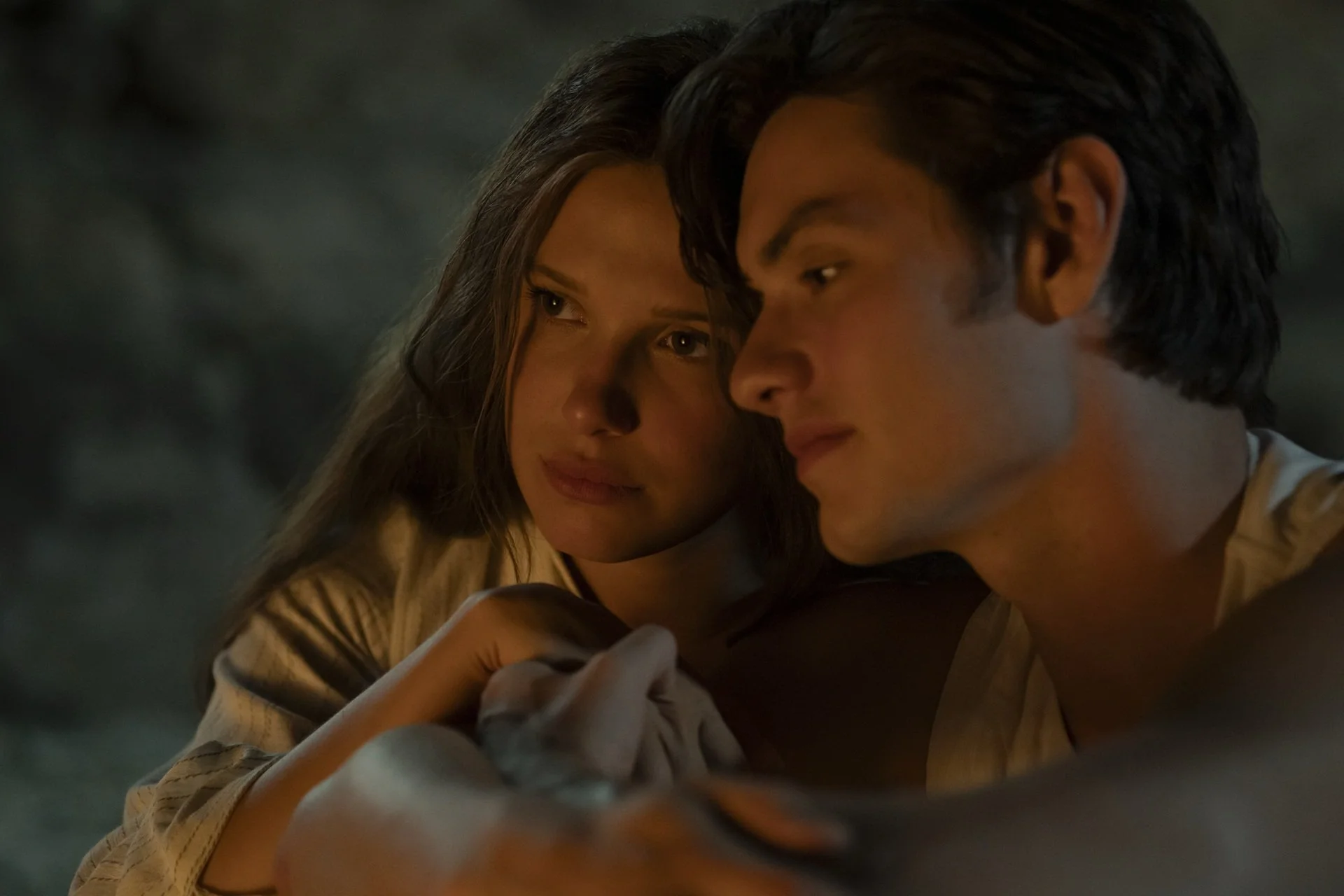
Image courtesy of Netflix
Even the target audience of teens, I presume, have to find these motions somewhat tiring, right? At least it seems the movie still has the grace to shoot in real locations instead of twenty green screens. The movie made me realize the Enola Holmes franchise would’ve worked better as a case-of-the-week series similar to Columbo and Miss Marple, where the material has fun with tropes instead of blindly following them.
The one noteworthy aspect of the installment is that it is directed by Philip Barantini, who gained worldwide recognition after his miniseries Adolescence smashed streaming records and took home countless accolades. Though Enola Holmes 3 is, I presume, his “one for them” project for Netflix, he still brings some visual competence — a dozen decently-lit shots and resourceful uses of locations — into the dreary landscape of the modern streaming era.
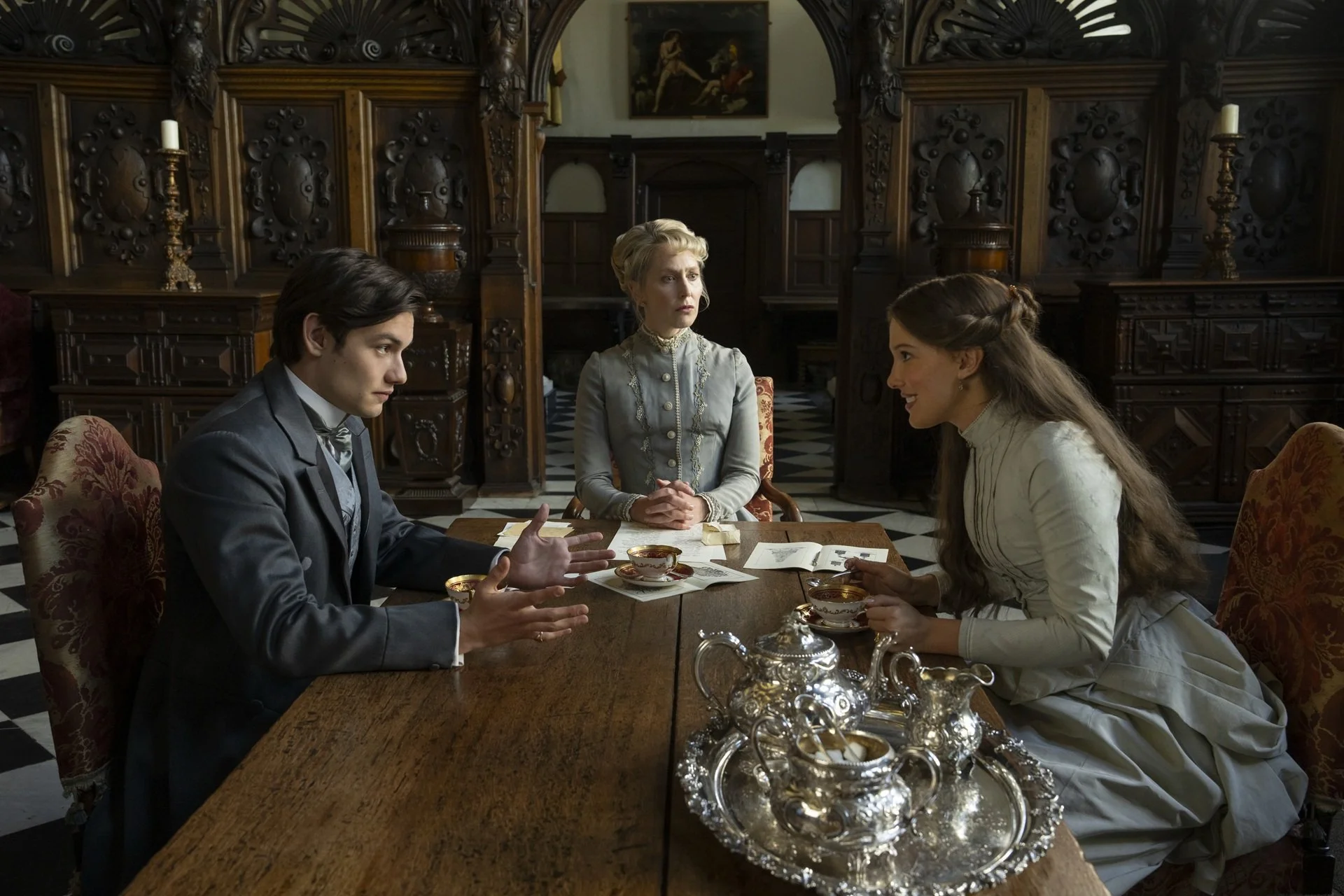
Image courtesy of Netflix
The heart of the film supposedly belongs to the love between Enola and Tewkesbury, but I never felt their dynamic evolving beyond the heroine and the sidekick. They might have grown into more thoughtful and mature characters as the films went on, but I dunno, maybe it’s too much to look for chemistry in such a busy movie. Instead I started to think for how much more time Brown and Patridge, two perfectly charismatic actors, are stuck in streaming projects which never allows their abilities as actors to fully blossom. If you don’t believe me, consider how Henry Cavill and Helena Botham Carter’s talents are wasted in this film in thankless roles, and try to imagine how impossible it seems that Millie Bobby Brown will have a career like Keira Knightley.
Acting/Casting 1 | Visual effects/Editing 1 | Story/Message 1 | Entertainment Value 1 | Music Score/Soundtrack 1 | Reviewer's Preference 1 | What does this mean?