
Movie Review: "Moana" (2026); Imitation is the Cruelest Form of Flattery

4/12 ForReel Score | 1.5/5 Stars
Thomas Kail’s live-action Moana (2026) is neither live-action nor “Moana”. A decade after the original’s inception, Disney remains committed to the joyless pastime of squeezing their animated catalogue for every penny it's worth. Moana (2026), in keeping with this tradition, looks duller, flatter, and, somehow, less real than the original. The film relies heavily on CGI to a ludicrous extent. Moana’s nautical, supernatural narrative demands conflict and locations that are almost entirely impracticable within the constraints of purely live filmmaking.
If only there were a way to illustrate impractical narratives without the need for live actors or tricky sets. What a novel concept.
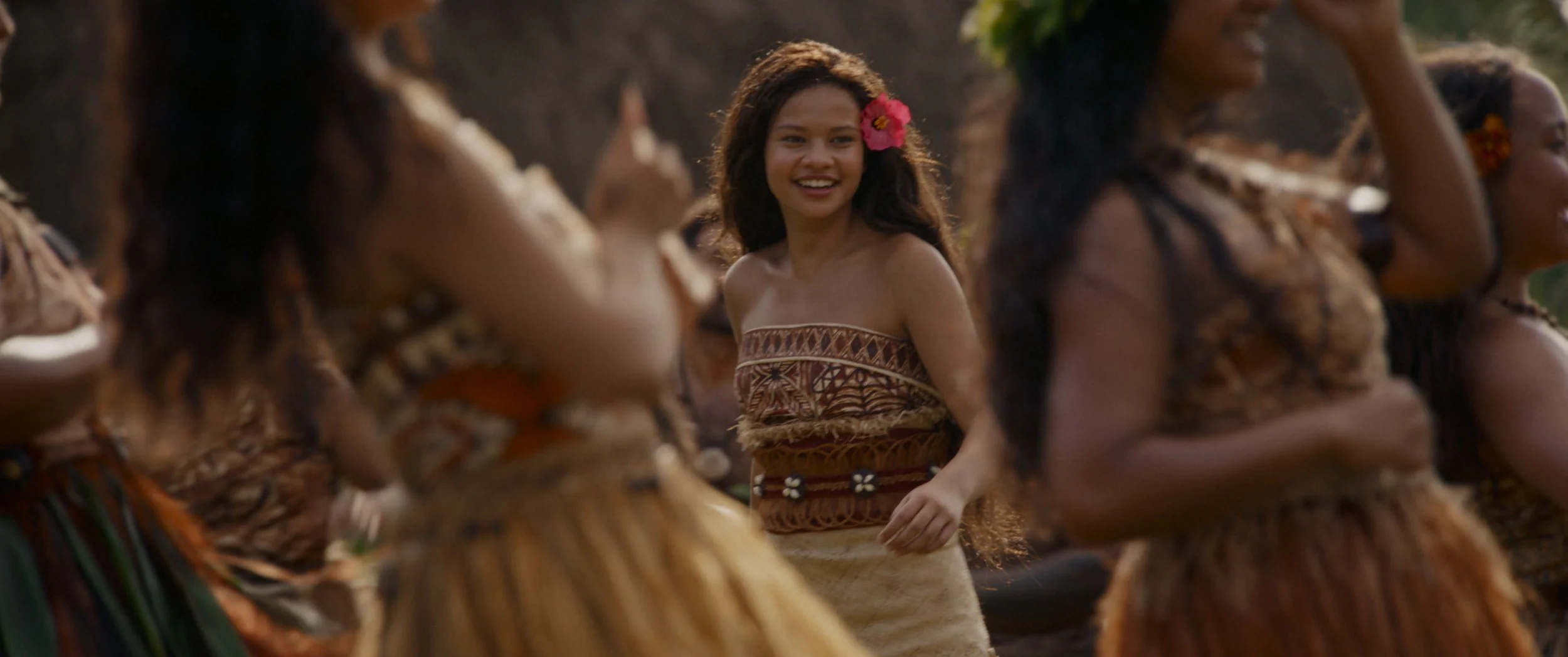
Image courtesy of Walt Disney Studios
Adaptations function best when advancing the source material in some fashion. They should tell a story that the original couldn’t quite due to some constraint of budget, medium, or awareness. It’s a rare cinematographic second chance. It’s also what makes Moana (2026) ’s obsequience to the original animated Moana (henceforth: Animoana) so damning. There are interesting, under-explored angles in the original deserving of elaboration. Notably, Motunui feels a touch perfunctory. The islanders aren’t monolithic, and the blight on their food sources is terminal. Presumably, there are a range of attitudes about the sea, Moana, and the impending resource catastrophe. I’d love to see them. Live actors have a great capacity for nuanced plurality, that could be prohibitively expensive in animation. Moana seems entirely disinterested in bold artistic swings. It’s entirely disinterested in being anything Animoana isn’t.
In some sense, Kail’s Moana is more parody than adaptation. It’s a film aware that it’s based on a comparatively new and beloved property. This awareness is problematic. It is slavishly dedicated to hewing as close to the original as possible. The plot, dialogue, humour, costuming, shot-work, and a chunk of the cast are lifted directly from Animoana. Instead of reverent adaptation, this film reads as uncanny imitation. Clad unsettlingly in the overly-composited skin of the original in some unholy attempt to convince an audience that they love this one too, Moana begs a centralizing question—why was this movie made?
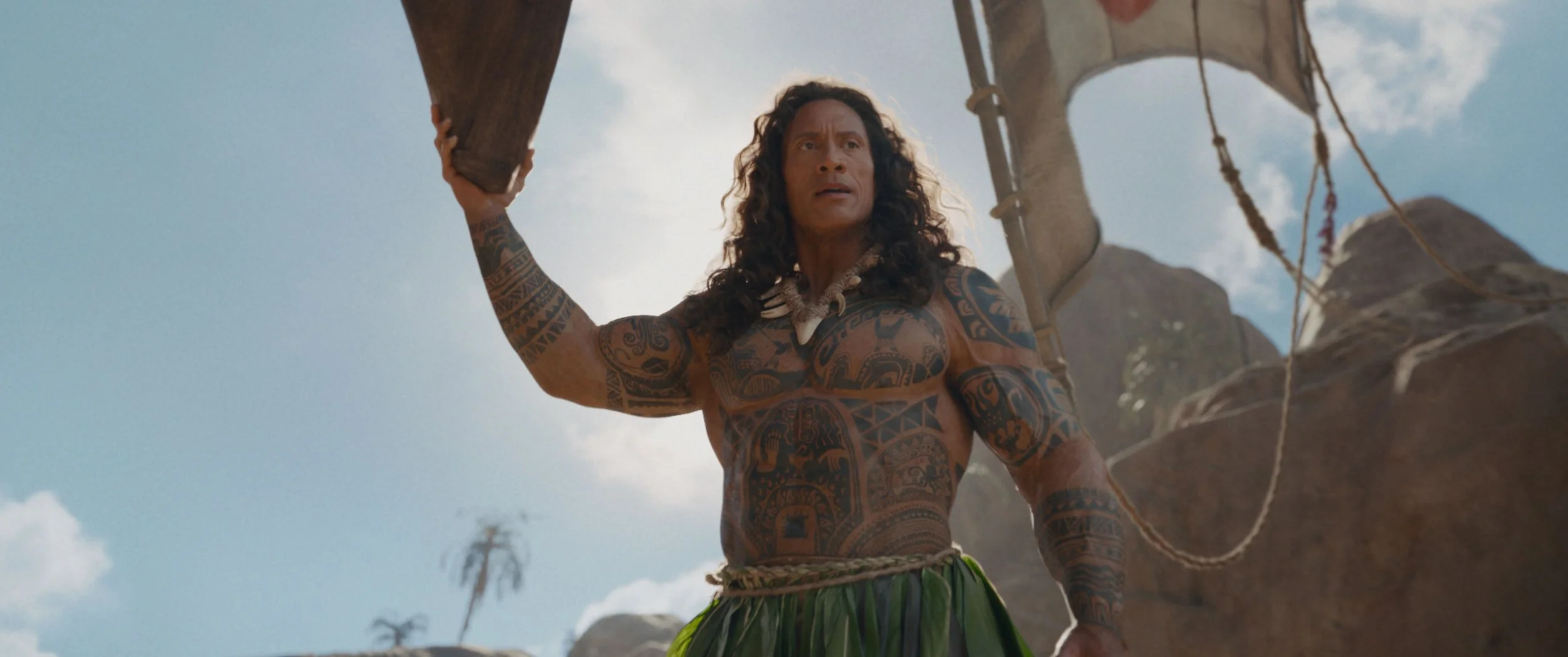
Image courtesy of Walt Disney Studios
Despite its parthenogenetic tendencies, Moana always feels askew. Shots are too long, angles too wide, and the physical comedy too cartooney. The CGI never achieves the expressive abstraction that defined the original. It’s Moan-ish. The film does everything in its power to evoke the original and, resultantly, lacks its own identity. Motifs like Maui’s (Dwayne Johnson) moving tattoos make sense only in an animated context. Tamatoa’s (Jemaine Clement) luciferin-infused lair is most striking in the controlled framing of animation. Here, they exist merely referentially.
The film is not entirely devoid of charm. Moana’s basic plot is timeless. A pair of wayward seafarers embark on an epic journey to set right a mythological wrong. It's The Odyssey if you squint. Catherine Laga'aia makes a formidable debut as the title character. Laga’aia inhabits a space different from her animated counterpart, but retains a good-natured resoluteness. The problem, naturally, is that much of what makes Moana enjoyable is also present in Animoana.
The film that understands the idiosyncrasies of Moana’s story was made a decade ago. Animoana wasn’t just a superior film; it understood its central argument. There’s an immediate vibrancy in the 2016 original almost entirely absent from the adaptation. Shots are snappier and contextualize the humor much more fully than actors doing their best impression of cartoons. Even Maui (voiced by Johnson) pulls off The Rock’s trademark braggadocious swagger, nuanced by insecurity, better than the man himself. Most concerningly, Moana forsakes its own thesis. At its core, Moana is a film chiefly concerned with answering the harrowing call of destiny.
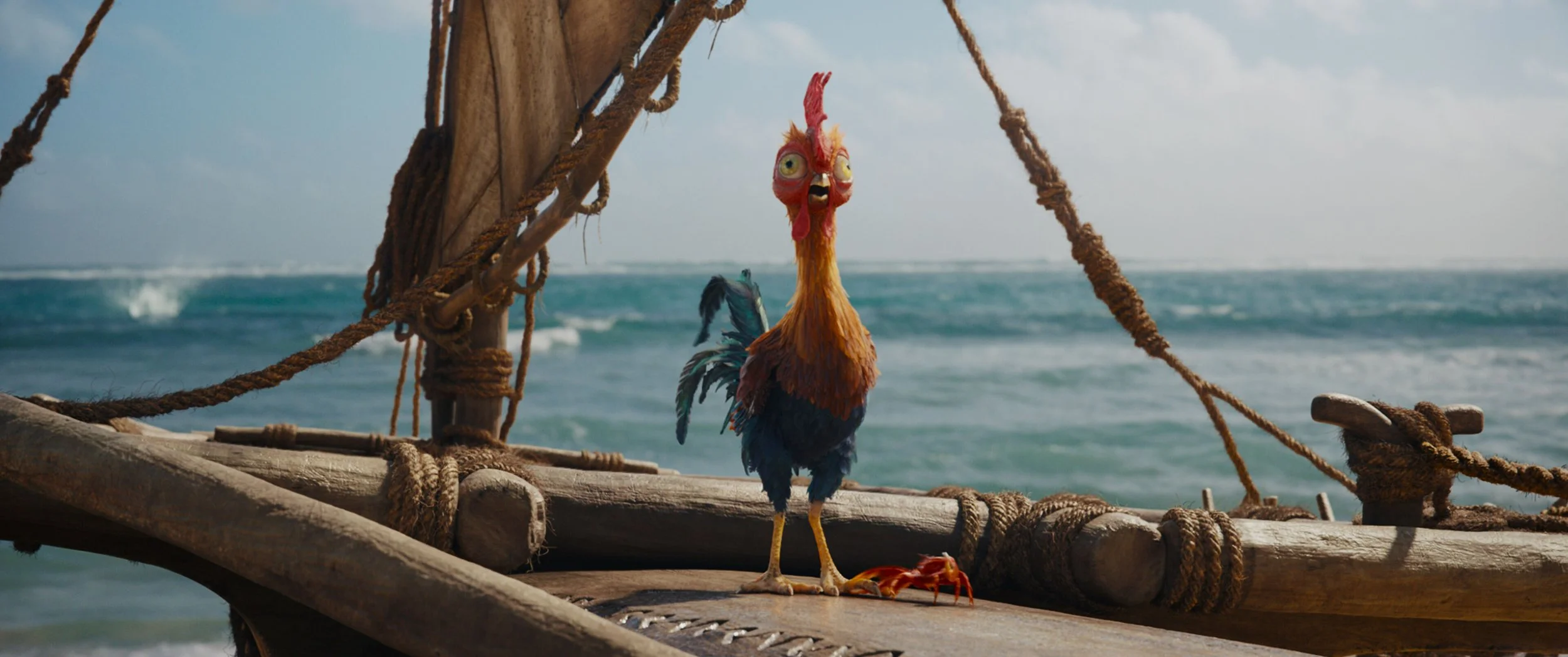
Image courtesy of Walt Disney Studios
“Who you are” in the context of the film is defined not by previous actions or circumstances of birth. Moana makes a case for inherency. A willingness to seize and act upon one’s true (ideally heroic) nature is the sort of straightforward moral messaging that Disney does best. Why, then, does this Moana reek of ambivalence?
Reading Disney’s intentions charitably, the making of Moana asserts a concerning, if incidental, maxim. “Live-action is superior to animation”. It’s the new and improved Moana! There is no other (non-fiscal) rationale that justifies such ambitionless imitation. The notion is as ironic as it is absurd, given that there’s nary a frame without significant compositing. It’s mostly animated anyway. The live-action trend (solidified by a pattern of similarly so-so adaptations like Beauty and the Beast 2017, The Lion King 2019, and Netflix’s Avatar: The Last Airbender) is in poor taste irrespective of production dollars. Yet, Disney built its identity on the promise of exceptional animated craft. Animoana is part of this tradition and wears it joyfully. The hyper-reality represented in animated worlds is a phenomenal vehicle for this story. That’s why they made it that way in the first place.
Moana, this is not who you are.