
Movie Review: "Evil Dead Burn" Pours Salt on the Hyper Violence

10/12 ForReel Score | 4/5 Stars
The post-Raimi era of the Evil Dead franchise has become a stenciling project of sorts. After 21 years in stasis, Fede Álvarez’s 2013 remake applied a gritty, hyper-gory balm to a near exact copy of the 1981 original. Ten years later, we got Lee Cronin’s Evil Dead Rise, which oddly enough felt more nostalgic for Álvarez’s film than anything. The success of that installment has emboldened Warner Brothers to turn Evil Dead into a semi-regular playground for up-and-coming horror filmmakers to cut their teeth on a legacy property. We have another entry, Wrath, coming next year. All of this has left me feeling a little tired. I wasn’t sure how many slight alterations on “group of people fight deadites in a small space” I had in me. Shockingly, Sébastien Vaniček’s Evil Dead Burn has completely convinced me that there may be life in this formula yet. His iteration doesn’t settle for being the goriest Evil Dead to date, it aims for emotional devastation as well. Some will accuse it of chasing the trite trend of “horror movies about grief and trauma” and that is somewhat true, but instead of supplementing that with esoteric arthouse scares, it smashes a classic horror franchise into one of those stories to create a thrilling combination that feels fresh.
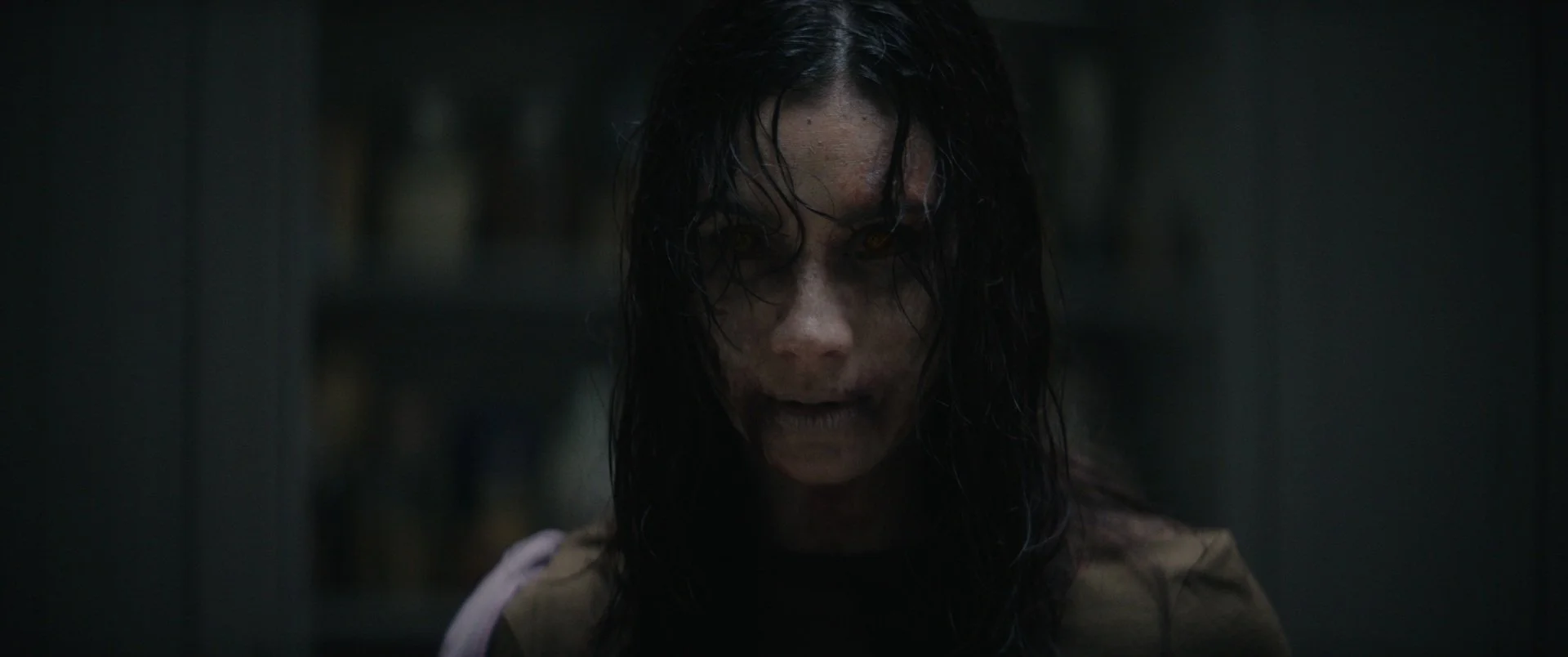
Image courtesy of Warner Bros.
We follow the Price family, descendants of deadite scholar Benjamin. We’re confronted with an abusive dynamic between Will Price (George Pullar) and his wife Alice (Souheila Yacoub). They have an explosive fight at a restaurant they co-own that his hapless brother Joseph (Hunter Doohan) and his wife Thya (Luciane Buchanan) can only watch in horror. Will drives away drunk and gets into a fatal crash with a deadite who meets him in the street, latching the iconic curse onto the Price family in the process. As everyone gathers to grieve, it is clear that matriarch Susan (Tandi Wright) has a deep contempt for Alice, especially since she is clearly not as upset by Will’s passing as everyone else. All of that agitation boils to the surface when patriarch Edgar (Errol Shand) starts acting strange and naturally, all hell breaks loose.
This is the first Evil Dead film to double as a fraught character study. In many ways, Vaniček’s film feels like a glib european family drama with deadites grafted on. There is palpable devastation in the air that Vaniček cruelly toys with whenever possible. Nobody can even give a speech at Will’s funeral without a loud construction crew blasting equipment in the background. Alice’s plight is instantly heartbreaking and vividly brought to life by Souheila Yacoub. This is the type of family that makes someone feel like an alien for being French. As they engage in a tense discussion over dinner about the fate of the restaurant, we can tell that she is moments away from screaming at Susan as she fires off one snide comment after another. Susan is a classic boy mom, only concerned with how her son was feeling, even pulling the classic “I know him better than anyone” line to twist the knife extra deep. Meanwhile, Edgar is playing with silverware a bit too close to the dog, eventually launching us into full blown madness.
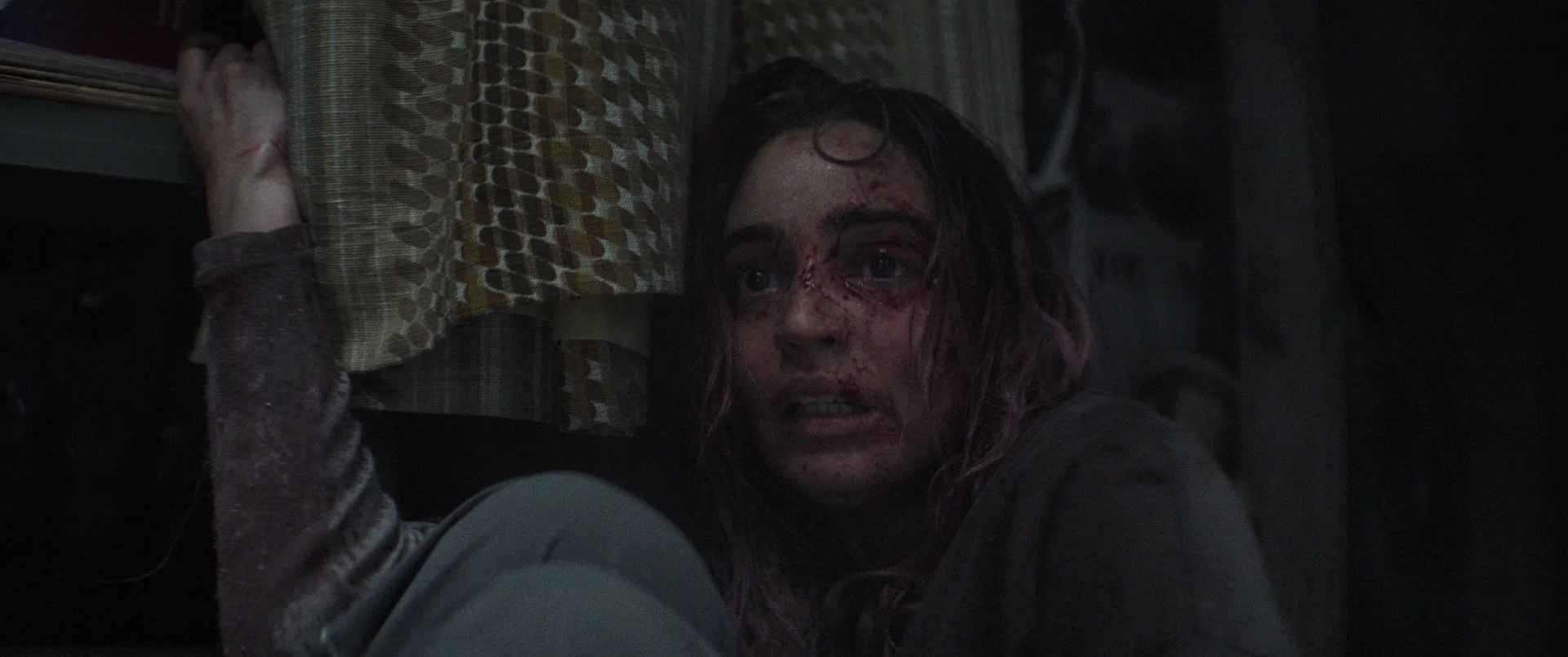
Image courtesy of Warner Bros.
The deadites have always preyed upon characters’ grievances with one another and here, as more people turn, those cutting remarks feel all the more personal. Vaniček doesn’t allow us to simply take pleasure in his onslaught of practical violence. Everyone here has an intimate relationship on some level, so when someone has to bash someone else’s brains in, it feels transgressive. All of the gore emphasises just how painful it is to watch skin and bone break. I constantly found myself thinking “oh…no” whenever one of the kills would start. It’s a welcome tonal shift augmented by Vaniček’s considerable filmmaking chops. He has a particular talent for the more action oriented bits. He’ll pick a character to latch the POV onto and then unleash chaos around them, making us feel confined as that character cannot seem to find a free window to escape. It would be easy to praise these sequences simply on a technical level for being “oners” but more importantly, they genuinely achieve the feeling of being trapped at the worst family event of your life writ large.
Frankly, the only thing holding this back from being phenomenal is the legacy of the Evil Dead franchise. The choice to make this the Price family is certainly clever but there are times where it’s a bit too aggressive in trying to build connective tissue. It halts a couple of times so that someone can drop an exposition dump about the family history. Raimi’s iconic floating shot rears its head multiple times and feels completely out of place. There’s even an abysmal post credit scene that weaves in a character from a previous movie in an outright Marvelesque fashion. One has to wonder how many of these elements come from Vaniček’s sincere inspiration. Some of this feels studio mandated.
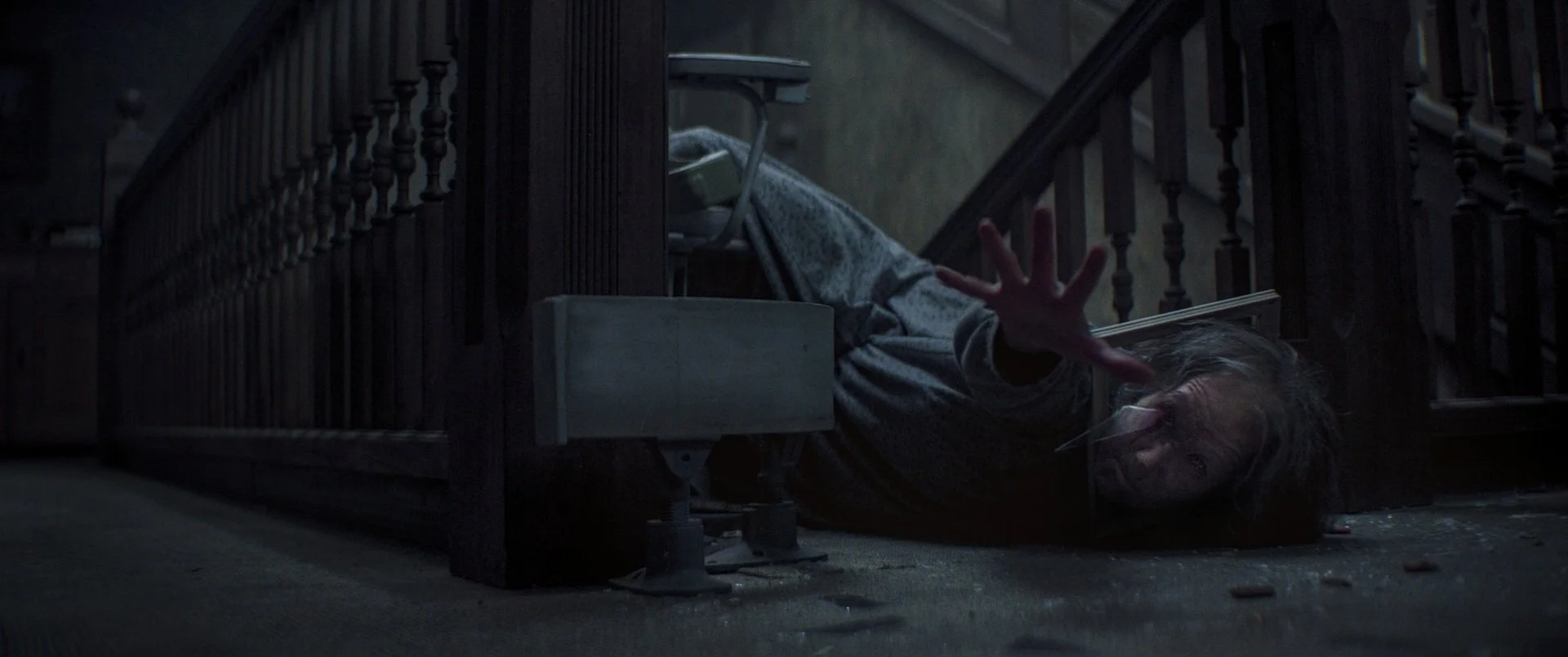
While I do yearn for another Evil Dead that takes a more kooky, high concept approach to the material, Burn is handily the best of the gritty entries. It integrates all of the shocking violence the franchise has built its name on into a story that would be frightening without it. That approach might see some fans of the elder films bounce off and understandably so. This is the type of franchise filmmaking that I personally love but is detested by many. Unconcerned with what one of these movies is “supposed to feel like” in pursuit of confronting you with a story that twists what you love into something deeply uncomfortable. I don’t necessarily want future directors in this series to take influence from Burn, but I am so glad that it is part of the canon.