
BFI LFF 2026 | "The Debut," "Klara and the Sun," and "Prima Facie"
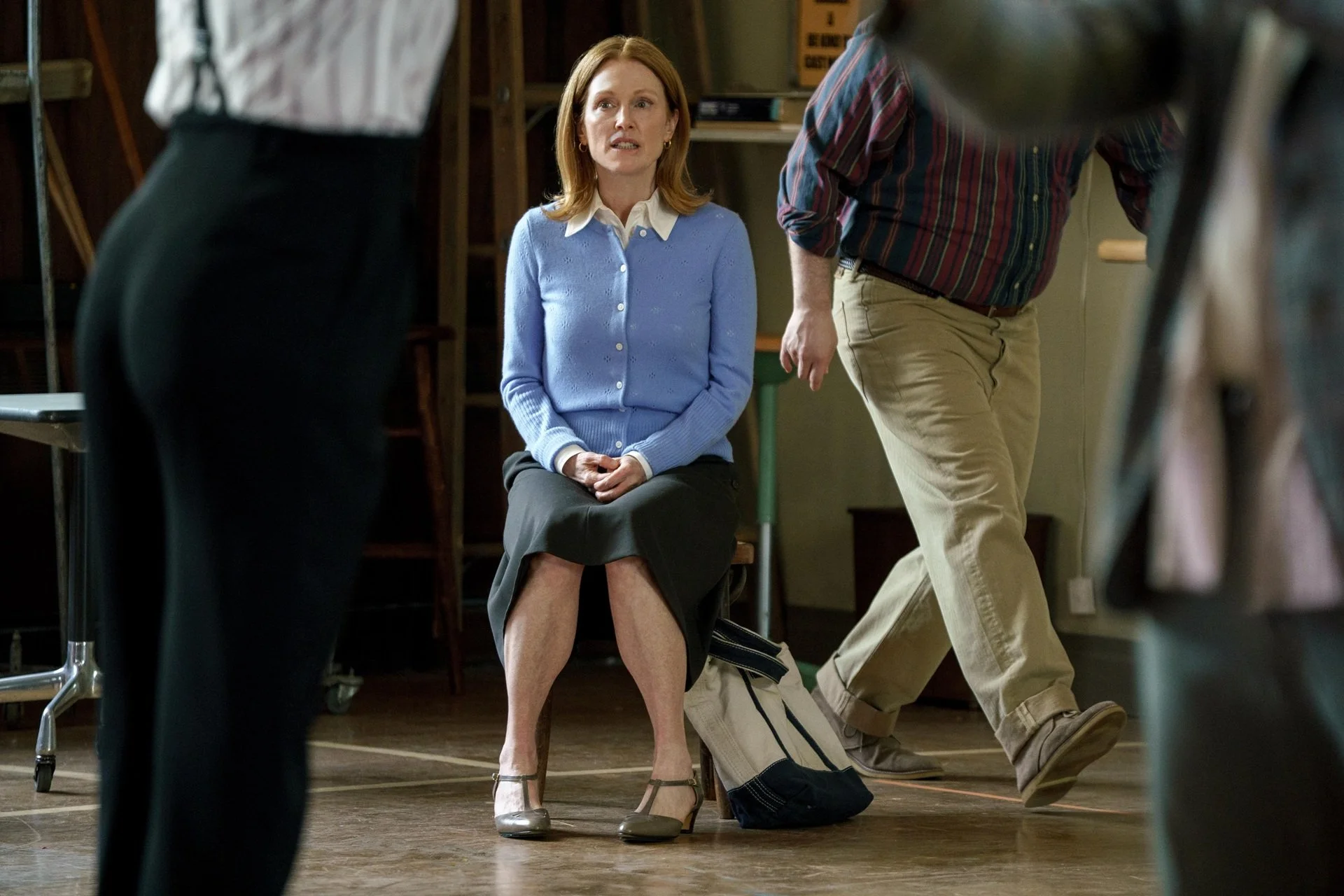
Image courtesy of A24
The Debut
4/5
With every passing year, more and more actors find themselves turning their hands to directing and writing, each to varying degrees of success. For every Greta Gerwig, Ben Affleck or Olivia Wilde, we have a Johnny Depp or Chris Pine (bet you didn't even know they directed – look it up!). But with Jesse Eisenberg and his latest effort, The Debut, following 2024’s A Real Pain, he has firmly established himself in the former camp.
The Debut finds Julianne Moore as Mona, a bored and un-loved housewife, who auditions on a whim for a local amateur musical directed by Paul Giamatti’s Jerry. Miraculously, she gets a lead role. Chaos, drama and hilarity ensue. At the London Film Festival 2026, there was unprecedented mid-film applause following a monologue delivered by Moore, a testament to the sheer ferocity of her performance. The Debut has everything a leading lady performance should be. She dominates the narrative, features in every scene, and the world of the film seemingly orbiting around her existence. We've known Moore to be one of our greats for decades at this point, but The Debut has elevated her to new, stratospheric heights as a woman on the verge of a nervous breakdown.
Surrounding Moore is a wonderful collection of exquisite supporting performances. Leading the pack is Giamatti as the director of the show, commanding and sharp-tongued as ever, alongside Halle Bailey as the charming star of the production. Eisenberg even makes a brief appearance as an exasperated member of the ensemble, but one almost begins to wonder whether his talents on-screen are even worth exploring moving forward. He’s one-note, and lacking in range completely, the exact opposite to his skills behind the camera where he evidently excels.
The first hour of the film is exceptionally strong. The razor-sharp script zips by at breakneck speed, with a visual style that is equally assured. The cinematography is beautiful, and the camerawork is particularly inventive. As we enter the third act, however, some of that momentum is lost. Things spiral slightly out of control, and the narrative meanders around in circles as we build towards the big finale. It eventually gets itself over the line by the time the credits roll, but that doesn't mean the journey there wasn't a touch wobbly.
In spite of these shortcomings, The Debut is undoubtedly an overall success. It passes by fantastically and looks absolutely fabulous on the big screen, with a proper movie-star performance from Moore at its centre. It's absolutely worth your time, and should she find success when Awards Season comes around once again, it would be an entirely deserved addition to her already formidable collection of accolades.
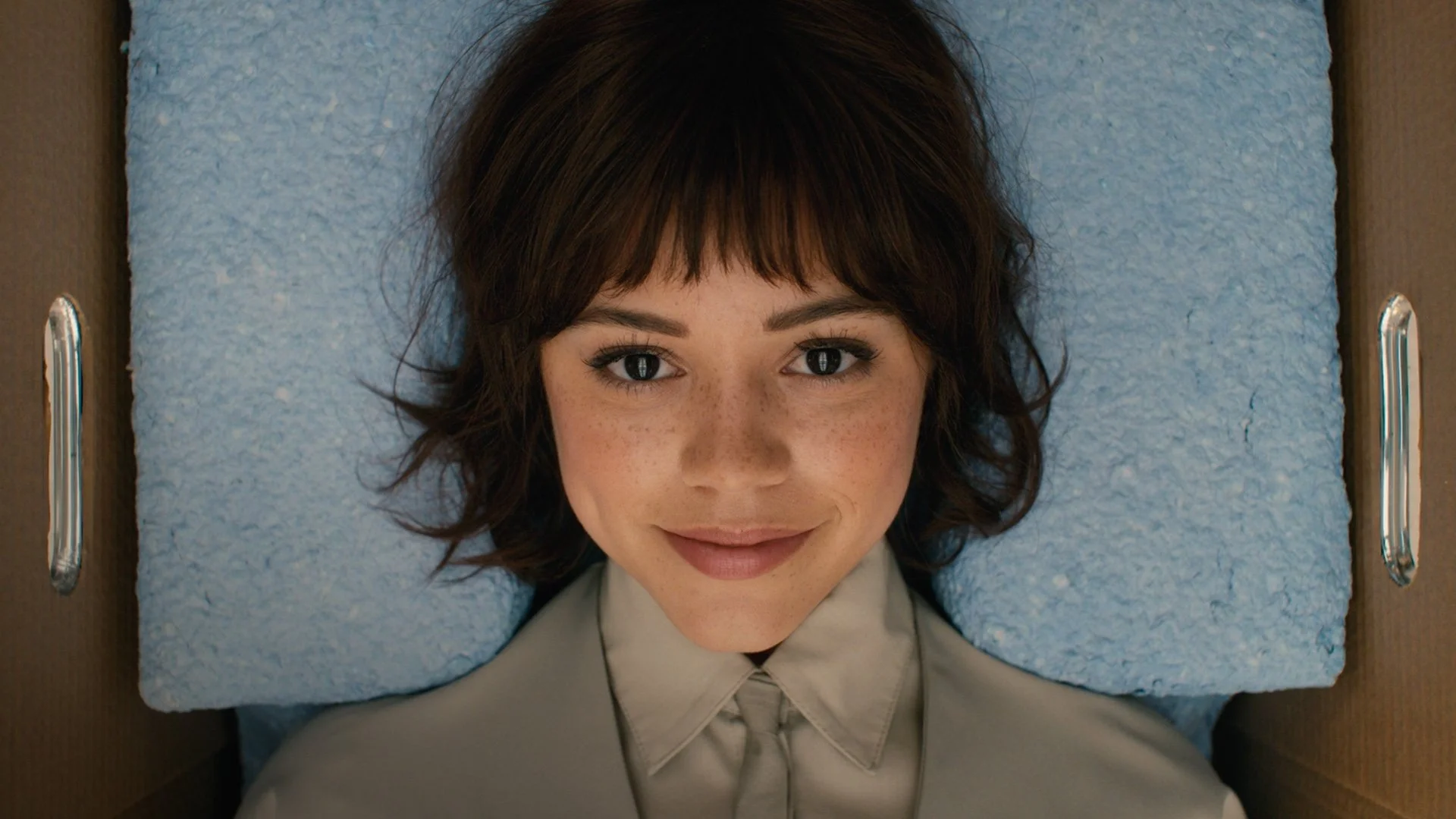
Image courtesy of Sony Pictures
Klara and the Sun
3/5
Premiering at the 2026 London Film Festival, the critical reception to Klara and the Sun has been universally and uniformly negative. Numerous one-star reviews, alongside pervasive lashings from critics, have resulted in the film’s removal from a number of screens and outright cancellations of its worldwide release. This response is, frankly, baffling. It’s hardly amongst the best pictures of the year, nor is it worth such visceral reactions and mass-scrapping of screenings.
Like many films released in the aftermath of Black Mirror, the film feels like an episode of the dystopian anthology. The most valid criticism of the film is that it’s nothing new, which is correct. (The film is based on the eponymous novel written by Nobel Prize-winning author Kazuo Ishiguro.) Klara, played by Jenna Ortega, is an AF (Artificial Friend), introduced into the family home by Amy Adams’s Chrissie as a companion for her daughter; we have seen this story before. But must every film be original in its entirety? Must every fable break the wheel? Can some tales not simply repurpose previously explored themes for their own purposes?
Director Taika Waititi, a previous film-Twitter fave and current film-Twitter villain, creates an intriguing world. We’re an indeterminate number of years in the future, and the internet has been banned (perhaps the only genuinely original idea proposed by the script; it is mentioned once and never again), but the visuals of the city he creates look great. It’s a cyber-punk jungle, full of neon signs and towering metal buildings, but it’s when we leave the city that things really become gorgeous. We find ourselves in the countryside, the sun seemingly in a permanent state of sunset, adored and worshipped by Klara as the very source of her existence.
Jenna Ortega is charming as the central figure, a refreshing change of pace from the dark and sullied characters she’s portrayed in Beetlejuice Beetlejuice and Wednesday. She’s magnetic and funny, and holds the screen nicely. It’s a nice enough role for Amy Adams, nothing groundbreaking, although it would be great to see her in a project on the level of Sharp Objects or Arrival soon. Perhaps the standout of the piece is newcomer Mia Tharia, who is quite lovely as the tragic Josie. She’s gut-wrenching and sassy and sweet; a genuinely lovely new presence to have on our screens.
For all its familiarity, Klara & The Sun is far from a perfect film, but there’s plenty here to admire, enjoy and occasionally be moved by. The reaction feels wildly disproportionate to the film itself, which is a perfectly decent piece of cinema that deserves considerably more generosity.
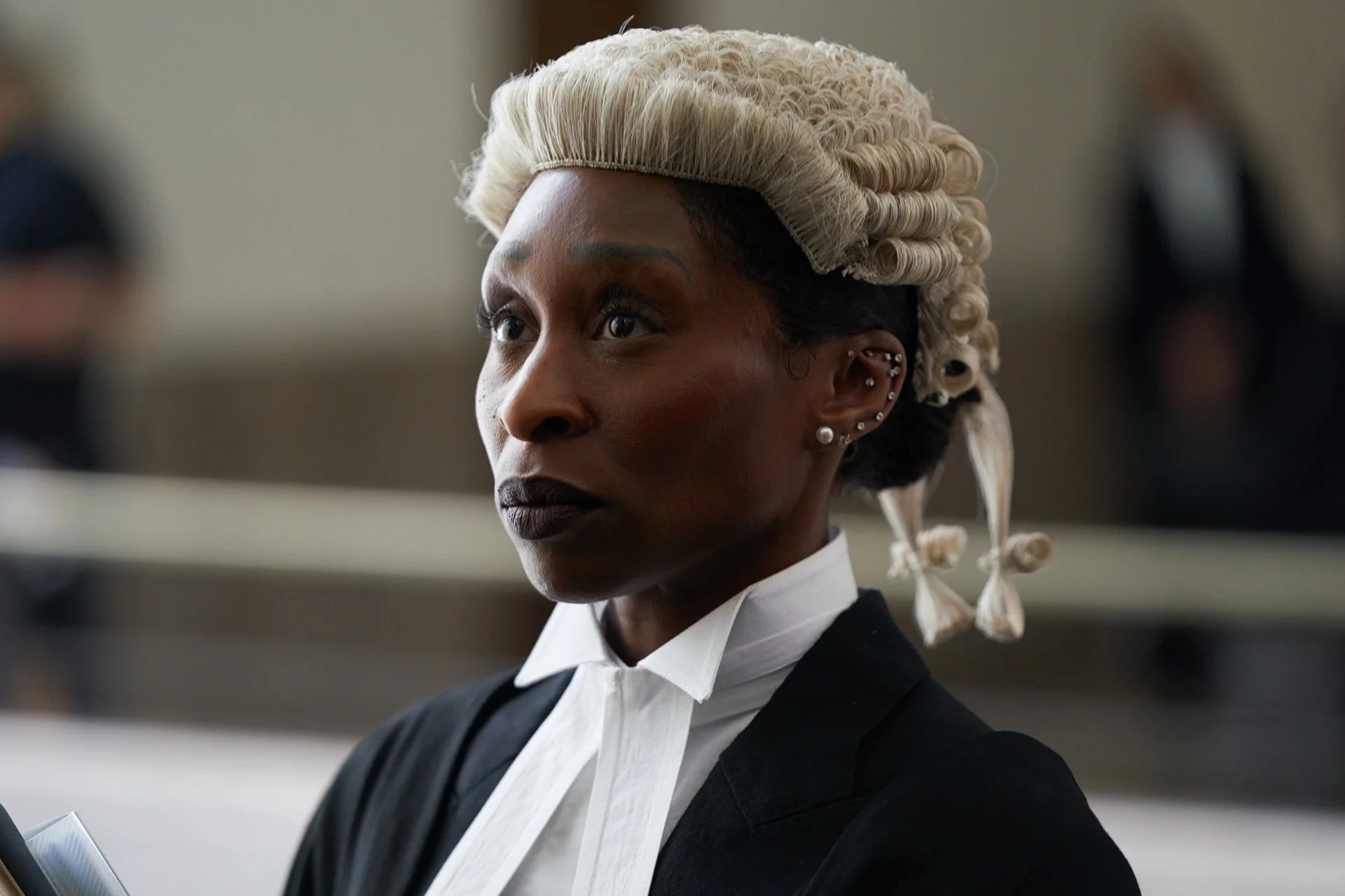
Image courtesy of Sony Pictures
Prima Facie
4/5
Fresh off the heels of her Emmy-award winning turn in Killing Eve, Jodie Comer took to the stage in 2022 in the one-woman West End play Prima Facie, a performance that won her both the Tony and Olivier Awards. Evidently, it’s a role with a lot of meat on its bones. Over half a decade later, we find the story reimagined in film form, this time with Cynthia Erivo adopting the mantle of Tessa, although it’s no longer a one-woman play. This time, Tessa is part of the outside world. She interacts with the people who are only mentioned in the original; we put faces to names and they have voices of their own. It’s a massive expansion upon the original production, a different beast entirely, but on the whole, is successful.
History shows that stage-to-screen adaptations can be tumultuous. The mediums are so vastly different, perhaps more so than is often appreciated, and adapting a one-woman play, arguably the most extreme example of the form, is bound to bring its own challenges. But despite the expansion of the world that surrounds Tessa, the driving force of the narrative is still that central performance. Everything revolves around her, and Erivo is electrifying. She bounces between fiercely empowered and crushingly vulnerable, sometimes within a single take. As the world came to understand with her still-brilliant performance in Wicked, she holds the screen beautifully, and she does so again here. In fact, it’s refreshing to see her grounded in the real world, on the streets of London and in courtrooms and kitchens. She was at home on the yellow-brick road, and she’s at home here too.
The story itself is timely and essential, albeit difficult to digest. Erivo plays a solicitor within the British justice system whose area of expertise is defending those accused of sexual assault. It is a job that is inherently morally questionable and thankless. Her world is turned upside down when she finds herself the victim of sexual assault, committed by a colleague of hers who has the entire legal world in his corner. Suddenly, she is at the receiving end of a system that she perpetuates. It’s a brutal watch, genuinely difficult to comprehend at times, and it has no intention of making things comfortable for the viewer. This is a legitimate and serious issue plaguing our society and our courts, and this film is a medium to stoke the fires of an ongoing conversation. Which is where its existence as a film comes into play; the theatre production was exclusive. Tickets sold like hot cakes, but performances were limited to particular venues and a short window of time. Film is for all. And thus it’s important that this film exists. Prima Facie is an agonising watch, but its purpose is clear; you will exit the cinema both moved and appalled, and understand precisely why this is a story that deserves to be seen by as many people as possible.