
John Carpenter’s Halloween - The Shape of Evil
Some time back in 2024, I decided to commit to a full franchise binge of Halloween. I’m not really one for franchise horror as the law of diminishing returns makes itself known rather quickly when faced with several films that follow the exact same structure. This, in tandem with the knowledge that they’ll never truly defeat whatever mascot is at their center, often leads to the whole affair feeling rather trite. Much of this can be traced back to the progenitor of the Slasher boom, John Carpenter’s Halloween and it is in my further revisitations of this original work that the creative bankruptcy of the franchise that it spawned was made crystal clear.
Following an initially shaky start to his filmmaking career, American director John Carpenter took his first two feature films Dark Star and Assault on Precinct 13 to London Film Festival in 1977 to see how these might fare beyond the confines of Los Angeles. Fortunately for him and writing partner Debra Hill, Precinct 13 caught the eye of producer Irwin Yablans and the duo were approached by him to make a horror film about a psycho killer hunting babysitters. In Yablans’ own recounting of the story, his aim was to make a film with a similar impact as 1973’s The Exorcist. Securing the backing of financier Moustapha Akkad, Carpenter and Hill were given $350,000 USD and carte blanche to execute their brief with complete creative control.
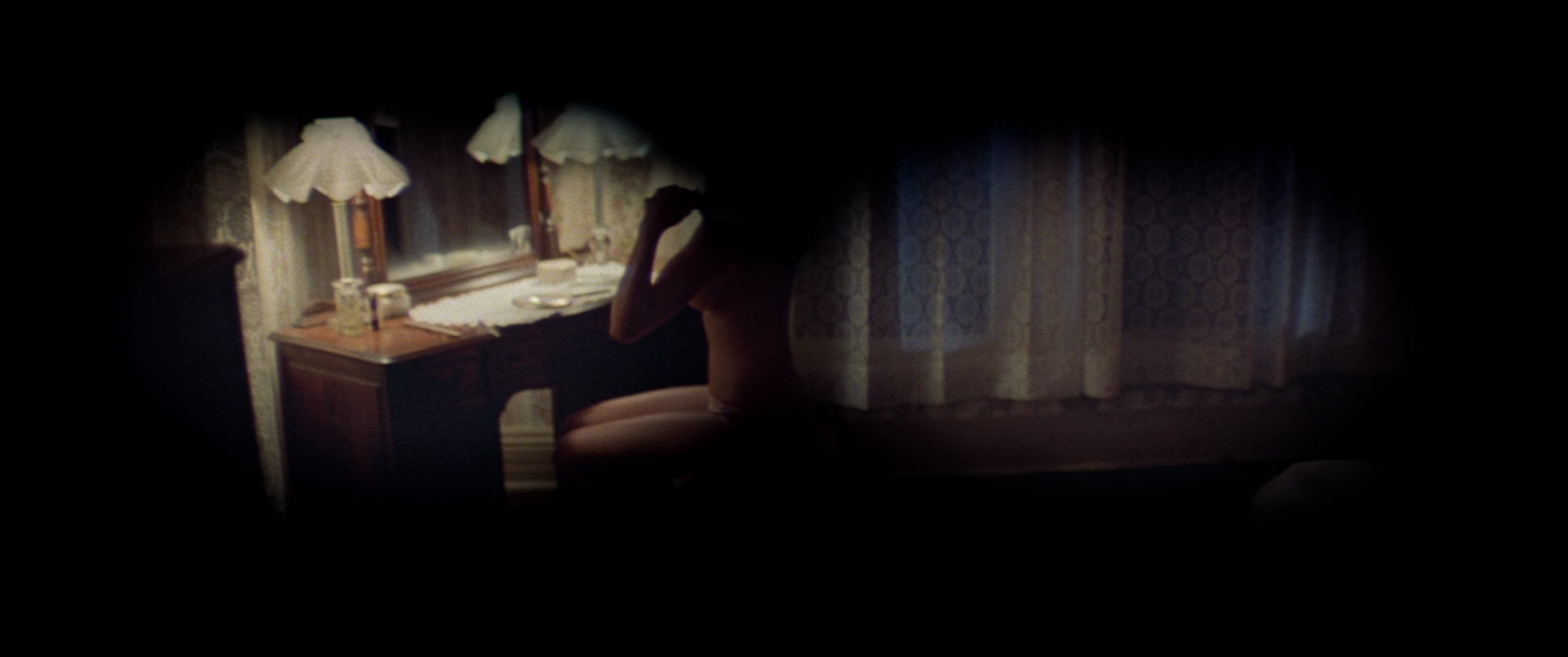
Halloween begins in a somewhat unorthodox manner for films of the era. The prologue takes place on Halloween night in 1963 and takes on the form of POV long-take through the eyes of an unknown individual. Initially beginning outside a suburban house, we are totally immersed in the voyeuristic perspective of this figure as we see him stalk a woman and her boyfriend through windows before finally entering the residence. Establishing a familiarity with the house, we see him make a detour to the kitchen in order to grab a knife before making his way up the stairs before finally picking up and fitting himself with a clown mask that is sat between a doorway. Just as this stalker is about to strike the now nude woman, we are made aware of his familiarity to her as she exclaims his name, Michael. Upon dispatching her, he slowly makes his way downstairs and exits out the front door, finally being unmasked by his parents as the POV breaks and we see a blank faced child, knife in hand, staring into the distance while those around him are too stunned to speak.
In just 4 minutes we know everything about The Shape (Nick Castle), which is nothing. Here John Carpenter and Debra Hill have laid the groundwork for something truly magical in that The Shape takes on the qualities of a rorschach test in regards to his evil. Halloween creates so much space for interpretation on the behalf of the viewer as to what exactly Myers represents. I've heard all manner of meaning ascribed to him from conservative fears of stranger danger, the darkness underlying American suburbia to the dangers of sexual repression. The wonderful thing about all of these interpretations is that they are all equally valid and true in their own regard and it's perhaps why the slasher has had such a long lasting legacy as that freedom of interpretation enabled so much authorial expression with each iteration of The Shape. For my money however, that mystery of meaning is one that I think is core to the appeal of the character. Attempting to explain away his evil through our own myopic lenses is a pointless endeavour and one that burdened this franchise with more baggage than it could carry.
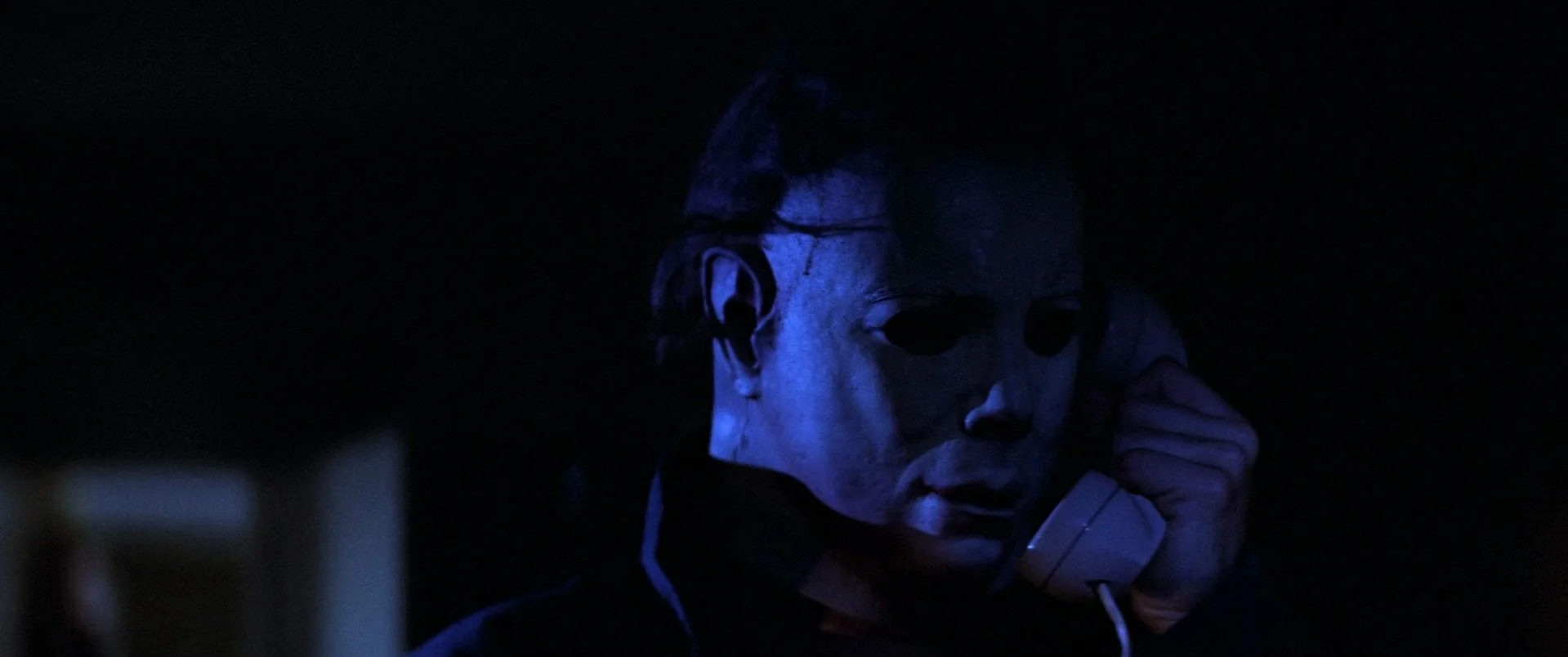
The technical mastery and ingenuity on display from all involved in Halloween from a production standpoint is unlike anything we’ve seen before or since. Filming for the feature took place in the spring of 1978 and under their budgetary constraints, Carpenter and co. really pushed the autumnal aesthetic to its limits. From reusing prop leaves, shooting day scenes when the weather was overcast, to utilising a rain machine at night in Dr. Loomis’ (Donald Pleasance) introductory scene, the practical considerations at play in placing the film squarely in October are undeniably impressive. The most famous of these concessions is the repurposing of a two dollar Captain Kirk mask to create The Shape’s visage. Hair dyed, “face” painted white and larger eye holes cut out, the mask is the most fundamental aspect to The Shape’s imposing presence as it reflects light and emerges from shadow right before the kill. The lack of expression on the mask is a feature unto itself, with the eyes rarely visible, making it impossible to get a read on The Shape’s emotional state.
Unlike the grimier Texas Chain Saw Massacre before it, there’s a classical sensibility to the cinematography within Halloween. The night scenes in particular employ shadows which consume the frame whole, its subjects lit from behind to create striking silhouettes and from the front to highlight faces and little else. Dean Cundey was recruited to work on Halloween as the film’s director of photography at the behest of Debra Hill, and given the results of Cundey and Carpenter’s first collaboration, it’s not too difficult to see why the pair would continue to work together in the years since.
Joining the film’s striking visuals is an equally striking score composed by director John Carpenter under the hilarious pseudonym of the Bowling Green Philharmonic Orchestra. Carpenter's score for Halloween is one that stands out among the sea of slashers that followed, with its stabbing synths and haunting piano permeating the film. The minimalism of its construction works entirely in the film’s favour, particularly in the main theme’s bassline which operates as a steady sonic heartbeat for The Shape as he stalks his victims. The varying elements of craft on display, from the prop department to cinematography and scoring would remain commendable in their own right, but it’s in that fusion of the aforementioned technical factors that the piece soars as the definitive film for the season.
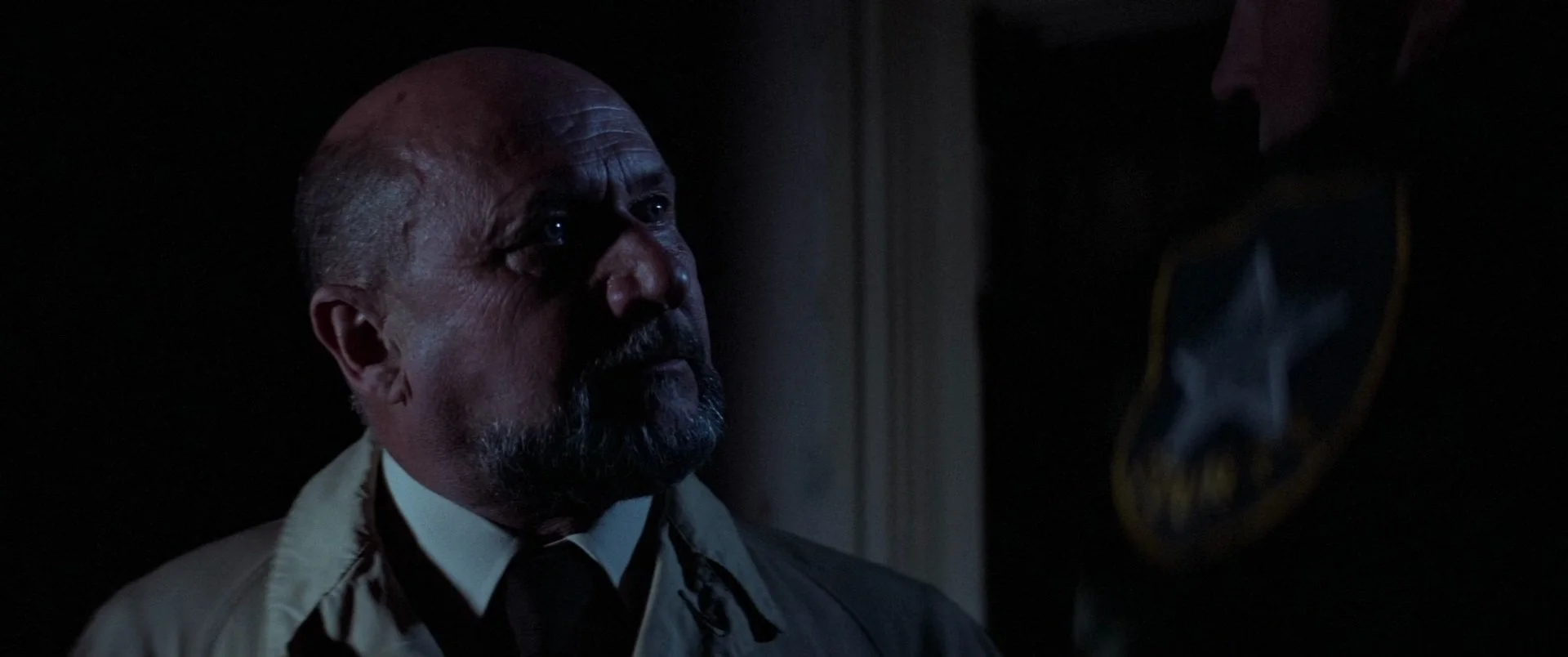
The efficiency present in Halloween's filmmaking also extends to its dual-protagonists, Laurie Strode (Jamie Lee Curtis) and Dr. Samuel Loomis. Loomis was Myer’s psychiatrist during his time at Smith’s Grove Sanitarium and bore witness to the shape of evil during the dormant stage of his life. The role Loomis plays injects a truly monstrous quality into The Shape due to the literary influence it is pulling from, occupying the same role as Abraham Van Helsing in Bram Stoker’s Dracula. Like Van Helsing, Loomis sees the bigger picture regarding the threat The Shape poses and this is made clear right from the jump. Loomis’ introductory scene gives us a brief insight into just how much this patient has emotionally battered the doctor and the severity of Pleasance’s delivery and physicality aids greatly in establishing the danger of The Shape. Beginning the film as stilted and detached and eventually reaching the point where he can fully divulge his experiences with Myers, is a development that on paper might come across rushed or unearned but thanks to the film’s frequent cutting to Laurie, that evolution becomes seamless.
If Loomis functions as a means of allowing us to understand the threat that The Shape poses, then Laurie is utilised to raise the stakes. As an audience we immediately warm to Laurie and that warmth largely stems from her uniquely playful relationship with Tommy Doyle (Brian Andrews). Laurie’s status as a babysitter innately places a sense of trust in her as a figure, there’s a warmth present not just in her role as a carer but also in the way Jamie Lee Curtis’ embodies that youthful yet wise-beyond-her-years quality and so when it’s revealed shortly after that her and her friends are being watched by an escaped killer, we want nothing more than for Loomis to arrive and save the day. It creates a wonderful back-and-forth between the two plot lines as we see The Shape slowly pick off Laurie’s friends, which then in-turn causes us to relate to and understand the manic desperation of Loomis’ search efforts. This mania would only be further ratcheted in the entries that followed, but given just how Halloween wraps up, it's not too difficult to see exactly why Loomis would later go off the deep end.
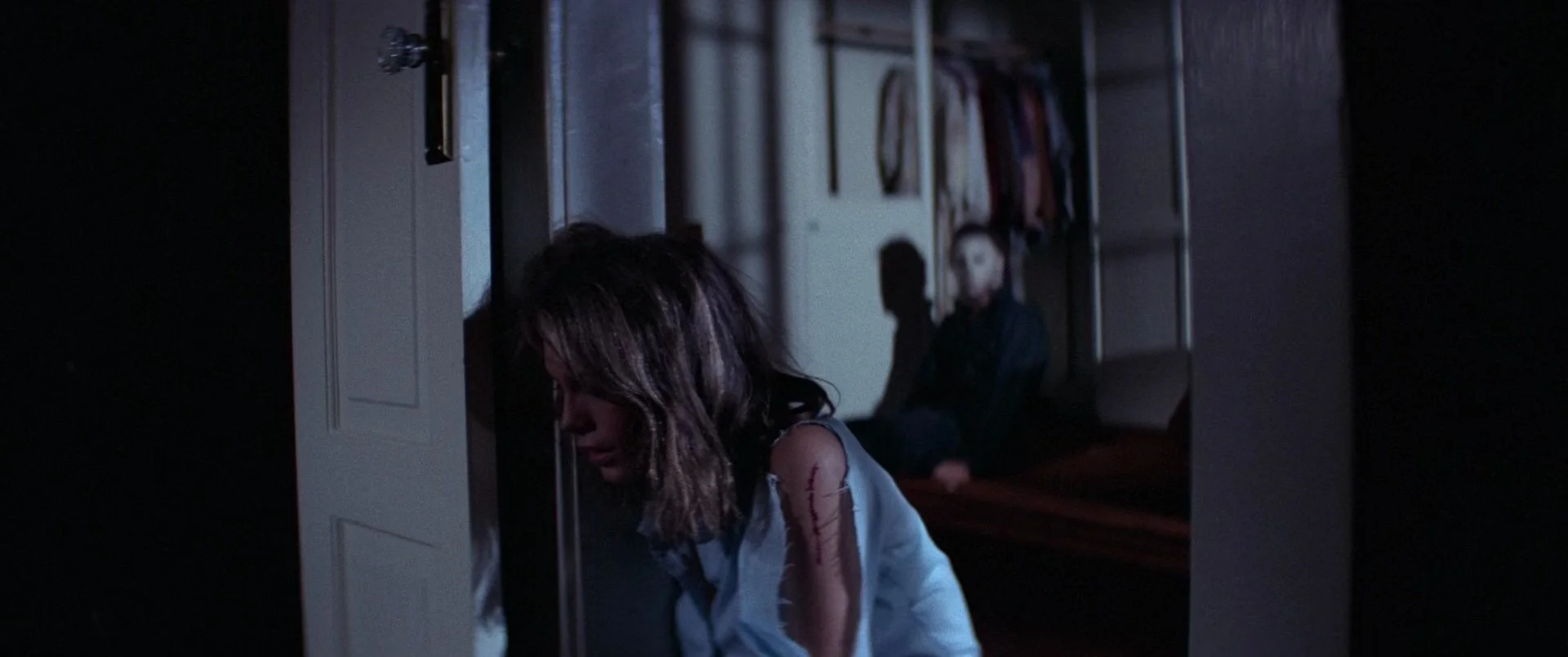
Halloween has quite possibly my favourite ending in all of horror. It closes by cutting between the locations The Shape has haunted throughout the film and it rather succinctly illustrates that his presence is now imprinted on these places forever. And that impression lasts on us too as just prior to this we saw him disappear into the night after tanking 6 shots to the chest. In Halloween, evil wins and we take that home with us as The Shape’s heavy breathing punctuates one final shot of the Myers house we opened the film on. His presence as the archetypal, unkillable bogeyman persists beyond the confines of the film itself and rings out of the picture into our own homes.
As a franchise, Halloween is utterly fascinating to me because so many of its sequels' mistakes are comically simple. They all differ in terms of the individual impact these choices have on each film, but when you boil it down, it’s just that they don’t understand The Shape as a character. The costuming is important, the lighting is important, the mystique is important, yet every subsequent filmmaker lost sight of these pointed choices in The Shape’s presentation. At the core of these issues however is the shortsighted insistence on rationalisation. They have all attempted to assign reason to his evil and in all honesty I can’t even completely fault them for doing so. We all try to make sense of the evil around us, try to justify it, try to fit it into boxes. It is a very human thing to do. In this ceaseless search for rationality however, all the films that followed would become just another entry into an overcrowded subgenre.
Halloween is such a masterclass in horror filmmaking that it becomes rather difficult to imagine ways in which you could build upon it without detracting from the initial work. The struggle to do so has helped to enlighten the small yet meaningful ways Carpenter’s first masterpiece distinguishes itself from that which would follow. The Shape, as envisioned in 1978, remains the greatest horror antagonist ever put to film. A manifestation of legitimately unknowable, unkillable evil, he hardly even registers as human.