
Movie Review: "The Death Of Robin Hood" Is As Lifeless As The Title Implies

5/12 ForReel Score | 2/5 Stars
Subverting expectations is one of my favorite things a writer can do, particularly in the adaptation process. There’s an art to stripping a celebrated text to its barest essentials before rebuilding from the ground up. One film that does this exceptionally well is Robert Eggers’ The Northman, a hyperviolent Viking-era deconstruction of Hamlet based on the Scandinavian legend of Amleth, reveling in the genre trappings of its source material. Its paradoxically subversive straightforwardness works to its benefit. But some efforts don’t always pass with flying colors, and writer-director Michael Sarnoski’s latest, The Death of Robin Hood is an example of subversive storytelling missing the mark. A tale of a grizzled, middle-aged Robin Hood (Hugh Jackman), The Death of Robin Hood’s greatest sin is subverting subversion.
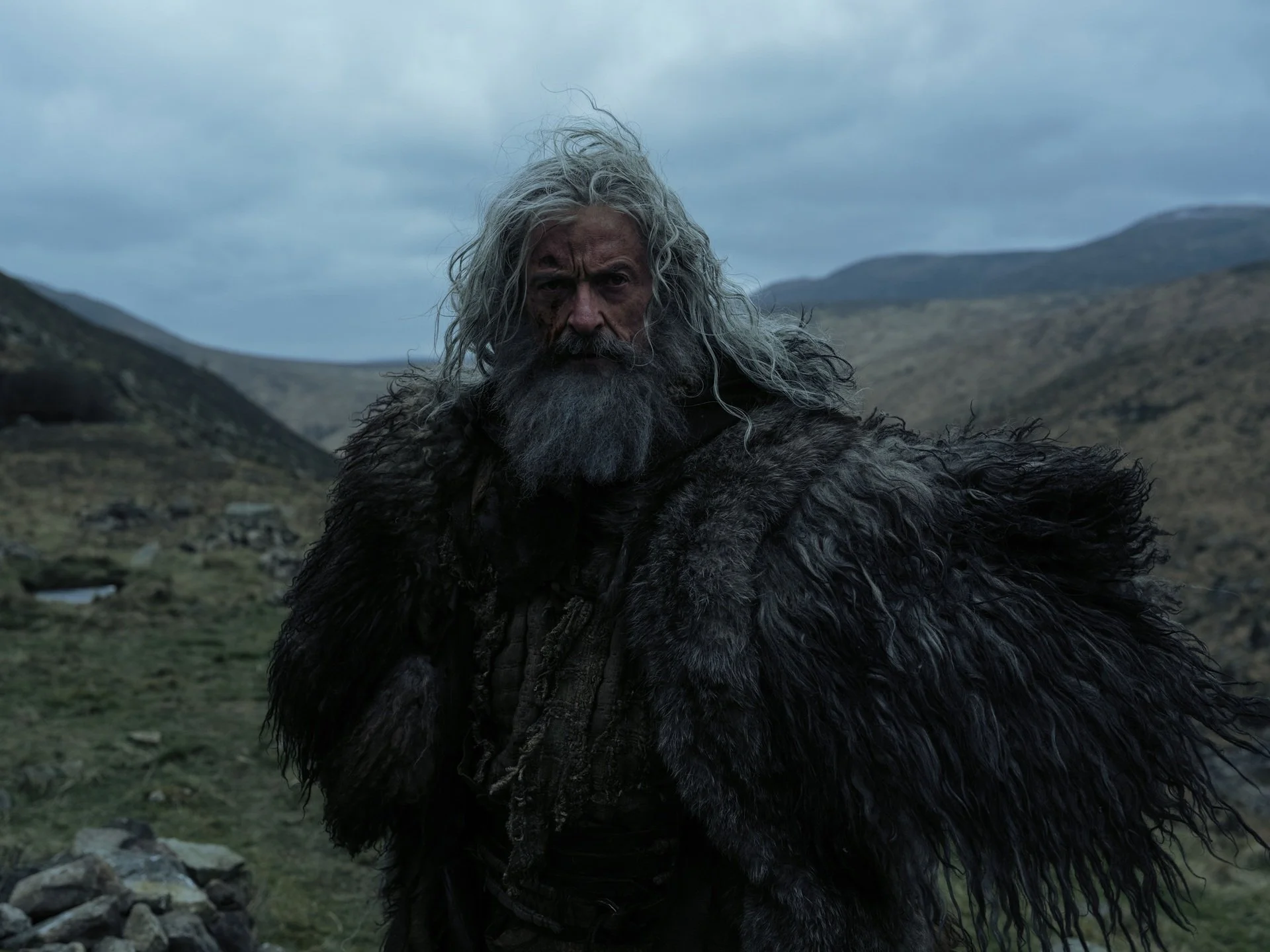
Image courtesy of A24
Treading a (maybe too) similar narrative to James Mangold’s Logan, The Death of Robin Hood—adapted from the ballad Robin Hood’s Death—follows the fabled archer in the eleventh century, living a solitary nomadic lifestyle in the English mountains. After racking up a Call of Duty-level kill count from poor chaps who crossed his path, Robin spends the rest of his days looking over his shoulder on alert for vengeful spirits in hot pursuit. Similar to his penultimate return as Wolverine in Logan, Robin isn’t exactly in tip-top shape, so, when asked by Little John (Bill Skarsgård) to save his wife from bandits, Robin is brutally injured and taken into the care of a nun, Sister Brigid (Jodie Comer).
For a solid thirty-ish minutes, Sarnoski delivers on the subversion of the Robin Hood fable via a startling sense of hyperviolence. Given the familiarity of Robin Hood as a gold-hearted hero a la Peter Pan, there’s certainly enough room to subvert the goofy Men in Tights-isms. Filmmakers such as Sir Ridley Scott and Otto Bathurst have tried and failed in darkening the source material, hoping to turn Robin Hood’s escapades into something more akin to Game of Thrones. Where Scott’s rendition was simply boring as sin, Bathurst’s was a true trainwreck of blockbuster filmmaking. All’s to say is that there’s a middle ground between lightheartedness and gruffness, a sweet spot that The Death of Robin Hood unfortunately doesn’t scratch.
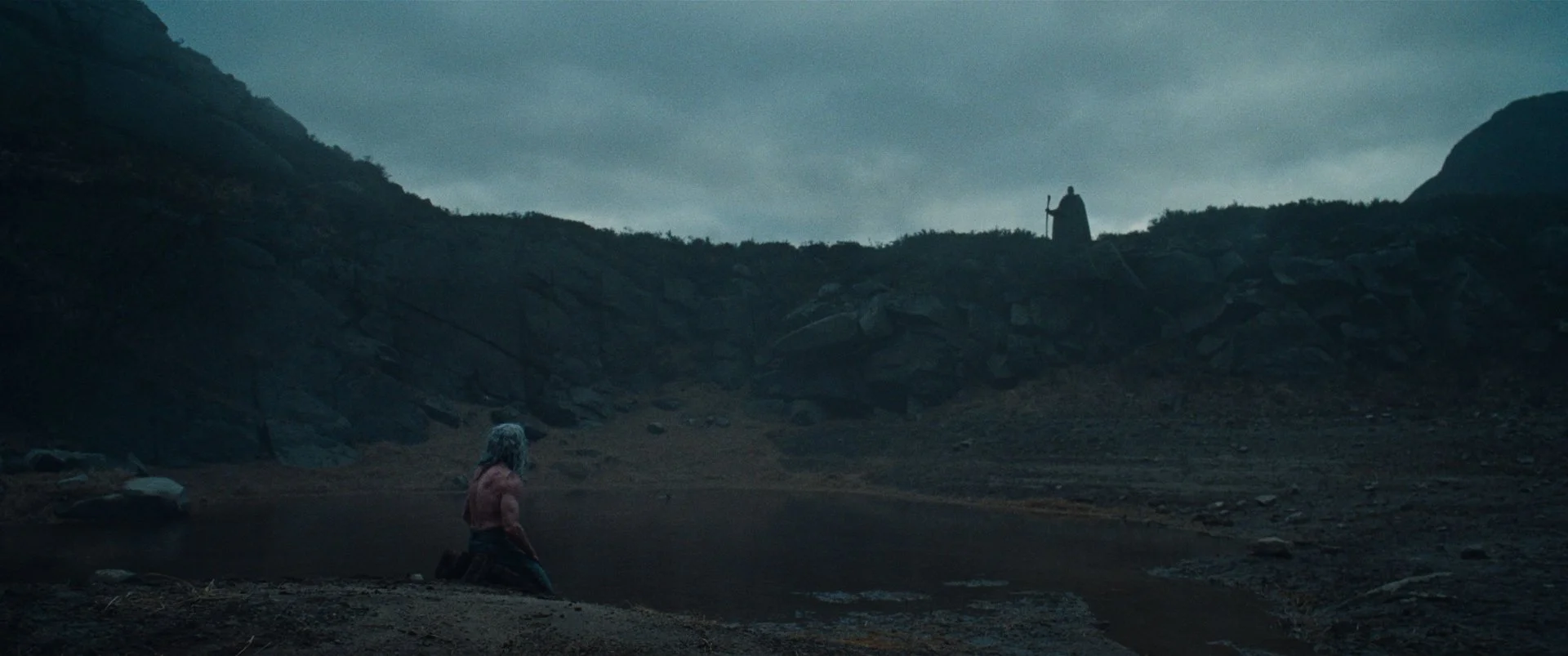
Image courtesy of A24
To say that The Death of Robin Hood’s second half takes a nosedive may be laying things on a little too thick, though the halt Michael Sarnoski’s script grinds to is anything but screeching. Once Sarnoski has successfully baited you with genre fare like the State Farm fisherman, Sarnoski re-subverts the narrative for sluggish navel-gazing; it’s like following up a caviar appetizer with a rice cake. Logan comparisons resurface when Robin takes Little John’s daughter, Margaret, under his wing, though to less effect than Wolverine’s relationship with his sort-of-daughter, Laura. The hat didn’t need another hat, but Michael Sarnoski put it there anyway. The result is an ultimately meandering experience, with less meditation than, say, David Lowery’s The Green Knight.
Upon being beaten within an inch of his life, it makes sense that a haggard Robin Hood would do some reflecting on his deathbed, though there is such a thing as too much reflecting. The dynamics between Robin, Margaret, Brigid, and a local leper are certainly well-acted, though there’s no real meat other than Robin learning that he was (or still is) a horrible person. The Death of Robin Hood starts and ends at the deconstruction of the character, which is more conceptually interesting than it is in the final product. Not much is really learned about Robin Hood other than “he’s not the same as he is in the ballads,” exchanging all intrigue for narrative redundancy.
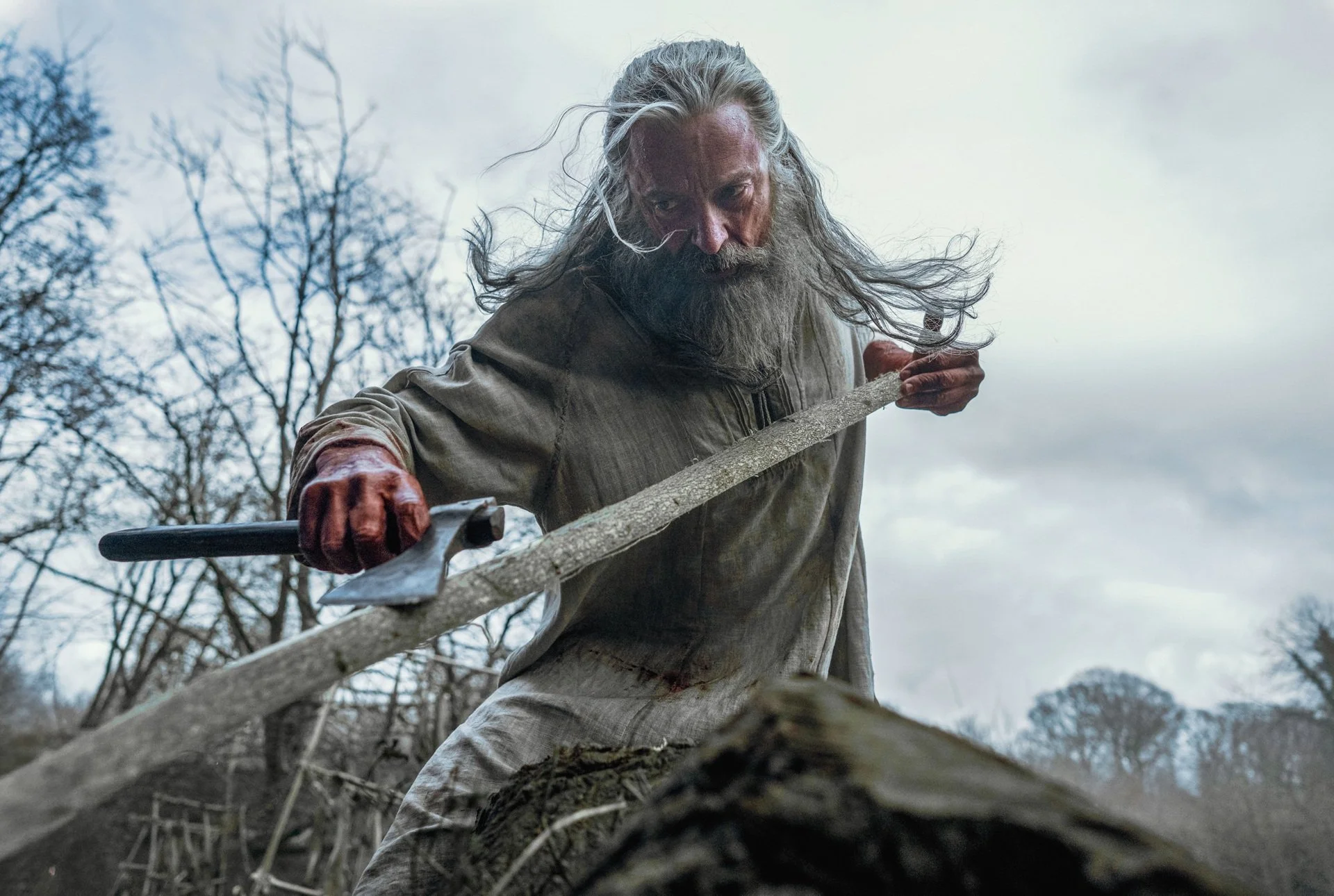
Image courtesy of A24
Maybe the joke’s on me for being super-subverted, but that doesn’t really change how much of a chore The Death of Robin Hood starts to become. It’s far too dour and bleak to be fun (Robert Eggers at least had the wherewithal to sneak a fart joke into The Northman), and its lethargy impacts any sense of emotional resonance. A slow pace is fine, even appreciated, but Sarnoski fails to imbue the film with that same quiet sentimentality that made Pig or A Quiet Place: Part One stand out. Even if the last thirty minutes manage to turn things around a tad, it's too little and too late by that point; good bookends can’t salvage a lifeless midsection.
Maybe one day someone will crack the code of a contemporary Robin Hood adaptation, though today is not that day. Sarnoski is evidently capable of leaning into genre when he wants to (his next film is an adaptation of the Hideo Kojima game Death Stranding), but all of that awareness gets lost in the shuffle of meandering portentousness. What slivers of ideas regarding redemption, mortality, regret, and change The Death of Robin Hood has are seldom explored, ultimately rendering Sarnoski’s gorgeous images hollow. The common thread connecting the last three Robin Hood films is their dark tone, so maybe the key is for the next filmmaker to, at the very least, have some fun with the material.