
Movie Review: "The Marching Band" Is Occasionally Off-Key In An Otherwise Satisfying Tune

8/12 ForReel Score | 3.5/5 Stars
Life can sometimes be a game of luck. It’ll then ask you if you’ll let that luck decide your future, or if your passion is strong enough to determine the person you’ll be. Emmanuel Courcol’s The Marching Band is a story of two brothers separated early in their lives. One is Thibaut Desormeaux (Benjamin Lavernhe), a world class composer who has just been diagnosed with Leukemia. The other is Jimmy Lecocq (Pierre Lottin), a school cafeteria cook and small-time trombone player with a deep love of music. The two interact through an admittedly superficial backdrop of economic struggle and chance-based survival, ultimately resulting in a still sweet and sentimental journey for them. Despite its simple and sometimes generic approach, The Marching Band is a heartwarming story of two brothers connecting through the thing they love despite the differences in their upbringings and the state of their respective worlds.
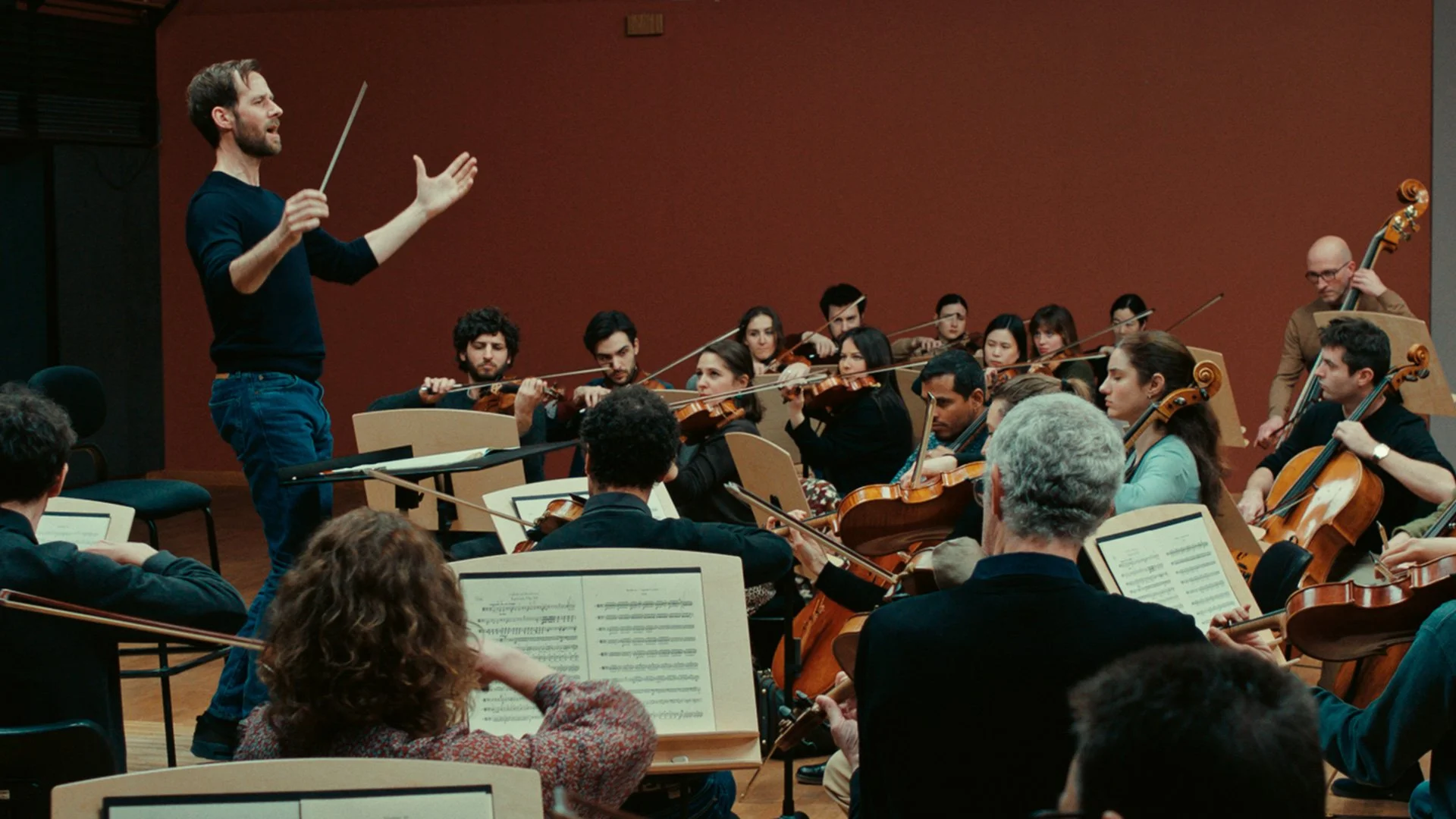
Image courtesy of Greenwich Entertainment
The Marching Band relies heavily on the chemistry of its two leads, and it certainly delivers there. Lavernhe and Lottin are wonderful on screen together. The brothers meet for the first time after Thibaut gets diagnosed with Leukemia. He tests to see if his sister is a compatible bone marrow donor only to discover that she’s not really his sister at all and that he’s adopted. Through a little detective work (that we don’t get to see), he discovers that he has a brother living in Lille. Where Thibaut is a friendly and calm man, Jimmy is angry and awkward. Music is their love. Thibaut lives a comfortable life, and Jimmy is struggling daily just to live. Not only is he in an inconsistent band, but he also has a daughter he barely gets to see. It just seems like things in his life are not as easy as they seem to be for Thibaut.
This is where my primary complaint of The Marching Band lies. The commentary on France’s status gap feels surface-level and underbaked. It doesn’t extend much beyond telling you that some people have more than others and that society and life are both driven by chance. The most interesting chunk of the film is in the second half with employees on strike coming together to perform in a band and get their stories told. There’s a strong look at social violence and injustice during this, you just maybe wish there was more of it. It’s powerful and shows the strength of initiative and determination through passion, but ends up feeling undermined by the idea that they needed a higher class individual to help them do that and get eyes on it anyway. This doesn’t necessarily impact the movie’s feel-good approach, it just means if you were looking for something deeper and more nuanced, then you may be disappointed.
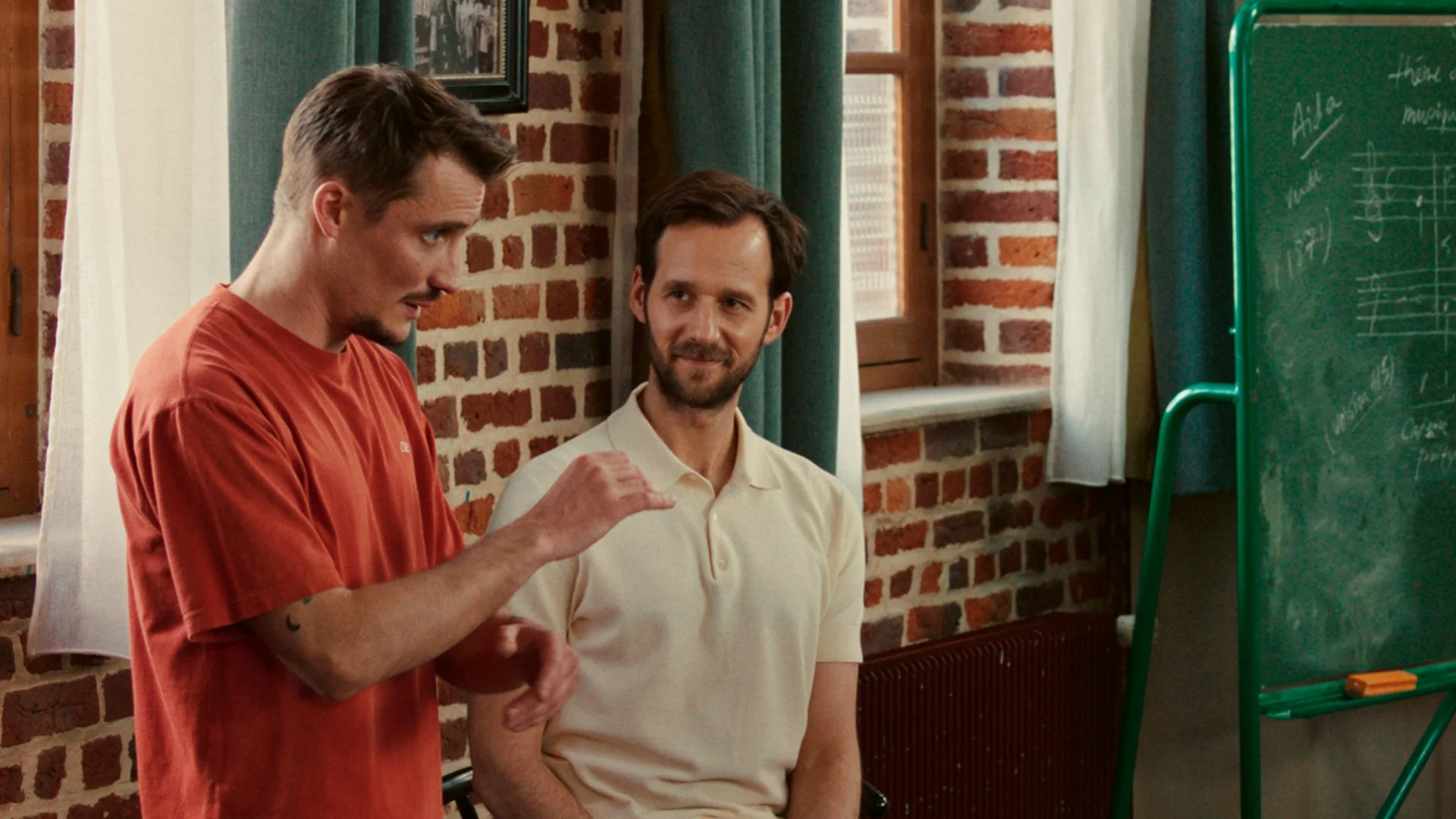
Image courtesy of Greenwich Entertainment
None of that means the stories of either leading character are uninteresting though. One of the most exciting aspects of the film is seeing how the two brothers have influenced each other’s lives. Thibaut takes a step back from his life after his diagnosis and starts to spend time with this person he wants to connect with, feeling as though he no longer belongs anywhere after discovering he was adopted. Jimmy is a little different. He feels like this entire situation has been thrust on him and he’s abrasive to the idea of meeting this person with a better life than him while he juggles his own personal relationships. The supporting cast on Jimmy’s end liven up the film - they’re the real heart and soul of it. Especially Sarah Suco’s Sabrina. She’s the strongest actor in the film, constantly pulling at your heart and grabbing your attention with an iron grip. Every scene with her acting opposite Lottin ended up being my favorites of the entire thing. Something the film really does right is bring these characters together through this shared love of music, showing how their passion for it guides them. Casting director Emmanuelle Prévost deserves her flowers for this one.
I could gush about the chemistry between the members of the cast and the emotional throughline of music for hours, but it all mostly works because of Courcol’s direction. The film is filled to the brim with stylistic and creative choices that add to the emotional weight of each scene sold to us by the actors. In a movie so focused on music and our connection to it, there isn’t really a present score for the majority of the movie. Courcol opts to have the music playing when it’s necessary, otherwise leaving the film silent for us to focus on the words and motivations of these characters. While some of the editing can feel choppy and kills some of the momentum at times, you’re always pulled right back in by the stellar cast and beautiful framing of each shot. The film has, if nothing else, plenty of heart.
The Marching Band urges us to help people we may have just met if we can. It asks you to do so whether you’re rich or poor, no matter where you’re from. While that central theme doesn’t always land and isn’t deeply explored, it does ring true and delivers a very heartfelt and satisfying story on brotherhood and human connection. Emmanuel Courcol shows us that music can connect us if we let it, and with it we can work through any obstacle put before us.