
Movie Review: "The Odyssey" Is A Feast For The Senses - A Major Achievement For Christopher Nolan

10/12 ForReel Score | 4/5 Stars
When a hero has been absent from home for decades, can they ever go back again? Or perhaps the better question is: *should* they? War stories ask this all the time. The Odyssey, the 3000 year old epic poem, tells the story of a man struggling to get home after a prolonged war. Christopher Nolan's latest epic movie of the same name reframes the story to interrogate the plight of a guilt-ridden protagonist even in the wake of victory - his failures, his flaws, and his regrets while questioning if this hero can ever go home again, or if he even should.
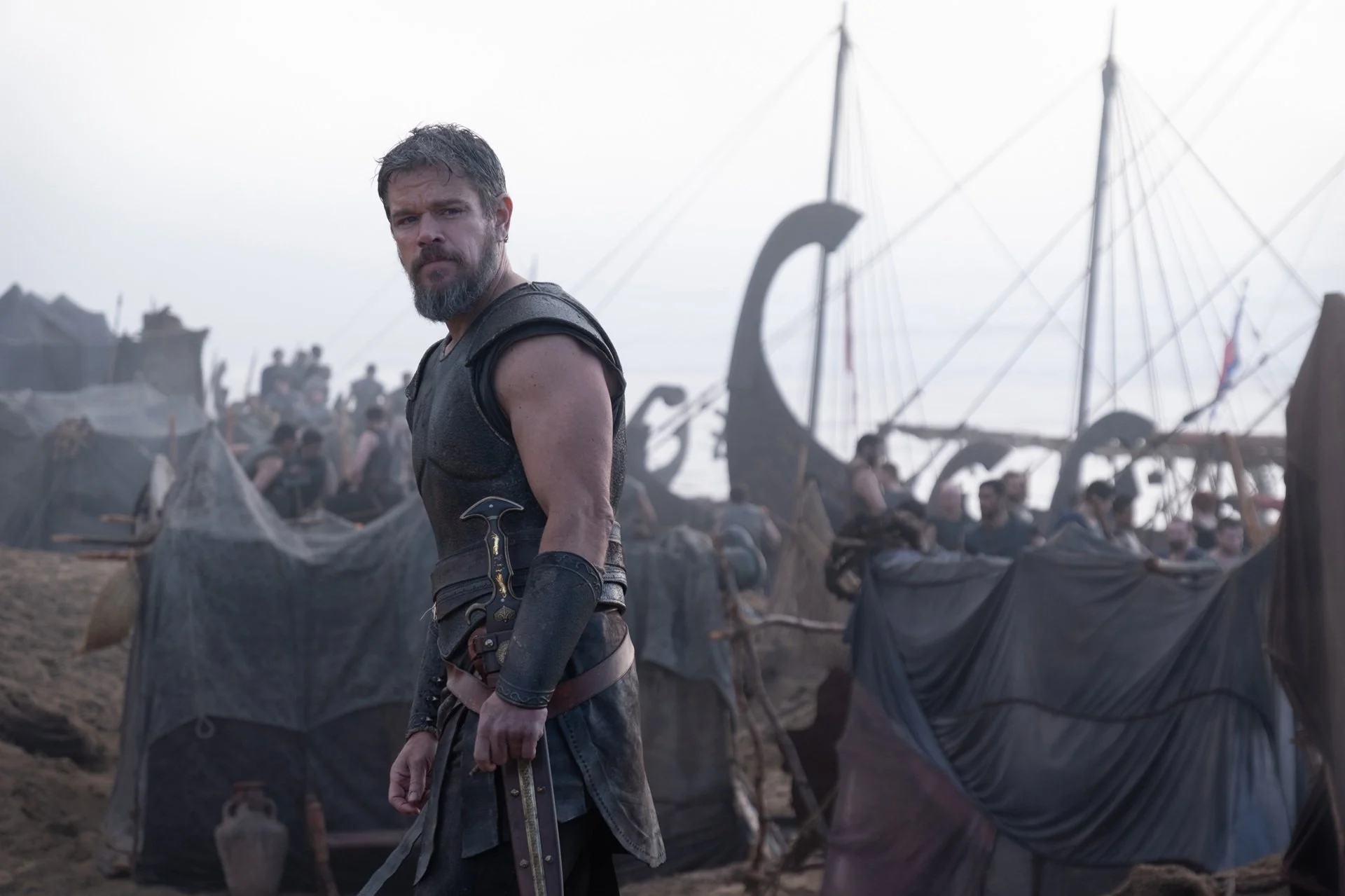
Perhaps the most famous story in western literature, The Odyssey follows Odysseus, the King of Ithaca, summoned to war in Troy by Agamemnon, brother of Menelaus, whose wife was taken by a Trojan prince. For ten years, they laid siege until Odysseus comes up with a plan to sneak soldiers inside in the belly of a great wooden horse presented to Troy as a peace offering, covertly infiltrate the city, open the gates, and sack the city. They win the war, but after angering the gods, it takes him ten years to make it home. The core of the story isn't much changed here. In Nolan's version, Odysseus (Matt Damon) and crew are subject to torments and trials on their journey home, they sack a city, spar with a giant cyclops, encounter a sea monster and goddess or two, with many dying along the way.
Nolan's version does take some creative liberties though - for a start removing much of the direct appearance of the gods. Athena appears, but only to Odysseus, and it's never quite clear if she is real or a manifestation of his guilt and trauma. Poseidon doesn't appear, but after their actions would have caused offense, the sea rages against them. The indirect nature of these versions of the gods help illustrate that although they are always watching, Odysseus makes his own destiny. Karma, as they say, is a cruel mistress, and those that break Zeus's Law - the ritualized, mutual respect between guests and hosts because you never know who may be a god in disguise - will be rewarded cruelly.
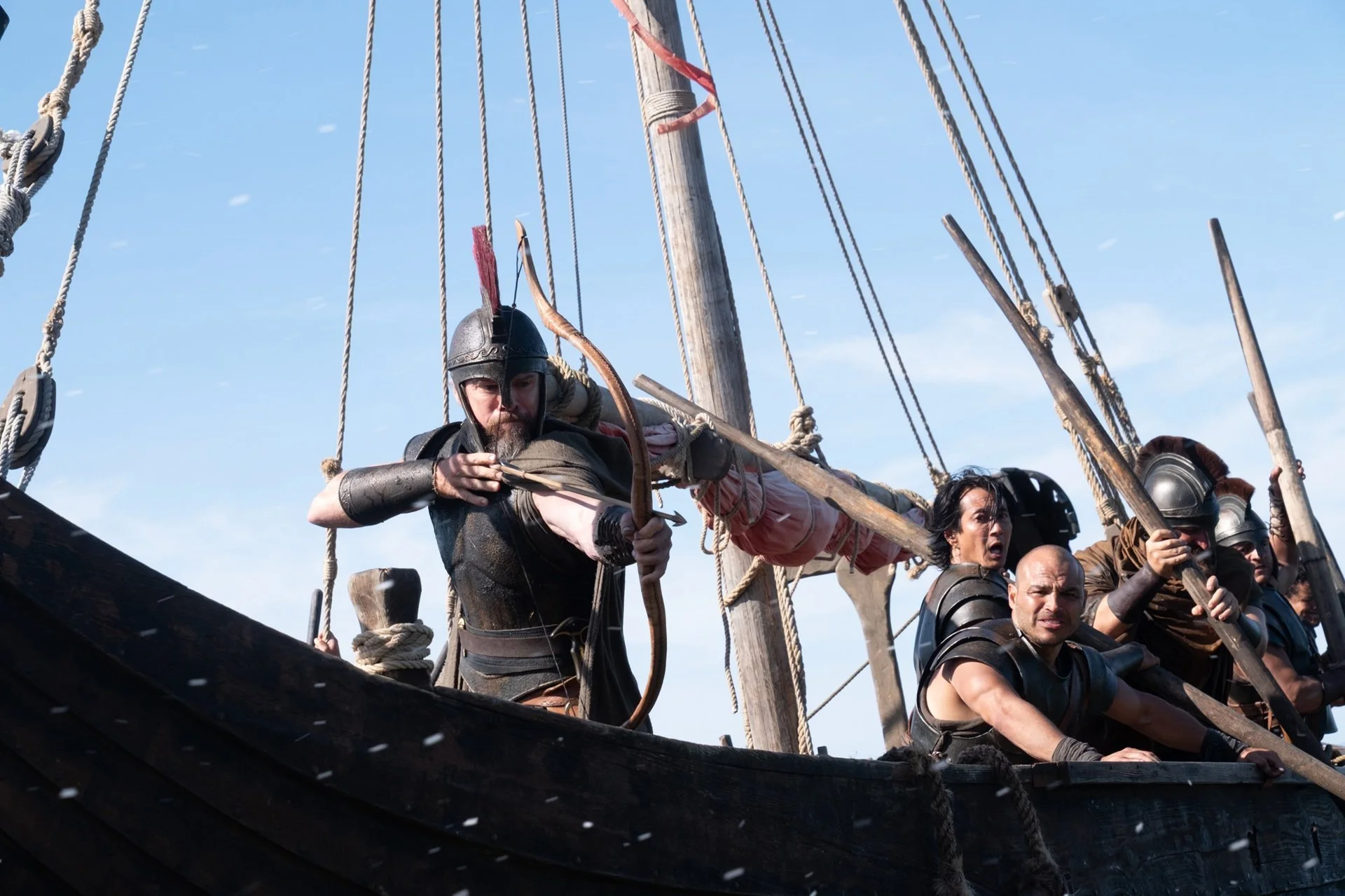
Nolan's approach to this presentation is, first and foremost, a stunning technical achievement. Shot entirely on IMAX cameras and mostly on location around the Mediterranean, you will be hard pressed to find a better looking movie this year. This will be true regardless of how you see it, but know that if the opportunity presents itself to see this film on a huge screen projected from large format film, you should definitely take it. Another thing that Nolan's film is is overwhelming. Even with condensing parts of the story and adopting his trademark non-linear storytelling, the film clocks in at just shy of three hours. A feast for the eyes, but as with some previous films he has made, an assault on the ears. To put it at its most mild, this film is *a lot*.
Another Nolan hallmark is extracting at least one great performance from his A-List ensemble, and this film has several. Chief among them is Matt Damon, who is able to convey both the hubris of Odysseus at the start of the story and the forlorn, traumatized older version of him a the end. Damon has always been a good actor, but this might be his best performance to date. He has several great scenes, no bad moments, and one of the most poetic and heartbreaking monologues in recent memory. It's likely assured that he is up for all the awards this season. Tom Holland plays Telemachus, Odysseus's son, and in what might be described as the first role in a new era for his career, he performs admirably. Much like the actors own persona, Telemachus is straddling a line between boyhood and manhood, and his evolution through the film feels organic and earned.
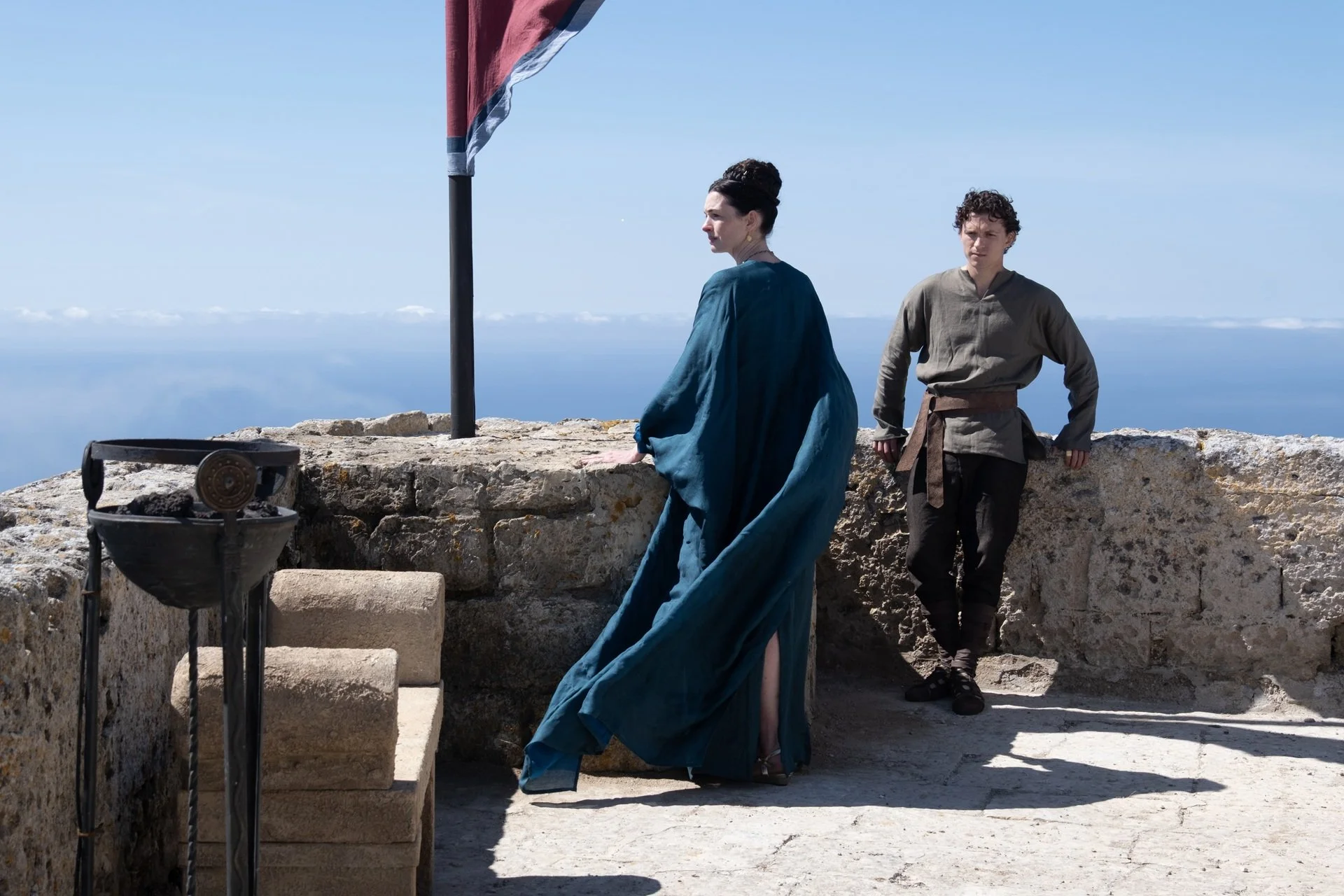
The truth is there are no weak links among the performances, and almost every character is played by a recognizable face. Logan Marshall-Green appears for just a few impactful scenes, for example. It's difficult to highlight everyone, but be aware that Robert Pattinson still excels at playing a worm, that Himesh Patel might be the most reliable presence in any film he appears in these days, and Samantha Morton has just one short sequence in the film but she has most of the best lines, and certainly the best line delivery, as well as the single best special effects sequence all to herself.
There are things to nitpick about though, among them that Nolan still isn't the best at writing women characters, that sometimes scene changes can be jarring, and for some the non-linear nature of the film can be hard to follow. The film is a lot, but that also ensures it will reward subsequent rewatches. However, this is a film that will leave you thinking. It asks questions about todays world that are relevant, and the conclusions are deeply moving if you're open to them. It's not subtle, but it also doesn't spoon feed you easy answers to the questions it's asking.
This is, indeed, a Christopher Nolan film, and it has all the quality and baggage that goes with that designation. Whether you leave the cinema thinking that it's merely a technical wonder, a deeply moving masterpiece, or something in between, it is at least one of the best made movies of the year, and at best one of the overall best films of the year.
Acting and Casting - 2 | Visual Effects and Editing - 2 | Story and Message - 2 | Entertainment Value - 1 | Music Score and Soundtrack - 2 | Reviewer's Preference - 1 | What does this mean?