
Movie Review: "The Samurai And The Prisoner" Is Slow, Steady & Stunning Storytelling

9/12 ForReel Score | 3.5/5 Stars
Maybe it’s because I’m still thinking about Christopher Nolan’s adaptation of The Odyssey, but I’ve been thinking a lot about the end of the world lately. Not a cataclysmic, apocalyptic event like a meteor crashing into Earth; more so the collapse of our “civilized” structures. Purely by coincidence, Kiyoshi Kurosawa chimes in on modernity’s impending doom with The Samurai and the Prisoner, an adaptation of Honobu Yonezawa’s novel of the same name. Following daimyo Araki Murashige as mysterious and macabre happenings arise during the siege of Arioka Castle, The Samurai and the Prisoner hearkens to a time when Akira was the only Kurosawa on the block. Marking Kiyoshi Kurosawa’s first jidaigeki film, his latest is methodically engrossing, though slightly tedious.
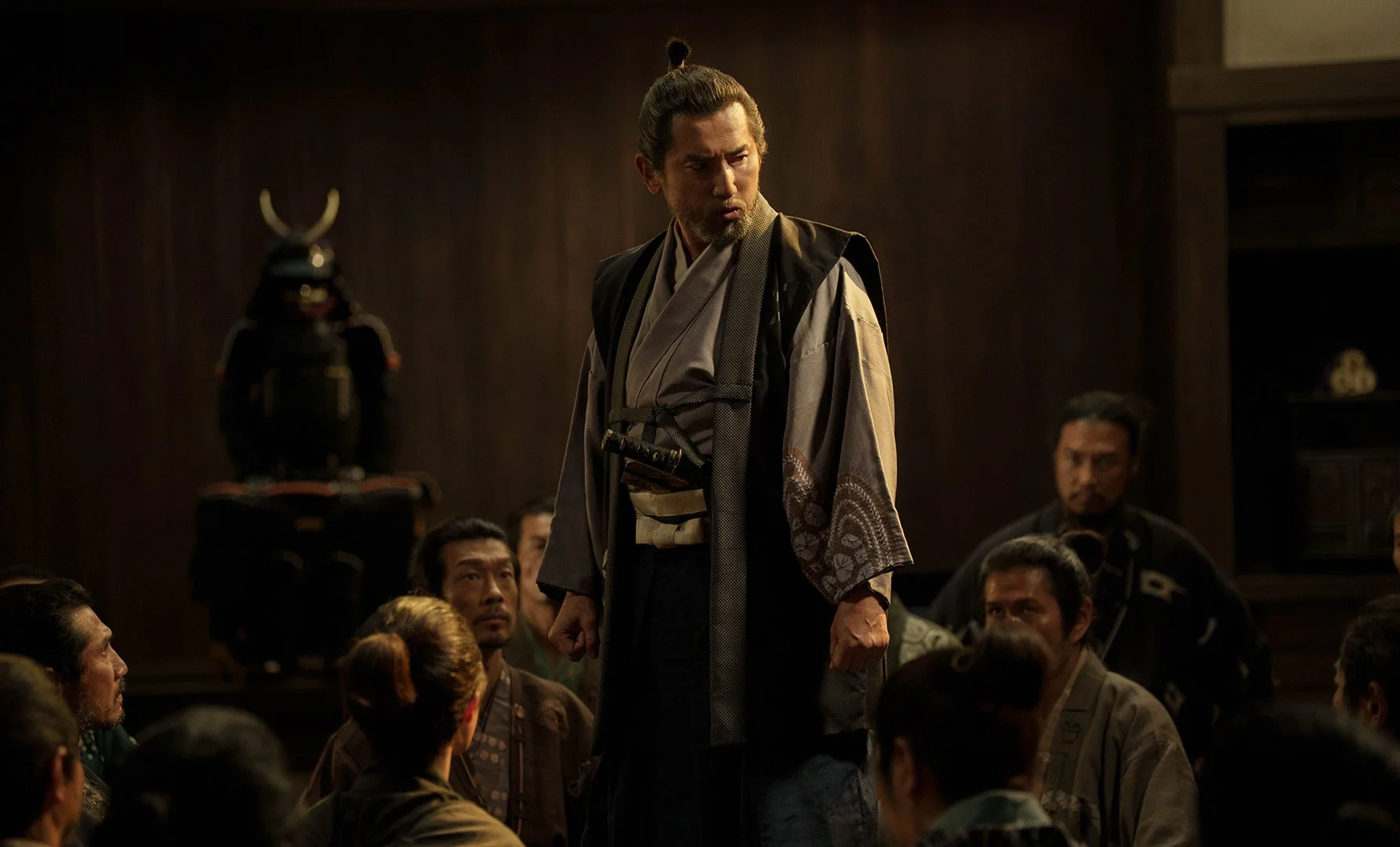
Image courtesy of Janus Films
Regimented into five segments—prologue, act one, act two, act three, and coda—The Samurai and the Prisoner marks another cold, calculated genre piece from Kiyoshi Kurosawa. Best known for his horror films Cure and Pulse, Kurosawa (who has no relation to Akira Kurosawa) has quietly been one of the world’s most prolific filmmakers since the late 1980s. Dropping both Serpent’s Path (a French remake of his 1998 film, à la Michael Haneke) and Cloud in 2024, Kurosawa, aged 71, shows no sign of slowing down. He’s such a trendsetter that it’s hard to believe that he’s in the late period of his career. In The Samurai and the Prisoner, though, Kurosawa takes a more measured approach than Cloud’s wry sardonicism.
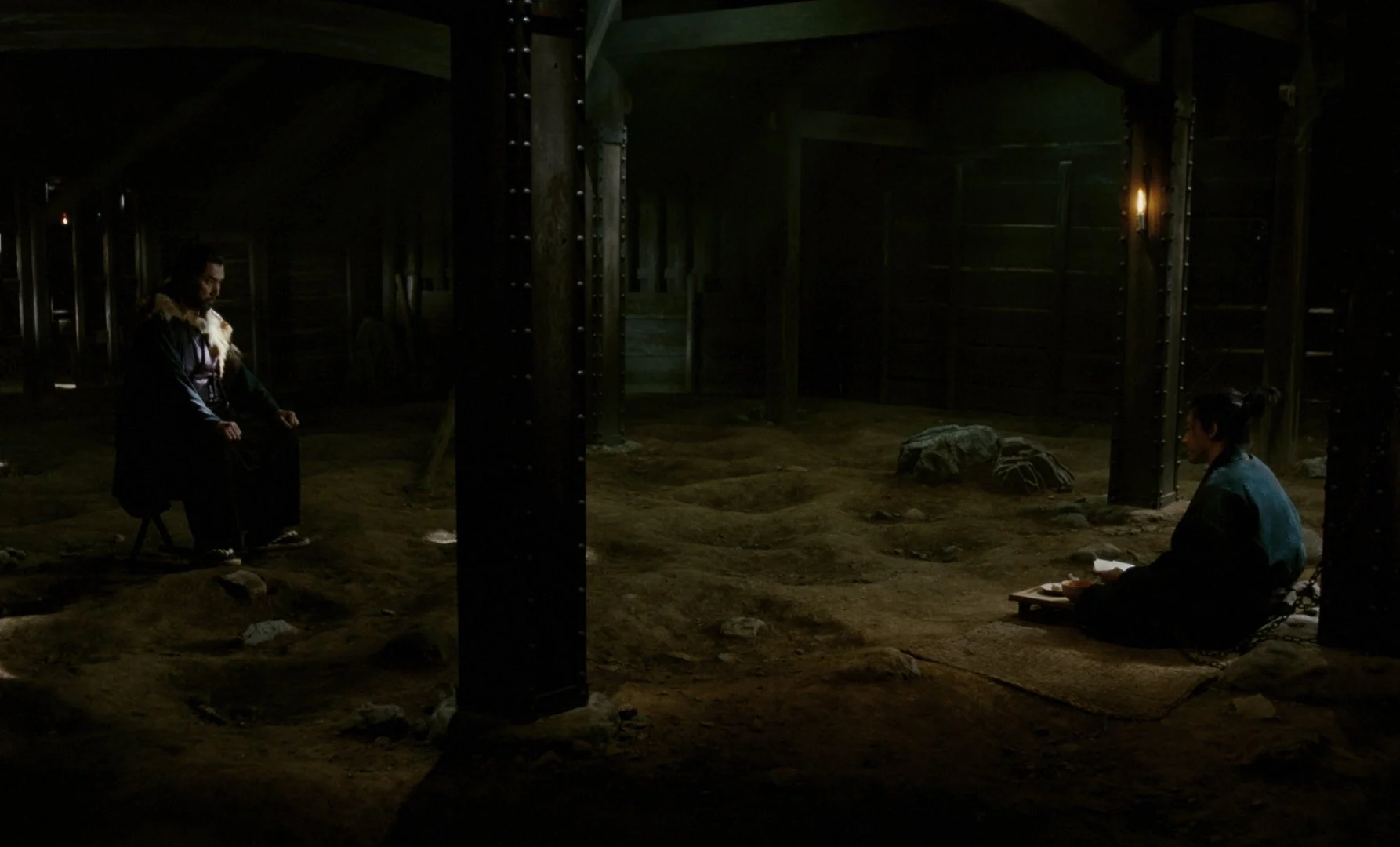
Set against the historical backdrop of Oda Nobunaga’s reign over Japan in 1578, an envoy, Kanbei (Masaki Suda), is taken prisoner by Araki Murashige (Masahiro Motoki) at Arioka Castle. In the ensuing ten months of Kanbei’s imprisonment and Oda’s looming siege of Arioka Castle, a series of deaths and strange occurrences plague the grounds, with Murashige playing detective to solve them. Part-samurai film and part-police procedural, Murashige often visits his dungeon to see Kanbei, who plays both Hannibal Lecter (minus the cannibalism) and the Riddler from his underground cell. The Samurai and the Prisoner truly shines in its investigative scenes, as the parallel political plotline operates more as an external driving force to the bizarre crimes surrounding Arioka Castle.
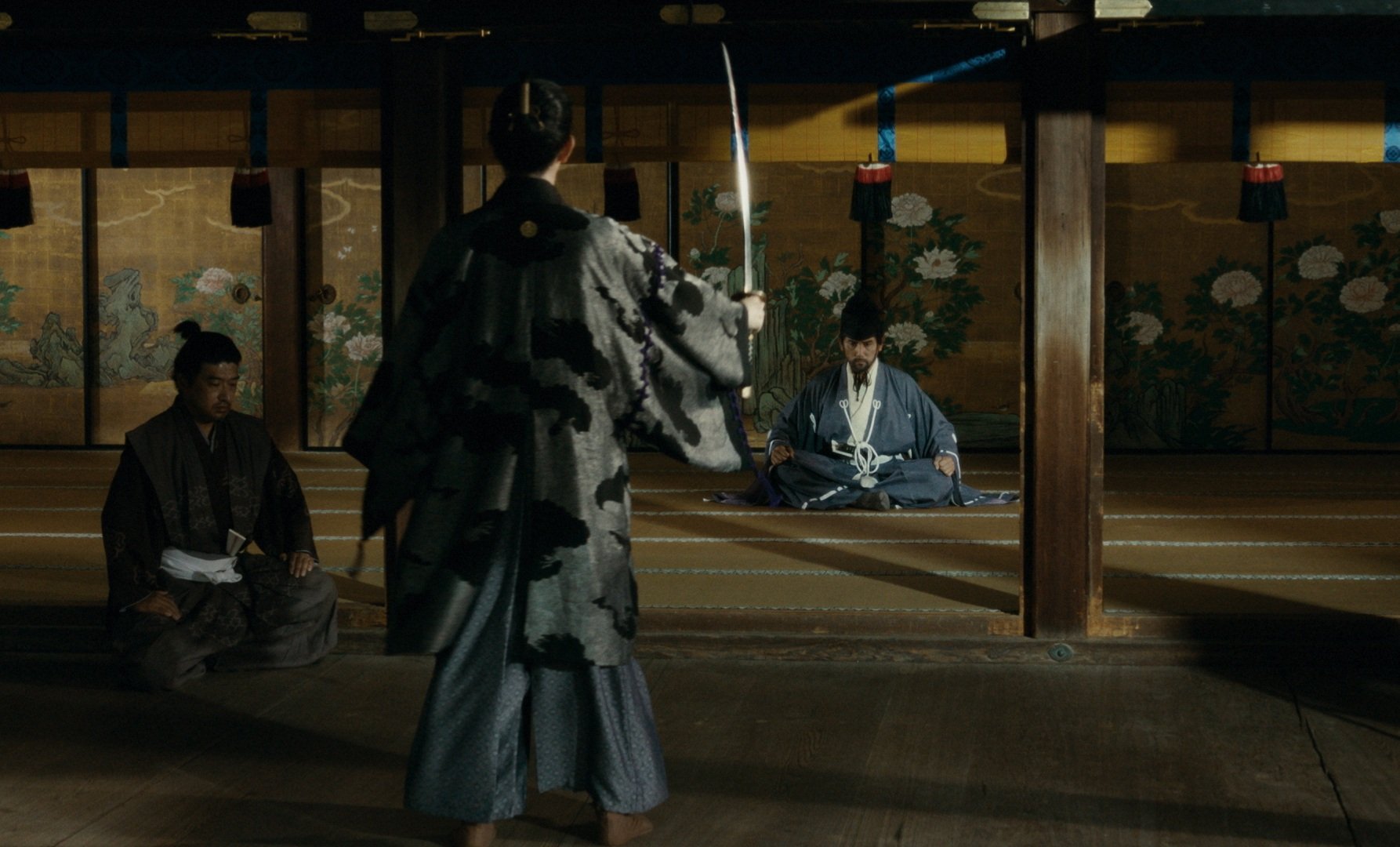
Image courtesy of Janus Films
With each act structured by the seasons, the Fall prologue is sequentially followed by the first act, set in the Winter. Murashige captures the son of a warlord and demands he be taken prisoner, as opposed to the custom where the child is to be crucified. Rejecting the codes of samurai law, Murashige sees no point in needless death, particularly for honor’s sake. He views human life as something more sacred than an already-collapsing social parameter, and longs for change in Japan. Unfortunately, the child is killed by mysterious means, sparking an investigation as to who committed the crime—arrow ballistics and all. This first vignette tackles decaying trust, as well as the dogmatic adherence to failing structures.
The next vignette, set in springtime, sees Murashige in a skirmish with an enemy warlord. After a successful battle, the daimyo and his men struggle to locate the severed head of said warlord, as they have no idea what the guy even looked like. A classic case of Kiyoshi Kurosawa’s pitch-black sense of humor, the mad dash to find the severed head is indicative of power struggles at the time within and between familial clans. Two clans argue over who took credit for killing the warlord, whose severed head’s facial expression has since distorted. It’s less of a whodunnit than a “which did it,” with a conclusion that gave me quite the chuckle upon the revelation.
Act three—Summer—follows Murashige as he investigates two murders: one a legendary warrior, the other a priest. Furthermore, Murashige’s favorite teapot has gone missing. Though the social commentary of public trust in Murashige waning as Oda nears remains, this third act is far more sentimental than the dark, dry humor of its predecessors. Act three interrogates the idea of losing something undervalued; a microcosm of the way our civilization is going. You don’t know what you’ve got until it’s gone, right? Weighing against Murashige’s disavowal of values he knows won’t last forever, Kurosawa contends that, while some things should remain in the past, there are other aspects we should keep and hold dear.
Culminating in a coda about people’s desperate attachment to the past—whether that be through religion, law, or ideal—The Samurai and the Prisoner’s density will reward those patient enough to appreciate Kiyoshi Kurosawa’s careful, stageplay-esque approach. His knack for composition remains brilliant, though the moments of action and violence are quite weightless compared to Cloud’s controlled guns-blazing mayhem. Either way, Kurosawa offers much to chew on with The Samurai and the Prisoner, and gives the viewer ample (if not a bit too much) time to enjoy their meal. Even if it was a bit of a workout for my attention span, at no point does The Samurai and the Prisoner fail to be a compelling study of a crumbling empire.