
Movie Review: "The Social Reckoning" is Beyond Parody

2/12 ForReel Score | 1/5 Stars
For some reason, I can’t remember my first viewing of David Fincher’s The Social Network. My best guess is that my mom showed it to me before the 2011 Academy Awards (I remember watching Black Swan far too early); it’s almost like I entered this world with The Social Network’s screenplay pre-downloaded in my mind. It’s a staple of the early Gen-Z cinephile syllabus, bearing a rightful reputation as one of the 21st-century’s best films so far. With such a high bar, you can’t watch the sequel, The Social Reckoning, without any preconceived notions. Written and directed by Social Network screenwriter Aaron Sorkin, The Social Reckoning is more of a canned Saturday Night Live sketch than a multi-million-dollar Hollywood production.
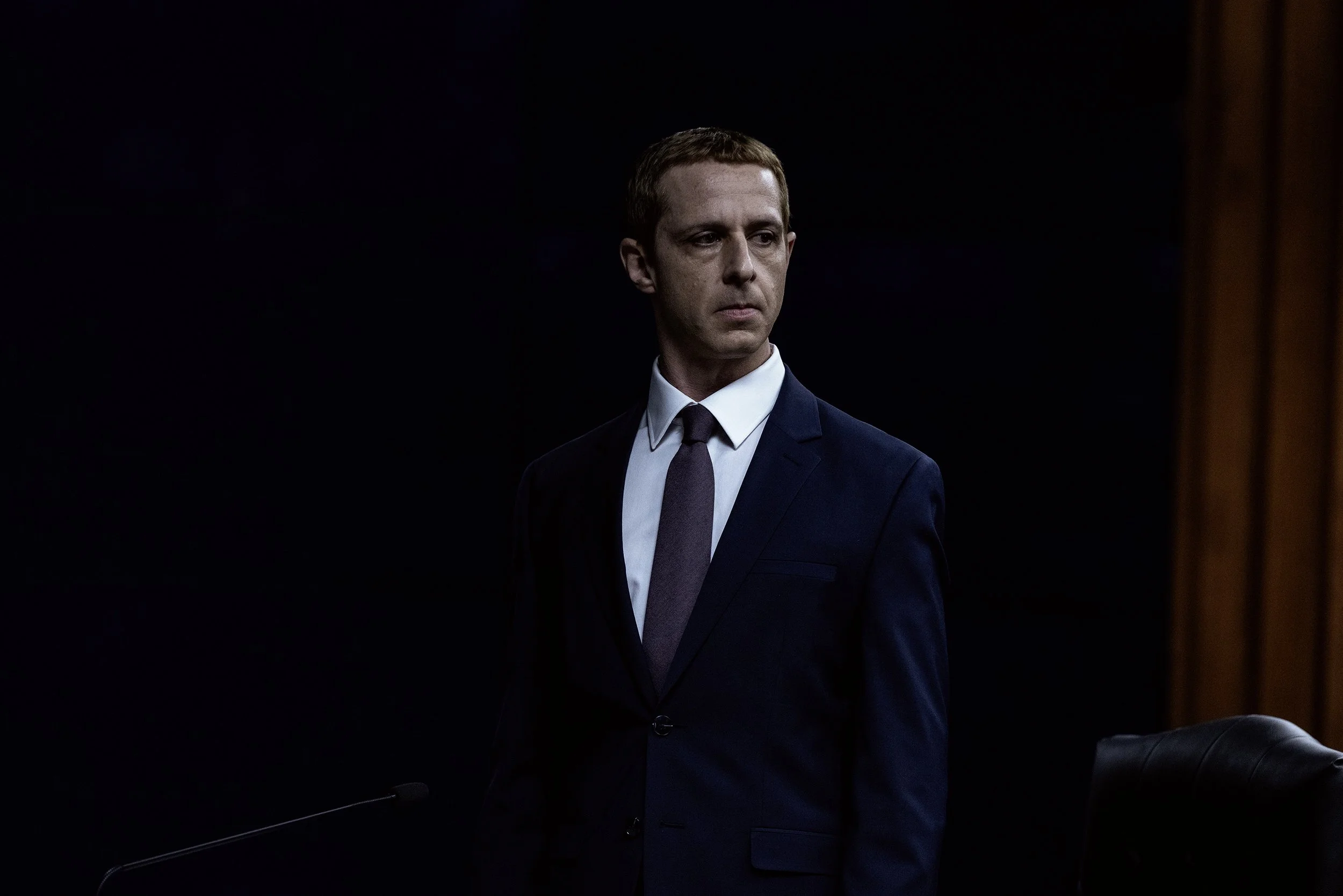
Image courtesy of Sony Pictures
Contrary to his collaborations with Rob Reiner, Bennett Miller, or Fincher, Aaron Sorkin’s directorial work leaves much to be desired. Once a playwright before transitioning to filmmaking, Sorkin’s prowess behind the pen is undeniable. A Few Good Men and Moneyball’s screenplays didn’t appear from thin air, yet the dissonance between those projects and Sorkin’s solo endeavors is oh-so-stark. Penning seven screenplays before his directorial debut, Molly’s Game, Sorkin’s ladder-climbing has only worsened his reputation in recent years. As a Chicagoan, The Trial of the Chicago 7’s neoliberal tone-deafness was borderline offensive, while Being the Ricardos amounted to an Oscar-nominated Lifetime movie. The Social Reckoning continues Sorkin’s downward spiral, bringing a swath of A-list talent down with him.
Leading the charge is Mikey Madison as whistleblower Frances Haugen, a role far below the Oscar-winner’s pay grade. Sorkin depicts Haugen with the timidity of the class nerd, and (as with Jessica Chastain in Molly’s Game, which is definitely not a weird pattern) jumps at any opportunity to put her in a revealing plunge dress. Sam Raimi was genre-savvy enough to do the “she’s pretty when she takes her glasses off” schtick with Rachel McAdams after Send Help’s plane crash set piece, whereas Sorkin (unknowingly) handles the trope with the grace of a bull in a china shop. There’s no distinguishing Madison’s Haugen amongst Silicon Valley’s sausage party bar her girlhood; quite the riveting social commentary, Mr. Sorkin!

Image courtesy of Sony Pictures
Meanwhile, Jeremy Allen White turns in the Emmy-winner’s (noticing a pattern?) weakest performance in eons; if there were awards for simply standing there and saying lines, he would be a frontrunner. Starring as Wall Street Journal correspondent Jeff Horwitz, Sorkin’s screenplay paints Horwitz as an incompetent buffoon who, by mere happenstance, stumbles upon the story of a lifetime. The real Jeff Horwitz is a Pulitzer-winning tech journalist—Sorkin’s can’t even operate a GPS. Most of White’s scenes feature him gawking at corporate malpractices or reading documents, though with less gusto than either lead from All the President’s Men. Much like Sorkin’s direction, White is utterly asleep at the wheel, with material (like Madison) far below a performer of his stature.
Standing in the eye of The Social Reckoning’s storm is Jeremy Strong as the Eye of Sauron (yes, that’s what Meta employees call Mark Zuckerberg) in a performance worthy of a mid-season SNL sketch. What separates Strong’s portrayal from Eisenberg’s star-making turn as “Zuck” is that the latter is an actual character—the former is a glorified impression. Though his presence is missed, I’m not sure if Jesse Eisenberg’s return to the role could’ve saved The Social Reckoning from Sorkin’s center-left pompousness. Line reads like “I’m not two years out of a college dorm room” gesture to Zuckerberg’s transformation in the past ten years, but it only signifies the immense gap in quality between Fincher’s original film and Sorkin’s sequel.

Image via Sony Pictures
Try as Aaron Sorkin does to separate The Social Reckoning from its predecessor, there’s no escaping inevitable comparisons. What little visual language The Social Reckoning has (like Insomniac’s recent Wolverine video game, Sorkin feels the need to include a visual timeline—just in case you’re too stupid to realize when the nonlinear structure switches gears) is as flat as the dialogue, lacking the rich saturation that made The Social Network pop. Sorkin is nowhere near David Fincher’s caliber, whose precise direction bolstered Sorkin’s rapid-fire writing style. Sorkin’s directing actually weakens his writing, bookending supposed mic-drops with pungently awkward dead air. Fincher could turn words into daggers, whereas The Social Reckoning trudges through Wikipedia beats like a fifth-grade book report.
Serving as part-investigative-thriller and part-political-drama, The Social Reckoning’s politics read like a Toyota Prius that still has a “Hillary 2016” sticker. Sorkin depicts the January 6th riot like Christopher Nolan’s portrait of Troy’s collapse, unknowingly giving power to a bunch of disgruntled doofuses who thought they could overthrow a presidency. The script’s spineless lack of name-dropping Trump makes the president out to be the next Voldemort (he who must not be named!), when he’s actually a geriatric manchild with a decomposing frontal lobe. And that’s not to mention Zuck himself, who’s more of a bullish cartoon than the rueful incel from The Social Reckoning. Sorkin claims skirting mentioning Trump was for timelessness’ sake, inadvertently rendering The Social Reckoning embarrassingly toothless.
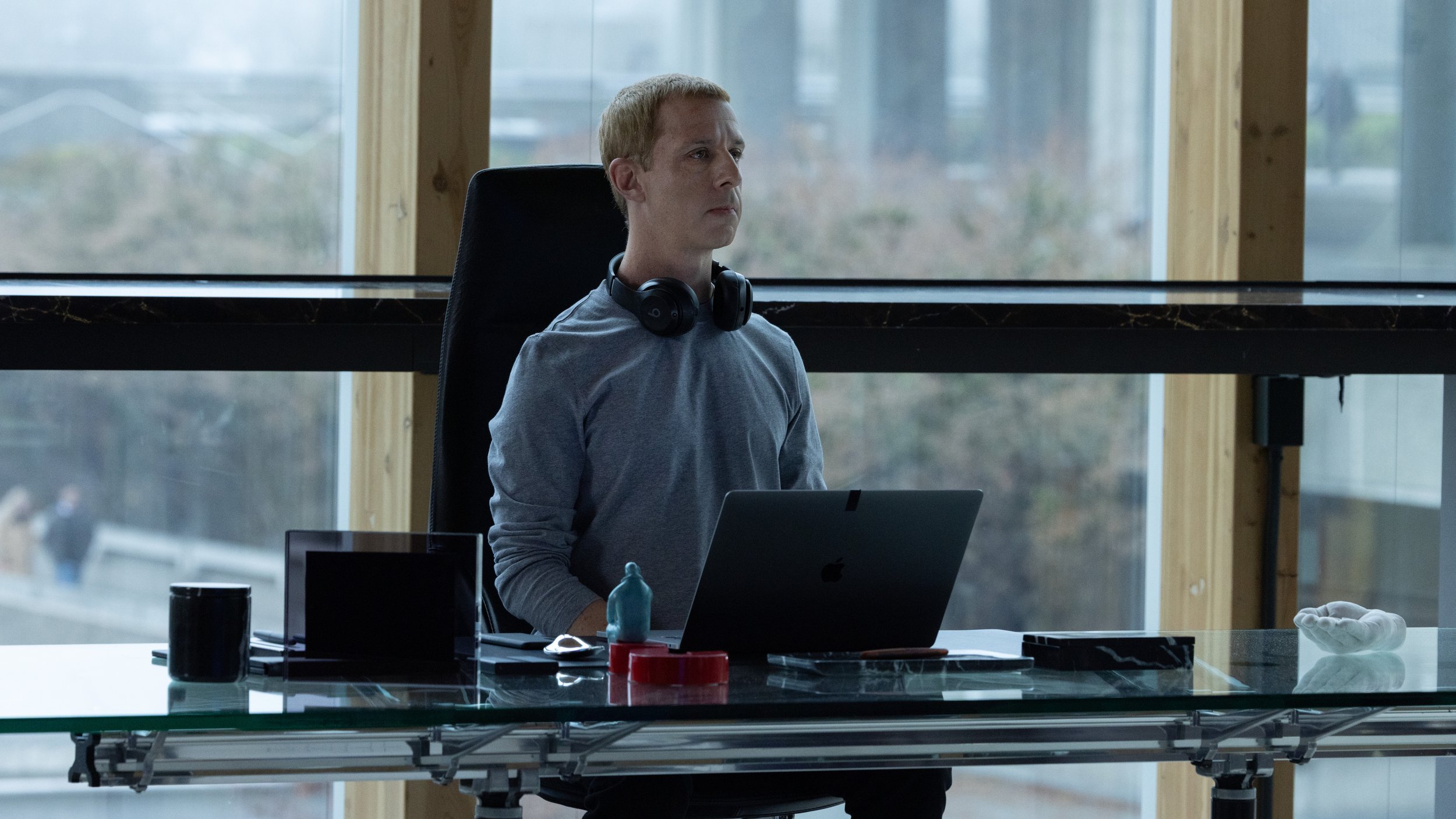
Image via Sony Pictures
In today’s day and age, we don’t need films like The Social Reckoning, Don’t Look Up, or Triangle of Sadness to lecture us about how much shit has hit the fan. This type of self-important “Imagine Video”-esque drivel is the exact target of Digger’s satire, vindicating Alejandro González Iñárritu’s mega-flop within a week of release (perhaps I treated you too harshly, Digger). That may be the only funny thing about The Social Reckoning, because it’s definitely not the film’s actual humor. There’s nothing to extrapolate from The Social Reckoning that you either don’t already know or can’t find on a Wikipedia page, leaving me wondering what the point of this whole affair was. Can’t wait for the even-worse threequel!