
Taylor Beaumont's VIFF Capsules Part 1

Tender Loving Care
A possible swan song for the 83-year-old Mike Leigh, Tender Loving Care is another of the British master’s microcosms, another study working class folk making a spot of bother stomach-able as a modest unit. But this film does without the grubby perversions of Leigh’s more challenging works, and instead offers a sincere and minimalist--almost Hong Sang-soo-esque--depiction of women plying themselves with wine and innocuous banter so they can later endeavour to prop up the frustrated world around them. As social workers in modern day England, Amy (Kate O’Flynn) and Rosie (Alice Bailey Johnson) are at constant odds with their cases, down-and-out individuals who don't trust the system to rehabilitate them, and who thus reject the girls’ well-intentioned propositions. Outside of work, Amy and Rosie are further stymied by single life as it pertains to impending middle age, and later, even Amy's reliable ol' mum and dad will cause concern.
Just like Leigh’s Meantime (1983) looked into the homes of real and found families in order to articulate commentaries about the broader sociopolitical scene under Thatcher, Tender Loving Care has some implied words about the British health and welfare programs, albeit meek, buried words. Maybe it’s because the characters this time around are less antagonistic, more accommodating and sweet, but it seems Leigh has gone soft in his late career, content, like Paul Jesson’s ailing patriarch Geoff, to just take a back seat and let the modern world prattle on. One might certainly appreciate this slight and subdued approach, Leigh’s commitment to observing the simple exchanging of pleasantries that keep life humming along, but this approach is only surface scratching, and the message rings too close to an empty platitude to prove truly affecting. Like Gary Yershon’s fittingly unobtrusive glockenspiel score, the project feels one-note; a pleasant, inoffensive wallpaper to hug but not really hold us in our current condition.
Behemoth!
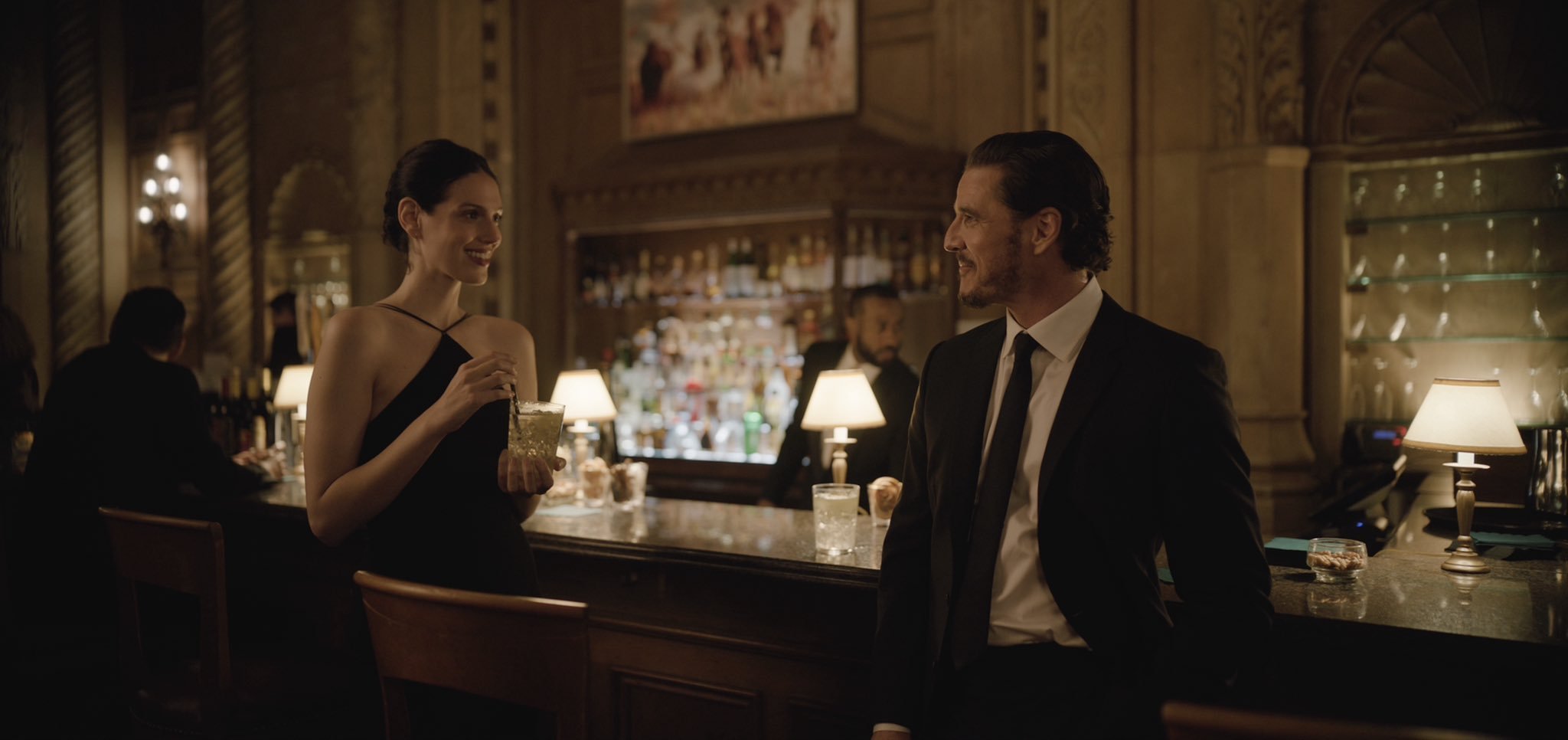
During a mentoring session, seasoned, well-respected and downright affable cellist Alex Serian (Pedro Pascal) assures his young student Mozart has already done the work for her--she just needs to "make a decision." As Tony Gilroy’s Behemoth! progresses, we realize Alex was essentially prescribing himself his own character arc. He was born into a renowned musical dynasty, and was performing on Johnny Carson before he turned double digits. The world was served to him on a platter, and that's why this Gilroy film is so breezy and aimless. We're used to filmic portraits of musicians being about these monomaniacal, all-consuming pursuits of greatness or artistic breakthrough, but Behemoth! has a different tempo. Alex has already achieved accolades and renown, a comfortable life, and so what we are treated to instead of narrative intensity are some slightly out-of-sequence episodes of him going through the motions, tending to personal affairs in between studio scoring sessions. Speed bumps are faced, and layers of his sorted family dynamics are revealed, but much is either played for laughs, or dialled-down dramatically. In turn, we are granted the chance to sit back and enjoy the music.
And what a repertoire Gilroy has amassed! Behemoth! boasts scoring contributions from James Newton, Alan Silvestri, Emily Bear, Michael Giacchino and more, and we see their work being performed almost every second scene of this film. Some music/musician-focused stories give us precious few scenes of music actually being performed, but Gilroy pulls us back into the studio constantly, giving us a better appreciation for the different voices that lend their talents and express themselves through the orchestral medium, while also crafting a heartfelt love letter to music-made movie magic in general. It could be said that we are denied a more challenging film as a result, that the character study is relegated to second fiddle, and that this film doesn’t do enough to earn its emotional beats, but again, this might be us holding it up to other music/musician-focused stories. Behemoth! is no TÁR, but why should it have to be? Its protagonist is more charming, warmly genuine, and while his modest picaresque may seem ambling and ambivalent, it has a way of escaping your grasp that proves tantalizing. And when you realize it needs to "make a decision," it does.

The History of Concrete
It’s John Wilson collaborator Nathan Fielder whose documentary currently commands the discourse, but if you’re in the mood for something more optimistic—and less existentially confounding—The History of Concrete is a plucky and life-affirming alternative. Rather than probe the depths of human interiority, Wilson investigates the surface, taking his subjects at face value in hopes they might reciprocate his earnestness and guide him towards new perspectives. His approach basically boils down to treating everything with curiosity, rather than judgment; saying, “Yes, and” to every reality that is pitched to him, no matter how tangential and bizarre. The starting point is concrete, that ever-prevalent building material that shapes our constructed world, but before long, we’ve found our way to a business that frames the flayed, tattooed skin of deceased loved ones.
For those who have watched Wilson’s “how-to” HBO series, The History of Concrete may feel overly familiar in its structuring and tone—Wilson initially frames his feature as a how-to guide for getting a Hallmark movie project greenlit—but with a feature’s worth of runtime to, well, run in, this means Wilson’s digressions get all the wilder. Some of these digressions are sprinkled in to celebrate absurdity and nothing more, but others lead to unexpectedly profound revelations, while others thread connections so far-fetched it’s as if concrete might be the physical expression of synchronicity. If nothing else, this documentary makes a great case for pure, unbridled wonderment. Because you’ll never *see* the world if you’re rolling your eyes all the time. You can see everything from the standpoint of a traditional documentarian, one looking to put forth an argument, but you will see everything if you just follow the concrete.