
AFI Fest 2026 | Movie Review: Andrew Scott Embodies Queer Resilience In "Elsinore"
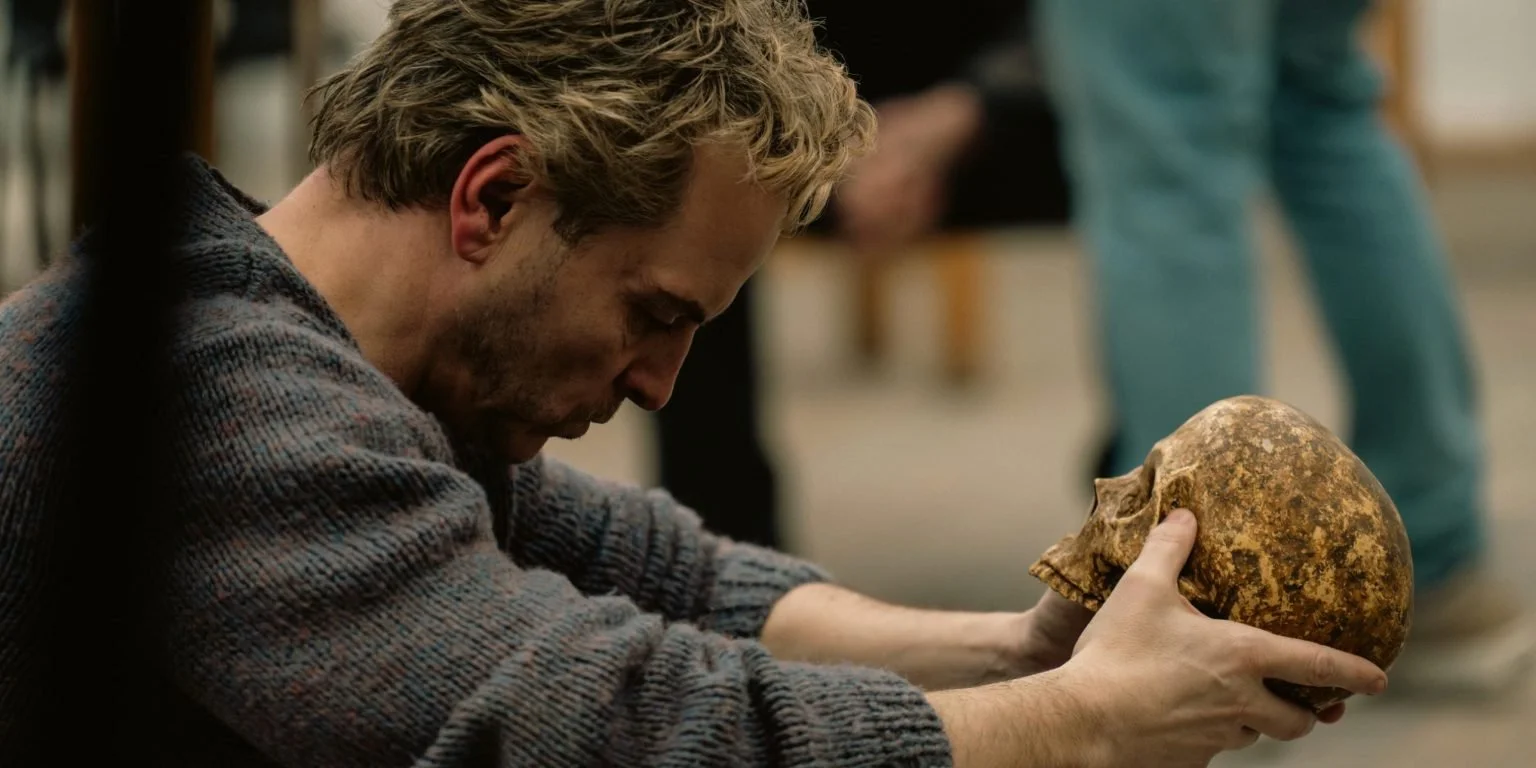
Image courtesy of Focus Features

7/12 ForReel Score | 3.5/5 Stars
Simon Stone’s Elsinore was designed in a lab to woo the AFI Fest crowd into voting for Andrew Scott this awards season. A tragic but not too tonally bleak true story about an ailing artist forced to persevere to be immortalized by his work. On that level - it succeeds wildly. As I sat in the lobby afterwards, I heard a middle aged gentleman say “he’s winning…it’s indisputable…there is no competition.” I just might agree. This is a tremendous performance from Scott that folds its arms around a film that often slips into cornball territory. That sentimental side is often endearing. Stone and screenwriter Stephen Beresford tackle harrowing subject matter with a refreshingly genuine sense of warmth and humor. This doesn’t feel like homework in the way that some naked Oscar bait does. It just eventually succumbs to some generic filmmaking urges that keep it from reaching the impact that Ian Charleson’s story clearly had.
In 1989, Daniel Day Lewis walks off stage midway through a production of Hamlet at London’s Royal National Theater. This opens the door for a new leading man. Stagnating Chariots of Fire star Ian Charleson (Scott) jumps at the opportunity, particularly since he is already friends with director Richard Eyre (Johnny Flynn). There’s just one problem. Charleson has contracted AIDS and his time is running thin. At this point, playing Hamlet is all he has to live for. This line of thinking does not compute to doctor Margaret Johnson (Olivia Colman), who is determined to convince Ian to focus on his treatment. Alas, stubbornness persists, as does the disease.
At one point, Ian gets into a heated argument with former director Derek Jarman (David Dawson) about how he should present to the public. David wants Ian to come out and admit that he has AIDS but Ian insists that he wants to be seen as a character, not a victim. Andrew Scott achieves exactly this with his performance. He ensures that his portrayal of Ian is never a maudlin sacrificial lamb constructed for tearjerking purposes alone. He’s lightfooted, generous and often quite funny. Ian doesn’t deny the gravity of his condition but until he physically cannot help it, he never lets it overtake him either.
Stone doesn’t allow this excellent work to fully blossom, though. Most of the rehearsal and performance sequences are montaged with a pandering score by Stefan Gregory often muffling dialogue to inform us that we should be feeling sad. We should’ve slowed down and allowed ourselves to intuitively understand why Ian connects so much with his craft and the character of Hamlet in particular. A couple of lengthy, patient rehearsal and performance scenes aside from the “to be or not to be” monologue would’ve elevated Elsinore into a film entirely deserving of the work that Scott turns in. It also would’ve allowed Johnny Flynn to shine a bit more. He does well with what he is given, but gets lost in the shuffle despite allegedly being in command of this production.
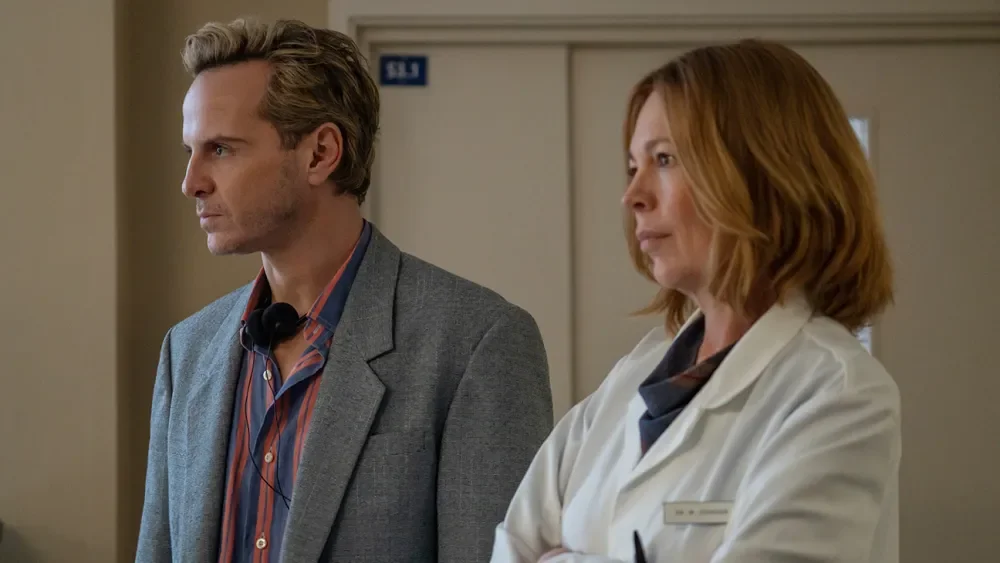
Image courtesy of Focus Features
Olivia Colman is naturally effective and droll as Ian’s stern doctor. We see her compassion for her patience and her grit when they dispute the care they need. Watching Ian and Margaret eventually develop a begrudging respect for what the other one wants is one of Elsinore’s more potent arcs. We also get some time with the community around Ian both in and out of the clinic. His close friend Georgie (Luke Thompson) and acquaintance Nicholas (Joe Locke) both reckon with how long they have left to live. The aforementioned dynamic with Jarman is fraught and peppers in some tension to keep things from getting too saccharine. Elsinore doesn’t shy away from the tragedy and grief at the story’s core but it puts connection amongst those who are still here first.
There will certainly be folks who look down on Elsinore as a film that exists to beg for awards. That isn’t incorrect - particularly since this is yet another story of queer suffering. However, it doesn’t run cold in that pursuit. Perhaps I’m just a sappy person at heart but I did find the film’s depiction of Charleson’s love for art in the face of his own mortality to be genuinely inspiring. It is certainly an apt companion piece to last year’s Hamnet, which explored the play’s connection to grief in the time of its inception. It doesn’t reach the emotional and aesthetic high notes of Chloé Zhao’s film but both serve as winning reminders of why we create at all.