
Movie Review: 'Clayface' Cannot Hold Its Malformed Parts Together

6/12 ForReel Score | 2.5/5 Stars
The Gunn-run DCU has been rocky to say the least; aside from 2025’s Superman, its entries have left much to be desired. The Supergirl film from this past June was an aggressive misstep in the wrong direction, with studio interference allegedly having a factor in the end product, but the DCU’s follow-up film, Clayface (2026), was a highly anticipated project that was birthed from the mind of one of modern horror’s greatest: Mike Flanagan.
Flanagan has been one of the most influential horror voices of the modern age; hell, his adaptation of The Haunting of Hill House changed my life. In 2021 when he expressed interest in adapting the Batman villain into a body horror film, I was all-in. His meticulous approach to character work was perfect for a film about an actor going mad with revenge after a horrible disfigurement. Unfortunately, due to commitments to his Exorcist film and Carrie adaptation, Flanagan was unable to go further on the project. His script was rewritten heavily by Hossein Amini, and James Watkins was announced as director. With all that said, the end product of Clayface unfortunately fails to capture any of the heartbreak or terror I expected.
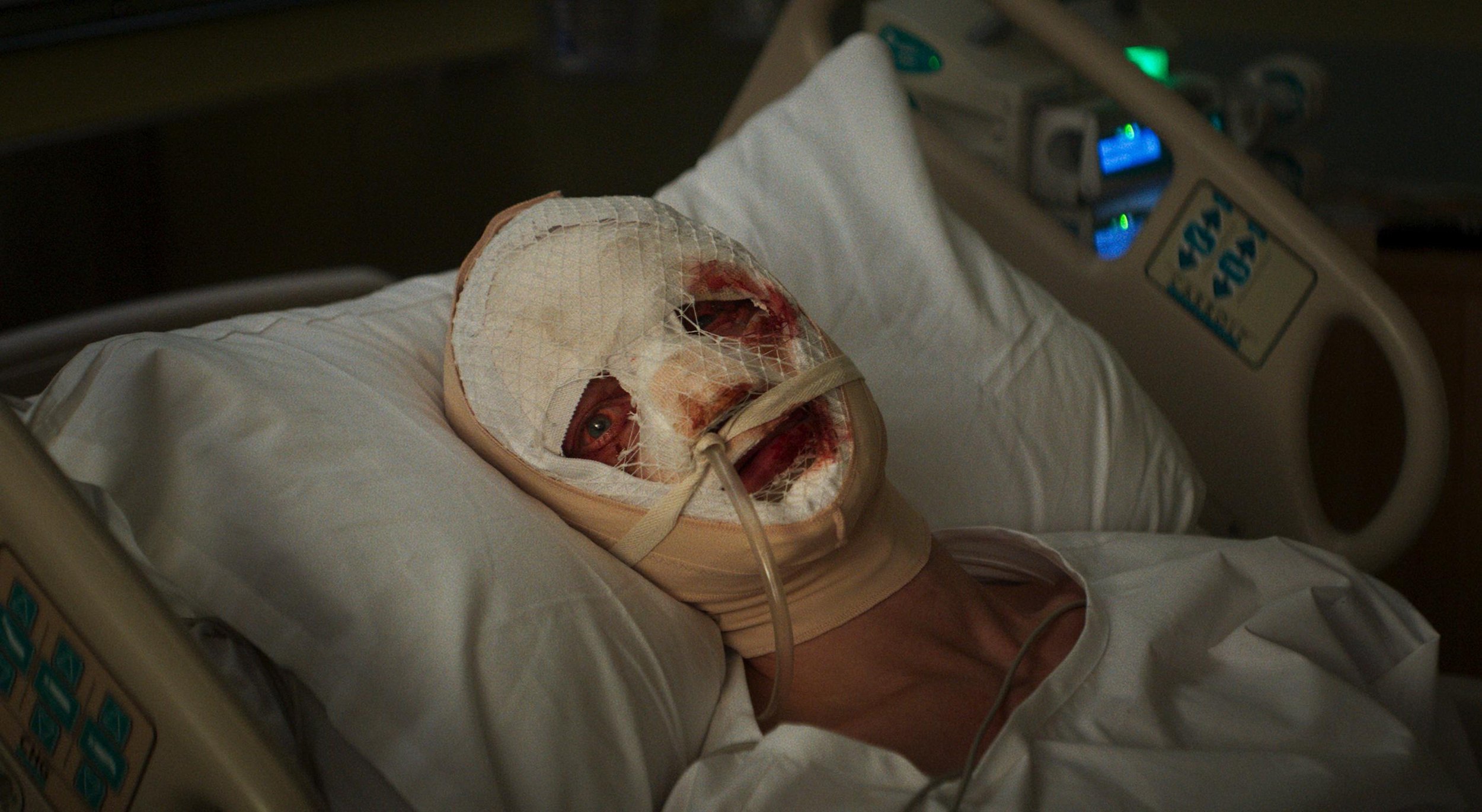
One of Clayface’s most fundamental issues lies with the screenplay. I can deal with things like characters talking a bit strangely; it is fiction after all. In this case, the film aggressively throws the audience into Matt Hagen’s (Tom Rhys Harries) life without any time to get to know him. We learn broadly of his life growing up in Gotham City, but the audience fails to learn the intricacies of his upbringing that leads to him becoming the villain we know. Broad strokes like this are rampant throughout the film, and it fails to make the audience care about Hagen, or anyone for that matter.
Harries carries the film, but the aforementioned script hinders his performance significantly. His ability to tap into the vengeful side of Hagen was the most compelling part. Had that throughline shone in the entire film, I would’ve been far more keen on him. The other actors in the film are far more one-dimensional, specifically Naomi Ackie as Caitlyn Corr, the scientist who gives Hagen the nanocells that result in Clayface. She was quite frankly wasted here, if her performances in Mickey 17 (2025) and I Love Boosters (2026) are anything to go off of.
Another problem that sticks out in Clayface is how it handles its existence as a body horror film. It’s as though the film is too afraid to commit to the body horror of its own premise, so it sits in an odd in-between spot that comes off as incredibly unsure of itself. Darker comic-book films that slip into horror territory are able to be done, so it’s incredibly frustrating to see a film be so afraid of being either or. Another aspect of the body-horror of it all is how often I was reminded of far better films in that subgenre. A key moment in the third act had me thinking, “I could be watching Cronenberg’s The Fly instead.” There are several body horror films that entered the forefront of my mind during the film’s runtime, but The Fly was the most common one. That film handles similar themes as Clayface with far more prowess and confidence, such as hubris and the consequences of one’s own vanity.

Even as a self-described body horror film, Clayface pulls its punches. The moments when it has something worth seeing, they feel like “Baby’s First Horror Film.” So many gruesome sequences are toned down just enough to make horror fans unhappy that the bloodshed that was promised is nowhere to be found. A highly talked-about scene from the trailer of Hagen cutting open his eyelids on a turbulent airplane felt underwhelming and frustrating. Aside from a well-choreographed and well-shot nightclub sequence (that doesn’t happen until the third act), I was left desiring so, so much more from what was advertised as a gruesome, gory horror film.
Clayface has no idea what it wants to be. A DC body horror film conceived by Flanagan could have been generational for both comic book and horror fans, but its execution and the departure of Flanagan turned his brilliant idea into an uneven mess. Rhys-Harries carries the film on his back, but the script bogs every aspect down so much that it overshadows his performance. The DCU has had a rough go-around since its monumental hit last July, to a point where I’m unsure if the Superman sequel Man Of Tomorrow is worth my time. Regardless, if Matt Hagen is ever seen in the DCU again, I hope he stays in the kiln for much longer.