
Movie Review: "Backrooms" Leads Us Through Limbo… and Leaves the Answers at the Door

10/12 ForReel Score | 4/5 Stars
It was only a matter of time before 4chan — the backrooms of the Internet — snuck its way onto the big screen. Beginning as a 2019 creepypasta on 4chan, before transforming into a viral YouTube series in 2022, Kane Parsons’ Backrooms has now become one of the most anticipated directorial debuts of the decade. Backrooms, which shares its name with the original 4chan post and his YouTube series, may have a storied digital footprint, but it has quickly grown into a singular phenomenon in Hollywood.
Backrooms is an expansion (literally) on an already expansive idea. What began as an unsettling image of a fluorescent-lit bare room, carpeted and wallpapered a dehydrated yellow, morphed into a nauseating idea: What if this room never ended? What if its corridors snaked to other yellow rooms? What if these rooms, barely adorned with not-quite-furniture, but some close approximation of it, hid something sinister? And what if there was something else, someone else, around every corner? What if this is it? Liminal horror designed for the digital age.
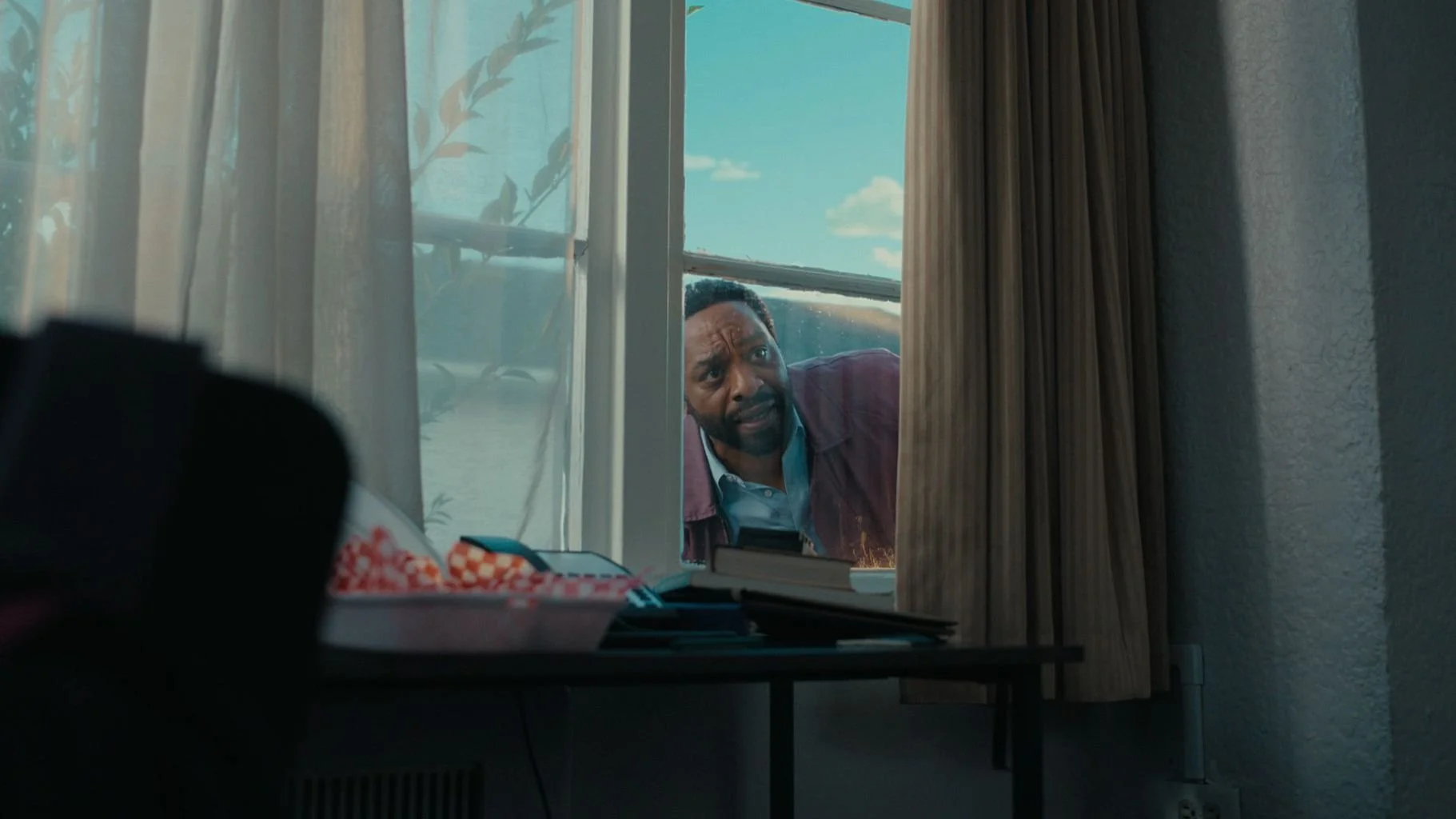
Parsons’ film takes his idea and tries to box it in, giving us characters with lives and jobs and backstories, giving us a plot, giving us a finish line. Unlike a YouTube series (or a 4chan thread), this film has a finite runtime. Despite being only 18 years old when production began(!), Kane Parsons was entrusted with a hefty eight-figure budget and two of the best actors working today: Chiwetel Ejiofor and Renate Reinsve. It’s a lot of faith to put in one teenager and his infinite rooms. As I said, a singular phenomenon.
Against the backdrop of no name, U.S.A., a 1990’s furniture clerk (and hopeless wannabe architect) named Clark (Ejiofor) makes a discovery in the lower level of the outlet he manages: a wall that he can pass through. On the other side, the titular labyrinth. It is shocking for him and completely unbelievable to his therapist, Dr. Mary Kline (Reinsve), who herself suffers from a case of traumatic malaise. Clark has proven himself to be an unreliable, self-centered alcoholic, while Mary possesses a naturally skeptical resolve (one can assume from her years of schooling and experience, though we see it’s grounded in flashbacks to her schizophrenic mother). The relationship between Clark and Mary isn’t just central to the plot, it’s essentially the only relationship in the film.
Besides a dash of screentime for Finn Bennett, Lukita Maxwell, and Mark Duplass (whose Creep is written all over this film), Ejiofor and Reinsve command nearly every frame. And since they maintain an APA-approved doctor-patient relationship, there is a distance between them that leaves the film lacking a chemistry to hold onto. We can root for or against Clark, and for or against Mary, but for the most part, their stories are disentangled from each other. One of the flaws in the film’s writing is, unfortunately, how clumsily their stories slam into each other in what is an otherwise well staged and well performed climax.
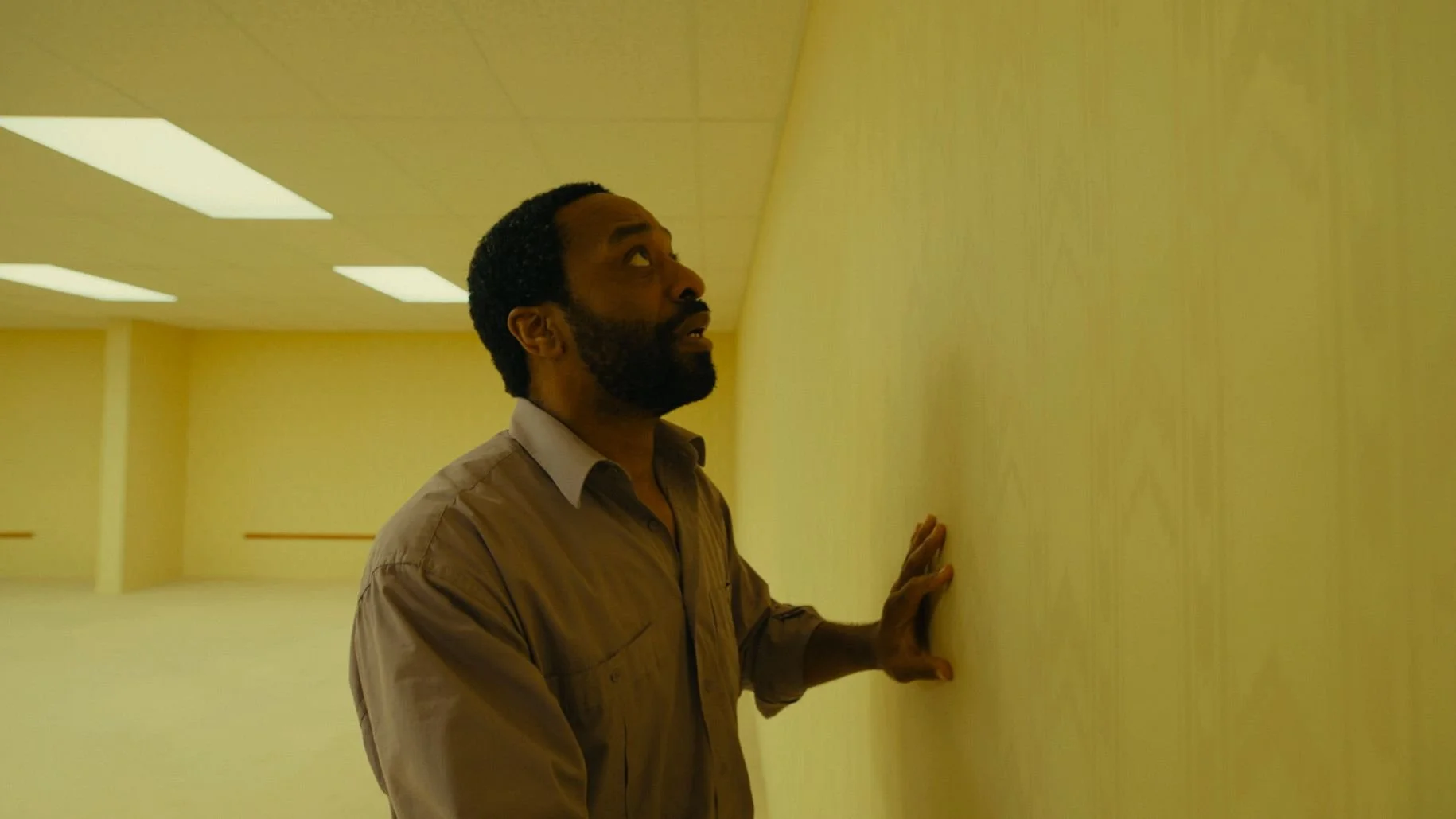
Similarly, Parsons struggles with subtext. He often toys with answering the question, “What does it all mean?” instead of toying with answers to the question. It is the biggest ding on the screenplay, though I’m skeptical it’s entirely his fault. Parsons, as a filmmaker (short and longform alike), masterfully handles the textual elements of his stories. He is able to conjure creepy, and at times downright frightening, images from literal empty spaces. Like the aforementioned Creep or The Blair Witch Project — both of which evidently haunt Parsons’ search history — Backrooms is terrifying at face value, especially when framed as faceless found footage, something cinematographer Jeremy Cox excels at. Unlike its forebears, Backrooms is forced into a subtextual quandary, attempting to answer (or at least attempting to look like it’s answering) the great “what does it mean?”. I imagine this was partially contractual. Studios don’t just hand over tens of millions of dollars without asking for concessions. And there’s no horror trope more ‘in’ right now than veiled illustrations of trauma.
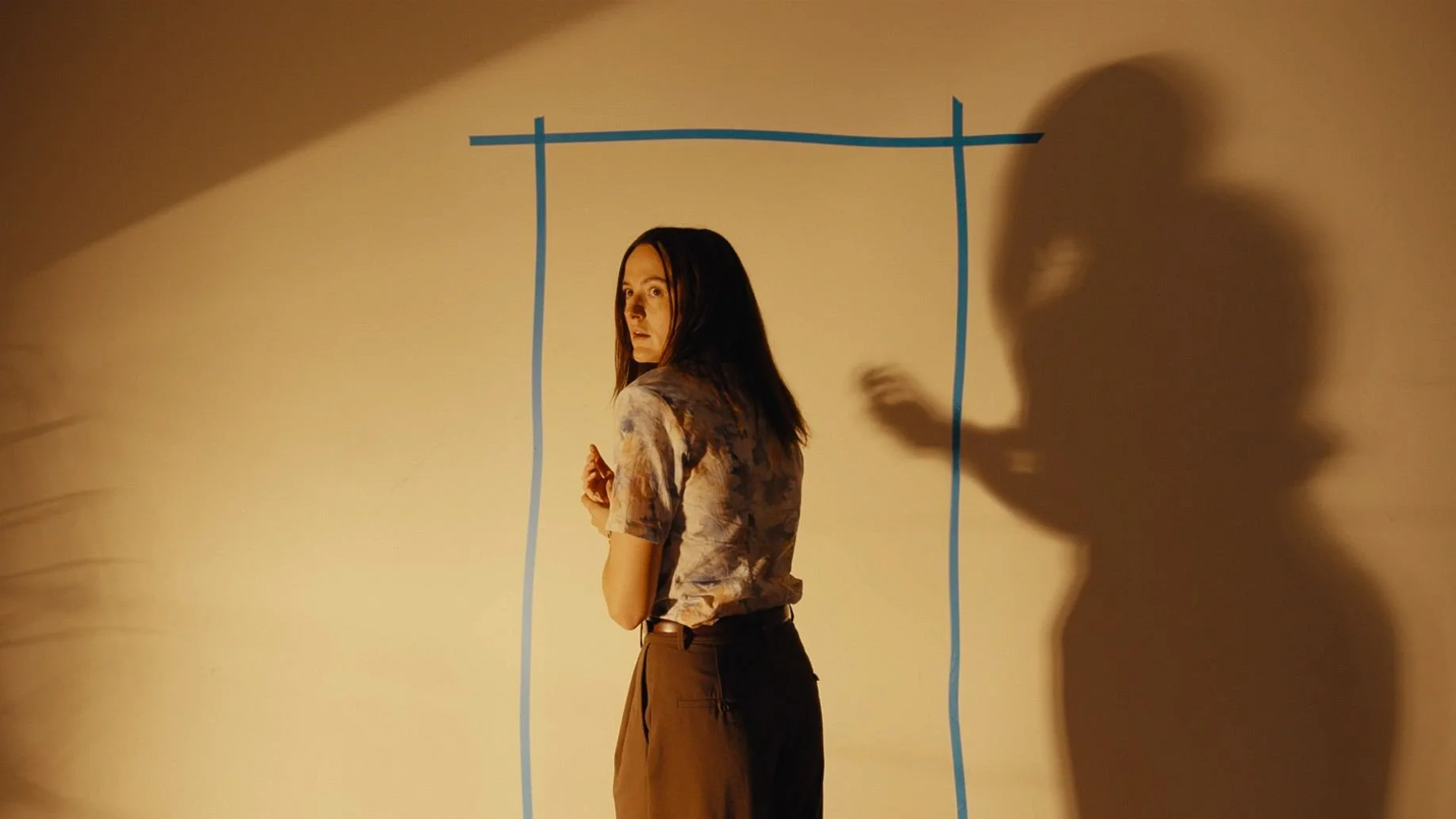
For all its half measured subtext, it’s ultimately better that Parsons never commits to full measured solutions. Answers strip the rooms of their mystique, which is where the film thrives. Ejiofor and Reinsve’s eyes serve as fantastic avatars for the audience. “What the hell am I looking at?” they – we – scream silently. None of us are ever truly sure, but we are torn between a desire to explore and escape. The phenomenal production design pulls us in, the skin-crawling sound design shoos us away. Parsons is able to harness, not just an environment of liminality, but the feeling we get when we find it. It’s dread, it’s anticipation, it’s curiosity. It’s a frozen, unblinking, “What do I do?”
That feeling alone is worth the price of admission, or rather, the price of walking through the walls of Cap’n Clark’s Ottoman Empire. Backrooms elicits a rare hushed horror, one that isn’t undercut by punchlines or jump scares. It is terrifying enough to make one press their hands toward the first blank wall they find, just to make sure nothing happens. Because Backrooms makes one believe that maybe something could happen. Maybe your hand will pass through. Maybe you’ll discover a limbo you were never meant to find. Maybe this isn’t all there is.
Acting and Casting - 2 | Visual Effects and Editing - 2 | Story and Message - 1 | Entertainment Value - 2 | Music Score and Soundtrack - 2 | Reviewer’s Preference - 1