
Movie Review: "Godzilla Minus Zero" is an Earth-Shattering Masterpiece

12/12 ForReel Score } 5/5 Stars
As the name suggests, kaiju films have always been Japan’s game. Barring Matt Reeves’ Cloverfield and Guillermo del Toro’s Pacific Rim, Western monster movies don’t pack the same punch as Ishiro Honda’s original Godzilla film. Warner Bros. and Legendary tried their hand at creating a “Monsterverse,” which veers further towards Americanized tokusatsu via each successive entry (with a sixth slated for next spring). Putting things plainly: the juice isn’t there in the old U.S. of A. Reiwa-era entries like Hideaki Anno and Shinji Higuchi’s Shin Godzilla or Takashi Yamazaki’s Godzilla Minus One nearly put every English-language kaiju film to shame (Cloverfield remains the lone caveat), with the latest, Yamazaki’s Godzilla Minus Zero, stampeding its way into “all-timer” territory.
Compared to Legendary’s “children in a sandbox” mode of mashing action figures together, Minus One’s sobering portrait of Japan’s postwar reconstruction was the back-to-basics approach Godzilla needed. Where the original Godzilla served as an indirect allegory to the bombings of Hiroshima and Nagasaki, Minus One depicted the King of the Monsters as a twisting of the knife—adding insult to a nation reeling from physical and psychological injury. Focalizing former kamikaze pilot Kōichi Shikishima and his reckoning with survivor’s guilt, Minus One wrapped its mushy interior in the destructive shell of kaiju cinema—earning an Oscar for VFX in the process. Doubling down on everything that made Minus One so great, Godzilla Minus Zero goes bigger, bolder, and angrier than ever before.
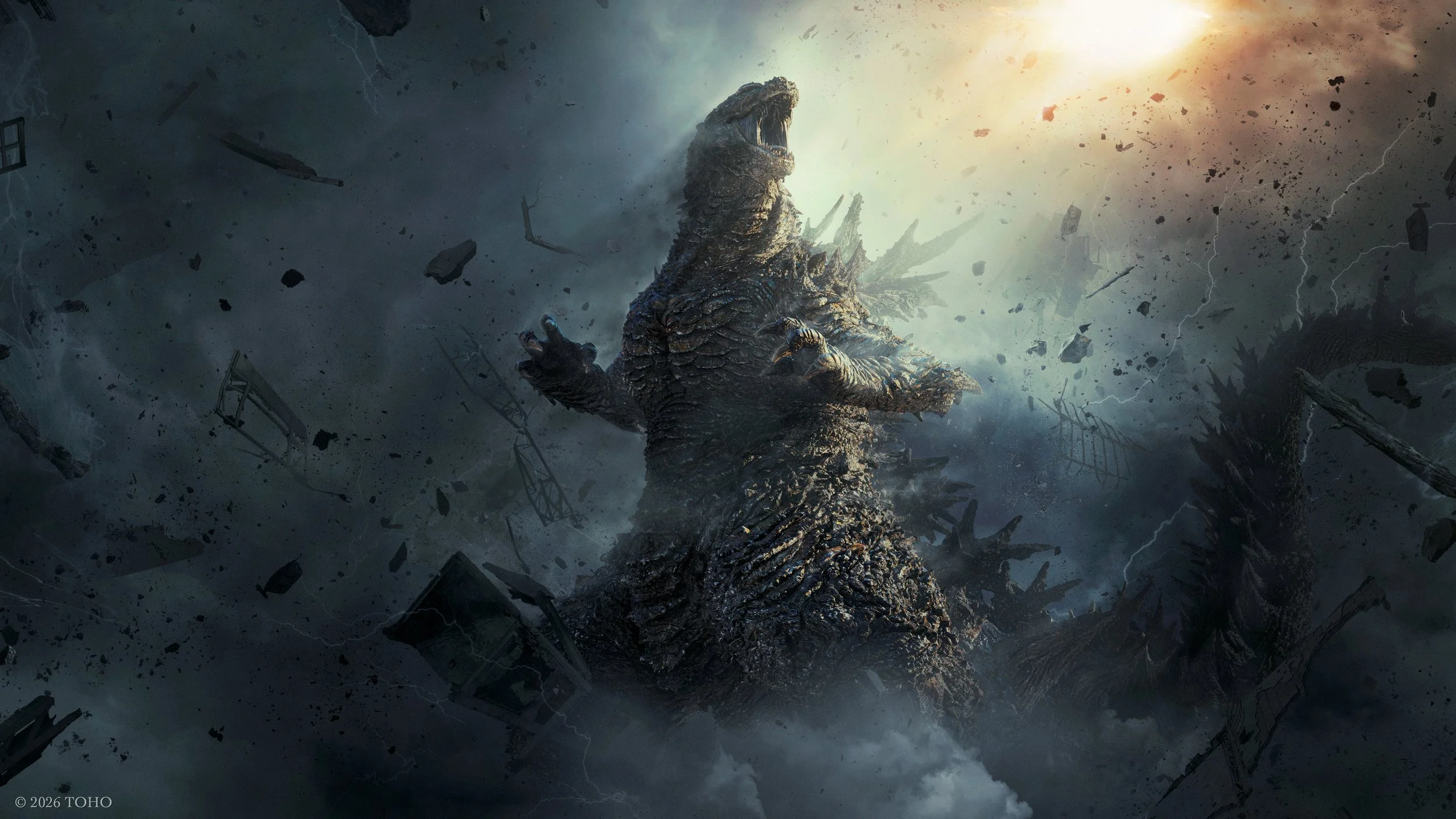
Image via Cineplex Pictures
Picking up a few years after Minus One’s blindsidingly tearjerking finale, Minus Zero finds its characters—alongside Japan—starting from scratch, only for a new kaiju to once again threaten the country. I’m not entirely sure if I’m allowed to specify which fan-favorite kaiju this is, but trust me when I say that Yamazaki wields the character to much greater effect (partially due to the gargantuan IMAX framing) than the Monsterverse ever did. Elaborating on Minus One’s postwar internal conflict without compromising on earthshattering spectacle, Minus Zero balances monster-wrestling action while delivering the fieriest Godzilla entry thus far. The visual effects are a noticeable upgrade from Minus One’s sporadic shakiness, whereas Yamazaki’s direction has only improved in the past few years.
Once again channeling the powers of blockbuster gods Steven Spielberg and James Cameron, Takashi Yamazaki—much like Godzilla himself—has greatly evolved in the time since Minus One. Besides the gargantuan, effects-heavy genre fare, Yamazaki’s meticulously staged action sequences evoke Alfonso Cuarón’s Children of Men (which he’s directly cited as an influence on the film), showcasing devastating chaos in several intricately-crafted one-take sequences that left my mouth agape. Godzilla Minus Zero was Yamazaki’s chance to cash in his directorial chips (and hopefully not the last, considering his next film, Grandgear, will be a Pacific Rim-esque mecha-movie), going for broke on proportions never before seen in kaiju history. It’s not as emotionally devastating as Minus One, trading its predecessor’s sentimentality for unprecedented scale.
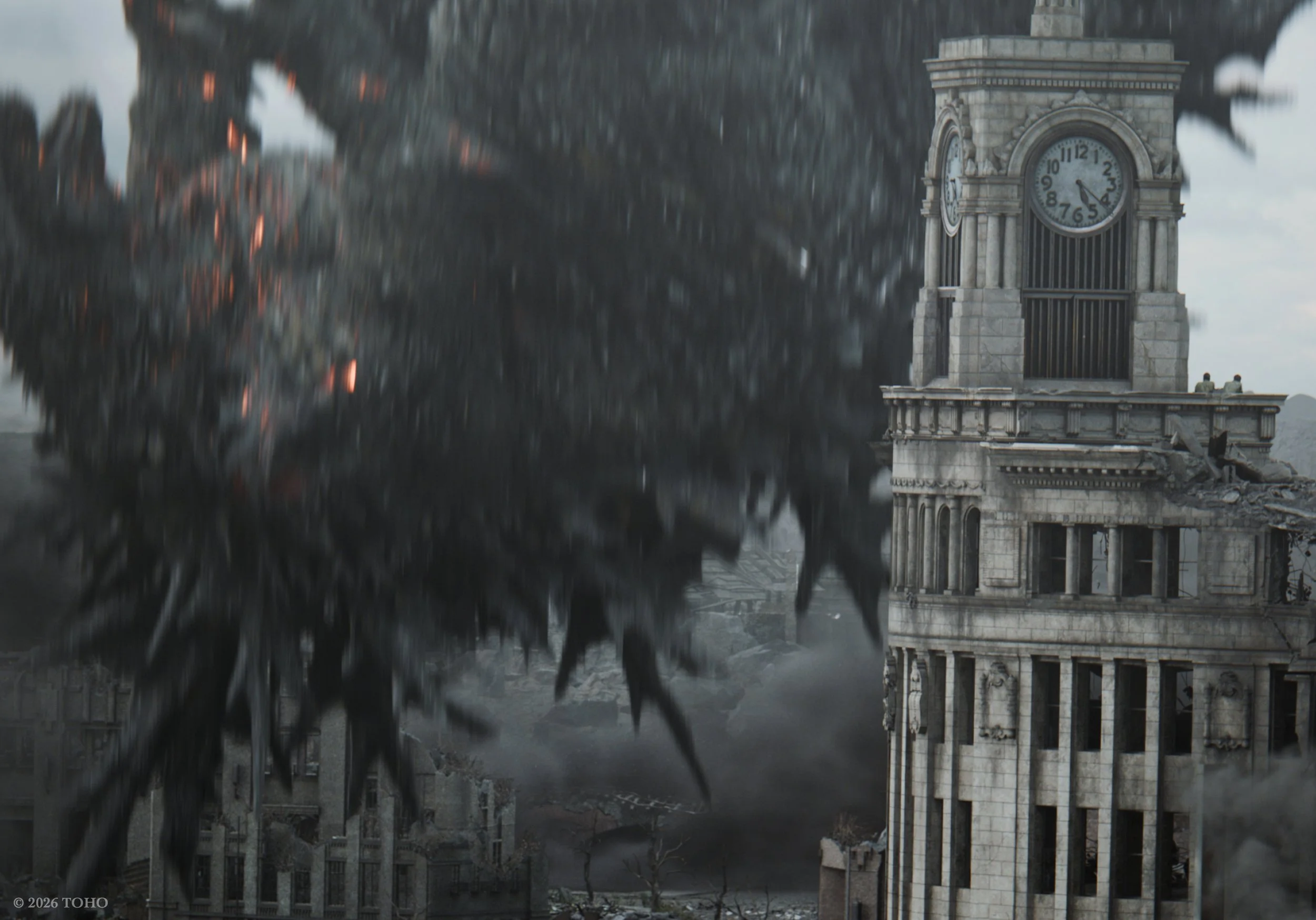
Image via Cineplex Pictures
Blockbusters have been cornerstones of moviegoing longer than I’ve been alive, so much so that they seldom impress me anymore. That’s not to say I can’t enjoy myself at the multiplex, though it’s hard to feel amazed when everything is a quarter-billion dollars and frivolously “filmed for IMAX.” So, believe me when I say that Godzilla Minus Zero reduced me to a near-infantile state of smallness through grandeur alone. I hadn’t cowered in fear like that since Minus One, with Yamazaki and company compounding on the wow-factor tenfold. It’s a Godzilla-sized movie for a Godzilla-sized screen, so awe-striking in its presentation that Legendary should throw in the towel with the Monsterverse and divert all subsequent funding to Toho.
Big monsters aside, Godzilla’s Minus duology (I need nine more of these) succeeds because of their riveting emotional cores. Minus One may be the more emotionally devastating of the two, but that’s only due to Yamazaki exchanging the first film’s tragic overtones with vengeful anger. Minus Zero picks up in 1949, two years after Kōichi Shikishima (Ryunosuke Kamiki) blew up Godzilla’s head, where he thrives alongside his wife Noriko (Minami Hamabe) and adopted daughter Akiko in—for postwar Japan standards—absolute bliss. That is, until both mystery-monster and Godzilla emerge. Joined by returning character Dr. Kenji Noda (Hidetaka Yoshioka) alongside a swath of new characters, it’s once again up to Japan to stop the dueling kaiju threats from destroying the entire country.
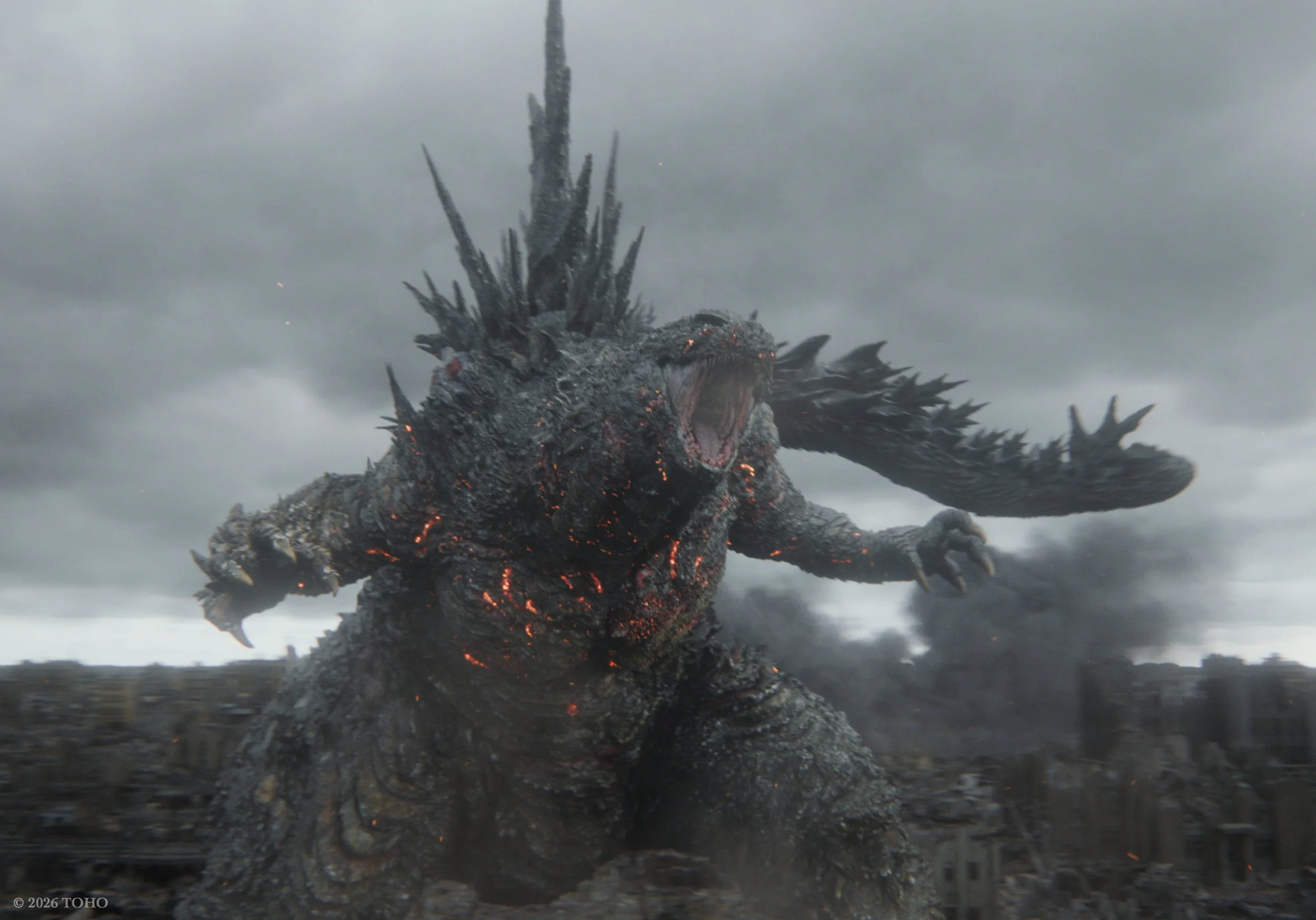
Image via Cineplex Pictures
Where Godzilla Minus One looked inward towards the overt suicidality of Japanese militarism, Minus Zero extends its view to the Cold War superpowers that placed Japan in a precarious position, literalized by two radioactive kaiju beating the sam-hell out of each other. Bolstering Minus Zero’s rage-fueled tone is Professor Kanji Murakami (Min Tanaka), an aged scientist who survived the bombing of Hiroshima. The Minus duology’s focal point remains that of survivor’s guilt, with Minus Zero reframing that trauma as a catalyst for a never-ending cycle of hate and violence. Such results in images I thought impossible for a post-9/11 blockbuster, especially one produced outside the U.S. Both narratively and formally, Minus Zero is Godzilla at its most ambitious.
At the risk of sounding overdramatic, I could’ve straight-up died in that IMAX auditorium. It’s hard to not enjoy oneself during a kaiju movie (unless its an American one), but Godzilla Minus Zero is on an entirely different echelon than any of its ilk. Blockbusters like this and Na Hong-jin’s Hope elucidate how lackluster Western filmmaking has become, leaving me wondering how American tentpoles can be so bland despite their nine-figure production values; we need more movies like Godzilla Minus Zero and less like Godzilla x Kong: The New Empire. Like its predecessor (only dialed up to maximum levels), Godzilla Minus Zero is a stupefying jewel of kaiju cinema, destined for “best of all time” debates for years to come.