
Movie Review: "Good Luck, Don't Die, Have Fun"; Sam Rockwell Shines In Decent Return To Action Filmmaking for Gore Verbinski

7/12 ForReel Score | 3/5 Stars
Out of the many voices that have come and gone in mainstream cinema for the past twenty-six years, I can't name one that's been as sorely missed as Gore Verbinski. His directorial debut, Mouse Hunt, was a moderate box-office success, with Verbinski further honing his surrealist style with an English-language remake of The Ring. Verbinski’s Pirates of the Caribbean trilogy remains one of the defining texts of the 2000s, and his meta-Western, Rango, took home Best Animated Feature in 2012. He faced two consecutive disappointments with 2013’s The Lone Ranger and 2016’s A Cure For Wellness, landing him in what many refer to as “director’s jail”. Nearly ten years later, Verbinski returns with the Sam Rockwell-led anti-AI action-comedy, Good Luck, Have Fun, Don’t Die, which is less of a director’s jailbreak than it is a small step in the right direction.
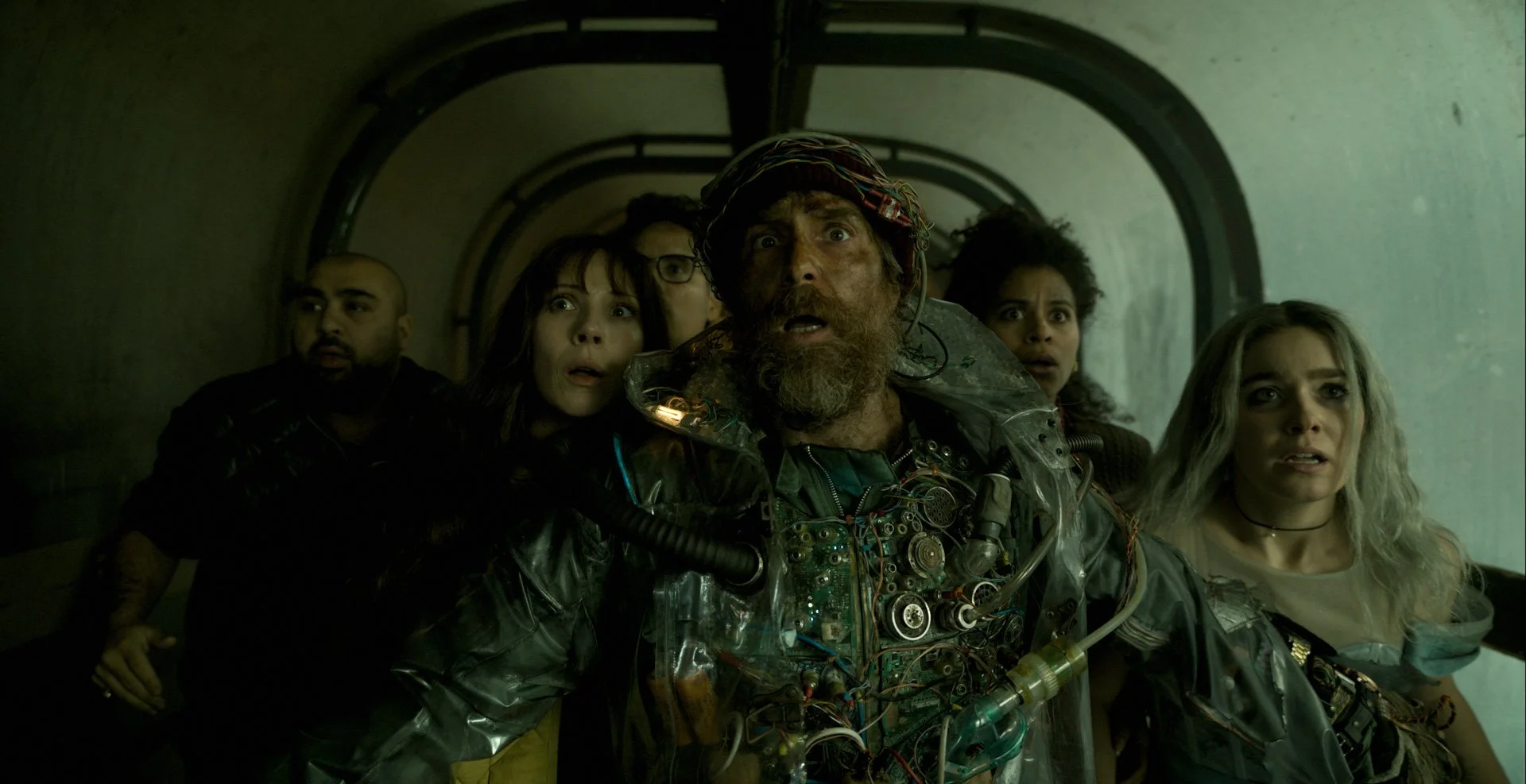
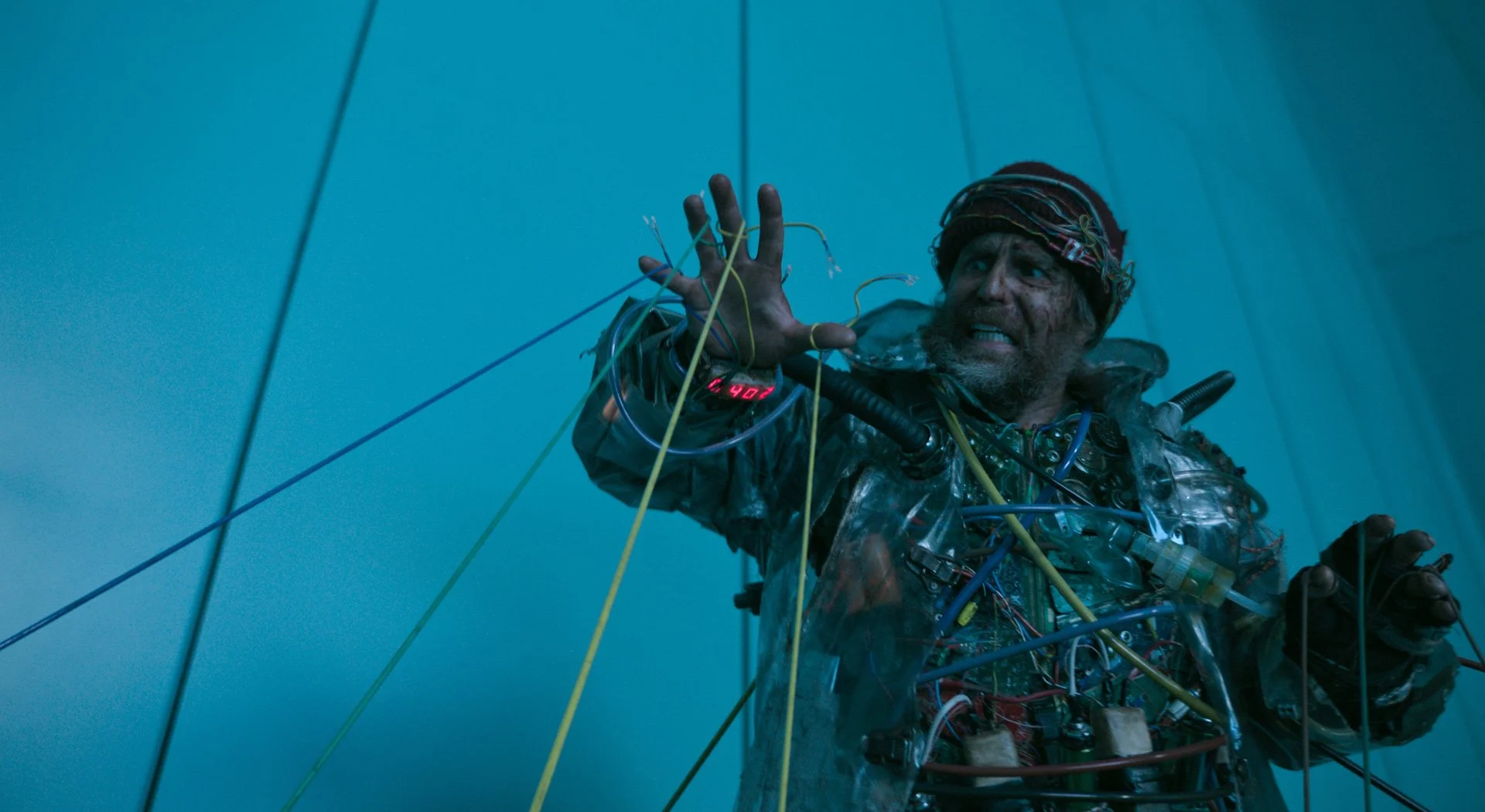
After a crazed man with a big beard and a giant plastic coat (Sam Rockwell) takes a diner hostage and threatens to blow the whole place sky-high, he claims that he’s a freedom fighter from the future and is assembling an army. Joined by two teachers (Zazie Beetz and Michael Peña), a grieving mother (Juno Temple), two other people who don’t get much screentime, and a passively suicidal birthday party princess (Haley Lu Richardson), Rockwell’s crackerjack crew of misfits has to band together to prevent the dissolution of reality as we know it. It’s somewhere in the crossroads of Terminator 2 and They Live, but nowhere near as exciting. It’s about as subtle as They Live (so, not at all), but the latter has the edge by being thirty minutes shorter. Good Luck, Have Fun, Don’t Die isn’t a slog by any means, but for its bulkier-than-necessary runtime, it doesn’t offer much to chew on.
For what appears to be a lower budget than Verbinski usually works with, he makes the most of it with his trademark blue-tinged visual aesthetics and playful energy. It’s visually interesting enough to make it to the finish line intact, with much of the heavy lifting resting on Rockwell’s usual “one man show” bravado. He’s always been a reliable screen presence, if not a complete scene stealer, in films like Seven Psychopaths, Jojo Rabbit, and even Iron Man 2. He’s been a personal favorite of mine ever since his Oscar win for Three Billboards Outside Ebbing, Missouri, but it’s not every day that Rockwell gets to lead a major motion picture. He’s been on a quiet run of fun leading roles in not-so-great movies like See How They Run and the dreadful Argylle, but Verbinski makes excellent use of Rockwell’s eccentricities, particularly when the character depth is lacking.
Several films have released within the past year or so that tackled “The State of Things” to varying levels of success, particularly regarding the looming threat of technology on our lives and minds. Whether it’s the very real threat of AI taking over our lives, class hierarchies, or the downward spirals of Internet brainrotting and dopamine holes (see: Eddington), we’re not exactly in a drought of social satire at the moment. And, unfortunately, Good Luck, Have Fun, Don’t Die falls to the wayside in terms of intelligent satire. Good Luck, Have Fun, Don’t Die examines teenage phone addiction, the overwhelming number of mass shootings, and digital escapism through a quasi-triptych structure (essentially three mini-Black Mirror episodes) centered around four of Rockwell’s hostages, with the satire strengthening as the film progresses.
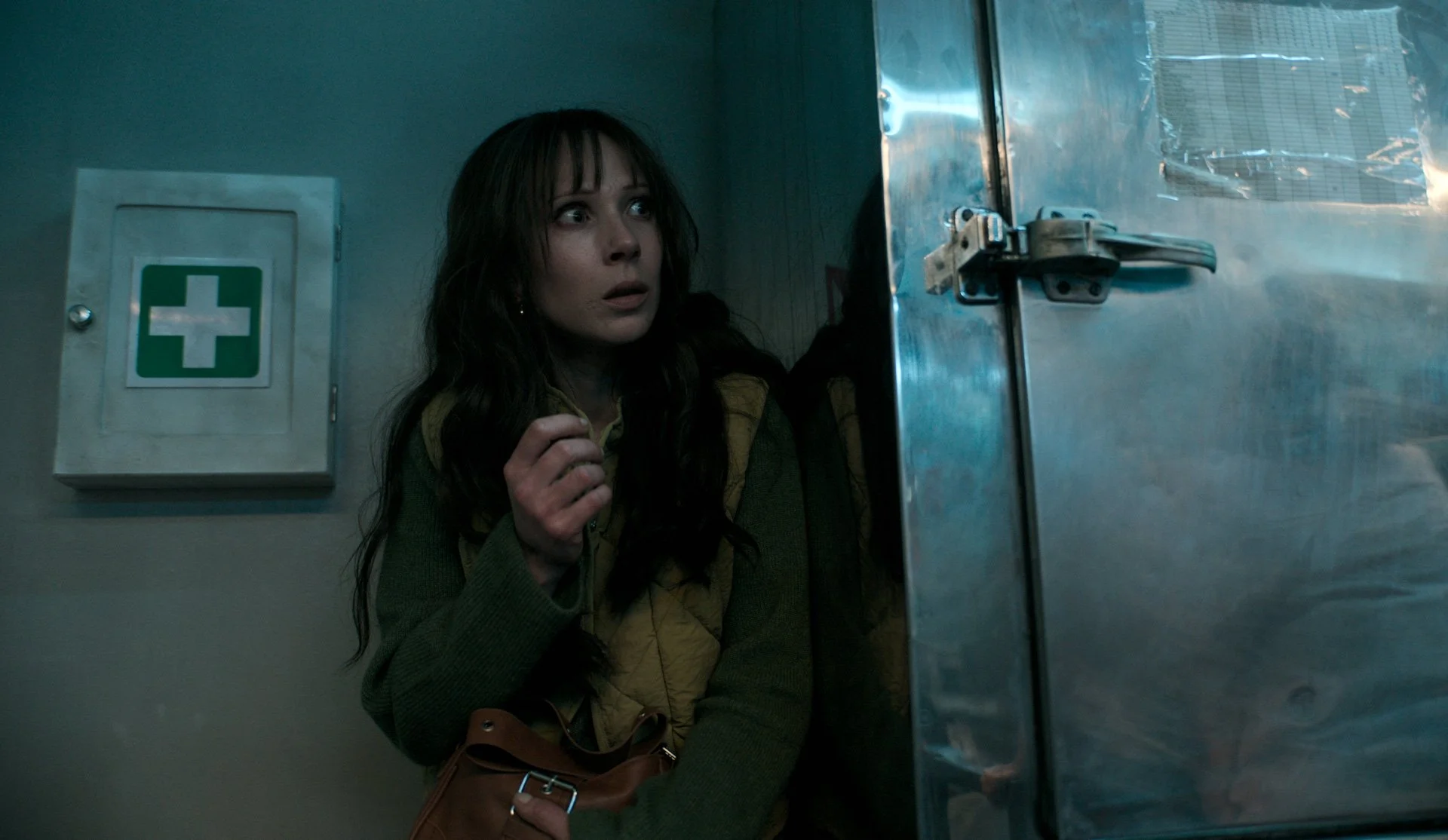
Chapter one centralizes Mark and Janet (Peña and Beetz) as they navigate the high school where they work while staying wary of their phone-addicted students. Having nothing to say outside of “phone bad, book good,” it’s easily the weakest chapter by far. Chapter two focuses on Susan (Temple) as she reckons with the loss of her son in a school shooting, before learning of a cloning process to bring her son back. It’s a risky tightrope to walk, and the humor darkens to a pitch-black tone, but Temple’s tragic, pathos-driven performance makes the reality of her trauma all the more palpable. Chapter three, following Ingrid (Richardson), is easily the best of the bunch, as Ingrid loses her boyfriend to a hole of internet addiction. In our age of endless doomscrolling, it’s about how destructive technology is to basic socialization, which underscores the importance of Good Luck, Have Fun, Don’t Die’s ensemble.
For a filmmaker like Gore Verbinski, I was hoping Good Luck, Have Fun, Don’t Die would be a return to form in the same way that Send Help was for Sam Raimi. That said, Verbinski is still somewhat operating outside of his wheelhouse. For some twisted reason, filmmakers like Shawn Levy are getting the budgets that I’d love to see auteurs like Verbinski having, especially with our blockbusters being a shadow of what they once were. I hope to all that is holy that Verbinski will go back to directing massive tentpoles with bold, creative visions, because his voice is what cinema desperately needs right now. This may not be the film that’ll singlehandedly bring the keys of the kingdom back to Verbinski’s hands, but it’s surefire proof that his creative juices haven’t stopped flowing.