
Movie Review: “Primetime” is a Dazzlingly Surreal House of Mirrors

10/12 ForReel Score | 4/5 Star
“You see how this looks, right?” is as ironic as it is iconic. That Chris Hansen tagline, once at the center of an American television staple (and now the defining viral meme for the movie about that television program), doesn’t make sense in the context of Primetime. Because nothing is ever quite how it looks in Primetime.
Lance Oppenheim’s narrative feature debut is a hyper-stylized adaptation of Luke Dittrich’s article, “Tonight on Dateline This Man Will Die,” a 2007 Esquire chronicle of the botched sting operation that drove To Catch a Predator off the air and effectively ended Chris Hansen’s career as a “serious” journalist. Where Dittrich is meticulous and didactic in his retelling of To Catch a Predator’s final days, Oppenheim is Lynchian and purposefully illusory. Primetime is not a feel-bad means of moralizing (like To Catch a Predator was for audiences, or Luke Dittrich’s piece was for Chris Hansen), it’s an attempt at an induced experiential media psychosis. But I’ll get to that in a minute.

Image courtesy of A24
Primetime follows the spiraling Chris Hansen (Robert Pattinson) — a man so high on his own supply that he has begun to lose his already loosened grip on reality — as he tries to carry Predator through an unprecedented opening: the Wednesday night primetime slot. Hansen is tasked with taking his NBC show up against the ABC behemoth: Lost. (A futile effort as Lost is — and this is true — the greatest television show, period.) Meanwhile, Hansen’s personal life, already having fallen apart, now threatens to spill over into his professional life. Everything is riding on the success of To Catch a Predator. Every catch a gamble, every “Why don’t you take a seat?” more important than the last.
Playing a man riding the razor’s edge allows Pattinson to do what he does best: be a freak. Pattinson is so far beyond the pale that it borders on the supernatural. His relentless repetition of the sex pests’ messages, wildly fluctuating line deliveries, ability to seemingly exist in another realm separate from his fellow characters — it is a mesmerizing performance. Pattinson makes real a synthesis of Hansen’s media ego. And while Pattinson is singularly manic, Primetime is far from a one man show.

Image courtesy of A24
Joining Hansen is his motley production team: producer Andie (an excellent Merritt Wever), predator scout Xavier (Matthew Maher), decoy Del (Phoebe Bridgers), and newcomer Dan Plum (Skyler Gisondo). Primetime, while being sold primarily as an opportunity to see Pattinson’s devastating simulacrum, is as much a star vehicle for Skyler Gisondo as anybody else. Dan, a baby-faced aspiring actor who joins the cast in hopes that it will get him a credit towards his SAG membership, finds himself helplessly lost in Chris Hansen’s house of mirrors almost instantly. And it’s his journey that serves as the audience surrogate. He gets preached to by Hansen, gets to play catch with Hansen, gets to be Hansen…therefore, so do we. It is no small part, and Gisondo plays it with heartbreaking and hilarious balance. Gisondo is invariably excellent, and Decoy Dan, as he is later nicknamed, is a career-defining role.
Lance Oppenheim hides the importance of Decoy Dan at first, instead impressing us with a dazzling foray of technical achievements to stylize what was an uncanny, but dull reality television show. Oppenheim is no stranger to this feat. Any one of his documentaries show just how sharp his eye is for style, as much as for story. He has proven to be a burgeoning master of disguising fact as fiction and vice versa. His documentaries are splendidly surreal and feel closer to scripted narratives at times than the slice of (weirdo) life that they are. It should come as no surprise that Oppenheim, always keen to toy with the medium, was taken by Predator. It was, for all its faults, a groundbreaking and utterly bizarre innovation in the world of 21st-century media — and one that unfortunately foretold the coming seismic shifts in the media landscape.
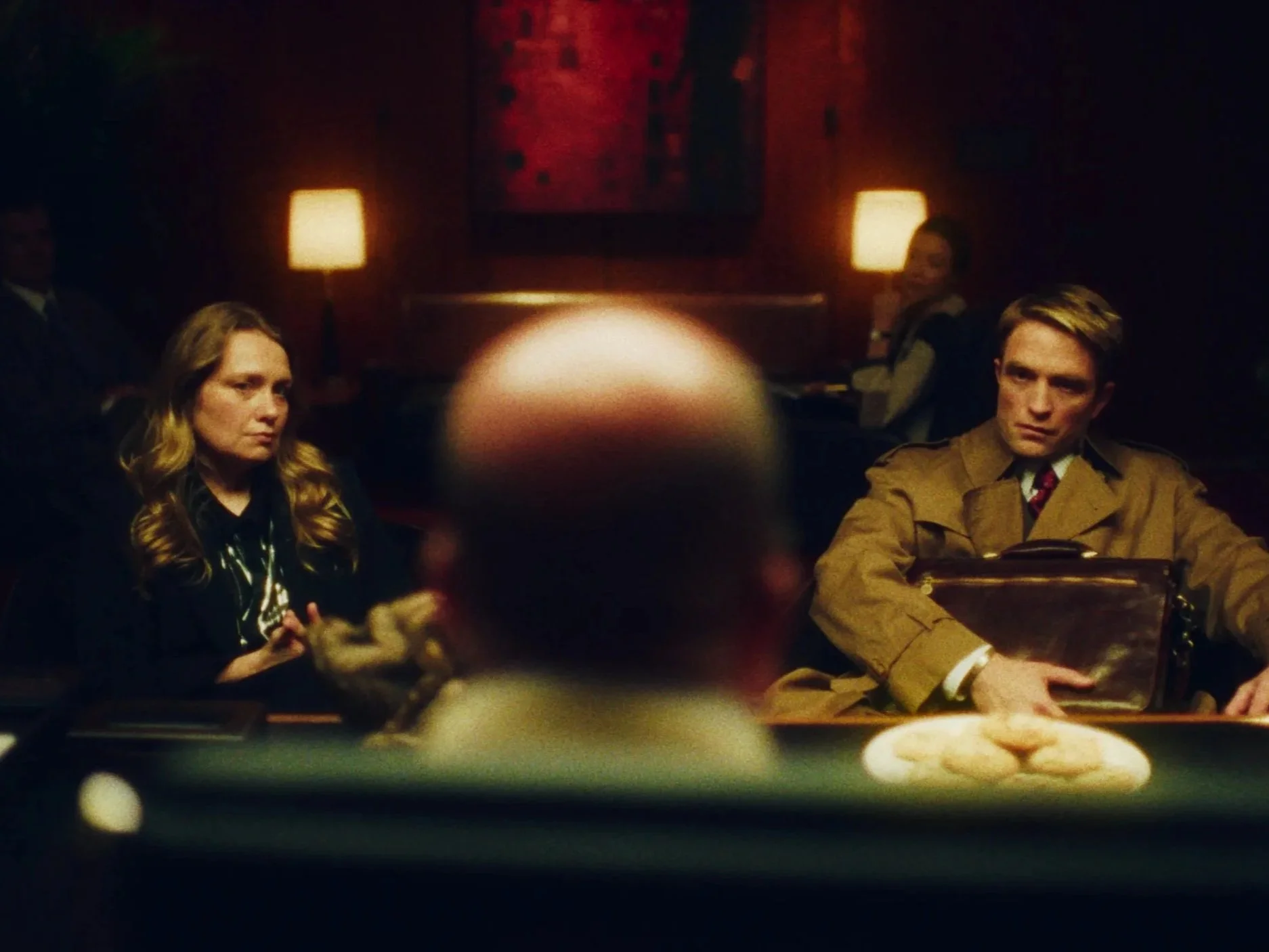
Image courtesy of A24
To Catch a Predator is fascinating for many reasons, but Oppenheim zeroes in on what fascinates him most. It isn’t the show’s legality (the film makes no mention of entrapment) or even morality, it’s the delusion of the spectacle and, moreover, how that delusion was turned into spectacle in the first place. For some, that won’t be interesting. For the moralists, it might even be sacrilegious. But for those who deeply appreciate the craftsmanship of great editing, production design, score, etc. there is a lot to love in Primetime.
And for those who can appreciate beyond that, those that are fascinated by the self mythologizing of small men who make monsters instead of stopping them, those that are fascinated by their very fascination, there’s no time like Primetime.