
TIFF 2026 | Festival Roundup: The Best and Worst Films at TIFF 2026
There’s no season like festival season. At least, not for me. I’m grateful to have gone to Park City for Sundance and Austin for South by Southwest, but TIFF is where my heart lies. 2026 marks my fifth year at the fest—my third as accredited press—and, in a ten-day whirlwind, I was lucky enough to watch twenty-five movies and meet so many wonderful people. I sincerely thank everyone who stopped by to say hello or talk shop, but I found a trend of dissatisfaction in several of my colleagues that I couldn’t ignore. It’s not just about TIFF 2026’s slate paling in comparison to TIFF 2025’s (plus NYFF’s juggernaut 2026 lineup); some unfortunate issues made 2026’s festival quite lackluster.
Firstly, tickets for “the People’s Festival” are simply too expensive. TIFF CEO Cameron Bailey disproportionately compared TIFF tickets to sporting events—an absurd declaration to justify pricing out one’s target audience. “Premium” screening prices “start” at $46, but, in the case of Bassam Tariq’s Your Mother Your Mother Your Mother, for example, ran at $108 a pop. Furthermore, TIFF’s “50/50” jackpot—a raffle introduced for last year’s 50-year celebration—earned less than half of last year’s pool, while audience members sarcastically shout “I love gambling!” during the raffle’s pre-show ad. With the biting of the hand that feeds over with (please invite me back next year, TIFF), I’ve decided to post-ceremoniously rank the five best and worst films at TIFF.
The Best
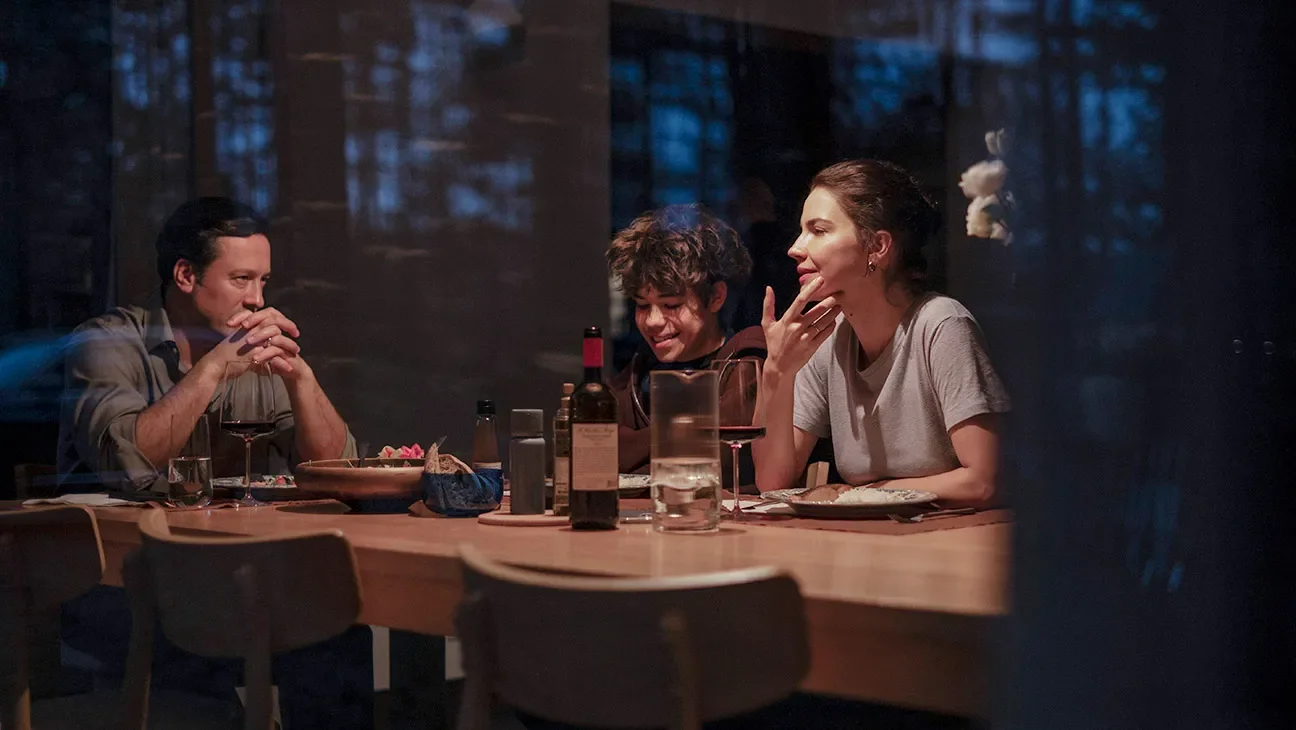
#5: Minotaur
More deserving of Cannes’ Palme d’Or than Cristian Mungiu’s shrug-worthy Fjord, Andrey Zyvagintsev’s Grand Prix-winning Minotaur asserts that one can get away with anything if they’re rich enough. It’s not a Russia-exclusive sentiment, though the film, adapted from Claude Chabrol’s 1969 film The Unfaithful Wife, parallels marital conflict with the ongoing Russo-Ukrainian war. Zyvagintsev—a multi-award-winning festival darling for his entire oeuvre—modernizes Chabrol’s original film with a coldly clinical approach. Apart from highlighting the sheer opulence of the couple’s hypermodern mansion, Zyvagintsev’s spacious frames and dull color grade give Minotaur an uneasy starkness. Coupled with trickling leitmotifs from composers Sacha and Evgueni Galperine, Minotaur’s simmering discomfort reads like a ticking time bomb of marital and political catastrophe.
Stacked on top of the extramarital conflict, the Russian defence ministry orders the protagonist, a CEO named Gleb (Dmitriy Mazurov), to select fourteen of his employees and send them to the front lines. Playing narrative cloak-and-dagger, Zyvagintsev unveils Minotaur’s true thematic meat by facing Gleb with the decision—a more astute and subtle mode of political self-reflection than Daniel Brühl’s plodding armistice plotline from All Quiet on the Western Front. Even if Minotaur moves too methodically to be deemed a “traditional” thriller, the core drama is spicy as it is juicy. Formally and textually, Zyvagintsev’s bleak austerity lends itself to Minotaur’s quietude; a slow-burn by all definitions. Zyvagintsev’s Minotaur offers the prickliness that Fjord pump-fakes, biting while Mungiu’s film nibbles.
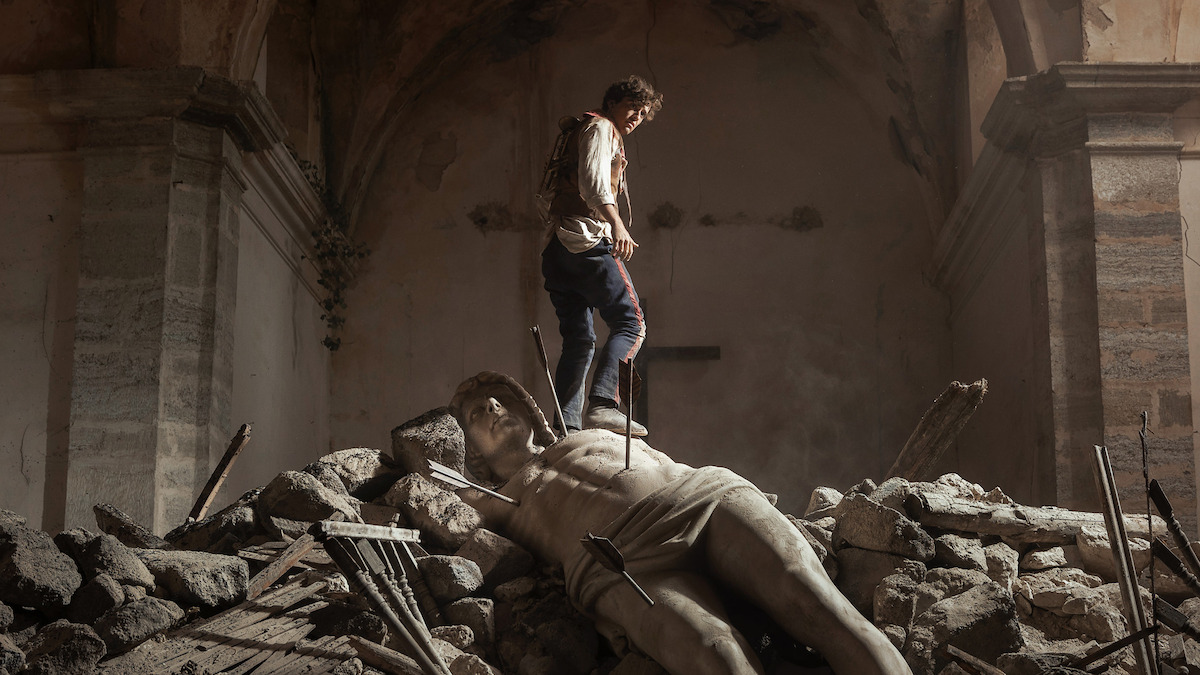
#4: La Bola Negra
Two years ago, actor-turned-auteur Brady Corbet (who, for all his talents, is really easy to make fun of) brought his third film, The Brutalist, to TIFF. Audacious in scale and scope, it easily earned a spot in the decade’s small list of great historical epics. Spiritually succeeding that film, though, is Javier Ambrossi and Javier Calvo (otherwise known as Los Javis)’s La Bola Negra. Inspired by the life and poetry of Federico García Lorca and told through the perspectives of three queer Spanish men in 1932, 1937, and 2017, La Bola Negra is staggering in its emotional and directorial magnitude. It’s the most ambitious film to win TIFF’s People’s Choice Award in years; a testament to its genuine excellence.
Breathing echoes of The Godfather Part II and Kleber Mendonça Filho’s The Secret Agent (particularly the latter’s emphasis on academic archiving) in its politically charged nonlinear structure, the only thing holding La Bola Negra back from a higher ranking is that I haven’t rewatched it. Akin to last year’s Sound of Falling by Mascha Schilinski, the link between La Bola Negra’s three plotlines is obfuscated by a slowly unfolding narrative, revealing the connective tissue alongside newfound information. La Bola Negra’s abstraction far defies its distributor Netflix’s need for second-screen dialogue, with 35mm prints thankfully going out to arthouses across the globe. Expect this to be a major awards player in the coming months, because it deserves the reputation.
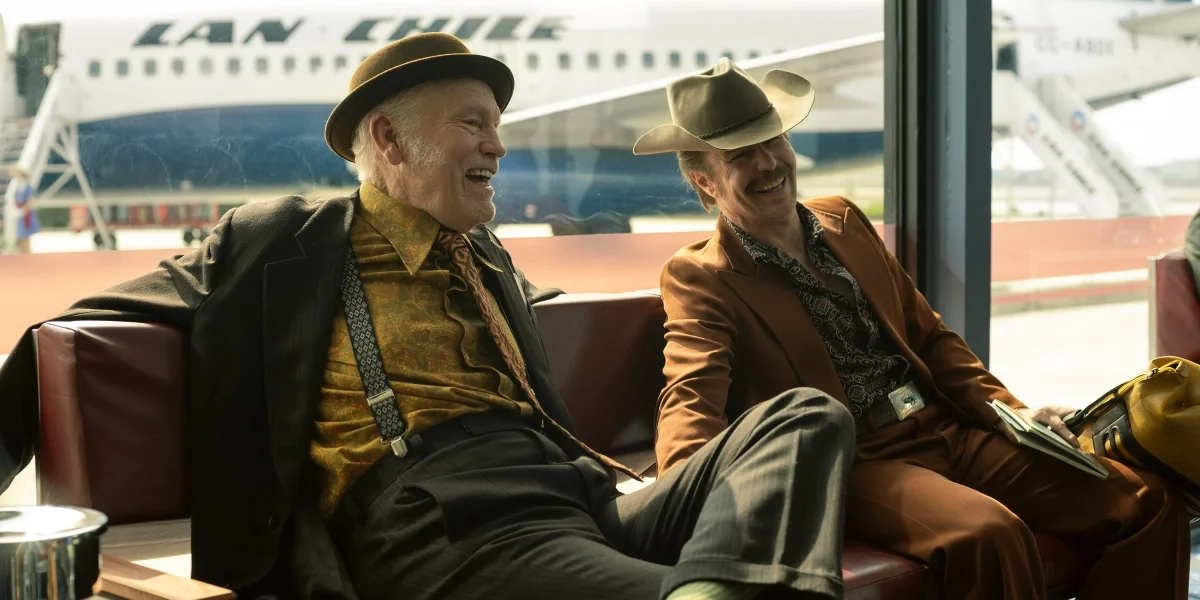
#3: Wild Horse Nine
Reductively dubbed In Bruges 2 after its first trailer, Martin McDonagh’s Wild Horse Nine retreads familiar territory through a more mature lens. Excellent as In Bruges is, particularly for a directorial debut, it’s admittedly quite juvenile. Wild Horse Nine, by contrast, finds McDonagh at a crossroads between In Bruges' hilarious immaturity and The Banshees of Inisherin’s poised sensitivity. Starring John Malkovich and Sam Rockwell as two CIA operatives crashing on Easter Island before the 1973 Chilean coup, McDonagh flips In Bruges’ age dynamic by making Malkovich his focal point—if not his self-insert. Considering the thorny Three Billboards politics and the Sam Rockwell of it all, Wild Horse Nine finds Martin McDonagh at his most self-reflexive.
After rewatching In Bruges recently, I had forgotten how much of its comedy reeked of the late-2000s. It’s also McDonagh’s least visually interesting work, whereas Wild Horse Nine is both beautiful and clever in equal measure. Wild Horse Nine’s South American backdrop, period setting, and gorgeous color palette are also—though not like La Bola Negra—largely reminiscent of The Secret Agent; one might even call it an evil twin. Alongside DP Ben Davis, McDonagh makes excellent use of the vibrant island setting; a vivid shift from The Banshees of Inisherin’s muted tones. The humor is both cheeky and absurd (Steve Buscemi under McDonagh’s pen is miraculous), yet it's McDonagh’s knack for tragedy that makes Wild Horse Nine so wonderfully memorable.
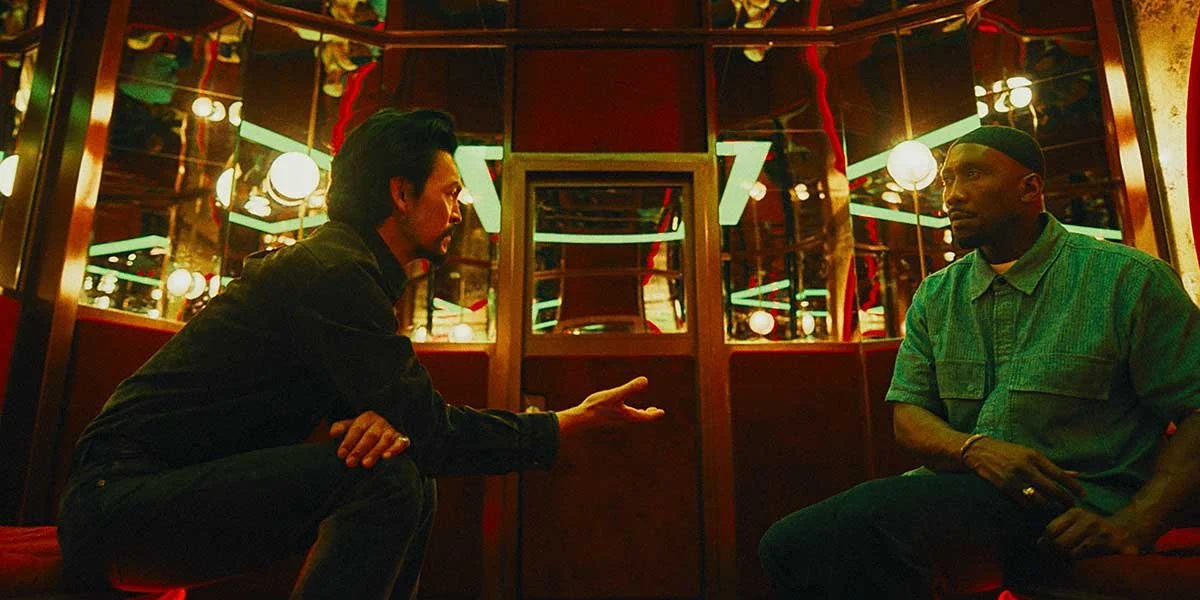
#2: Your Mother Your Mother Your Mother
Over seven years ago, two-time Academy Award winner Mahershala Ali took Comic Con’s Hall H stage to announce a new Blade film for Marvel, helmed by Mogul Mowgli director Bassam Tariq. Coupled with an (off-screen) post-credit cameo in Chloé Zhao’s Eternals, that was the first and last we’d ever see Ali as the leather-clad daywalker. Stuck in development hell until the project eventually fell through, Blade’s cancellation was, retrospectively, a net positive. Not only did the unused costumes go towards Ryan Coogler’s Sinners, but we also got Your Mother Your Mother Your Mother. Directed by Tariq and starring Ali as a sword-wielding hitman, one wonders if the now-defunct Blade film could even hold a candle to its successor.
Upon further discussion with many of my festival-going cohorts, the simplest answer to my query is “no.” The contemporary studio system—institutionalized racism and all—wouldn’t allow for a Ghost Dog riff about Islamic faith, frustration, and familial ties. A CGI-heavy clusterfuck of a production denies all of Your Mother Your Mother Your Mother’s outstanding visual style, and a story about a Muslim facing off against a neo-Christian militia is all the more daring given our current political landscape. All I can say is that Your Mother Your Mother Your Mother’s mere existence is a triumph on its own; the fact that it’s also an amazing movie is a bonus. If I were Kevin Feige, I would also feel like a loser.
#1: Josephine
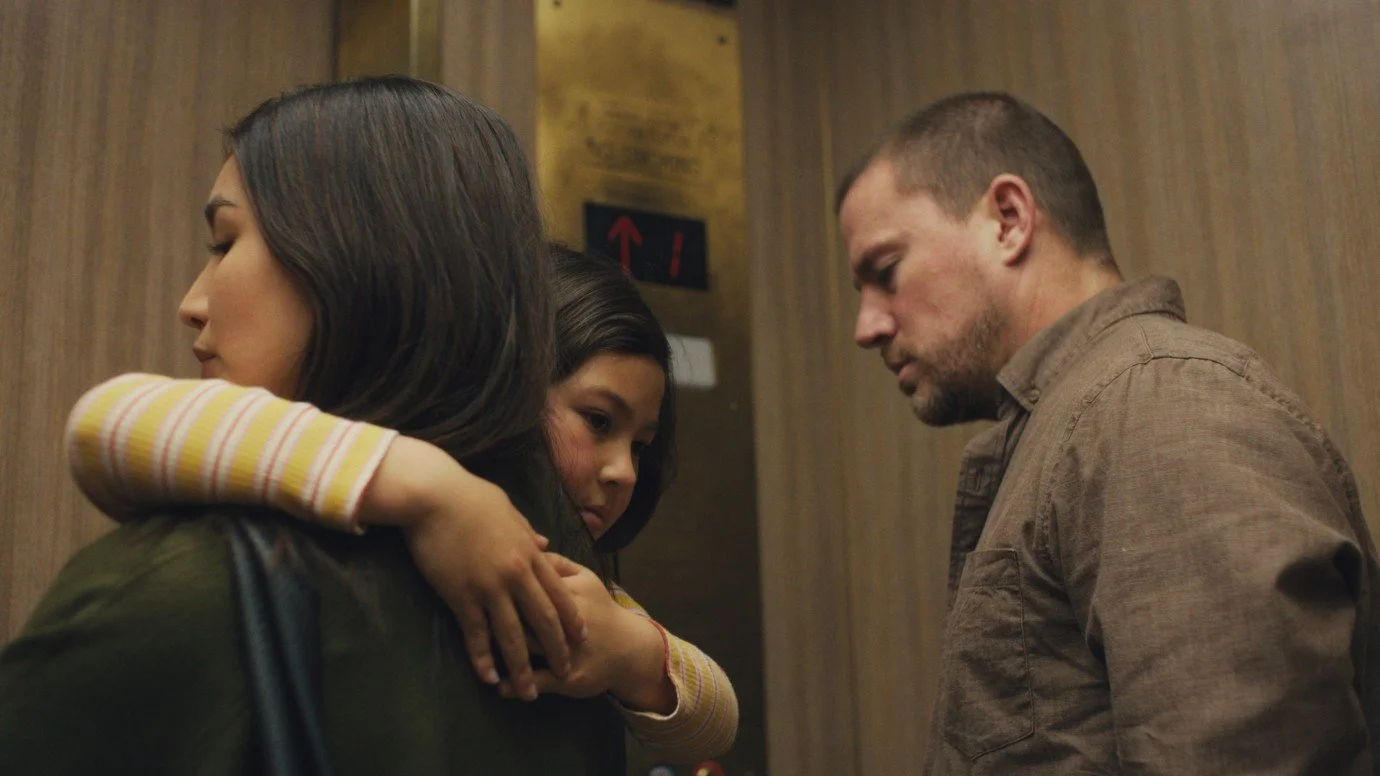
Claiming the throne as my favorite film of 2026 so far—not just at TIFF—is Beth de Araújo’s Josephine. Told through the lens of a child who’s the only witness to a horrific sexual assault, calling Josephine a “violence begets violence” story is an oversimplification. Starring first-timer Mason Reeves as the titular character alongside Channing Tatum and Gemma Chan as her parents, Josephine’s examination of violence’s trickle-down effect is scarier than any horror film I’ve seen all year. Like Philip Barantini and Stephen Graham’s miniseries Adolescence, de Araújo's pulse-pounding sophomore feature (coming four years after her debut, Soft & Quiet) taps into prescient anxieties about contemporary American parenting. Unflinching in its immediacy, I haven’t stopped thinking about Josephine since the credits rolled.
Growing up in the post-Sandy Hook (not to mention 9/11) era of metal detectors in schools and overall sociocultural paranoia, there’s no wonder why Josephine struck me as hard as it did. It’s hard not to see some sort of violence in the contemporary day-to-day—particularly in the internet age—and we’re simply left to reckon with it ourselves. Everyone involved has to wrap their heads around the assault, not just Josephine, showing that a parent can only be so prepared. Brilliant on both formal and textual levels (the eventual courtroom scene is a breathtaking work of direction and dialogue), Josephine’s shattering confrontation of the world we’ve cultivated for our children is nothing short of masterful.
The Worst
#5 and #4: The Apocalypse Now Riffs
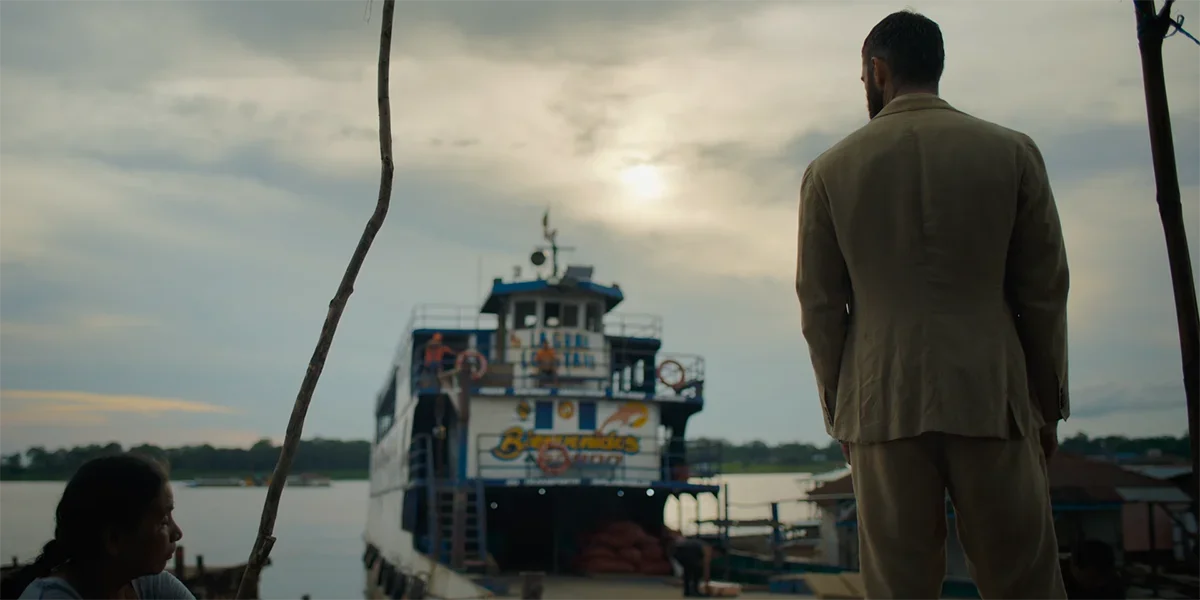
Premiering at TIFF 2026 were not one, but two Apocalypse Now-indebted stinkers: Zack Snyder’s The Last Photograph, and Duncan Jones’ Rogue Trooper. Both promised genre-forward, hyperviolent romps, though where the former toes the line of ontological evil, the latter is flat-out boring. The Last Photograph focalizes Ethan Black (Stuart Martin), a former DEA operative taking refuge with an Icelandic shepherd, who learns of his former lover’s brutal murder in South America. Such a setup would hopefully interrogate the potential power fantasies of white men slaughtering brown people, but this is Zack Snyder we’re talking about. He’s not politically savvy enough (indicated by his proto-fascist 300 adaptation) to tackle these themes in depth; the result is mean-spirited, racist, and horrendously misogynistic.
To the benefit of Rogue Trooper (based on the Gerry Finley-Day and Dave Gibbons comic series), Duncan Jones’ adaptation shares none of The Last Photograph’s mean-spiritedness. Honestly, Rogue Trooper could’ve benefited from more violent cruelty. Running at two hours (the longest Midnight Madness film this year), sitting through Rogue Trooper was an absolute chore. Considering it’s animated in Epic Games’ Unreal Engine 5, I wish I were playing Rogue Trooper instead of watching it. Maybe it’s because it was the last midnight screening of the fest, but multiple people told me they nodded off during the film. Midnights are precarious timeframes, functioning on a pass-or-fail basis, and it’s not a good sign when half of the audience is noticeably asleep.
#3: Bucking Fastard
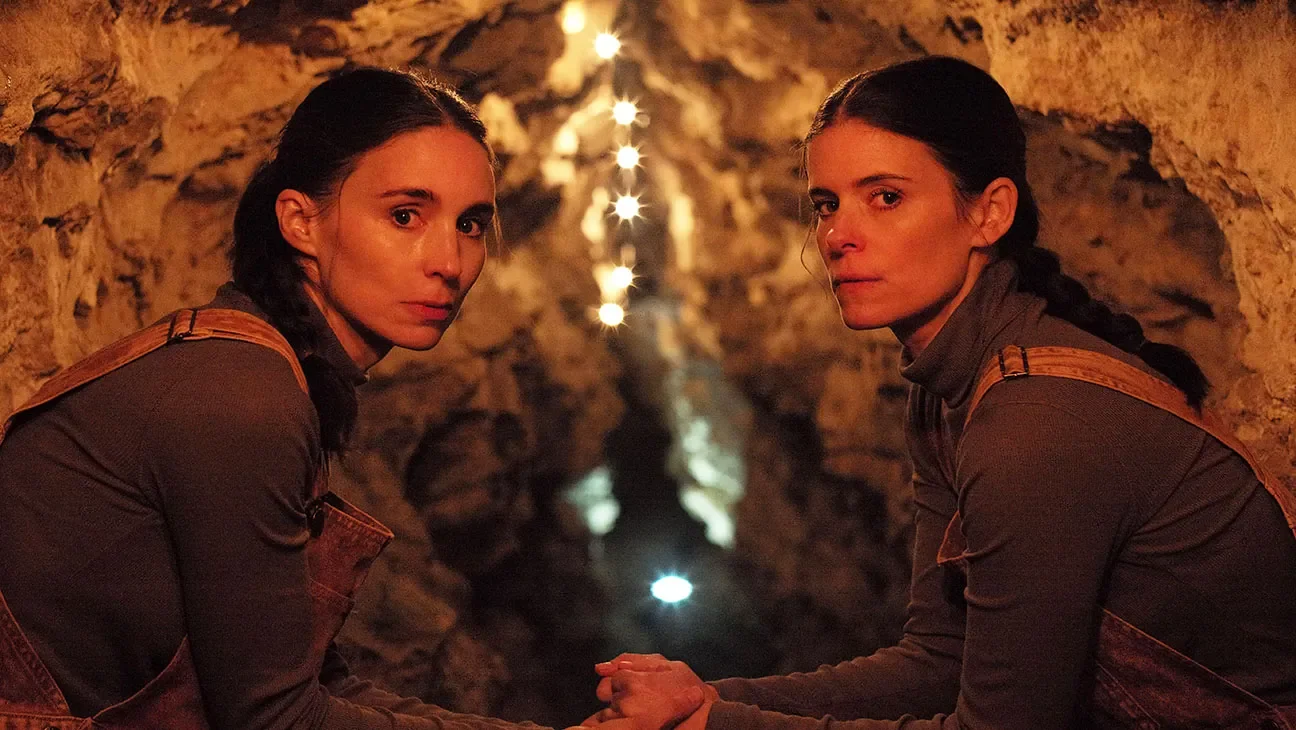
Seven years after master filmmaker Werner Herzog’s Family Romance, LLC, the German renegade returns with the Kate and Rooney Mara-starring Bucking Fastard. Loosely based on Yorkie twins Freda and Greta Chaplin, the Maras star as Jean and Joan Holbrooke: two sisters with a more-than-symbiotic relationship. They speak simultaneously and pursue the same lover (Orlando Bloom), though their co-dependency inhibits them from simple tasks like opening tins of sardines. Even after divisive reactions from the Venice Film Festival, I went into Herzog’s latest with an open mind. Unfortunately, Herzog’s lack of focus makes Bucking Fastard quite the frustratingly repetitive experience. It’s a fool’s errand to expect straightforwardness from Herzog, but Bucking Fastard’s unfocused laboriousness is far from rewarding.
For about thirty minutes, I was quite on board with Bucking Fastard’s gimmick. The mere concept is enough to garner my undivided attention, but Herzog squanders the opportunity through sluggish meandering. Bucking Fastard’s biggest surprise is its 109-minute runtime, as Ryusuke Hamaguchi’s three-hour All of a Sudden felt shorter in comparison. I’m not one to harp on things like “plot,” but Herzog’s failure to captivate (the Holbrookes spend the entire third act strip-mining through a mountain) makes Bucking Fastard an absolute snoozer. I’m not sure if it was as potent a sleeping aid as Rogue Trooper, and I’m not looking to find out upon rewatch. I derive no joy in dunking on a respected auteur like Herzog, hence my dissatisfaction.
#2: Anchors Aweigh
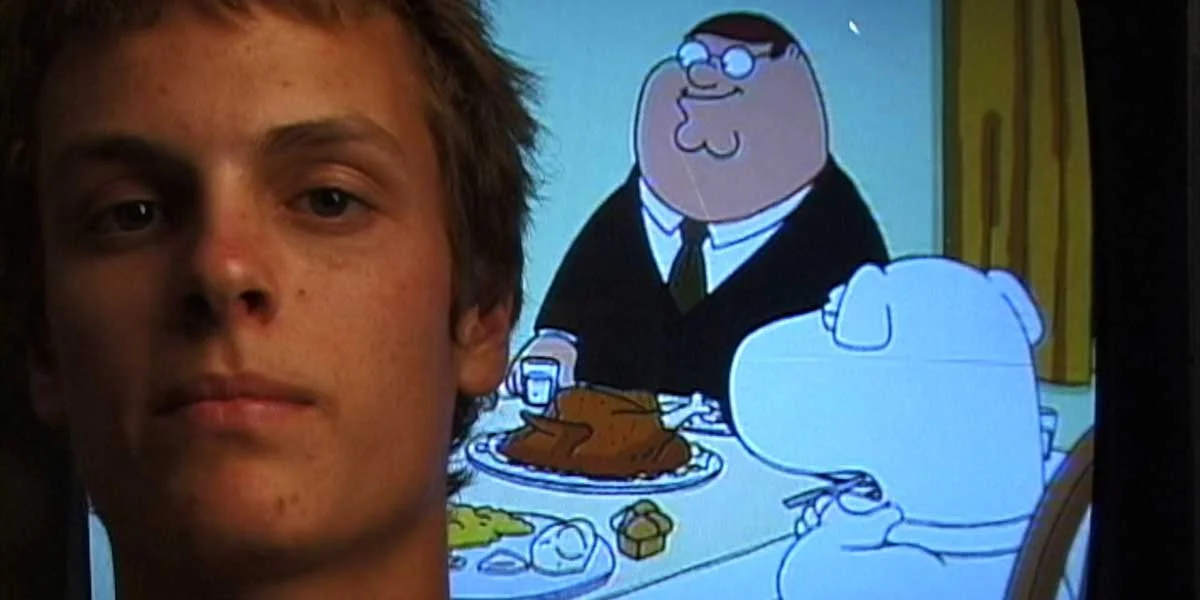
When you’re watching an average of two movies a day, you must be mindful of your headspace going into successive viewings. And, to be abundantly clear, I was far from my right mind when watching Matt Barats’ Anchors Aweigh. Having beelined to the theater minutes after Beth de Araújo’s devastating Josephine, I probably should’ve taken some time to process what I’d seen before diving headfirst into Anchors Aweigh. An experimental one-man show told in “a series of vignettes,” Anchors Aweigh follows Barats as he loses and tries to win back the love of Broadway actress Megan (Serena Profaci). The deadpan evokes that of a millennial Nathan Fielder, though the belly laughs are minimal compared to the number of nose exhales.
Bad attitudes aside, Anchors Aweigh has some merit as a festival-season palate cleanser. Such is the responsibility of a midnight madness slate—a break from the Fall festival froufrou in exchange for something down to Earth. It’s impossible not to crack a smile at Barats’ repeated mention of being “hornier than a ten-dicked dog,” and the use of Radiohead’s “Pyramid Song” as a punchline points to Anchors Aweigh’s ridiculing of contemporary inceldom. There’s not much to extrapolate from the 71-minute runtime apart from some solid laughs, and I’m thankful for a midnight movie (cough-cough Rogue Trooper) that doesn’t overstay its welcome. Maybe I’ll revisit Anchors Aweigh one day—one where I’m not fighting tears when I walk into the movie theater.
#1: Half
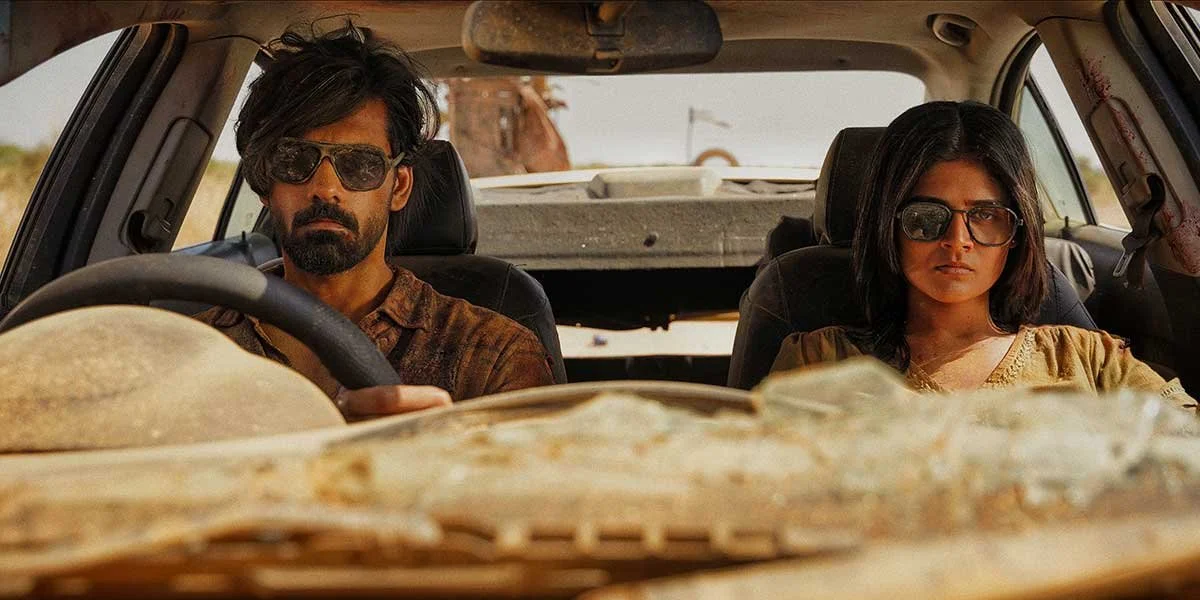
Capping off TIFF’s worst-of list is the least offensive of the bunch: Samjad’s Half. Advertised as a cocktail of Sinners’ ethnography and Blade’s “daywalker” concept of half-human, half-vampire, Half wastes its potential through poor direction and narrative decisions. Every year, I attend Midnight Madness for a solid fight movie (2023’s Kill, 2024’s The Shadow Strays, and 2025’s The Furious), with this year’s being the biggest letdown of the bunch. Firstly, Half is barely a vampire movie. The vampirism primarily comes from the protagonists’ invulnerability, reading more like plot armor than vampiric immortality. There’s no vampire-ing until Half’s final few minutes, leaving so much to be desired. Goopily gory as Half is, the violence is more torture-porn-y than anything else.
Action films rely on violence as narrative propulsion, and Half seldom delivers on that front. Fight sequences are either too short or weightless, with Samjad’s direction muting otherwise stellar choreography. Half (no pun intended) of Half’s draw came from The Raid and The Night Comes for Us choreographer Very Tri Yulisman’s involvement, but the action is so dull that you can’t even tell. Half was easily my most-anticipated Midnight Madness of the festival, yet I, alongside the many friends I brought with me, left the theater utterly deflated. It pains me to place three Midnight Madness films on my “worst of” list, though this year’s programming paled in comparison to years before; I can only hope next year is different.
Wrapping Up
Compared to the last few TIFFs I’ve attended, I’m left feeling a bit let down by this year's slate. There's merit to discovering hidden gems like Eugene Kotlyarenko’s Vintage Violence and Louis Clichy’s Iron Boy, yet the lack of programming like Lance Oppenheim's Primetime, Tony Gilroy’s Behemoth!, Luca Guadagnino’s Artificial, and Takashi Yamazaki’s Godzilla: Minus Zero (the latter three are all going to NYFF) leaves me feeling enviously unsatisfied. Maybe the inclusion of The Last Photograph instead of literally any other highly-anticipated film has me more miffed than I should be, or maybe TIFF spoiled us last year with their best fest of the 2020s so far. Let's just pray TIFF’s higher-ups figure things out for 2027’s fest.