
Movie Review: "The Invite" Makes The Most Of This Wilde Dramatic Date Night

11/12 ForReel Score | 4.5/5 Stars
Earlier this year, Norwegian filmmaker Kristoffer Borgli interrogated what’s said and unsaid in the 21st-century American relationship with The Drama. Though he pushed things to an extreme with a topic (that I will not spoil) that was more garnish than meat, the core case study of two characters figuring out what eternal companionship actually entails more than made up for those hanging threads of North American pulse-checking. On the other hand, though, is Olivia Wilde’s similarly-titled The Invite. A maturation of The Drama’s sardonic cheekiness, The Invite’s shades of Mike Nichols, James L. Brooks, Elaine May, and Woody Allen tender a layered, textured, and deeply personal dual-character study of a marriage falling apart at the seams.
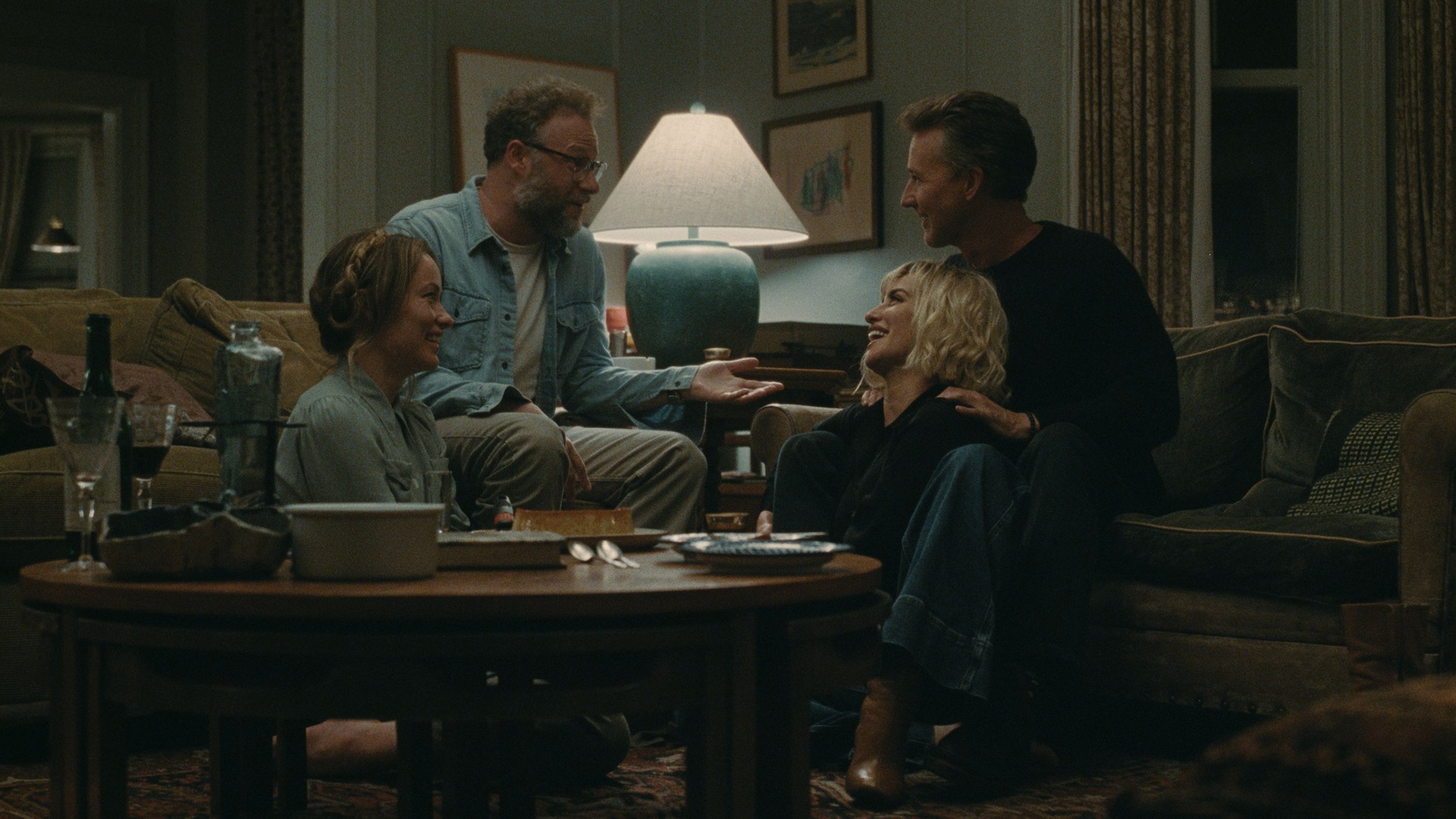
Based on the Spanish film Sentimental (or The People Upstairs), The Invite centers around dysfunctional couple Joe and Angela (Seth Rogen, Olivia Wilde) and their eventful grazing dinner with their hypersexual upstairs neighbors, Hawk and Pina (Edward Norton, Penelope Cruz). Angela—a stay-at-home mom and stuck in a permanent state of redecoration—and Joe—a former band member turned disgruntled schoolteacher with immense back pain—have hit their breaking point, and are one bad night away from calling it quits. The Invite’s modernist realism comes from a brutally honest and deeply emotional place, putting to bed any potential comparisons to Michael Angelo Corvino’s Splitsville. The Invite’s cross-section of the primal and domestic does make for good fun, though it makes for even better drama.
Coasting at the ripe age of twenty-three, I fear The Invite has unlocked a new fear to add to my ever-increasing arsenal: zombified domesticity. Joe and Angela are constantly sniping at each other and take any opportunity to undermine their spouse—all the signs of a unhappy marriage. With their daughter away for a sleepover, the stage is set for all-out matrimonial warfare. Co-written by Rashida Jones and Will McCormack, The Invite’s sense of humor ranges from playful jabs to genuine meanness, making sure to stoke any embers that may have sparked in the ensuing crossfire. As a relationship drama, The Invite’s examination of the contemporary forty-something household is even more pinpoint than Judd Apatow’s (lame and overlong) This is 40.
Nearly four years have passed since Wilde’s controversial sophomore feature, Don’t Worry Darling, and she seems to have really processed her emotions after the public lashing she received in the time since. Between rumors of behind-the-scenes philandering with then-boyfriend Harry Styles, rumblings of on-set screaming matches with Florence Pugh, and her divorce from Jason Sudeikis (in which she was served divorce papers onstage at the 2022 CinemaCon showcase), Wilde has had a truly tumultuous few years in the spotlight. Wilde required a recenter after the Don’t Worry Darling fiasco in both the personal and directorial spheres. The stripped-backness of Wilde’s debut, the John Hughes-Superbad blend Booksmart, does so many favors for The Invite, emphasizing blocking, staging, and screenplay over aesthetics.
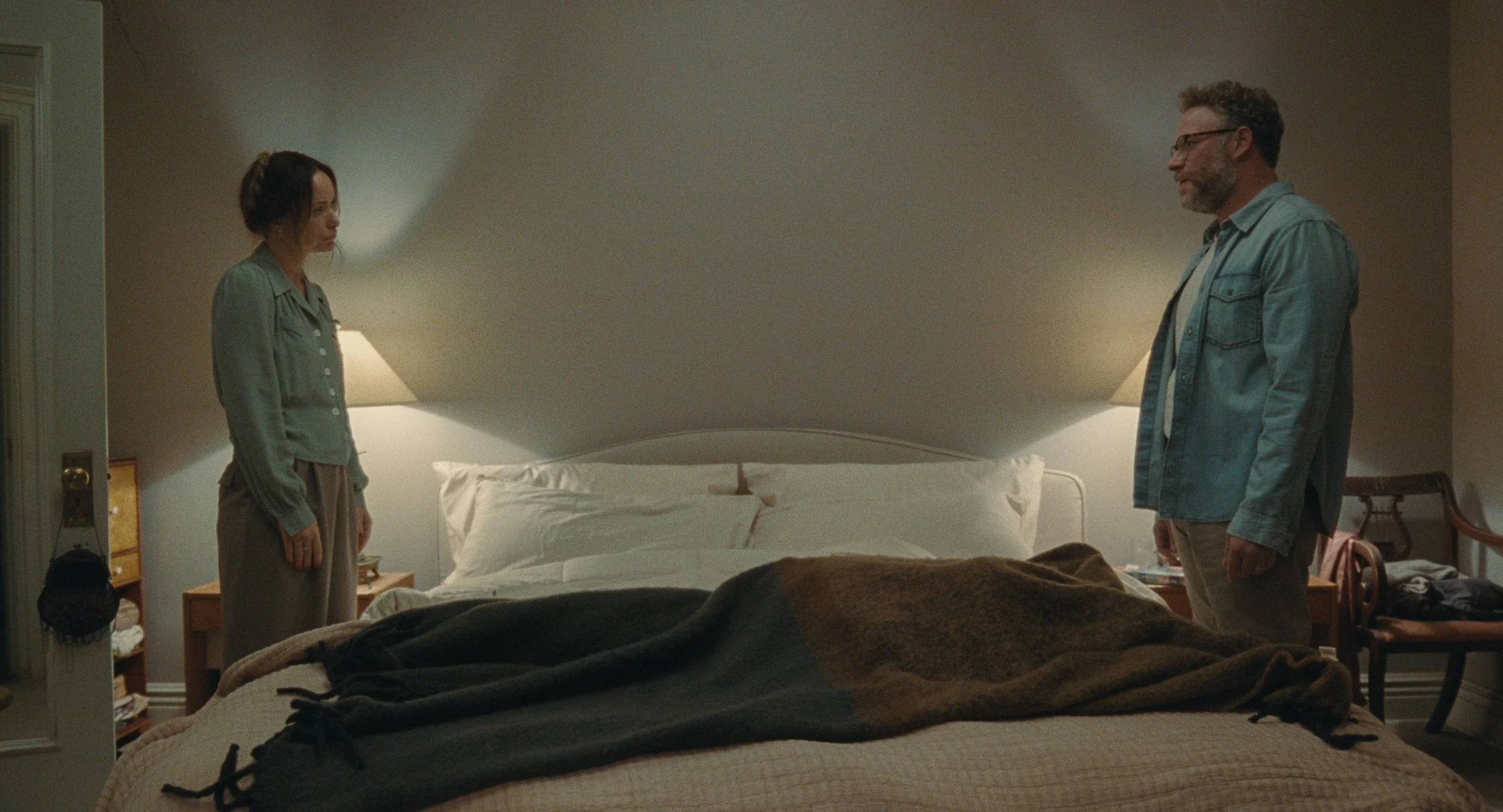
Operating as an A-list stageplay shot for the screen, The Invite’s chamber-set claustrophobia works wonders for Wilde’s marital pressure cooker. It’s a nice piece of San Fran real-estate with a palpable lived-in touch, an aspect that The Invite’s screenplay goes out of its way to remark upon. Coincidentally assisted by Splitsville cinematographer Adam Newport-Berra, Wilde’s sense of space within the quasi-brownstone is nothing short of superb. Wilde knows exactly where to place the camera and how to move it, exemplified by dozens of tightly framed hallway tracking shots, frames within frames, or wide angles with Wilde and Rogen at either side of the shot. The near-overwrought Sundance-y vibe—35mm photography and all—works to The Invite’s strong though seldom cozy sense of intimacy.
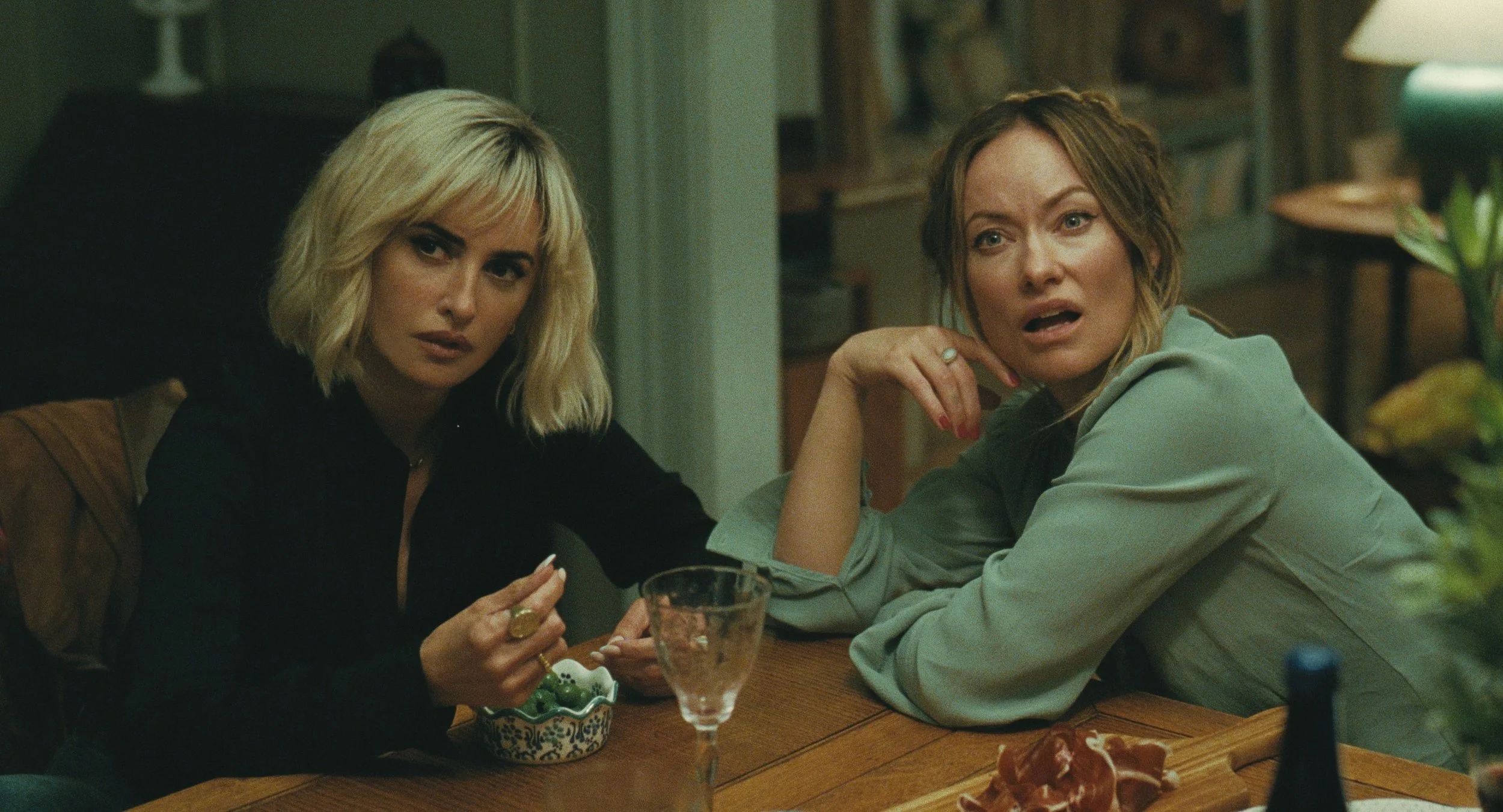
Easy as it is to say that Olivia Wilde is at the center both on and off screen, The Invite’s greatest trait is that it’s nowhere close to being a vanity project. A lesser filmmaker would’ve created a spousal hero-villain binary, and Wilde is not that filmmaker. Wilde isn’t shy of thorniness nor being the butt of the joke, instead embracing it in a similar way to how Seth Rogen will always find himself on the floor. It’s an excellent two-hander with both actors operating at peak performance, serving as a career highlight for both leads. Neither Wilde nor Rogen has tackled such complex material, bar Rogen’s recent work in The Studio and Wilde’s brief appearance in Spike Jonze’s Her.
Opposite Wilde and Rogen are the always-welcome and rarely-disappointing Penelope Cruz and Edward Norton, whose best traits are their lack of completely stealing the show. The Invite works as a four-player game of indoor tennis (racquetball?), with the edit bouncing between characters before landing on the perfect reaction shot—most of which hinging on Seth Rogen as the passive, Albert Brooks-esque funnyman. Between the way Cruz purses her lips or the way Norton addresses Rogen, everyone has these small but noticeable little verbal and physical tics that work so well towards a cohesive ensemble. Nobody’s undercutting each other or going overboard; there’s an equalized rhythm to The Invite found only in the best of performers, with no clear favorite in sight.
Though I enjoyed the recent heightened marriage-on-the-rocks comedies like Borgli’s The Drama and Jorma Taccone’s Over Your Dead Body, The Invite's lack of heightened stakes and staunch realism crowns it as 2026’s best romantic dramedy so far. By no means is Wilde’s dissection of primal instinct and the nuclear family a new nor groundbreaking concept, yet the sheer modernity of The Invite and its deeply-rooted interpersonality present an ornate charcuterie board of ethos, logos, and pathos. The indebtedness to Wilde’s influences and predecessors has all the potential to veer into pastiche or copycat-ism, though The Invite is more update than upheaval. Early as it is to dub The Invite “a classic,” it’s certifiably one of my favorites of the year.