
Movie Review: “The Uprising” Makes Rebellion a Colorless Bore

7/12 ForReel Score | 2.5/5 Stars
The Uprising is an action epic rich with marvelous technical credits, but at the end it simply isn’t much fun. Granted, this isn’t exactly supposed to be fun: the story involves dark themes, since it reveals awful things about human nature under class and power, but the gloomy message doesn’t sit well with me when the violence is so sensationalized. Although Francois Truffaut famously believed that an anti-war film could never be made, period films usually get a pass as it concerns people from a time of a different system with different values. But I don’t think the story of tyrants manipulating the common people with a false sense of hope is that outdated after all. This becomes a movie concerned with bombast when it should be concerned with humanity.
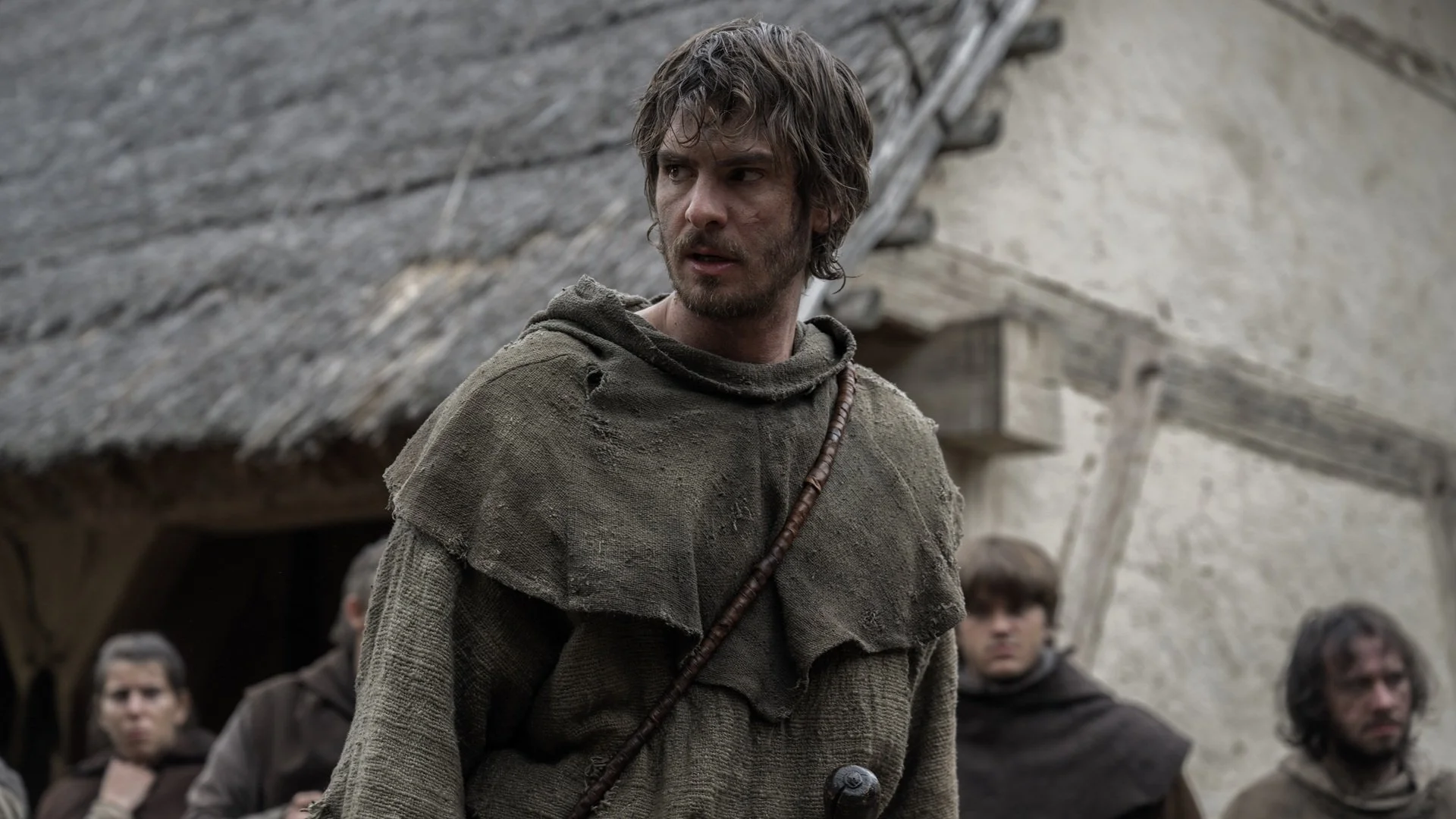
At its core, the movie simply lacks a strong set-up. The motivation and reason for the film’s inciting incident is so unconvincingly direct that the rest of the film plays like set pieces strung together with a loose plot. In the opening moments, helpful titles inform us this film takes place in 14th century England, where a plague has claimed the lives of half the population, and survivors were “engulfed by grief.” We see Andrew Garfield as a dirty farmer wandering around with a sorrowful expression. We will soon learn this is the only expression he wears. Government officials gather so that a nameless advisor can reiterate how badly they need money, and we can go straight to the next scene where citizens react to the tax increase. Hence, the uprising.
Obviously, there are problems littered with society before the tax increase even took place, but we never really get a sense of peasant life, since the film seems in hurry for the people’s rebellion. Fine, but the rebellion formula is common ground at this point. We know one group leads the charge while the rest cheers them on; we know they yell demands to the higher power; we know there will be obligatory satisfying scenes where law enforcement get their throats slashed. A good example of these movies (say, Braveheart) masters characterization and story. This one barely supplies either.
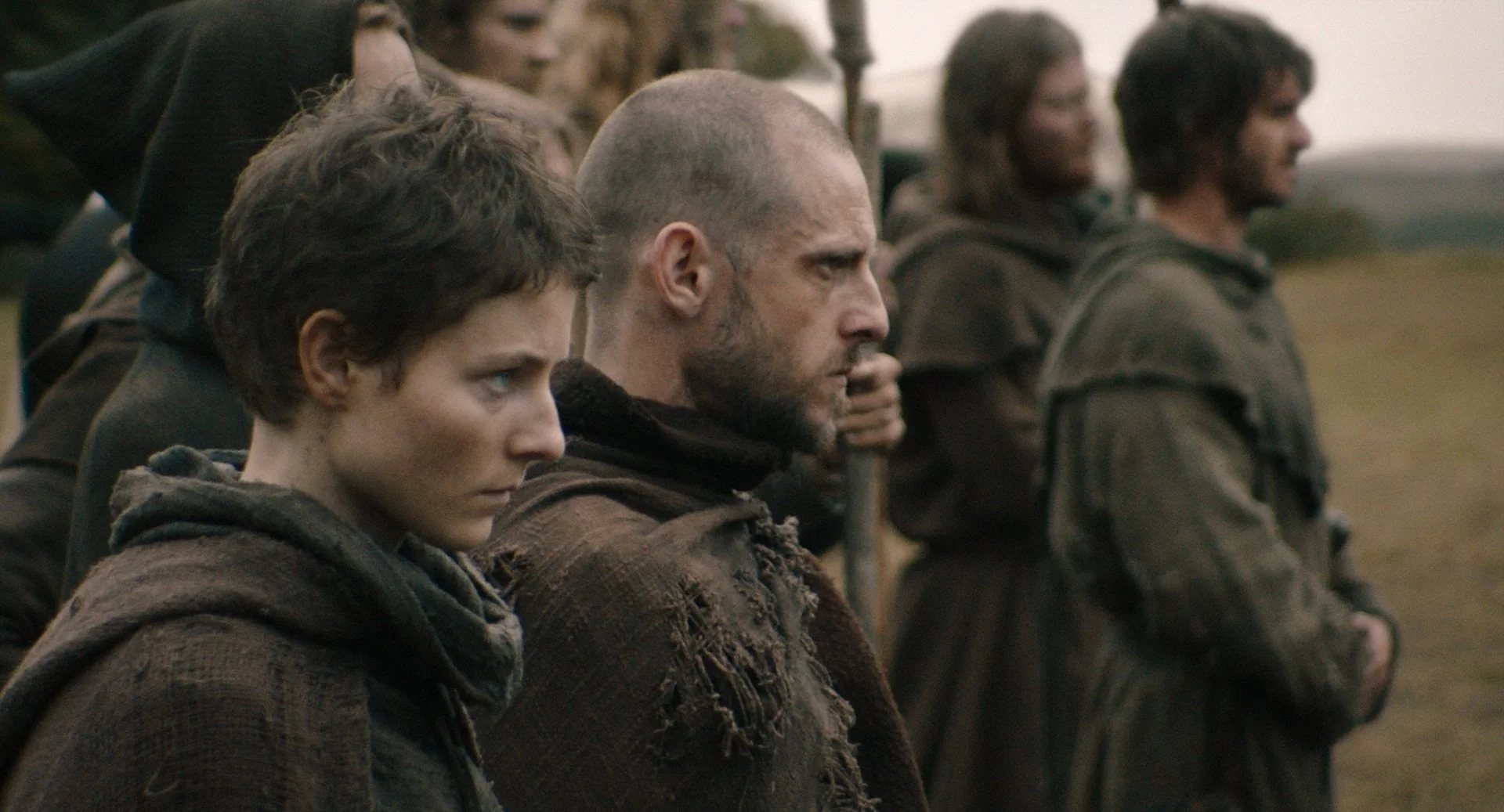
Cosmo Jarvis gives the film’s best performance as Wat Tyker, one of the leaders of the resistance. He is, I think, given the best lines, and delivers them with the most depth. The other characters, such as Jamie Bell as the priest John Ball and Thomasin McKenzie as fellow peasant Alyce, don’t exactly demonstrate dimension. Their purpose is to utter sad speeches to Garfield to incite anger in him, which fuels his hunger for violent revenge. I thought there was a good thread in the movie about how violence will always be met with more violence no matter which side starts it, but the movie seems unkeen to explore such a cycle.
The director of The Uprising is Paul Greengrass, whom you may remember from the Bourne franchise and Captain Philips. Greengrass comes from a documentary background, and so is able to handle every scene with maximalist coverage. I am doubtful of its effectiveness, as many sequences here stimulate us with angles and cuts and zoom-ins, so much that I became almost nauseous. He’s also written the script of the movie, which suffers the opposite problem: too little is conveyed to us, and whatever is conveyed, is so devoid of heart and soul that it ultimately feels like staring at nothing in particular.
Acting/Casting 1 | Visual effects/Editing 2 | Story/Message 1 | Entertainment Value 1 | Music Score/Soundtrack 1 | Reviewer's Preference 1 | What does this mean?