
TIFF 2026 | Movie Review: Ryusuke Hamaguchi's Sharp, Spirited Exhortation For Healing

11/12 ForReel Score | 4.5/5 Stars
It’s only natural that the 2020’s have netted several cinematic exhortations from our finest directors, with many of these films stressing the importance of art as healing, as well as providing some reflection on our post-COVID world, one of increased polarization, burnout, and general lack of clarity.
None of these themes are exactly new within the loaded filmography of auteur Ryusuke Hamaguchi, but that doesn’t stop All Of A Sudden from being one of the most thrillingly dense films you’re bound to see this year. Clocking in at three hours and sixteen minutes, Hamaguchi’s latest takes the age-old “physician, heal thyself” idiom, and shapes it into a multilateral exploration of what it truly means to be healthy and alive, through societal, mortal, and personal lenses.
Set predominantly in Paris, the film follows Marie-Lou (Virginie Efira), a nursing home director spearheading a new wellness initiative rooted in the practices of Humanitude, a real-life approach centered on returning dignity and gentle care to the elderly and ill. Despite this brief logline, the bulk of the film is not in the nursing home itself, and we embark on a truly remarkable journey with Marie-Lou as she searches for a recharge of her own spirits, both personally and professionally. In her search, she attends a play created by Japanese artist Mari (Tao Okamoto), which moves her tremendously, leading the two to meet after the play, with their journeys then intertwined by what feels like destiny.
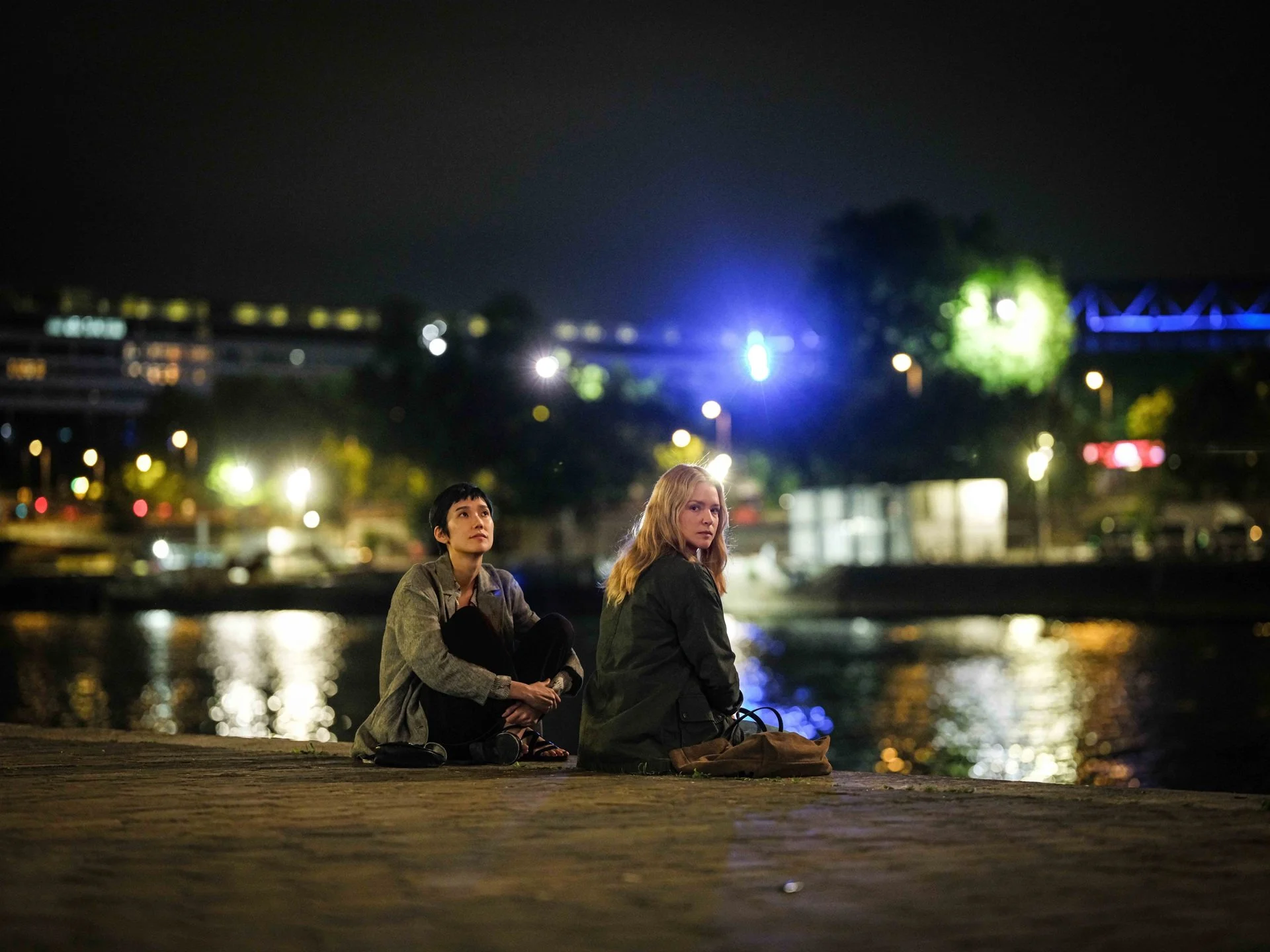
The central journey is simultaneously spiritual and grounded, often in equal measure. One of the greatest compliments that I can give to the film is that it never feels like it half-bakes any of its central ideas, incredibly apt for a film in which defining clarity is a salient concern. Many of the interpersonal and societally-based discourses in the film are aptly recognized by both our protagonists and ourselves as an audience as problems that can only be solved with radical change, with one of the central nursing home’s goals quite literally being to ‘make the impossible, possible’.
Hamaguchi’s structural choices themselves build on this idea of radicality, and really show us that radical change starts at a personal level, and ought to be grounded in a sense of dignity and compassion. I understand how the idea of a 20-minute-plus scene in which the protagonists quite literally write out an anthropological diagram of societal pitfalls could feel overly didactic. This same potential qualm about didactism could apply to the whole film, in fact. After all, one of the grand ‘rules’ of storytelling is ‘show, don’t tell’. Yet, Hamaguchi and his two stellar leads make such grand, literal thematic conversations feel intimate. The lightness and empathy that the two Mari(e)s’ relationship is predicated upon make the explicit discussion of historical bummer topics like late-stage capitalism, mortality, and 21st-century personhood feel oddly invigorating, guided by each character’s personal truth. Their walk-and-talks through the scenic streets of Paris feel as thrilling as blockbuster set pieces, and it is truly no surprise why the duo of Efira and Okamoto shared the prestigious Best Actress prize at the Cannes Film Festival earlier this year.
I must admit that the fairly hyperbolic diction of my praise does not reflect some kind of extremity on the film’s end, as it remains so tender with its characters, with this very tenderness being a central plot point for said characters to achieve. As mentioned at the top of the review, these kinds of earnest cinematic exhortations have become increasingly common from the world’s leading auteurs, and it absolutely makes sense. What sets All of A Sudden apart from other life-affirming stories about the power of art (ie; Hamnet, Sentimental Value, to name a few) is how socially grounded it all feels. So much of this is informed by the explicit political consciousness that the film adapts, but also by virtue of its setting in an elder care facility. The immediate connotations that may come to mind with such a setting are likely to veer into depressing and stark territory, but All of A Sudden finds so much power within them, thanks to its radically imaginative and optimistic spirit. Perhaps most surprising is how Hamaguchi is able to turn this kind of space into an organic hub for intersectionality, both literally and thematically. The ailing seniors are not the only beneficiaries of moving humanity and grace, with focus given to Mari’s own terminal illness and the grace of the creative process. In other words, the film extends so many emotional olive branches to the audience, in terms of in-universe and real-world circumstances, respectively… and I found myself latching onto a great many.
Calling films ‘life-affirming’ has become an ontological festival buzzword, but trust me when I say that All of A Sudden honestly lives up to that descriptor, not only because of its subject matter on mortality. All of this grace and meticulous study coalesce in a stunning third act, one chock-full of sweeping emotional moments that feel grounded in the psychology of the film, and never come off as too saccharine. Sometimes, especially in film festival contexts, I find myself feeling a tad jaded or unresponsive to uber-emotional moments in films, but Hamaguchi and company had me deep in the feels, and I imagine with how thorough the film is in its character work, the payoffs will touch even the most jaded souls… and I promise you, you will never be able to see or experience a foot rub the same way after seeing this film.
I understand that three-plus hours of dense thematic conversations may be a hard sell for some, but after all, patience is a virtue, and one that All of A Sudden rewards its audience for in spades. Cinematic escapism is a healing mechanism for many, and one that this film blends with an extensive invitation to its audience to join in on its remedial thinking and subsequent feeling. As I said, change is a radical idea, but this film shows us that it can also be gentle, materializing both in the form of simple acts of care and, of course, stellar filmmaking.