
SXSW 2026 | Movie Review: Count "Leviticus" Among The Impressive Roster Of Australian Horror Successes

10/12 ForReel Score | 4/5 Stars
Maybe it’s just the RackaRacka (directors of Talk to Me and Bring Her Back) of it all, but Australian horror has been on the up-and-up as of late. One could call Jennifer Kent’s The Babadook the progenitor for Aussie horror going mainstream, with RackaRacka carrying the torch into the 2020 era. Even with a plethora of filmmakers from the land down under, the homeland’s usually relegated to the likes of George Miller and the Mad Max franchise. Even then, most of those movies take place in the outback or some other wilderness. Now, a new challenger approaches: Leviticus. The directorial debut of Adrian Chiarella, Leviticus is Australia's latest entry in its burgeoning horror canon.
After being subjected to an occult conversion therapy ritual, Naim (Joe Bird) and Ryan (Stacy Clausen) are haunted by an invisible (to everyone else) specter hellbent on killing them. On premise alone, Leviticus (named after the Old Testament’s moral rulebook) is cut from similar cloth to Smile and It Follows. However, its queer overtones distinguish Leviticus from its predecessors. Frankly, I was more reminded of Jane Schoenbrun's I Saw the TV Glow’s emphasis on queer repression than anything else. Bird skillfully internalizes Naim’s withdrawn sheepishness, whereas Chiarella takes the time to flesh out an oppressive society without making things abundantly clear to the viewer. Similar to Luca Guadagnino’s Queer, Leviticus is an immensely lonely movie, emphasizing the need for human connection while contrasting it against homophobic social standards.
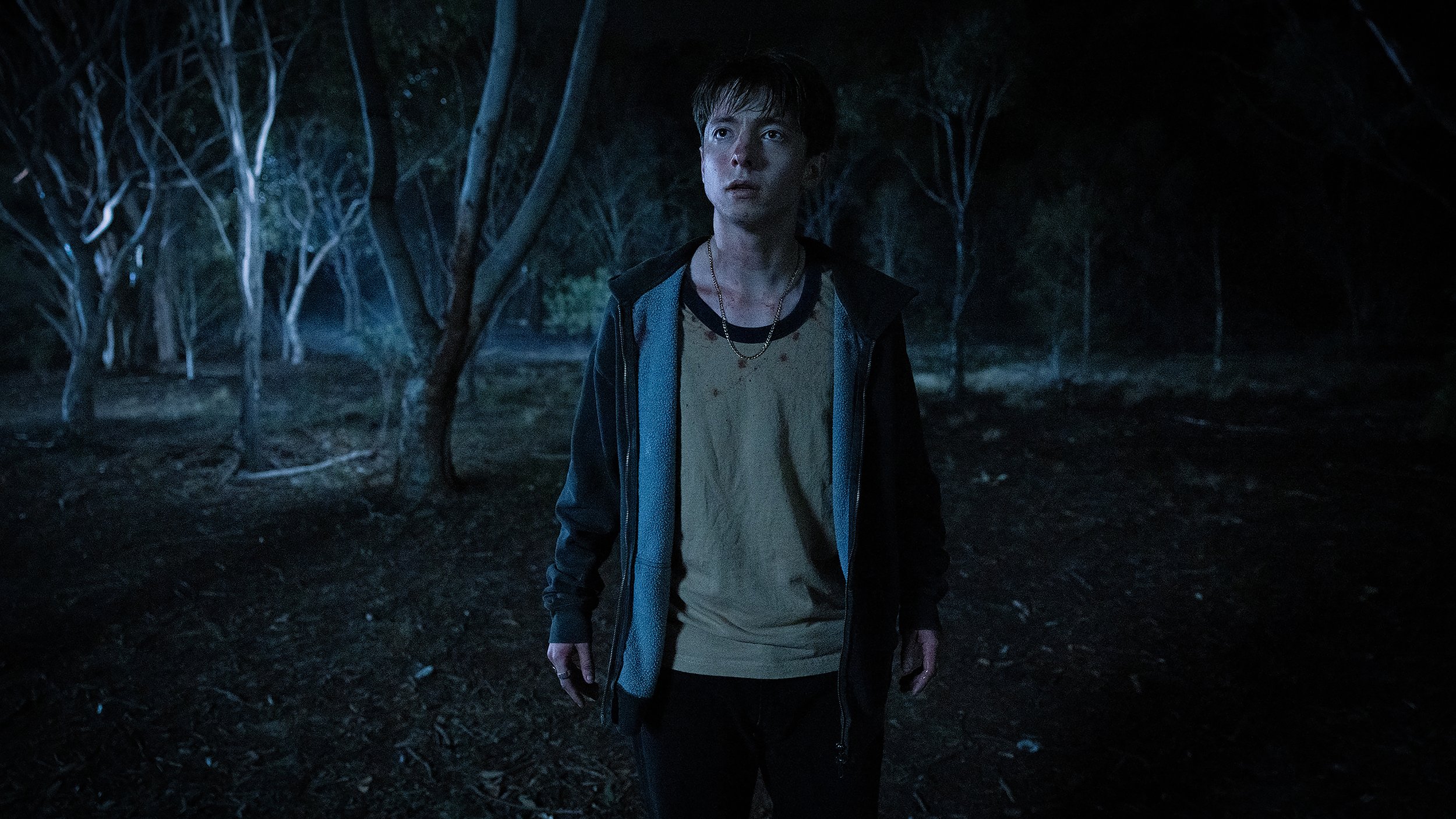
For a horror film, I wouldn’t go as far as to call Leviticus “scary.” Instead, it’s a concentrated dose of malaise that made me more uncomfortable than flat-out terrified. Set against the core drama between Naim and Ryan’s oppression and repression, the actual scares aren't as gripping as the tension between them. The strain stems from how the skulking presence chasing Ryan and Naim takes the form of the other, prompting the two to keep their distance as much as possible. That said, that doesn’t mean that Chiarella isn’t good at building suspense and following it up with earned payoff. A few scares gave me a good jolt, but there’s a stronger emphasis on atmospheric dread rather than blood and guts.
As solid and well-constructed as the horror elements are, I found myself more locked into Leviticus’ interpersonal conflict than anything else. The central romance is as yearning-laden as it is tender, as Naim and Ryan’s chemistry levels are off the charts. When Naim and Ryan aren’t absolutely scared shitless of whatever’s coming after them, their shared screentime is genuinely very sweet, affectionate, and moving. I found myself wholly invested in their relationship, crossing all of my fingers and all of my toes that they’ll escape from not only the quasi-invisible monster (succubus?) but also the social parameters of their community. Outside of the obvious supernatural elements, Leviticus is effective because it feels so real.
Part of that reality is both the world Chiarella conjures and the fringes Naim and Ryan exist in. Without beating you over the head, the world of Leviticus is a religiously fundamental one. The scares may be effective, but the real tragedy in Leviticus is watching devout parents disown and ignore their queer kids. Naim’s mom, played with a frustrating sense of purposeful obtuseness by Mia Wasikowska, is so infuriatingly cold-hearted that she may as well serve as Leviticus’ secondary antagonist. Having an invisible monster stalking you is one thing; being fully ignored by your only support system is another. The hardest-to-watch scenes aren't the ones with bloodshed; they're the ones where Naim’s mother completely stonewalls (no pun intended) him.
Where Leviticus truly succeeds is Chiarella’s controlled sense of tone and atmosphere. Almost every inch of Naim’s religiously fundamentalist community is imposingly dour, devoid of an iota of warmth. It’s a stark contrast to Naim and Ryan’s blossoming relationship, with their shared moments being the only source of joy in an otherwise bleak movie. It doesn't feel as hopeless as similar horror movies like Smile, because that’s not the message Chiarella is trying to convey. The world at large is hard on queer folks, but there’s still a light at the end of the tunnel.
Speaking from the perspective of somebody who isn’t queer, I found Leviticus to be an unnerving yet tender look at queer loneliness, religious subjugation, and the subsequent need for those feelings to blossom instead of decay. I can see that those who relate to Naim and Ryan’s struggle will get so much more out of Leviticus than I did, but that’s not to say I didn’t sympathize with them. Not only is Leviticus a new entry into the growing canon of Australian horror, but it’s also an addition to queer horror as well. It’s as much about a genuine need for human connection as it is a message to live one’s truth, or else the weight of repression will follow you around forever.