
The Halloween Horror Hootenanny III | Weekly Roundup No. 2
After a pretty stellar start to the marathon I was fired up to get going again on week two. Last week was full of substitutions and while that’s unavoidable when trying to source the more niche entries I had planned, I went into this week with a lot more confidence that I’d be able to see a truly wild mix of styles and tones of horror.
Seven movies down, twenty-one to go. Welcome to week two of THE HALLOWEEN HORROR HOOTENANNY III: SEASON OF THE WITCH.
Day 8 - Cure (1997)
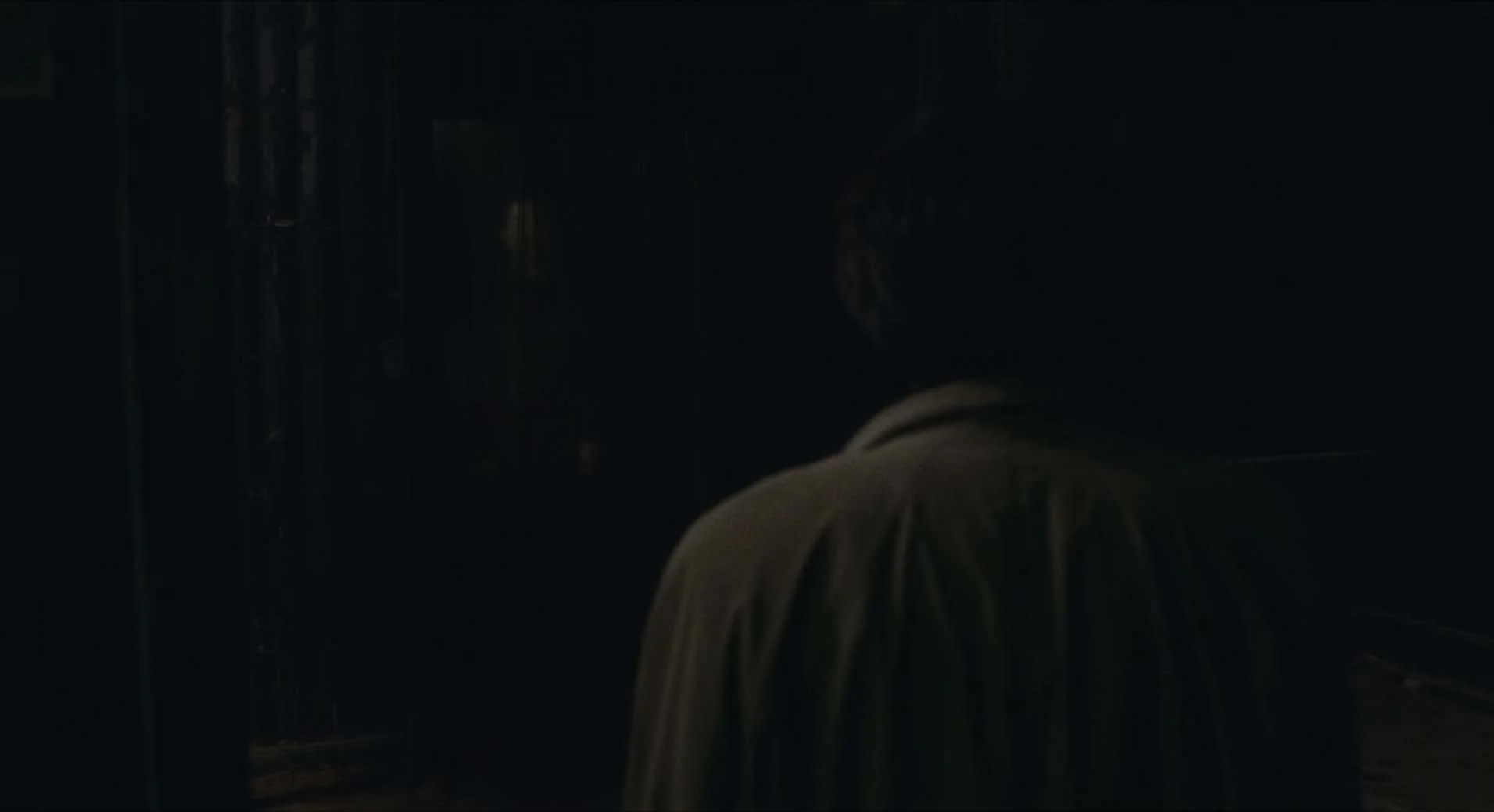
Starting with William Peter Blatty’s The Exorcist III and escalating in notoriety thanks to David Fincher’s Se7en, the 90’s marked an inflection point for neo noir. A pivot into something darker and more terrifying, these films ushered in a brand new wave of crime thrillers that saw dread placed on equal footing to the machinations of their murder mysteries. Kiyoshi Kurosawa’s Cure may be the finest work to spawn from this trend.
Gone are the Abrahamic analogues of it’s American counterparts, instead focusing on the intersection between the occult and the psychotherapeutic, it keeps the audience in the dark just as much as it does it’s characters. The cultural differences between the American works and this Japanese one is what allows for Cure to veer into uncharted water. There’s a genuine unknowability to every development that occurs as each new revelation renders our previous assumptions inert. A soft spoken whisper breeds chaos akin to a satanic ritual and nobody, not even us, knows why.
The hypnotic introspection of Cure bleeds out of Mamiya’s (Masato Hagiwara) mouth and floods the frame with negative space, letting terror seep into our own minds while his victims are irrevocably altered on a dime. The darkness of Cure is one that has been suppressed for over a century. Buried under changing state doctrine, it presupposes that this refusal to acknowledge, to accept societal change, is the very symptom of the troubles plaguing the nation today. In this stifling of expression, it creates a country whose sickness has festered for so long that a cure can never be found.
Day 9 - Lake Mungo (2008)
Growing up in the 2000’s came with it a great deal of excitement for all that consumer grade technology may offer me. My shitty video camera that I used to film family escapades, access to the pre-algorithmic internet and the ability to document anything and everything with a flip phone, so much of my life has been archived and perceptible to so many. It was an age of connection and connectivity, yet at 17 I still felt so unbearably alone.
Lake Mungo sits at the tail end of a wave of digital horror that began with Sanchez and Myrick’s Blair Witch Project. Following the blueprint laid by that film, Lake Mungo takes on the form of a mockumentary. Fictitious in the story it is telling but grounded by the codes and conventions that documentaries entail, the immediate audience immersion and level of participation is heightened as we seek to compile and square away the facts of Alice Palmer’s (Talia Zucker) death.
Wearing it’s influences on it’s sleeve initially made me feel at arms length from Lake Mungo. I have seen this story before in Lynch and Frost’s Twin Peaks and the direct allusions to Laura Palmer invited unfair comparisons that I’m sure the filmmakers were well aware of. What Lake Mungo really is then, is a testament to the strength of form in lieu of groundbreaking content. The digital imagery on display here is horrific and the almost clinical approach to the subject unsettles thanks to the impersonal immersion of this specific kind of documentary.
Alice Palmer is, like Laura Palmer, a victim of all the individual systems and people that failed her. Every instance of her troubled life was documented and buried by these individuals. From the horrific CSAM, consultation with hypnotherapists, to her brother’s frequent overstepping of boundaries, the evidence of something terrible was always able to be shown. Instead what this new technology presented, like in Kurosawa’s Pulse, were opportunities for individuals to draw ever inward.
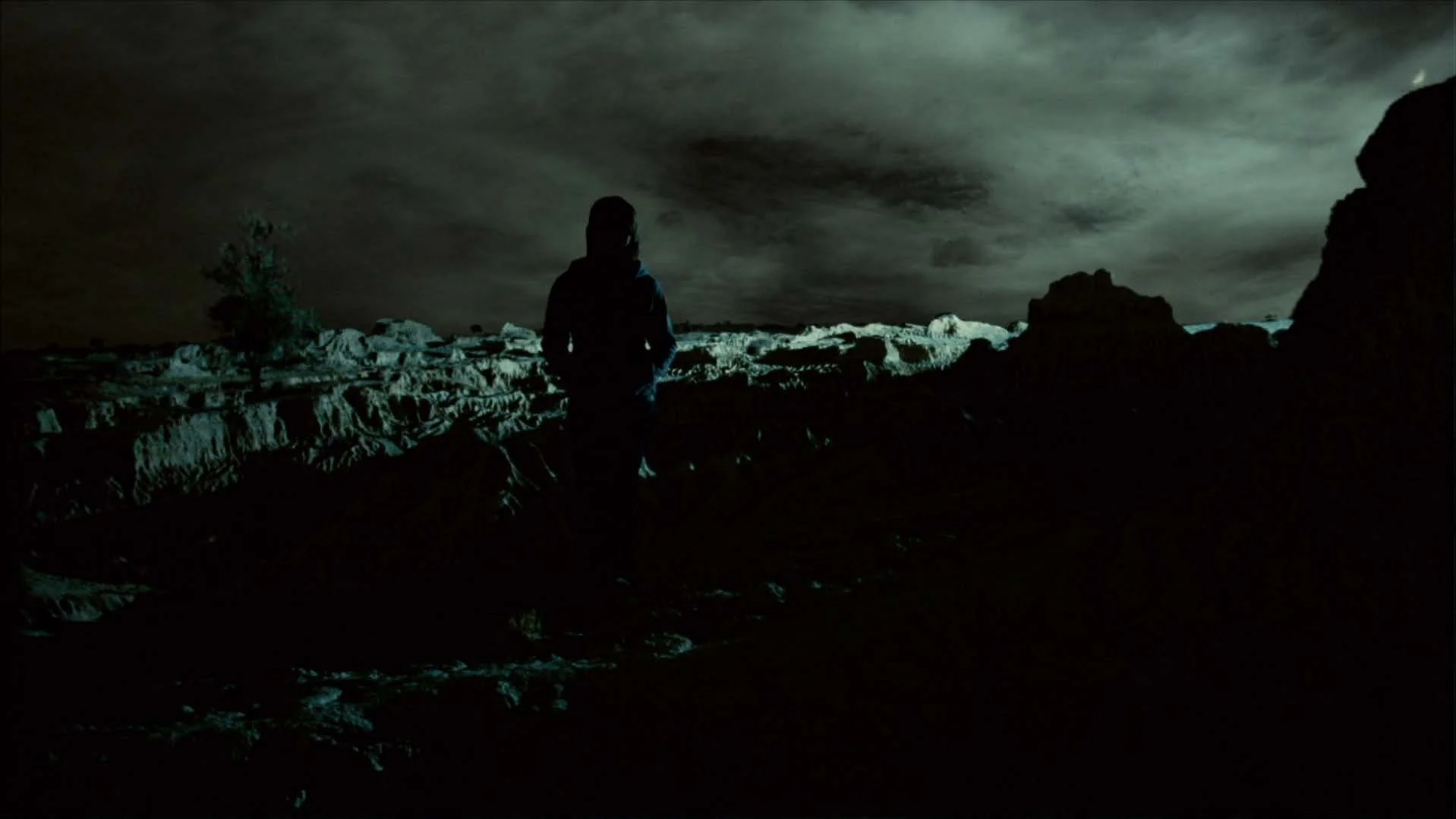
No image produced by any of it’s obvious influences has haunted my waking moments in quite the same way as that final shot of Alice, alone and isolated, standing on the crags of Lake Mungo. They may not see her, but I do.
Day 10 - Society (1989)
In my last two years of University I started talking to a counselor to decompress the events of my life every couple of weeks. To all that know me, I am a notoriously terrible communicator, so having that structured call time and impartiality really helped me to keep in touch with being more honest with myself about the ups and downs of my life. As a part of these biweekly discussions, talk inevitably returned to chatting about movies. I’d told her about my two previous horror marathons and she slotted a couple of recommendations in there for the next. Society was one of those recommendations.
Society is a real headscratcher of a film. How something like this got made during the reactionary period that was the 1980’s baffles me. The entire piece hinges on this perversion of the tropes of high school coming-of-age films of the time as we follow what would traditionally be the antagonistic force of this kind of film in a rich jock named Bill (Billy Warlock). Unlike his cinematic contemporaries, Bill is actually a well meaning kid and one that has consistent therapy sessions on account of the strange happenings within his household. The complete antithesis of the archetypal protagonist of a Hughes venture.
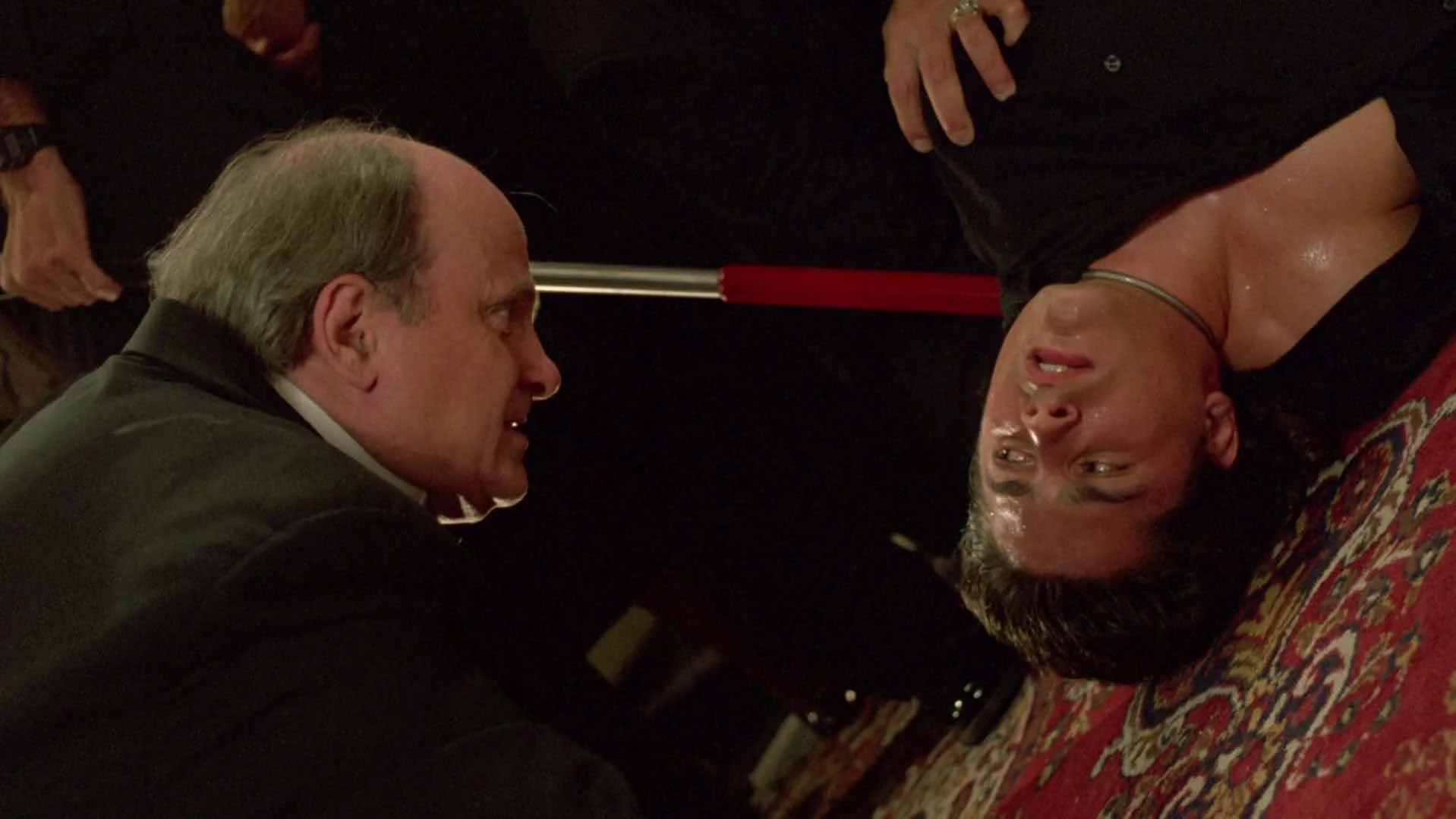
Coming out at the tail end of the decade, Society puts the unspoken and normalised debauchery of the 80’s on full blast. Most of the film sees us following Bill as he uncovers a long-gestating secret society that has been feeding (real emphasis on that “feed” by the way) upon the poor for as long as polite society has existed. In a sequence that I shan’t spoil on account of this being a lesser known film, I found myself completely aghast. Not just because of how shocking it was for the time, but because of its prescience to the horrific atrocities committed by the Los Angeles elite in the years since.
Day 11 - Ravenous (1999)
Part two of my counselor's recommendations brought me to Antonia Bird’s Ravenous. Starring several up-and-comers of the late 90’s, it’s a bizarre genre fusion between comedic western and vampiric horror. It stinks of that late 90’s counter-culture attitude and I for one found it rather endearing as a window into a moment in time.
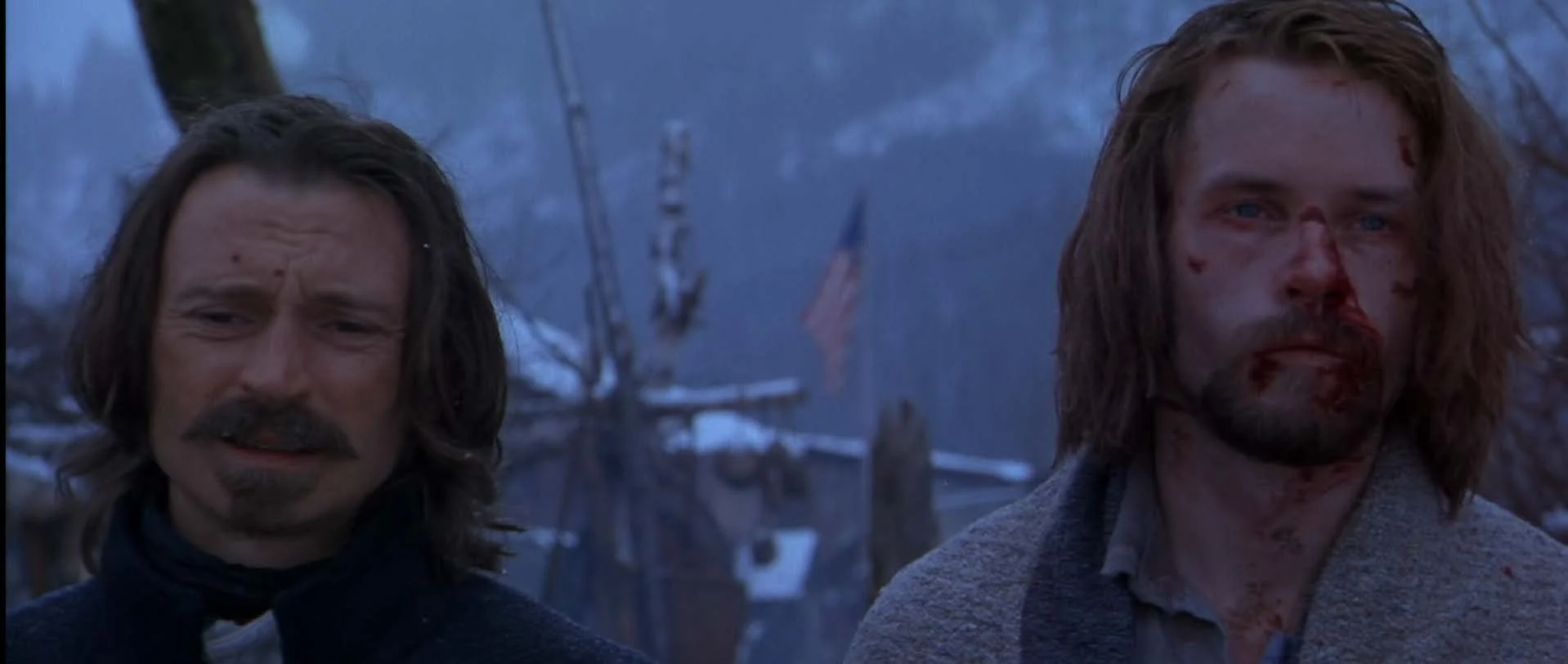
Led by Guy Pearce as remorseful soldier George Boyd, Ravenous is very open with its thematic content. As Colonel Ives (Robert Carlyle) lays it out, the vampiric wendigo is a literalisation of “manifest destiny”, feeding on the meek and marching through the frontier to satiate an unending avarice. Amidst all of this obvious commentary, the piece is anchored by the aforementioned stars in performances that highlight desperation, guile and greed. Carlyle in particular is a delight, chewing the scenery for all it’s worth and masterfully switching between two modes of being with disturbing ease.
The part of Ravenous I can see myself returning to the most is the film’s score. Composed by Michael Nyman and Damon Albarn of Gorillaz and Blur fame, it’s this phenomenal blend of classic film composition and wild 90’s electronic instrumentation. The best representation of the fusion of these opposing disciplines is largely reserved for the film’s third act with the track Saveoursoulissa. Named like some kind of cursed B-side we were never meant to hear, it contains a beat made up of a looping sample which creeps its way through the ear with unrelenting malice. If for nothing else, Ravenous has made me positively giddy to hear more of Albarn’s scoring work in Luca Guadagnino’s Artificial later this year.
Day 12 - Near Dark (1987)
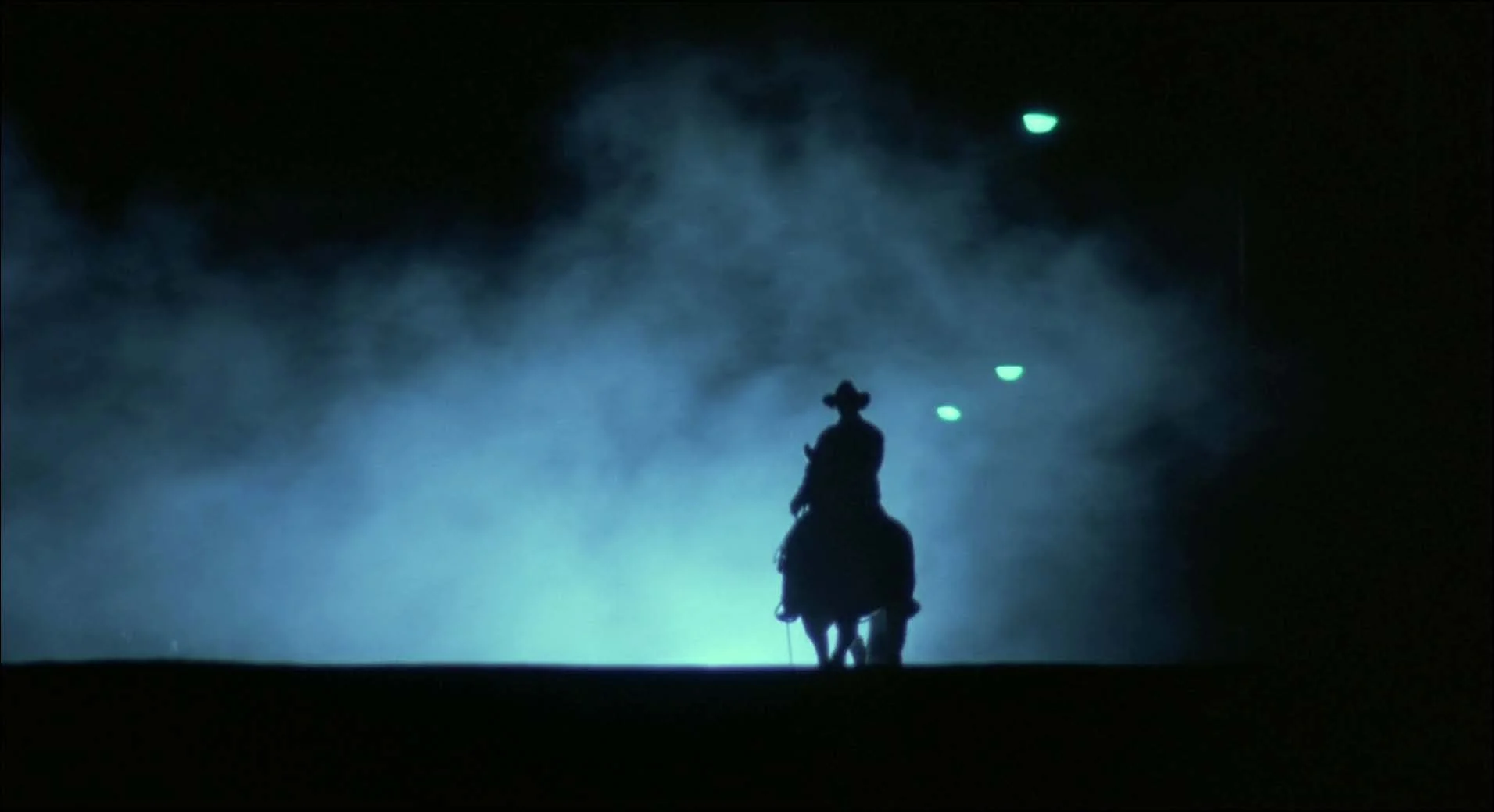
Unlike last week’s viewing of Train to Busan and Dawn of the Dead, the pairing of Ravenous and this film as a vampire western duo was entirely incidental. Aside from seeing a few striking screencaps online, I had zero idea what Kathryn Bigelow’s Near Dark would have in store for me. It was a riot!
As mentioned, my initial impressions of Near Dark were purely informed by the shots I had seen posted and reposted ad nauseum by blue checkmark horror accounts on Twitter. In sitting down to watch it, the purely visual elements of the piece made this aesthetic admiration instantly understandable. Bigelow’s focus on unmotivated lighting and neon signage make the film feel dated in such a charming way, brimming with all the hallmarks of 80’s studio fare.
Where the film really gets to shine however is in it’s action sequences and in particular the daytime motel shootout towards the end of the movie’s second act. In this sequence, Near Dark utilises the cast’s status as vampires to heighten the drama of it’s visual presentation. A bullet is immaterial to these immortal bloodsuckers, but the ray of light made by that bullet? Those pose the real threat. The chaos of this moment wonderfully interjects a western staple into a vampire narrative without cheapening either element, only heightening the visual splendor with it’s fire and brimstone gunslinging antics.
The ensemble at work in Near Dark are a delight to behold too. Much of the film follows a troupe of vampires both ancient and newly turned, each still retains glimmers of the period they arrived from. The lead of the bunch, Jesse (Lance Henriksen) hails from the Confederate South and Henriksen plays into this bastardised sense of morality with a believable sense of authority that grounds the character. Meanwhile, Bill Paxton’s Severen is a complete maniac who relishes in all that his powers bring him. Being a greaser from the 50’s, it’s as though that bad boy charm he once had was only emboldened when he became a vampire and the way Paxton carries himself is terrifying and enchanting to watch.
The underlying romance of Near Dark left me wanting a tad (aside from one very inspired shot of a euphemistic oil drill during an erotic scene) but that’s something I can easily overlook when the rest of the piece is as unabashedly fun as this. Dark and sensual like all good vampire stories are, Near Dark’s American Gothic / Neo-Western spin makes it essential viewing for all those who love all things vampire.
Day 13 - From Beyond (1986)
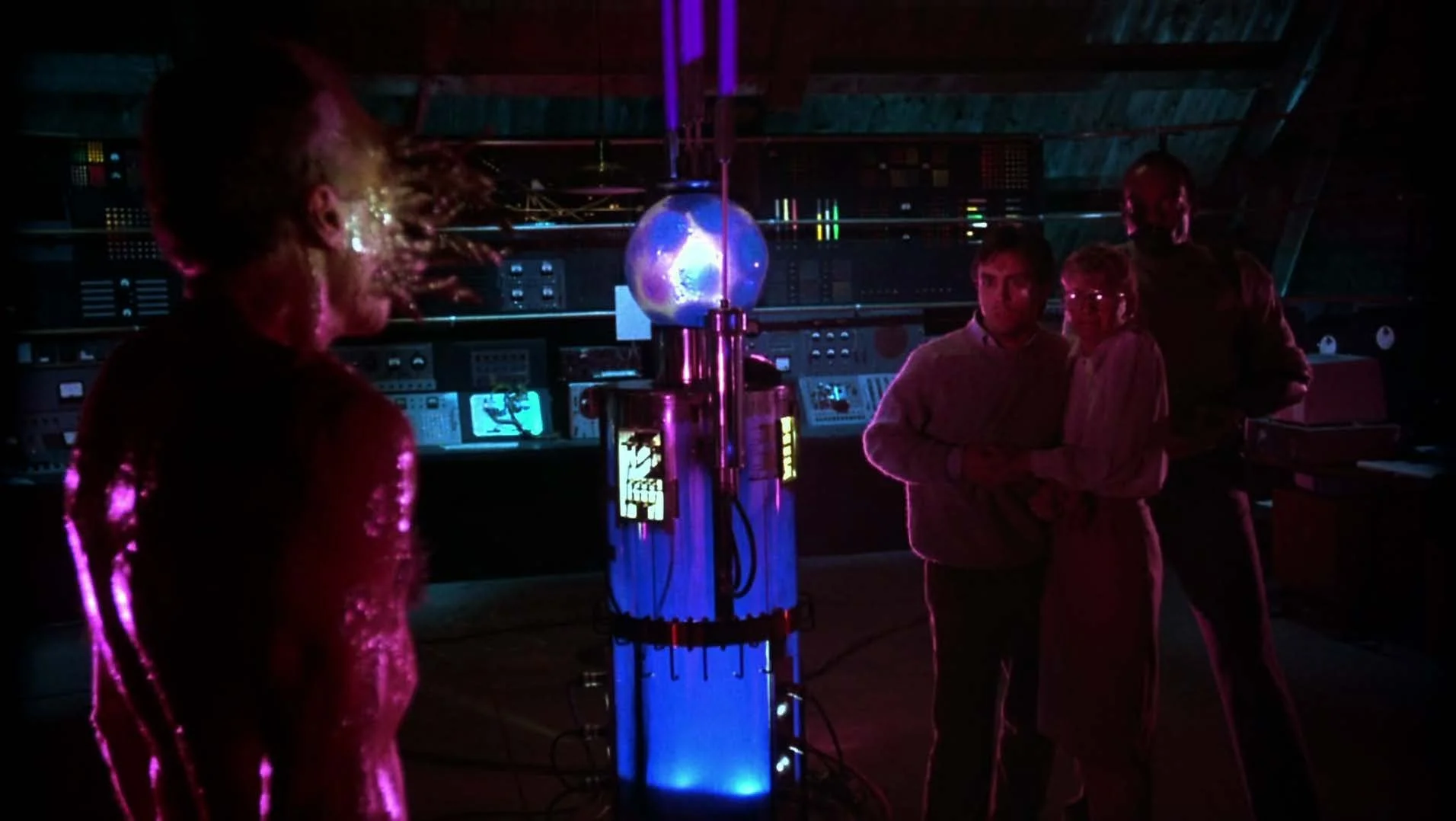
The final of the films recommended to me by my counselor, From Beyond is unfortunately the weakest of the films I’ve watched over these last two weeks. Directed by Stuart Gordon and produced by Society's Brian Yuzna, the film is one of many adaptations of the works of prolific horror author H.P. Lovecraft and centers on an experiment which unleashes terrors from another dimension which exists parallel to our own.
My issues with From Beyond aren’t specific to this film but rather cinematic adaptations of Lovecraft’s work generally speaking. One of the strongest components of all his work is in the power of the theater of the mind. The prose being rudimentary in it’s expression of cosmic threats, his works are all about letting the reader fill in the blanks with their own terrible images. Translating that to film is always going to be an uphill struggle as it is a visual medium and so 9 times out of 10 these films default to slime and squid-like tendrils which, despite being unbelievably impressive from a filmmaking craft stance, lacks a fair amount of that audience projection.
Where From Beyond becomes slightly more engaging for me is in the injection of more sensual and erotic elements. There’s a very specific type of sexual trauma that is explored here in the character of Dr. McMichaels (Barbara Crampton) as she is driven mad not just by her encounter with another world, but in the consciousness stripping her naked as it tries to absorb her. Her immediate defaulting to a kind of dominatrix persona in the wake of these events is fascinating to me in that it is both reactionary in its depiction of this turn as out of character, but also resonant as an example of hypersexuality in the wake of trauma.
I’m rather torn on From Beyond. The prosthetics work and the film’s surprisingly intelligent exploration of sexual trauma sit as the obvious standouts but I can’t help but feel like the adaptational element drags it down a fair deal. An interesting film, but not one I can see myself revisiting in the years to come.
Day 14 - We’re All Going to the World’s Fair (2021)
Continuing on from the digital horrors of Lake Mungo, I arrived at We’re All Going to the World’s Fair with a healthy amount of skepticism. Internet age horror is so difficult to do right and with the equal amounts of praise and derision I’d seen towards Jane Schoenbrun’s debut, I was anxious and excited to see where they got their start.
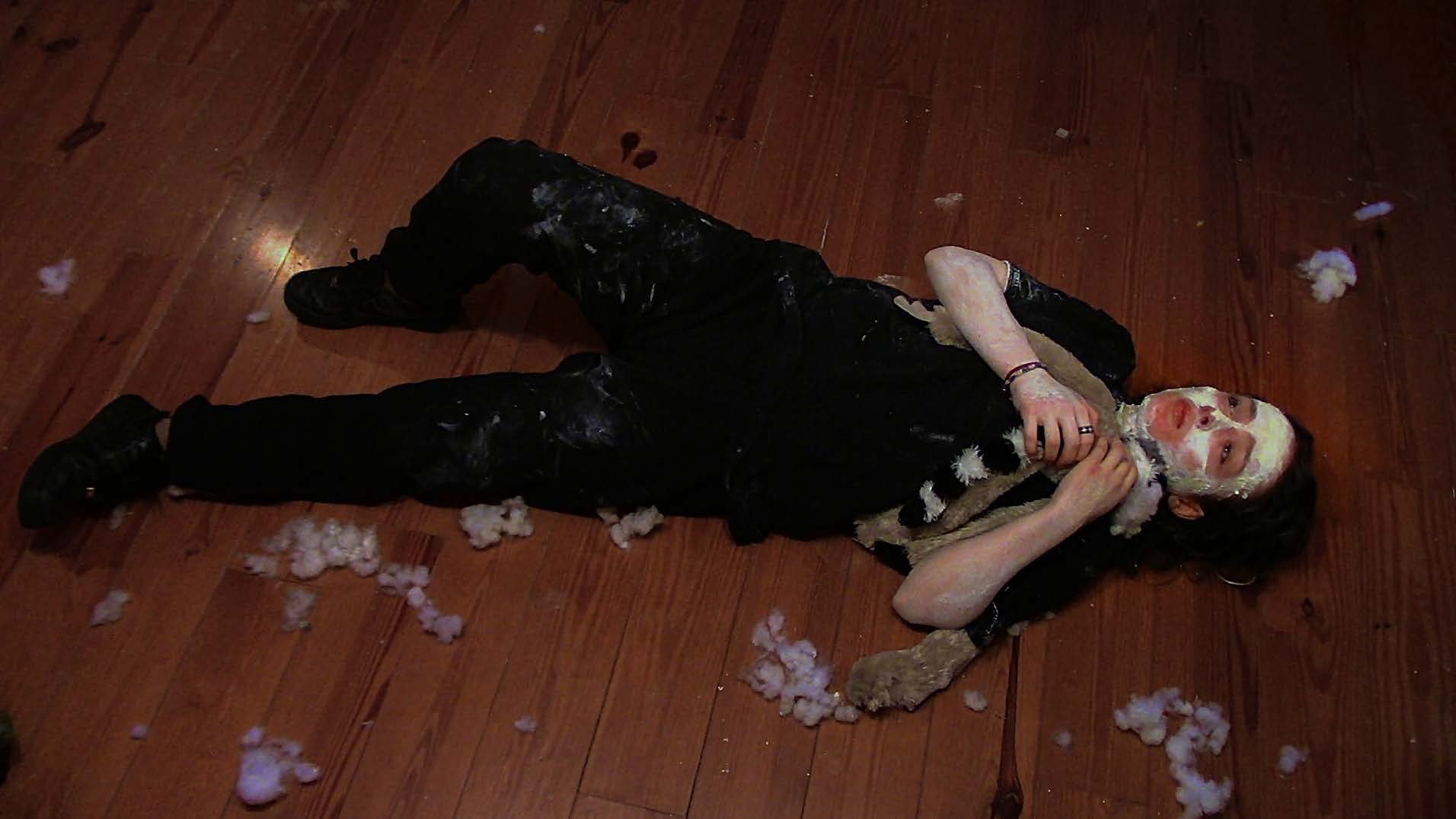
It can be so god damn isolating being a teenager on the internet. I was fortunate enough to have a good group of friends that shared my passions at the time, but in Casey I see so much of what could have been had I withdrawn from these social circles. At 15 there was a brief window of time where I found myself interacting with a group of kids on Discord who were clearly socialised in much the same way as Casey. They spoke in in-speak, didn’t ever divulge the goings on of their personal lives and seemingly liked to exist only in their identification with fandom. It fucking terrified me.
The unique thing about Schoenbrun’s portrayal of this kind of individual is that they still exist and as someone who is active on Twitter, I occasionally get the odd glimpse into their world. The paradox of World’s Fair is that I don’t even really know Casey, not really. We see them go about their own life early in the film, and they’re clearly someone who’s trying to make sense of themselves through fandom and it’s here where the character of JLB (Michael J Rogers) exists as mirror and antagonist.
When the film begins centering him, and therefore us as viewers, the film pulls back from showing Casey’s life beyond the videos they keep making. We are as unsure as JLB as to where the line is drawn between Casey’s performed life and their interior world. The ambiguity of online content creation is capitalised on greatly by Schoenbrun here. Online communication is largely an exercise in decoding and try as you might to understand an individual by their select word choices and actions, you won’t ever truly know them until you share a room together.
JLB’s likely fictitious monologue about his meeting with Casey is a fantastic realisation of that notion. He’s desperate for some kind of romanticised closure, to get to know Casey better as an individual beyond the videos they make. He’s shaken by Casey’s clear drawing of lines between their working relationship as collaborators and the lack of closure he receives regarding that relationship leaves him with nothing but a blank stare.
In these short form pieces, I really don’t have the capacity to delve into a work like We’re All Going to the World’s Fair in quite the way I’d like. Which is fitting really, given how much the film exists between states of understanding and that which is obfuscated by the constraints of online persona.
Closing Thoughts
Much of this week’s viewings have been a reminder of just how reactive horror can be. Many of the works I have experienced feel like distinct moments in time, so strongly representative of the periods they were released in — Be that in the trends of the era or of the figures at their centre. My favourite of the week was Kurosawa’s Cure and my least favourite was From Beyond. Next week I’ll be continuing with the filmography of Jane Schoenbrun in I Saw the TV Glow.