
TIFF 2026 | Movie Review: "The Man I Love" Is a Touching Portrayal of Artistry and Mortality
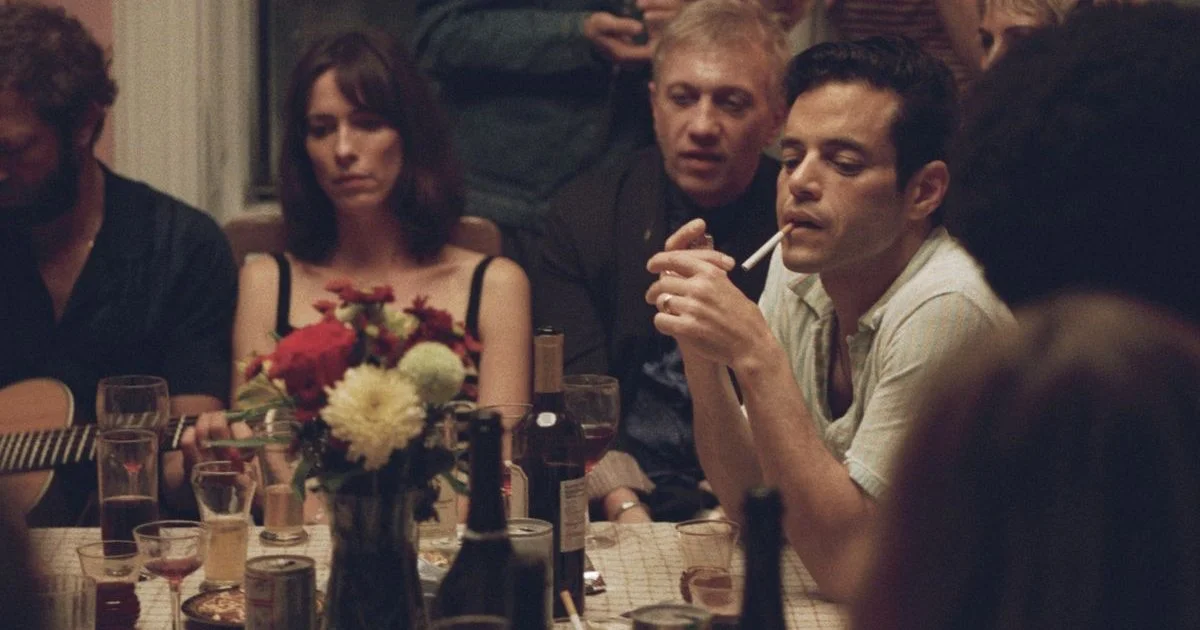
Image courtesy of Big Creek Projects

10/12 For Reel Score | 4/5 Stars
Admirers of Ira Sachs, I reckon, will find greater appreciation for The Man I Love than other viewers, since it is one of the most prominent examples of the filmmaker’s unique strength: Knowing what to leave out of his stories. The average viewer will no doubt find the movie unsatisfactory, since it lacks a set-up and a closure. But understanding Sachs’ approach to character and plot makes one realize this is not the kind of story with closure, just as there wouldn’t be such in real life. The last scene signifies that things have continued without notice; life never leaves a note. One of my favorite things about Sachs remains his focus on intervals of a story that would ordinarily be skimmed through in a more conventional film.
Not long after the opening we are told the protagonist Jimmy George (Rami Malek) is facing AIDS. Although the disease is not explicitly identified until later in the story, the movie makes no secret of his impending doom. Jimmy has a lover (Tom Sturridge), who is drowned in sorrow and pain, and a warm and inviting support group. A wonderful scene shows them singing one after another, and by instinct we immediately understand their dynamic, particularly their value to one another. I initially found the lover one-dimensional but understood him better after the film had finished; to me he literalizes the feeling of being stuck in place while tending to a loved one. He wants to move forward but doing so, he thinks, would indicate selfishness.
Jimmy decides to put on one last show, an iteration of Once Upon a Time in the East where he cross-dresses as the female lead role. Lengthy segments show us rehearsals where Jimmy struggles to get through basic elements such as dialogue and timing because of his illness. Such a sight would be exploited for melodrama in a less sensitive film. We’ve all seen scenes like this: The performer tries his best to perform but succumbs to his personal issues, eventually having to abandon the show in front of a silent crowd. The Man I Love does feature a scene like that, but it is captured with one continuous shot, painfully dragged on and on. We cannot look away. But intermittently we see instances of Jimmy singing and dancing, and it shows that Sachs does not leave the artist’s talent as an afterthought in favor of conveying the tragedy surrounding his illness. When Jimmy performs, he performs better than anyone—it’s just that those occasions grow rarer and rarer.
Consider the wonderful sequence in which Jimmy performs What Have They Done to My Song, Ma? at a wedding, and observe the way Malek tells a story here not from the lyrics but by the way he sings it, by little gestures like when he decides to let his voice raise, and when he decides to let it fall. It is a masterful scene because it invites us to observe so many things while showing us so little of the full picture.
The concept of a “full picture” doesn’t exactly exist in Ira Sachs’ oeuvre; his films are about the periods between major developments—the “adjustment period,” as John Lithgow’s character describes in Love is Strange. Think about the way mainstream Hollywood would treat the story of this film: It would start at Jimmy’s diagnosis, condense his rehearsals into a montage, use his failure of a performance as the climax, and end with his death. The tendencies of mainstream cinema to sensationalize tragedy betrays the depth and humanity of its stories. The tragedy in The Man I Love is not illness or death, it is watching how beautifully a man can sing and realize how little time he had for it.
Acting/Casting 2
Visual effects/Editing 1
Story/Message 2
Entertainment Value 1
Music score/Soundtrack 2
Reviewer's Preference 2