
TIFF 2026 | Movie Review: “Children Untold” Provides A Somber View Into Post-War Japan

10/12 ForReel score | 4/5 Stars
Vittorio De Sica’s Shoeshine is an Italian neorealist masterpiece featuring two boys shining shoes in the streets of Rome in order to save their money for a horse. They end up being framed for a crime and the two spend the majority of the film in a juvenile detention center together. It’s a dark post-war story about how a freshly crumbled society corrupts and forgets about children, as the institutions fail to support them, instead actively punishing and ignoring them. Miwa Nishikawa’s thoughtful coming of age Japanese drama, Children Untold, echoes these ideas and takes clear inspiration from them. Children Untold is a delicate and nuanced story about a group of young children just struggling to get by in the aftermath of World War II. It’s not just about how a child deals with this broken world, but also how they’re forcibly suppressed by those around them and are discouraged from being who they really are.
“Children Untold”
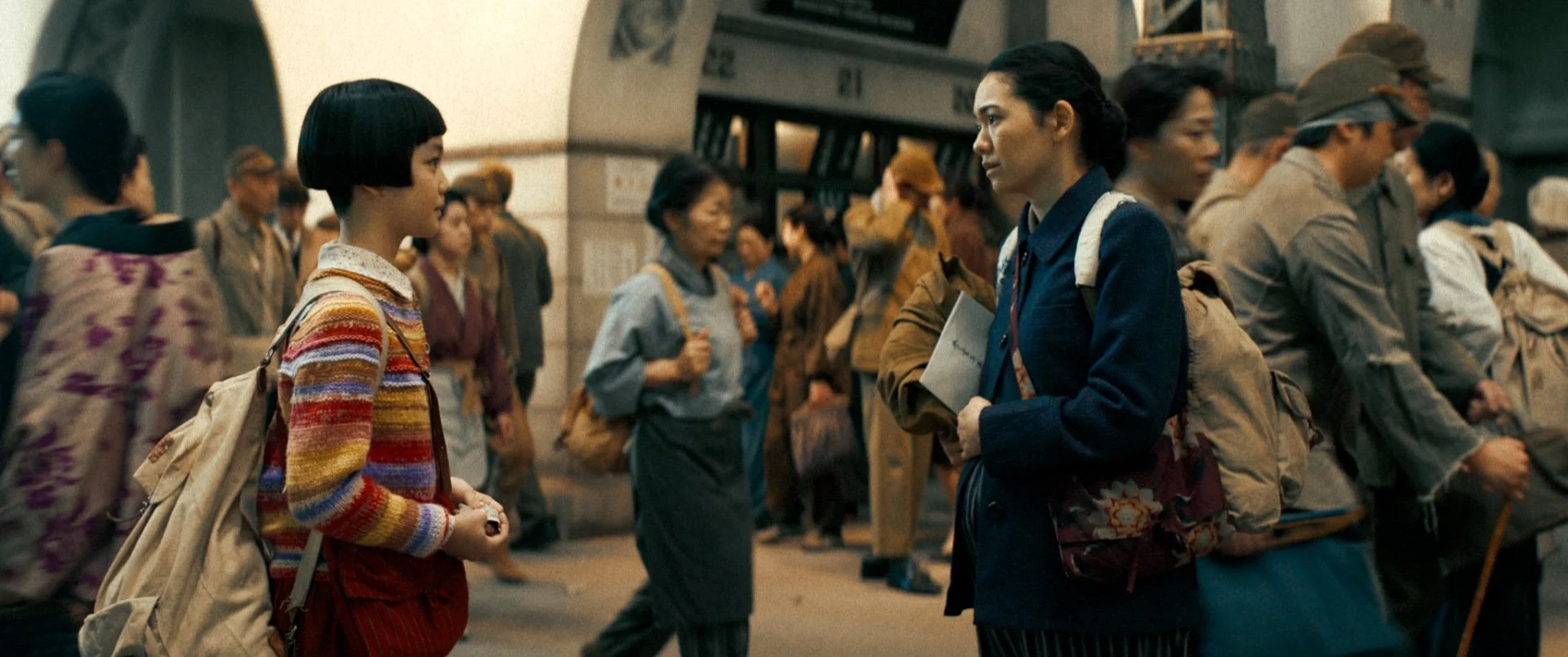
Children Untold follows a 12 year old girl named Kotoko, played by the incredible Ami Koyae. She gives a breathtakingly impressive performance as Kotoko and makes every emotional beat in the film land heavily. Kotoko and other children have been sent away from the main areas of the war for their own protection. When they finally get word that it’s safe to return home, Kotoko finds no one waiting for her. Her compassionate teacher, Sone, asks Kotoko to go with her but is rejected. Kotoko waits and waits until she decides to finally leave the train station, embarking out into this world for herself. She realizes early on that surviving on her own will be hard for her as a young girl, so she cuts her hair in order to pass as a boy named Shigeo. How convincing she is is honestly one of the best parts of the movie. Seeing her struggle to live her life in the world around her is now complimented by the internal conflict of her aging with so many questions — and no one to really ask, as she has to keep the fact that she’s female a secret. It makes for some very interesting scenes where she’s torn between deciding to be herself and keeping up her ruse.
Nishikawa develops this heartfelt relationship between the teacher and pupil early, with Kotoko insisting that someone will be there for her and Sone, played by Fumi Nikaido, deeply regretting leaving her behind. The film weaves together these two tragic stories pretty seamlessly. It bravely puts Kotoko and her story at the forefront, leaving Sone in the background for the majority of the film on her quest to find Kotoko. This actually leads into my only real complaint about the film. It runs a little long, and that ends up lessening the impact of each of Sone’s few scenes spent looking for Kotoko. I can see it as tying back into the message of how we’ve failed the next generation in a post war world, but Sone actively rejects those ideas to a point where it’s hard to see her fall victim to it well into the second act of the film. That being said, when Nikaido is on screen she steals the show completely. There’s so much emotion behind her eyes that implies a genuine and true goal to find Kotoko and help her. She doesn’t want her to continue to grow lost and alone and to do the things Sone (and presumably many other women living in Japan at the time) were forced to do to survive.
Kotoko’s journey in the film is gut-wrenching. She runs from place to place on her own just to be able to eat every night. She finds herself a makeshift family in a small group of other orphaned children, but can never truly relax as she still must constantly hide who she is. Ami Koyae is a fantastic young actress that you can’t look away from. She plays this deeply conflicted little girl with grace and power and refuses to let go of the hold she has on your emotions. She doesn’t speak much throughout the film, but her body language and subtle facial expressions never fail to set the tone for each and every scene. Nishikawa uses her to her fullest potential, and she simply melts into the script. Kotoko is this little girl who has been robbed of a childhood, but she’s not without family or a future.
While there is a hopeful aspect to the film, I feel that its strongest points lie in the idea that children are the biggest victims in any war. Whether they’re killed or forgotten, it feels like the end of the world. We carry the responsibility and weight of that, and we must not forget and ignore. The film’s message is nuanced, but still sharp and refined. There’s a clear intention and motive behind every scene, with Kotoko often drawing the short end of the stick in this new life. There are no breaks for these orphaned children with no one to turn to, and Nishikawa does well to keep that in your mind through some stellar direction.
Miwa Nishikawa’s Children Untold is a tear jerking odyssey showing how society chews up those less fortunate and spits them out, forcing them to turn to the worst parts of themselves to live. Kotoko is such a beautiful character because, regardless of what is put in front of her, you beg for her to keep her childhood innocence. She grasps onto it and refuses to let go, passively inserting herself into every situation in front of her just to survive. Children Untold asks us to watch what happens when youth is stripped away from children and how that impacts not only them, but the world around us as well. The world is worse for it and this does not become an overly sentimental film, but it does tell us that hope can live on. Despite that, there may not be many chances for it to.