
Movie Review: Anne Hathaway and Michaela Coel’s Lovelorn Dynamic Carries David Lowery’s Bold If Uneven ‘Mother Mary’

8/12 ForReel Score | 3.5/5 Stars
I may not be hyper enthusiastic about David Lowery’s filmography, but I have to respect that he rarely makes the same movie twice. He’s known for his more esoteric fantasy and horror films like The Green Knight and A Ghost Story. He’ll also turn around and make a pleasant tribute to a legendary movie star like The Old Man and the Gun or even an above average Disney remake like Peter Pan and Wendy. He’s a true journeyman filmmaker who still mostly manages to retain his signature style. That brings us to pop opera Mother Mary, a shocking new direction in part because I would assume that he’s the type of guy who would throw on Noah Kahan over Lady Gaga. Indeed, this is a much more dour affair than one might expect from a film with original songs by Charli XCX and Jack Antonoff that are in part meant to mimic Taylor Swift. Lowery’s intimate story of deep regret and unrequited love in the face of fame between Anne Hathaway and Michaela Coel spirals into something far more mystical and supernatural in the second half. It doesn’t always sing in key but its ideas are bold enough to carry the tune.
We meet megastar Mother Mary (Anne Hathaway) in the midst of a major tour. She’s completely burnt out, especially following an on stage accident that is making her feel existential. She tracks down her old fashion designer Sam (Michaela Coel) to make her a dress that will indicate a rebirth and perhaps a farewell. It is immediately clear that the history between these two goes far beyond professional. They were once very close (history will say they were friends) but now Sam is deeply resentful towards Mary for abandoning her upon reaching more mainstream fame. The two spend a lengthy sequence that comprises nearly half the film’s runtime airing out these issues, only to eventually land at the conclusion that the creation of this dress is going to require far more mystical means than the right combination and cuts of fabric.
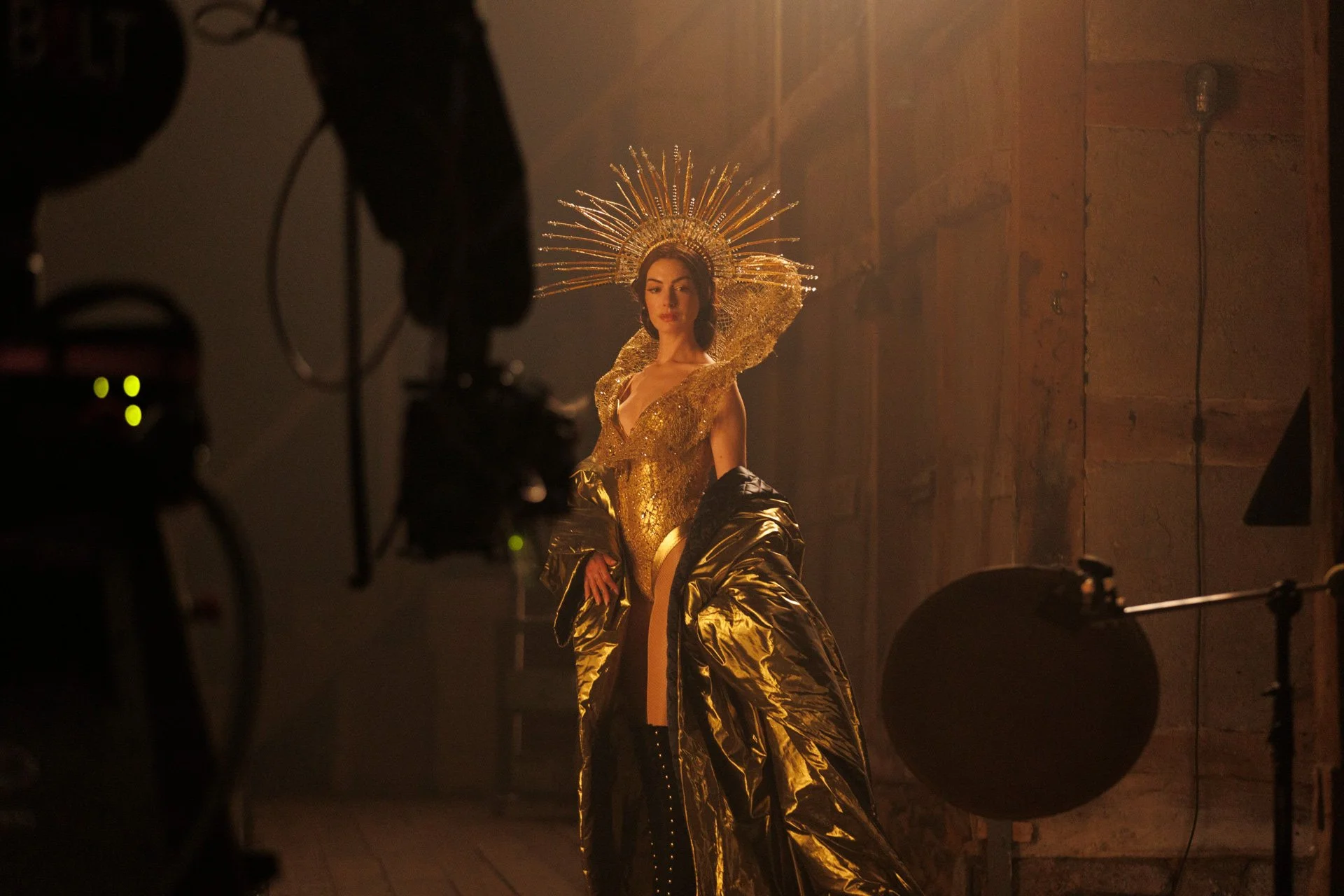
Image courtesy of A24
Anne Hathaway and Michaela Coel are electric together. Their lengthy opening showdown often feels like the type of indie blackbox play that working actors will put on for a crowd of five people. We are locked in Coel’s dingy and cavernous fashion studio as the two air out all of their issues with the help of Lowery’s fraught and beautifully written dialogue. One might expect this to be Hathaway’s most brash and opulent performance, but it is actually one of her most subtle and broken. We see glimpses of the big personality she creates for the stage but we mostly spend time with the dejected woman who lives underneath. The one who is desperate to escape. Coel is even better as Sam, so snide and dry in her humor and yet we can feel that she is barely able to disguise the pain that Mary inflicted upon her. She’ll deliver a cutting remark in a way that scores a laugh but it’s clear that if she let her guard down for a moment she’d start to cry. Lowery allows us to marinate in this dynamic for so long that a big part of me wishes that he had just allowed this conversation to be the entire movie.
Once we start diving into the creation of the dress, Lowery starts to indulge in the more tiring arthouse aspects of his filmmaking style. Mary and Sam both believe that some kind of spirit is interconnecting them even in separation. There’s a sequence where a medium played with flair by FKA Twigs nearly summons it into being, and it seems to have a parasitic and sexual attraction to Mary in particular. The link is pretty obvious, but Lowery has Mary and Sam belabor the point with a far more vague style of dialogue that becomes a bit of a chore to listen to. It ultimately leads up to a striking centerpiece image that feels worth the wait, but I wish that the more direct tonality of the first half stayed in place to get there.
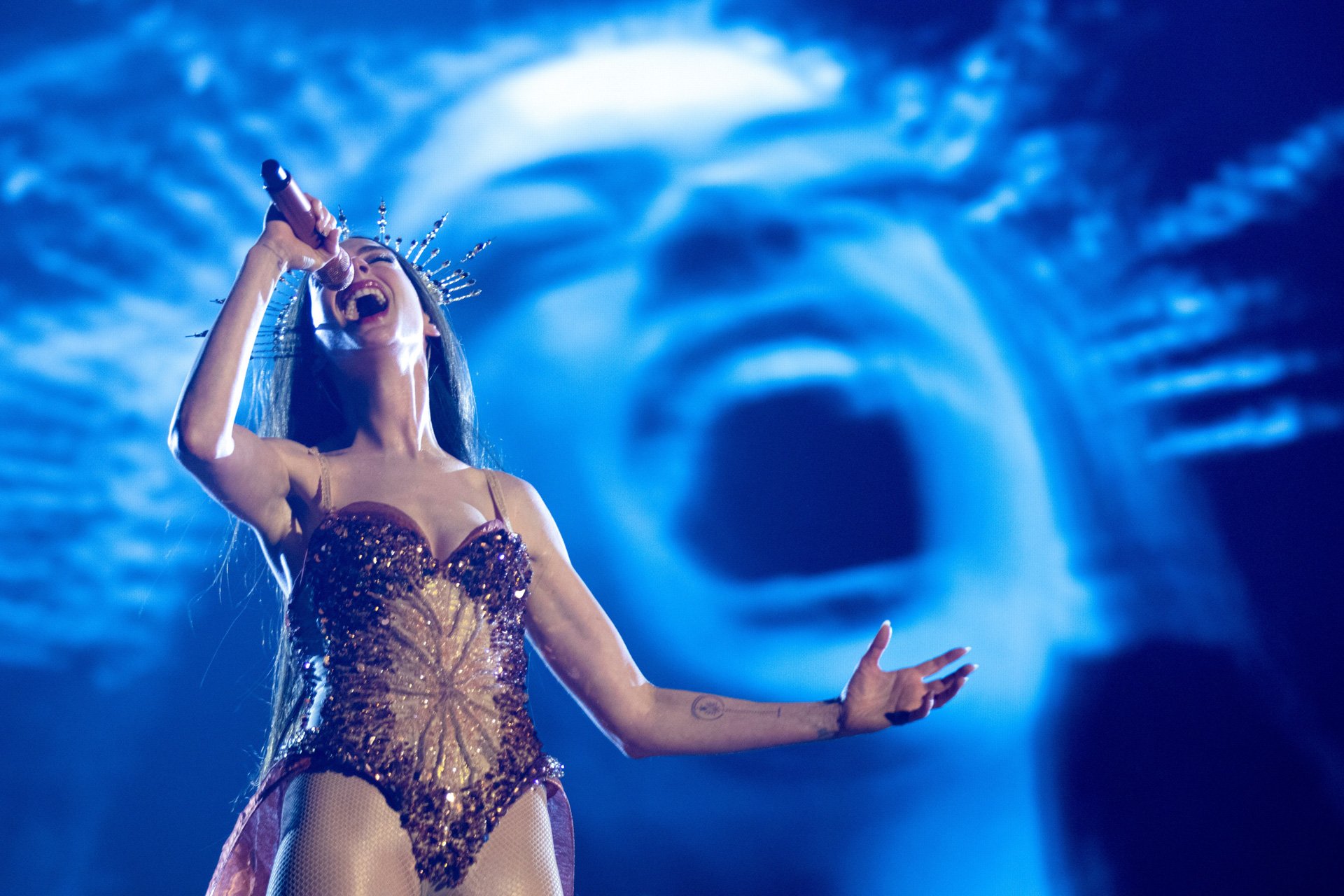
Image courtesy of A24
Lowrey also doesn’t incorporate the music as anything other than transitional background noise. In fairness, the tracks by Charli XCX and Jack Antonoff are just okay as are the lukewarm concert sequences, so perhaps that became apparent in the edit. It’s a shame. Mother Mary needed something bombastic and operatic to transition between it’s distinctly separated acts but whenever we’re listening to music, we’re wondering how Mary managed to get famous in the first place.
As I’ve grown older, I’ve found myself respecting audacious filmmakers like Lowrey who are unafraid to re-write the rules of a film like this. Even though I don’t think Mother Mary completely coalesces as a coherent vision, it is so much fun to watch Hathaway and Coel play their tense dynamic out. It is certainly a unique approach to a queer film, mostly allowing the audience to piece together the physical and emotional passion these two once shared for themselves. I suspect that many queer women will form a much deeper attachment to this film than I did and I commend Lowrey for jumping into that arena with something so thoughtful. Mother Mary may not break my personal Spotify Wrapped but I’m glad that she will now be able to become gay famous.