
Movie Review: 'Avatar: Fire And Ash' Keeps Things Fresh For Those Who've Acclimated To Living With This World

10/12 ForReel Score | 4/5 Stars
If there's one thing I truly despise when it comes to talking about movies, it's the phrase “just turn off your brain.” It’s mostly a cop-out argument to disavow substantive criticism, but a few diamonds still manage to shine through the rough. James Cameron's Avatar films, which may constitute a new form of hypnosis, might just be the epitome of “turn your brain off” cinema. Cameron’s Avatar series may not be as intellectually challenging as your average Béla Tarr film, but the visual splendor of what’s now a nine-hour franchise is such a breathtaking work of cinematic craftsmanship that its cookie-cutter storytelling becomes entirely irrelevant. If you’re clued into Cameron’s sensibilities from the previous two Avatar films, odds are you’ll find the third, Fire and Ash, to be the most emotionally riveting instalment yet.
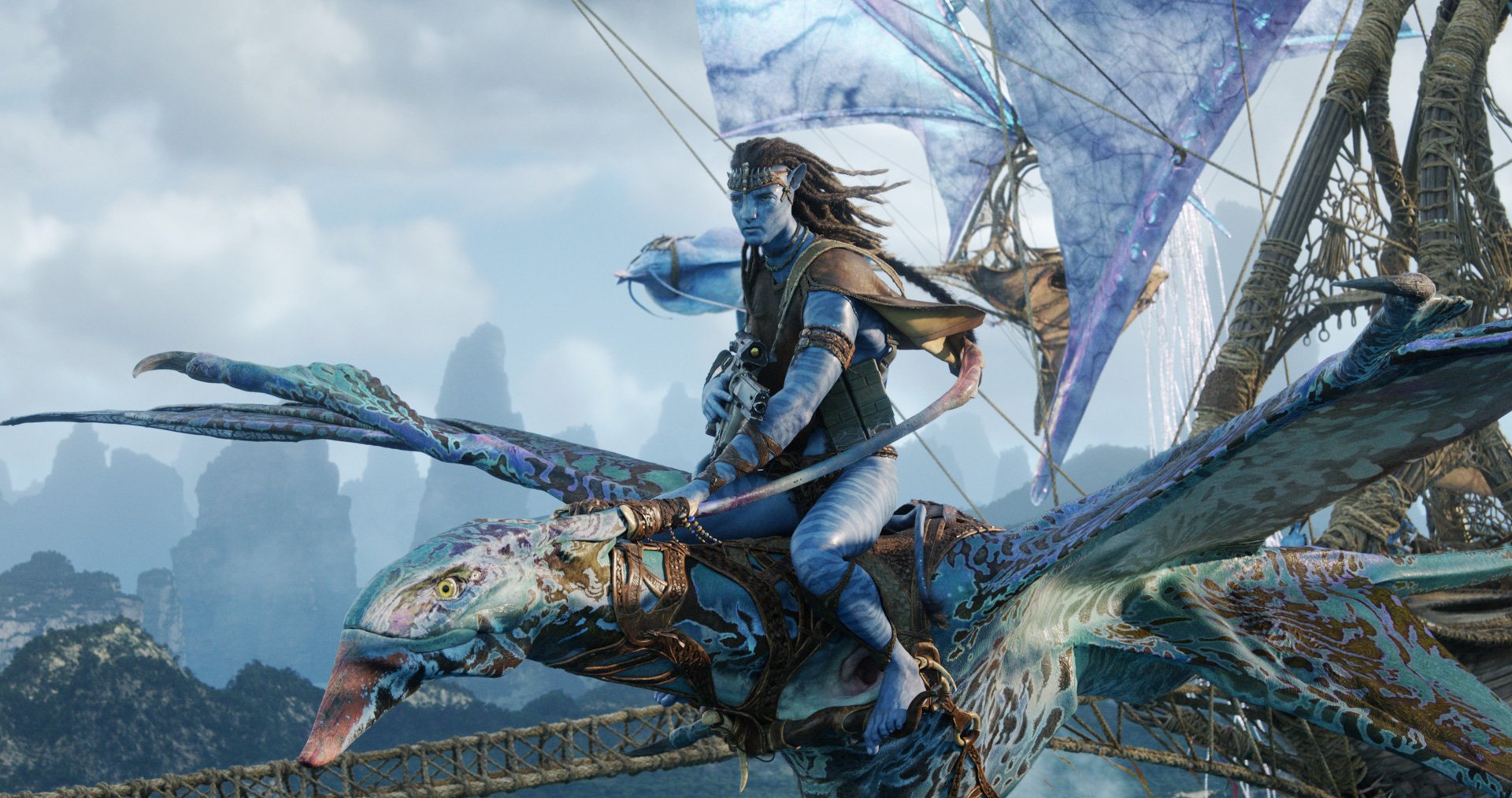
Image courtesy of 20th Century Studios
2022’s Avatar: The Way of Water left us on a bittersweet note for the Sully family, as the last we saw of them was mere minutes after losing the eldest son, Neteyam. Not only was it a devastating blow (Zoe Saldana’s performance in that one scene is more Oscar-worthy than her performance in all of Emilia Perez), but it was a hard tonal shift from what was initially about three hours' worth of tree-hugging and swimming with space whales. There was tragedy in the first Avatar, sure, but Neteyam’s death felt harrowing and visceral. Even if The Way of Water ended with catharsis, the catharsis doesn’t change the fact that the Sullys have lost a family member. Retrospectively, it’s almost as if Cameron took away our floaties and tossed us into the deep end.
Picking up immediately where The Way of Water left off, Avatar: Fire and Ash shifts perspective from the patriarch, Jake (Sam Worthington), to Lo’ak (Britain Dalton) and Kiri (Sigourney Weaver, if you can believe it), the middle children of the family. Trying to make sense of the death of Neteyam, the Sully family is an absolute wreck, with matriarch Neytiri disappearing into hatred while Jake tries to compartmentalize as much as humanly (Na’vi-ly?) possible. Lo’ak bears the weight of guilt for his brother’s death, while Kiri has a crisis of faith regarding the Na’vi’s religious figure, Eywa. There are so many moving parts to this movie, and not all of it works, but I was still left in a state of “how the hell does somebody even come up with this?” for Fire and Ash’s bulky 195-minute runtime.
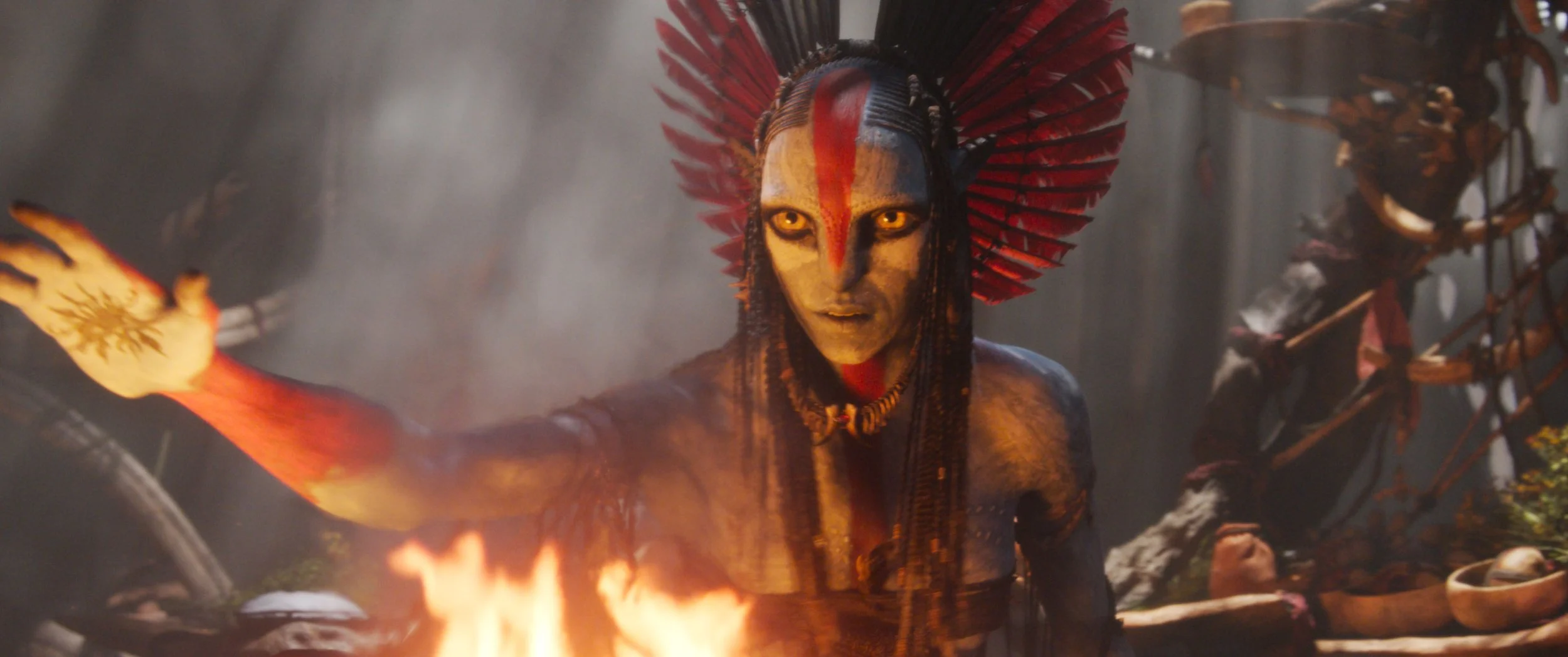
Image courtesy of 20th Century Studios
Existing on the other side of the Sully coin is that of Miles Quaritch (Stephen Lang) and his Na’vi-raised son, Spider (Jack Champion). Quaritch, resurrected as a Na’vi in The Way of Water, is on a vengeful manhunt to even the score with Jake, who just so happens to be Spider’s surrogate father. Not only does the tug-of-war between father figures make for interesting family drama, but it also offers glimpses of pathos and humanity to a villain that could otherwise feel cartoonishly one-note. Tearing up the scenery by the minute, Lang is an absolute treasure trove of fantastic line reads and facial expressions, and has gone from being your standard “Evil Military Man” antagonist into being one of the most exciting blockbuster villains we’ve seen in decades.
Quaritch has always been a mirror to Jake, so it only makes sense that Cameron would give our villain a love interest, too. Striking up a romance with Varang (Oona Chaplin), the figurehead for a group of fire-wielding bandits, Quaritch and Varang’s interests and affections align through terror and destruction. The blossoming romance between invader and raider makes for some of Cameron’s horniest writing since the iconic handprint from Titanic, bringing Avatar to places that I never thought an audience-friendly IP like this would go. It feels crazy just typing out that there’s a fire-obsessed alien succubus that blows space-cocaine up people’s noses, but that’s the type of screenwriting that makes Avatar such a trip for the imagination. Honestly, it’s not a stretch to say that the villains in Fire and Ash are far more interesting than the heroes.
Aside from having to adjust to clunky 3D glasses (my heart goes out to those who have to wear them on top of their normal glasses), yielding to Cameron’s imagination is as easy as pie – as long as you’re picking up what he’s putting down. Generic as they may seem, it’s pretty easy to hop on board with basic ideals like environmental preservation, systems of belief, and family values. Not many writers have an entire planet stored directly in their brains, but the sheer creativity of the world Cameron has constructed is nothing short of staggering. After first conceptualizing Avatar in 1994, he’s conjured four distinct element-based cultures (much to the dismay of The Last Airbender fans), entire ecosystems, and whatever’s in store for Avatar 4 and 5.
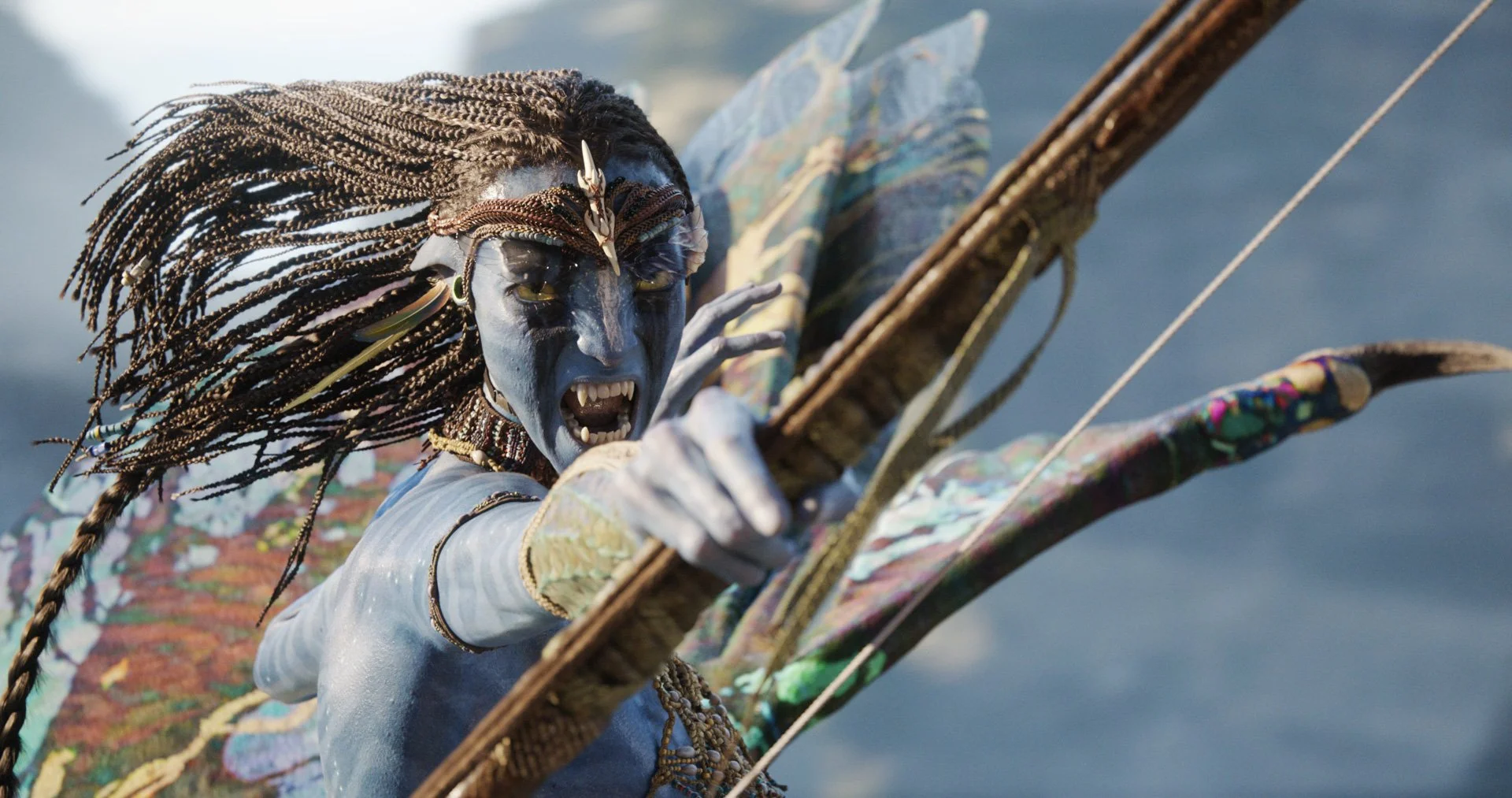
Image courtesy of 20th Century Studios
Imaginative excellence aside, there is a portion of Fire and Ash that does feel like it’s retreading familiar elements from the prior two films, but especially The Way of Water, which makes sense considering that both films were part of one bigger film at one point. I’m reminded of how audiences initially reacted to Kill Bill Vol. II, another film that directly examines the fallout of its predecessor. Audiences that are more reductive than I could go as far as to call Fire and Ash “Avatar 2.5,” and while they wouldn’t exactly be wrong, they won’t be right, either. There are a few repeated plot points and moments from The Way of Water, but Cameron is at least smart enough to make them feel different in some shape or form.
Even if James Cameron’s pot of imagination seems to be boiling over with ideas, there’s something refreshing about how uncompromised Cameron’s grandiose vision is. It feels like having your brain mainlined into Cameron’s, which is never a bad thing in an era where Hollywood’s creative juices are depleting on a daily basis. Even if the plot stretches itself thinner than I would like, there’s more than enough visual spectacle to compensate for whatever nitpicks I have with Cameron’s (sometimes excruciatingly corny) screenwriting. I have absolutely no idea where Cameron could go from here, but I am more than willing to be surprised when Avatar 4 rolls around in 2029.