
Movie Review: "Resident Evil" is the Best Video Game Movie Ever Made (So Far)

9/12 ForReel Score | 3.5/5 Stars
During my tenure as an active film critic, I’ve found myself watching more video game movies than I’d like. Getting dogpiled by fans over my Five Nights at Freddy’s review was a cherished milestone of my career, and I’m sure it won’t be the last time I get flak from dogmatic basement-dwellers. I’m a retired gamer—mostly a dilettante rather than the hardcore “sweat” I was in high school. Thanks to my roommate’s pushing to buy a PlayStation 5, I’ve recently gotten back into the gaming groove. In anticipation of Zach Cregger’s live-action adaptation, one series I’ve slowly chipped away at is Capcom’s Resident Evil. And, for what it’s worth, Cregger’s Resident Evil might be the best video-game movie thus far.

Image via Sony Pictures
Most video game adaptations trip over themselves pursuing “lore” and easter eggs—easy fixings for a post-Marvel audience of fanservice—often following a checklist rather than any conventional structure. Last year’s Five Nights at Freddy’s 2 was awful to the point of self-satire, while HBO’s most recent season of The Last of Us made the idiotic decision to split Naughty Dog’s The Last of Us 2 into two seasons. Someone needed to bridge the dissonance between The Last of Us’ bastardization of its source material and Five Nights at Freddy’s creator Scott Cawthon’s self-indulgent screenwriting. Enter Cregger, someone who, before this point, had never worked on franchise IP. Narratively disinterested in adapting the games, Cregger instead opts to recreate Resident Evil’s gameplay.
Where many vocal fans kicked and screamed for the games’ familiar faces, Cregger chose to create an entirely original story within the world of Resident Evil. This proved a major point of contention for the Resident Evil fanbase, turning the film’s press rollout into a worldwide apology tour. And, to briefly play Devil’s advocate, their apprehension wasn’t entirely unfounded. Paul W. S. Anderson’s Milla Jovovich-led hexology nearly turned Resident Evil into a laughingstock of live-action adaptations, whereas Johannes Roberts’ Resident Evil: Welcome to Raccoon City was a shameless exercise in catering to rabid fans. There was no middle ground between Anderson’s genre-forward excess and Welcome to Raccoon City’s fanservice until Cregger took the reins, balancing both poles with maximum efficiency.
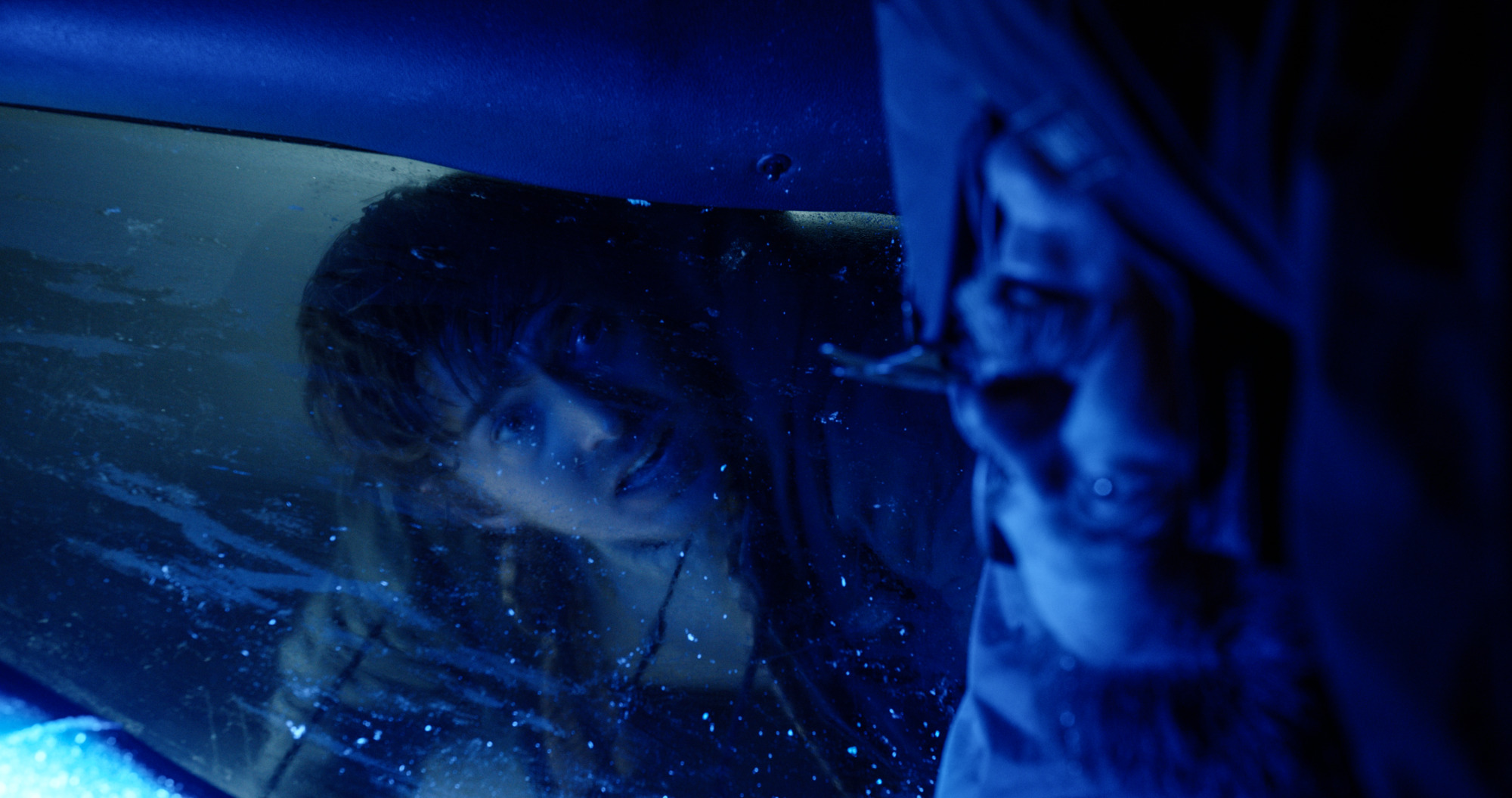
Image via Sony Pictures
Speaking transparently, I’ve only played one Resident Evil game (the petrifying Resident Evil 7: Biohazard), though that’s all the experience one needs going into Cregger’s rendition. Bar the slightest iota of gameplay, Resident Evil requires no prerequisites, as this latest film is more interested in simulating how it feels to play Resident Evil. When you’re not looking over your shoulder for stalking zombie-monsters, you’re also hyperaware of resource management and ammo economy. Seldom are movies so bullet-conscious (Resident Evil could give John Woo an aneurysm), heightening the stakes beyond an impending zombie apocalypse. Cregger’s swapping between third and first-person photography furthers that video-gamey notion, with the evocative mise en scene and direction making Resident Evil all the scarier.
Another byproduct of the comedy-to-horror pipeline, Cregger shares Jordan Peele’s propensity for intertwined laughs and scares. Both aspects fundamentally rely on timing and expectation, with a good jolt coming from expert deployment of the two; there isn’t much difference between setup and tension, nor between punchline and release. Cregger’s understanding of this dynamic is second to none, exemplified by the “woman with scissors” scare from Weapons and the first hour of Resident Evil. One scare got a full-fledged yelp from this mortified critic—the signifier of a filmmaker playing you like a fiddle. The first half is much scarier than the latter’s run-and-gun panic, though the devolution from terror to body-horror is why this works as a Resident Evil film.
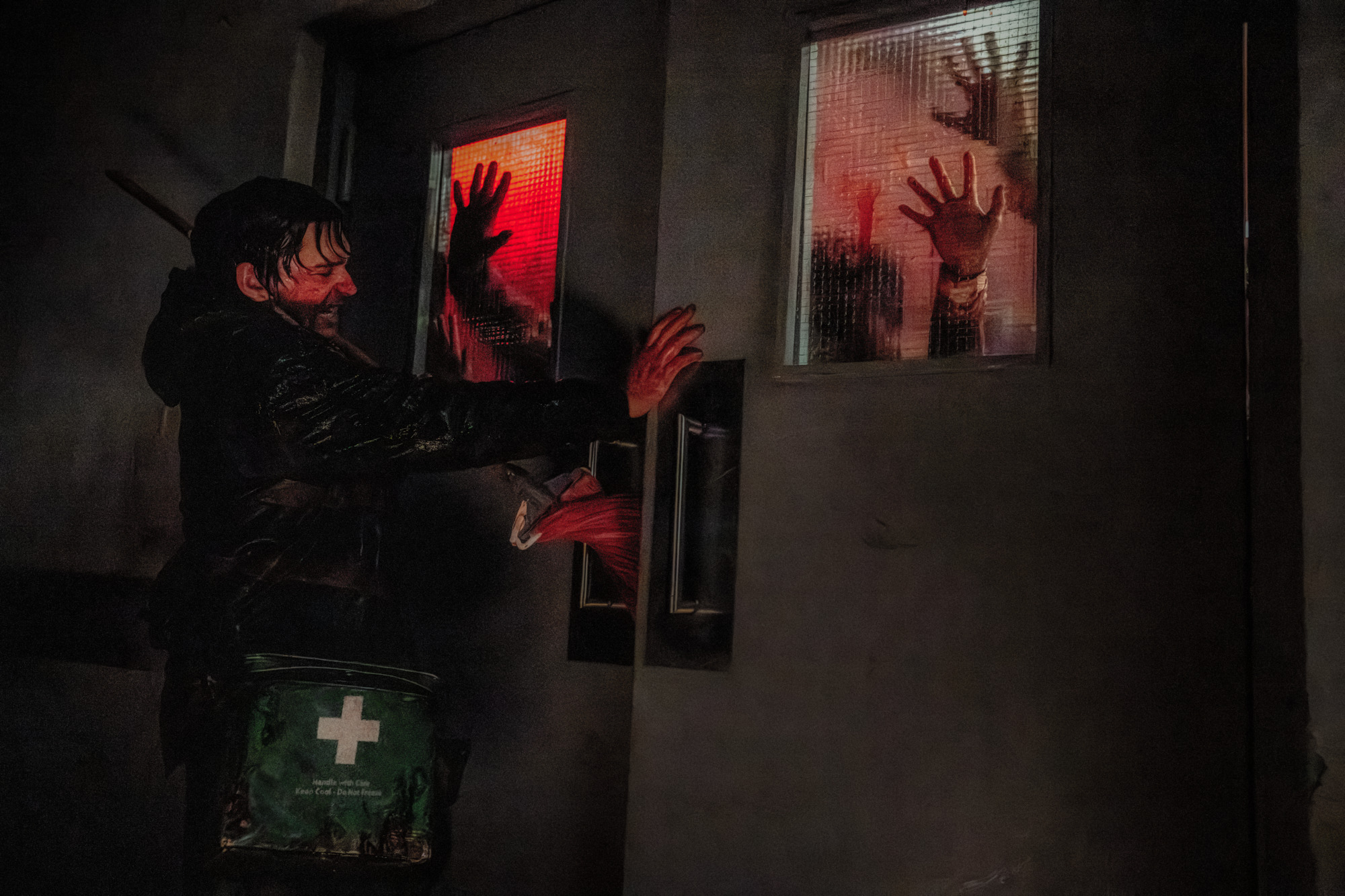
Image via Sony Pictures
Compared to the mystery-thriller components of Barbarian and Weapons, Resident Evil is more of Cregger’s opportunity to flex his directorial chops. It may be the lesser of Cregger’s three films, but for a for-hire gig, I’m considerably impressed. Cregger clearly had a ball making this (putting any question of his love for the games to bed), with a delightful mean-spiritedness bolstering Resident Evil’s locked-in fervor. Blood and guts spill by the gallon to no end, and the monster effects are—for the most part—beyond extraordinary. Either on or off-camera, Resident Evil’s fun is nothing short of contagious. It’ll daunt the squeamish and deliver for the thrill-seekers, reveling in the short-but-sweet zombie carnage for the ultimate fanservice: Resident Evil done right.
Anchoring Resident Evil’s tight 90-minute runtime is Cregger alum Austin Abrams (who you may remember as the drug addict from Weapons), who, as many fellow critics have pointed out, toes a line between Bruce Campbell in Evil Dead 2 and Griffin Dunne in After Hours. It’s basically a one-man show that rests on Abrams’ shoulders (much like Brian Duffield’s upcoming Whalefall adaptation will be), even though the performance isn’t his most dramaturgically intensive. Still, I found Abrams’ reactive physicality and stupid goofiness quite charming. He wonderfully embodies the humiliating fear that Resident Evil provides at its best, and is never afraid to be the butt of Cregger’s jokes. He’s more marionette than character, with Cregger sadistically pulling his strings.
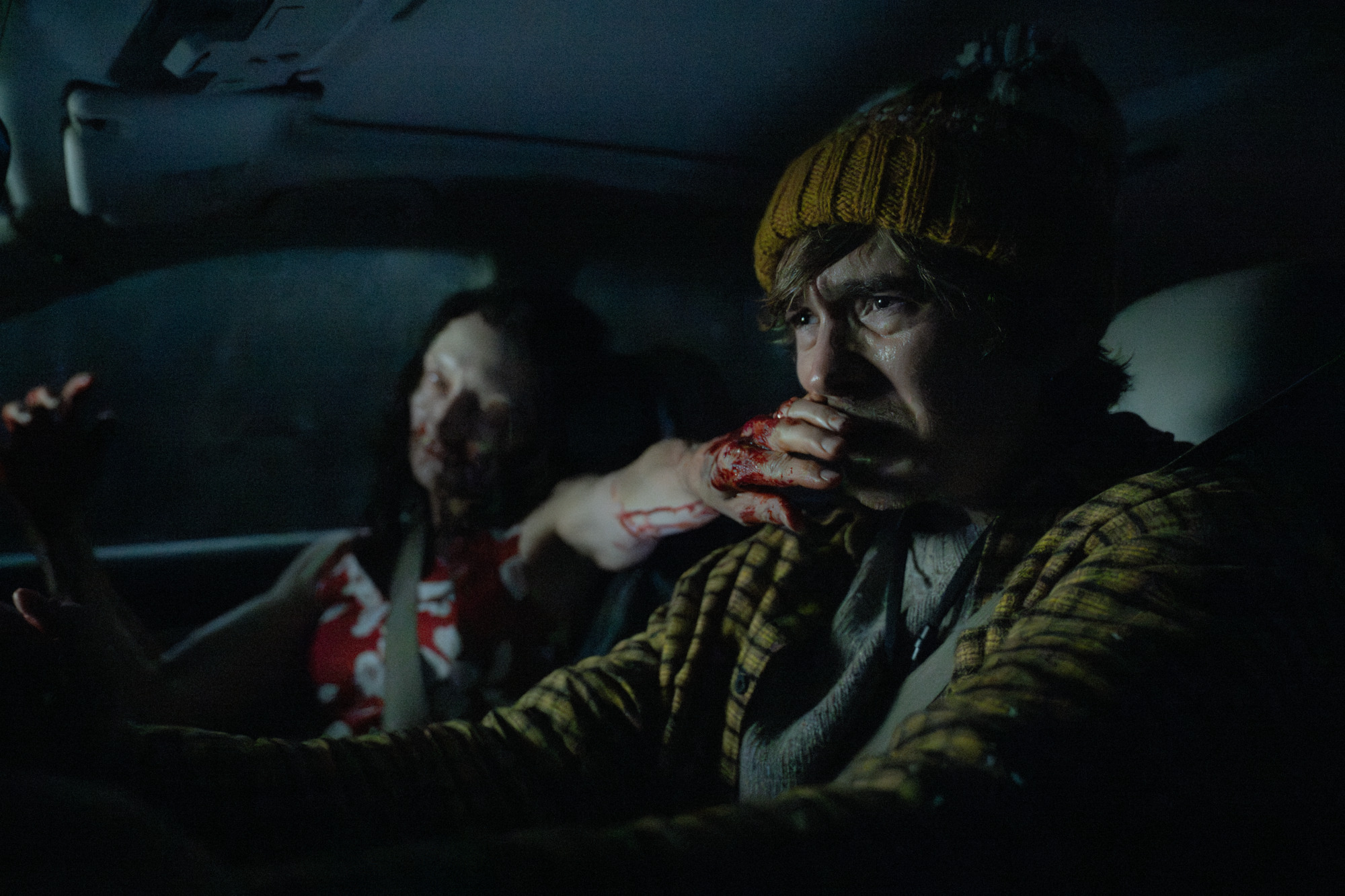
Image via Sony Pictures
Akin to David Robert Mitchell’s The End of Oak Street and Na Hong-jin’s Hope (though the briefest), Zach Cregger’s Resident Evil’s all-gas-no-brakes genre romp crowns it as the best video-game movie of all time—purely by default. It’s a great movie on its own, though I can’t name another movie based on a video game that I would even call “great.” Considering how Cregger received similar preconceived blowback to Resident Evil 7, it’s funny that both are the best Resident Evil entries in their respective mediums. It’s a huge win for Cregger and an indictment of an industry chasing the next fad, so maybe this will show studios that listening to rabid, chronically online superfans isn’t always the best idea.