
TIFF 2026 | Movie Review: "Ha-Chan, Shake Your Booty!" is an Excellent Crowd-Pleaser That Feels Personal

10/12 ForReel Score | 4/5 Stars
Ha-Chan, Shake Your Booty! does not exactly contain a strong story, but it radiates such a feverish glee that we are exhilarated nevertheless. Through how director Josef Kubota Wladyka portrays the protagonist, how he films musical sequences with delicate staging, how sympathy is elicited from the characters and their circumstances, it is clear this film is a very personal one for him. He dedicated this film to his mother, and after the screening we learn that she is in fact the prime inspiration for the movie. It explains why it seems to be so enamoured by its lead that the story is left as an afterthought.
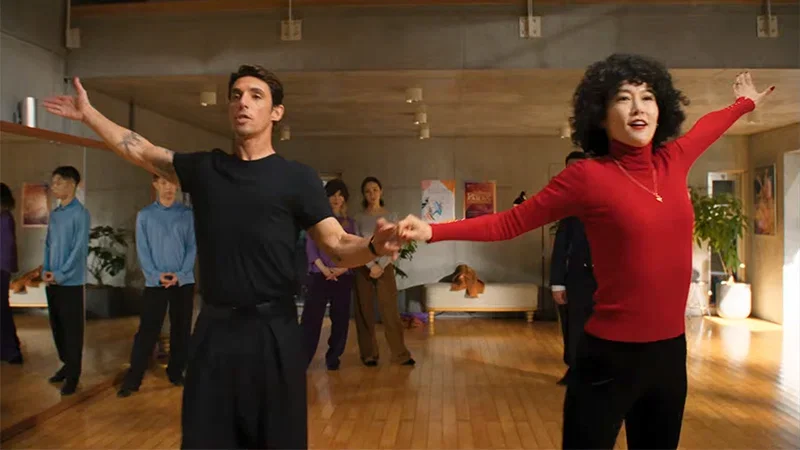
Image courtesy of Sony Pictures Classics
Ha-Chan (Rinko Kikuchi, in one of those performances that outshine the film itself) makes a talented dancing duo with her husband Luis (Alejandro Edda), but one misstep on the dancer floor costs Luis his life. Ha-Chan is distraught over the next few months, barely mustering the energy to exit her house. In her dreams, her husband consoles her in the form of an odd-looking animal. One of the more resonant aspects of the story is how it studies grief and how it can completely consume someone and make them oblivious to their mania. Ha-Chan does things throughout the film that is no doubt out-of-character to people around her (she has two loyal friends who sort of act as the devil and angel on her shoulders), but in her eyes it makes perfect sense. What Wladyka wants to say is that our dependence on our dearest loved ones for us to function properly is made all the more glaring when those people are gone.
Ha-Chan reluctantly joins a dancing class and becomes infatuated by its instructor Fedir (Alberto Guerra), the Spanish-speaking charmer whose unique marriage produces some great laughs. The heart-eyes sequences where Ha-Chan dreams of dancing with and sleeping with and touching him run too long and somewhat lessens our patience, but there are occasional delights in the filmmaking. One sequence in particular is a highlight: A sing-and-dance scene with quirky choreography that is inserted when we least expect singing and dancing to happen. You’ll know it when you see it.
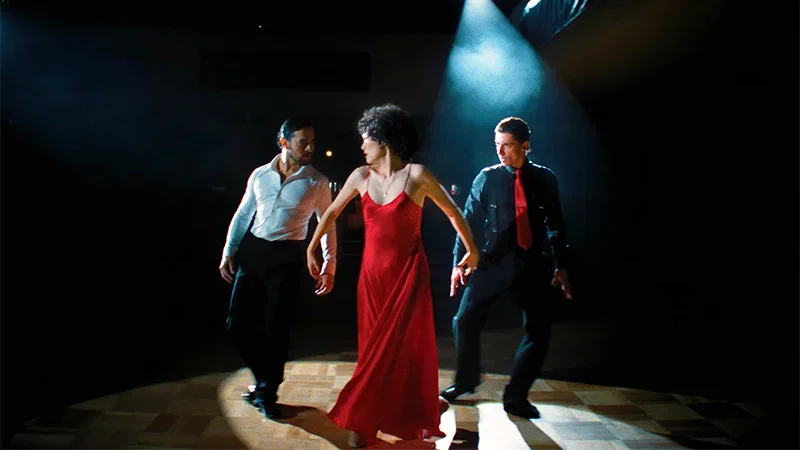
Image courtesy of Sony Pictures Classics
This movie is made of fun parts that doesn’t necessary flow perfectly. The most consistent aspect are the performances. Rinko Kikuchi has not only mastered the physicalities of a skilled dancer, she completely captures the essence of Ha-Chan, someone who is lost adrift in the social world and whose senseless devotion towards every instinct is evidence for her vulnerability. Kikuchi makes us root for her even when she does things that are inexplicably maniacal. When you make us sympathize with a character at their lowest, we cheer even more at their highest. Indeed the story could be trimmed and refined, but trimming it almost dims the spark of the miraculous performance at its center.
I must mention how funny this movie is. Yes, the middle section is redundant and relies on absurdism to vitalize scenes that do not progress the story, but even then the editing is sharply witty. Wladyka has a perfect grasp of his film’s tone, and that kind of certainty is evident from its first moments. This is not a perfect film—it didn’t blow me away but moreso won me over. It is a crowdpleaser that manages to feel incredibly personal. And Ha-Chan is no doubt one of the most interesting protagonists in the movies this year.
Acting/Casting 2
Visual effects/Editing 1
Story/Message 1
Entertainment Value 2
Music score/Soundtrack 2
Reviewer's Preference 1