
MOVIE REVIEW: “The Dog Stars” is a Lackluster Post-Apocalyptic Journey

6/12 ForReel Score | 2.5/5 Stars
I know it generally invites eye-rolling when a reviewer feels obligated to mention that they are familiar with the source material of an adaptation, but I must state why I enjoyed Peter Heller’s novel The Dog Stars before explaining Ridley Scott’s mistreatment of the text. Heller’s book is special in its approach to post-apocalyptic fiction through the lens of poetry; its solitude elicits peace instead of dread. Scott’s adaptation, on the other hand, betrays the humanist elements of the story by hurrying past them in favor of action set pieces. The film’s opening has fair consideration to its atmosphere, but Scott and his writer Mark L. Smith gradually run out of patience and instead focus on bloodshed.
Splendidly photographed as The Dog Stars is, the editing gives us little breathing room—even luscious images of landscapes last too short to be appreciated. Story-wise, the movie barely has characters; it circles around a few people, but we know none of them well enough even after spending two hours with them. The only character with something resembling an arc is the protagonist, Hig (Jacob Elordi), a widowed pilot who spends his colorless days with his tough-nut neighbor, Bangley (Josh Brolin), and his dog, Jasper. Vowing to fly until he meets new faces, Hig searches for connection, whereas Bangley rejects the notion entirely.
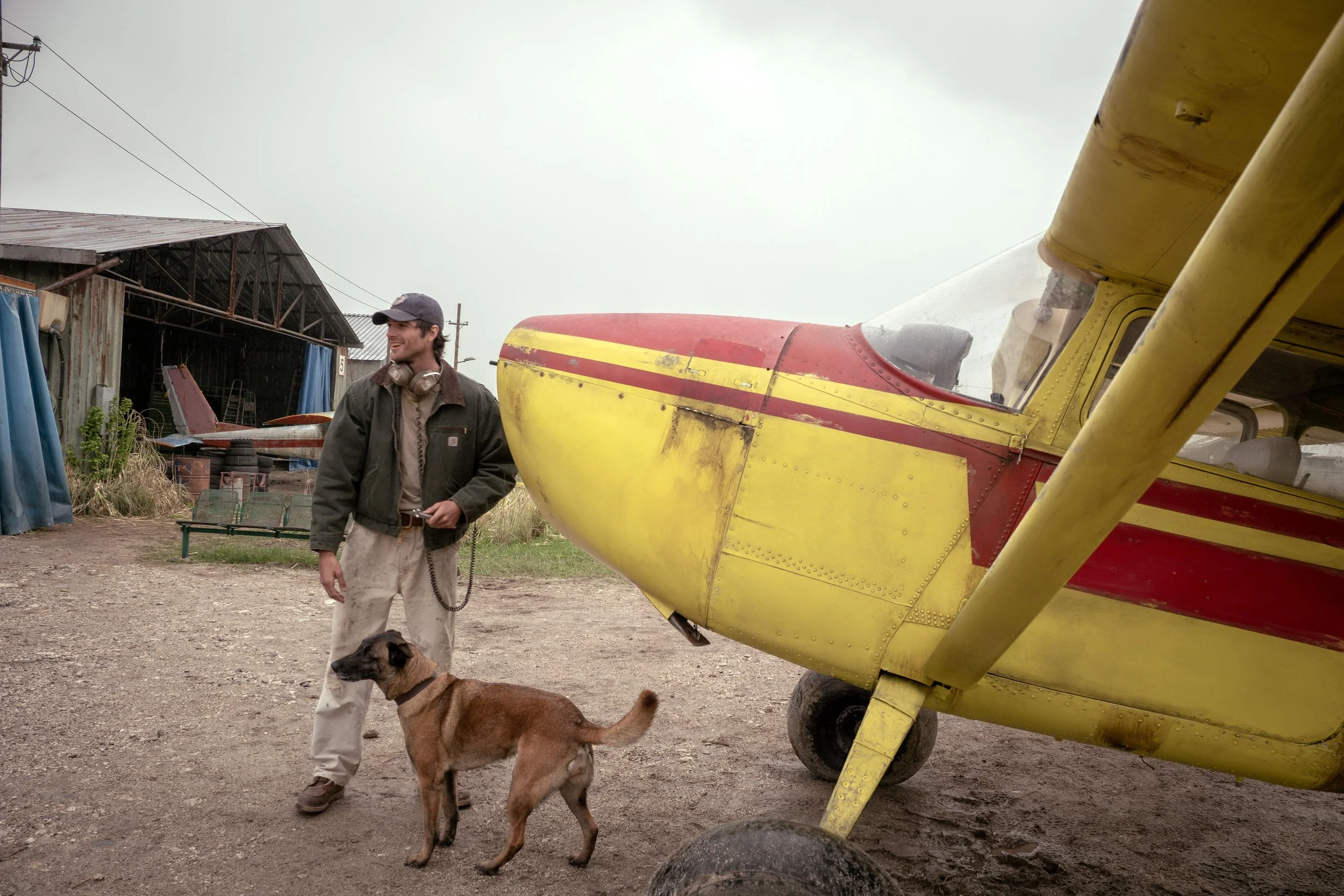
Image courtesy of 20th Century Studios
And new faces he meets, as he stumbles upon the residence of Cima (Margaret Qualley), a perky and kind-hearted young woman, also widowed, and Pops (Guy Pearce), another tough nut, partially making him indistinguishable from Bangley. Credit must be given in how Brolin and Pearce do their best to individualize their characters, even when the material gives them little in that regard.
Despite Hig and Cima naturally developing a fondness for each other, their dynamic is never explored thoroughly. The Dog Stars is oddly indifferent to humanism, even when the preciousness of human connection is the film’s overarching theme. Instead, we are segued to several action scenes, one involving Bangley fighting off intruders alone, and another where Hig & co. escape to Grand Junction, an establishment that radiates hope among the barren lands.
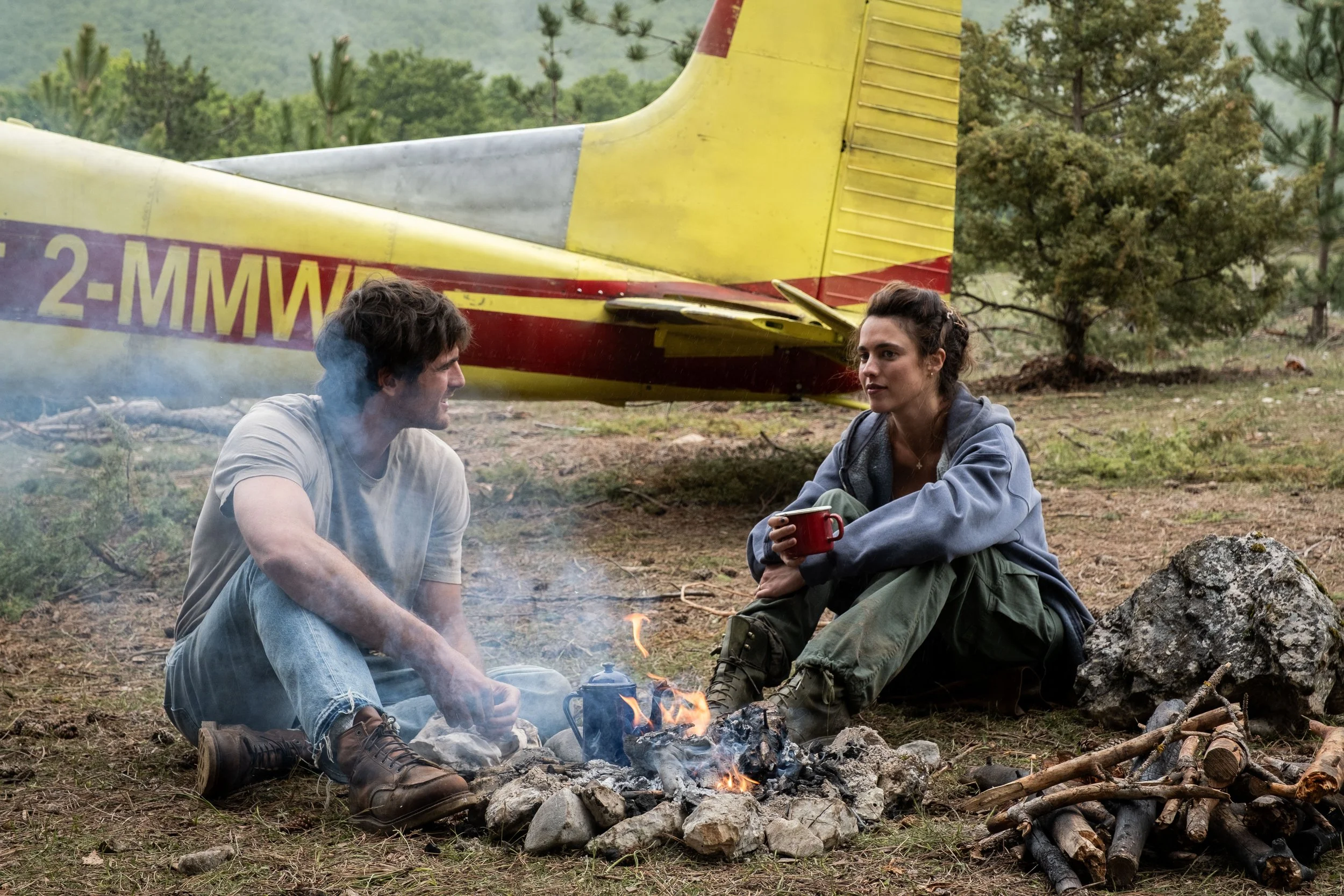
Image courtesy of 20th Century Studios
What unfolds inside Grand Junction is the most tonally bizarre section of the movie. Without spoiling anything, I raise the following questions: 1) why would the cautious Pops would enter such a place, and 2) what is the purpose of alluding to the operations of the place without following up on it? I wish I could say the sequence betrays the tone and pacing of the film, but they were never consistent enough to be betrayed. The Dog Stars is one of those movies where elements are constantly at war with each other: Scott’s tendency to sensationalize violence distracts from the tenderness of the story, with the human elements ending up underdeveloped.
For a director who usually is adept at bringing out the pathos of his materials, The Dog Stars contains quite one-dimensional dramaturgy: brief flashbacks and simple exposition lazily convey the backstories of characters, who are never allowed to grow. Rather, the movie is seemingly hurrying towards something—towards what exactly? The action is quickly dealt with, with the film concluding without much closure. There is a chance the muddled nature of the movie is a result of the studio desiring an action thriller (it is certainly marketed as such) instead of a contemplative human story in the style of a Studio Ghibli film. So perhaps Scott’s vision is altered, as it has happened on numerous occasions. This is all speculation, of course, but they explain why the movie lacks focus. Should a director’s cut of The Dog Stars release, I’ll surely be on the lookout for it.
Acting/Casting 2 | Visual effects/Editing 1 | Story/Message 0 | Entertainment Value 1 | Music score/Soundtrack 1 | Reviewer's Preference 1 | What does this mean?