
Movie Review: The Most Gruesome Kill In 'Scream 7' Is The Slaughtering Of The Once Great Franchise

2/12 ForReel Score | 1/5 Stars
Out of the countless horror franchises that have come and gone, there hasn’t been a slasher series as ironclad as the Scream films. From 1996 to 2011, Scream was horror titan Wes Craven’s baby (oft penned by writer Kevin Williamson, who wrote all but Scream 3, 5, and 6) until his untimely passing in 2015. Directing duo Matt Bettinelli-Olpin and Tyler Gillett–otherwise known as ‘Radio Silence’–carved themselves respectable pieces of the Scream pie, having a similar knack for gruesome violence and self-aware comedy that made Craven’s first four entries so good. Unfortunately, good things don’t last forever. A shameless, fan-service-y pivot for the sake of maintaining shareholder value, Scream 7, directed by Kevin Williamson, caps off thirty years of Scream with a whimper–for now.
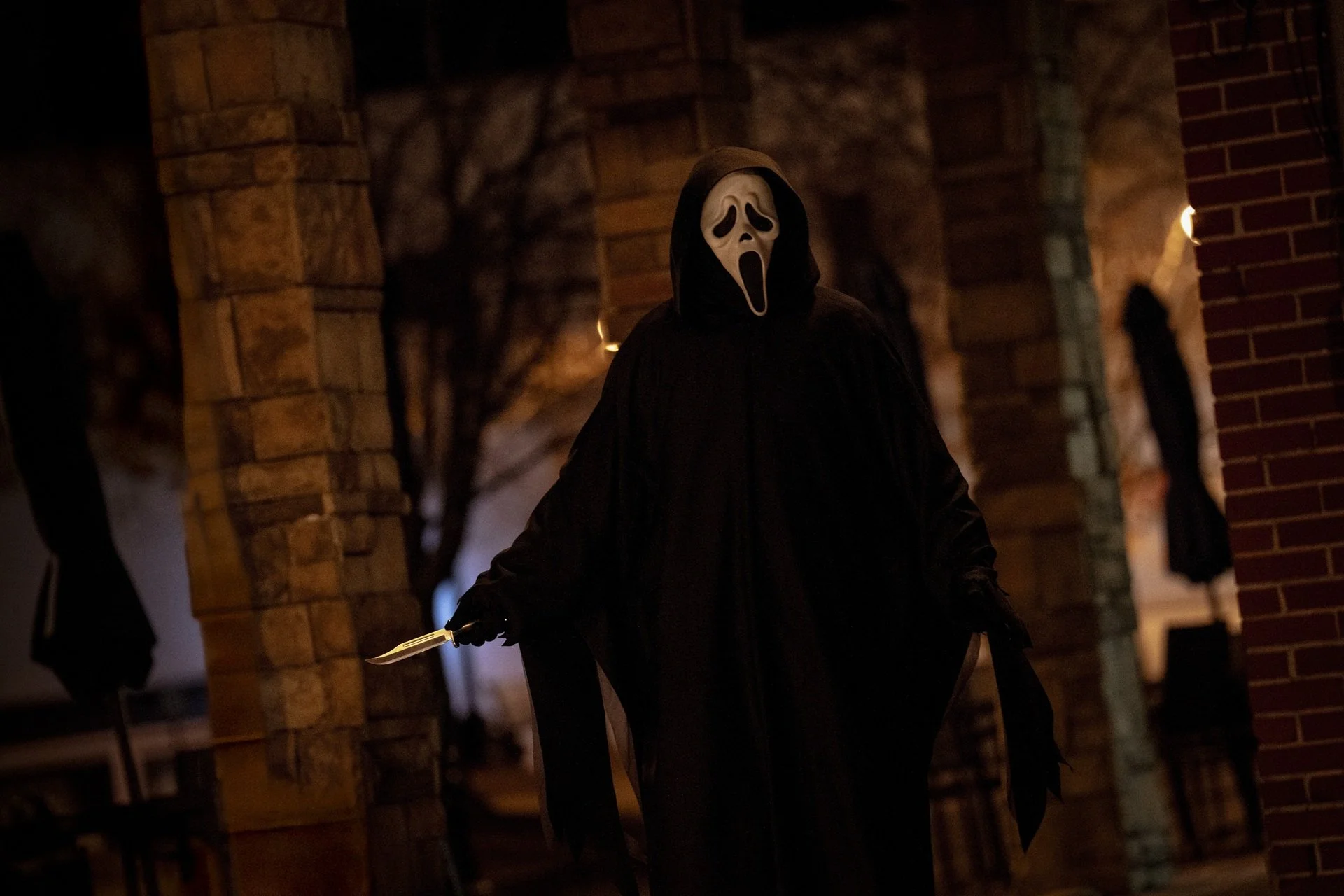
The lead-up to Scream 7 was a far cry from “smooth sailing.” When Melissa Barrera, the star of Scream 5 and 6, was effectively fired by the Spyglass Media Group (the owners of the Scream franchise) for speaking out against the ongoing genocide in Palestine, Scream fans–myself included–were pissed. Not only was it a spineless maneuver to begin with, but it nearly resulted in Barrera’s near-blacklisting from the entire industry. Director Christopher Landon (Kevin Williamson was neither the first nor second choice to direct 7) would go on to drop out due to receiving death threats from insane fans. Meanwhile, Jenna Ortega, the biggest name of the recent Scream films, backed out of the film in solidarity with Barrera. Add on a marketing campaign fueled by Kalshi prediction markets, Meta AI, and UFC, and you’ve got one cursed movie on your hands.
Desperate times call for desperate measures, and what’s more desperate than bringing back the character who started it all: Neve Campbell’s Sidney Prescott. Another, smaller, instance of corporate damage control (Campbell was initially underpaid for Scream 6, hence her decision not to return for the film), Sidney Prescott returns for another showdown with Ghostface, claiming to be the long-considered-dead Stu Macher (Matthew Lillard). Not only is this setup the cheapest cash grab of all cash grabs, but it’s also the exact type of film that Scream 5 was satirizing. Scream 5 directly interrogates and plays with nostalgia-bait and the “requel” phenomenon, right down to simply being titled “Scream,” and Scream 7 does nothing more than retread that exact material–right down to a near-identical meta-monologue from Jasmin Savoy Brown. "You either die a hero or live long enough to see yourself become the villain," I guess.
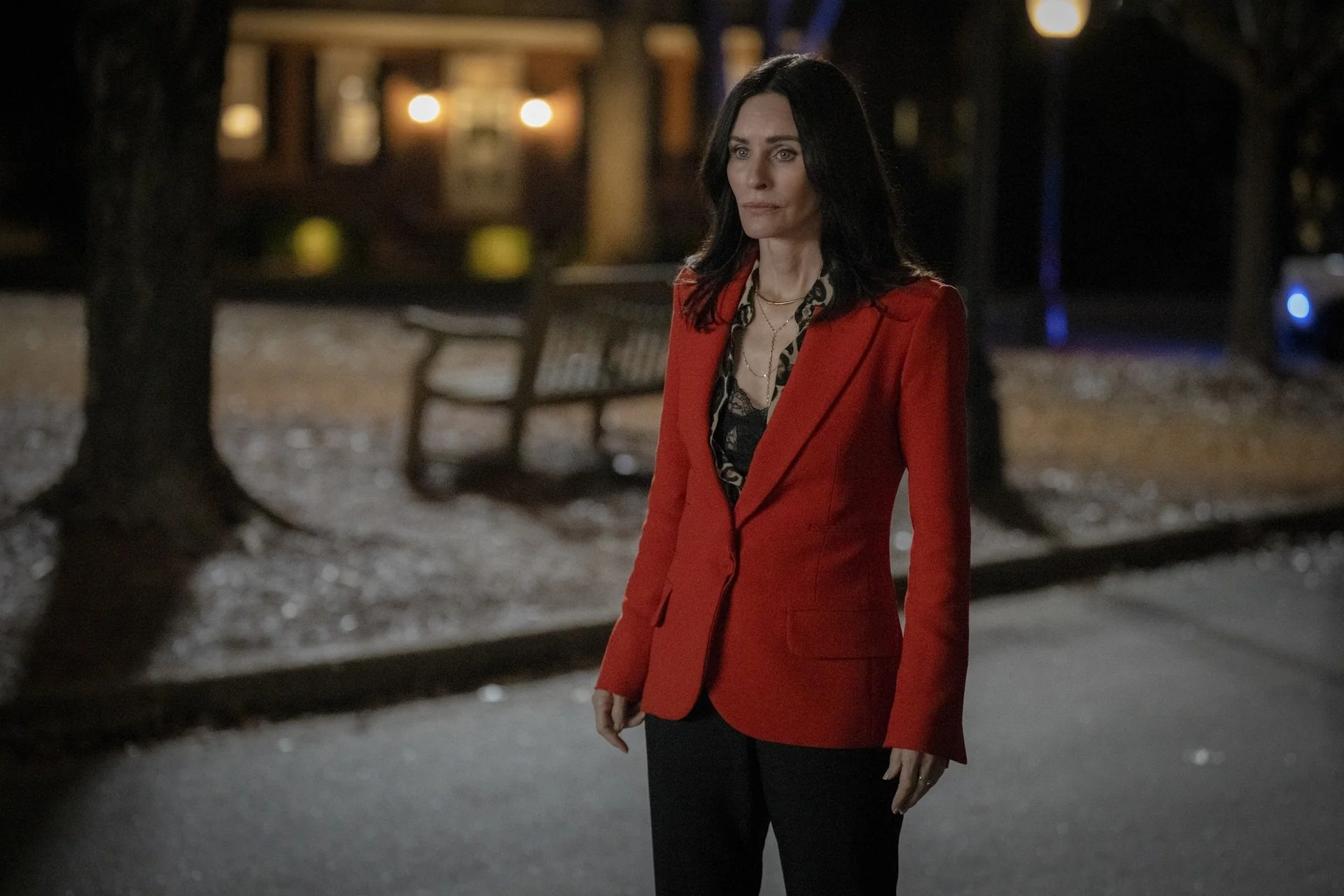
Supporting Campbell’s unclimactic return are Isabel May as Tatum, Sidney’s eldest daughter, and Courtney Cox, reprising her role as Gale Weathers. Tatum and Sidney have a strained relationship due to Sidney’s PTSD, which is basically a rehash of Jamie Lee Curtis’ character arc as the deeply disturbed Laurie Strode in David Gordon Green’s Halloween reboot. Nowhere in Sidney is that same traumatized thorniness that characterized Laurie in the most recent Halloweens, most likely to avoid similar backlash to Luke Skywalker’s haunted characterization in The Last Jedi. Some films are tightrope walks, but Scream 7 walks on eggshells; a frivolous attempt at being as inoffensive and crowdpleasing as possible. The minor characters are as forgettable as they are flat, with the Ghostface reveal being the most boring and unsurprising out of the entire franchise.
Radio Silence’s last two Scream films both felt like they were trying something new, which makes Scream 7’s nostalgia-heavy back-to-basics approach feel less like a return to form than it does a last resort in the writers' room. The TV-looking cinematography (the soap-opera effect looks even more garish on an IMAX screen), the CGI-heavy guttings, the screenplay that leaves so many hanging threads; it’s all as rushed as humanly possible. It’s an aggressively mediocre slasher movie dampened by the hideous stink of corporate meddling. Like all Scream films, there are some solid kills and morsels of meta-humor, but they’re few and far between for what’s the most unamusing and self-serious entry in the entire franchise. I haven’t felt so underwhelmed by a Scream film since the last entry’s offscreen shotgun kill, but at least 6 tried doing something new.
Where Scream 7 ultimately falters—outside of the off-screen controversy bleeding into the final product—is that it respects its audience far less than previous entries. Rather than becoming their own set of characters, half of Scream 6’s “core four” have been completely written out of the canon, where the other half, Chad and Mindy, are relegated to being shadows of Courtney Cox’s Gale Weathers, and you're just supposed to roll with it. Going the nostalgia route is (because of Scream 5) a losing battle, because Scream 7 forgets that this entire franchise is built on familiarity with contemporary cinema. The film is too dumb for its own sake, and is ultimately crushed by its own weight. A series that once expected more from its audience is now playing a cinematic game of “here comes the airplane,” which is so goddamn disappointing.
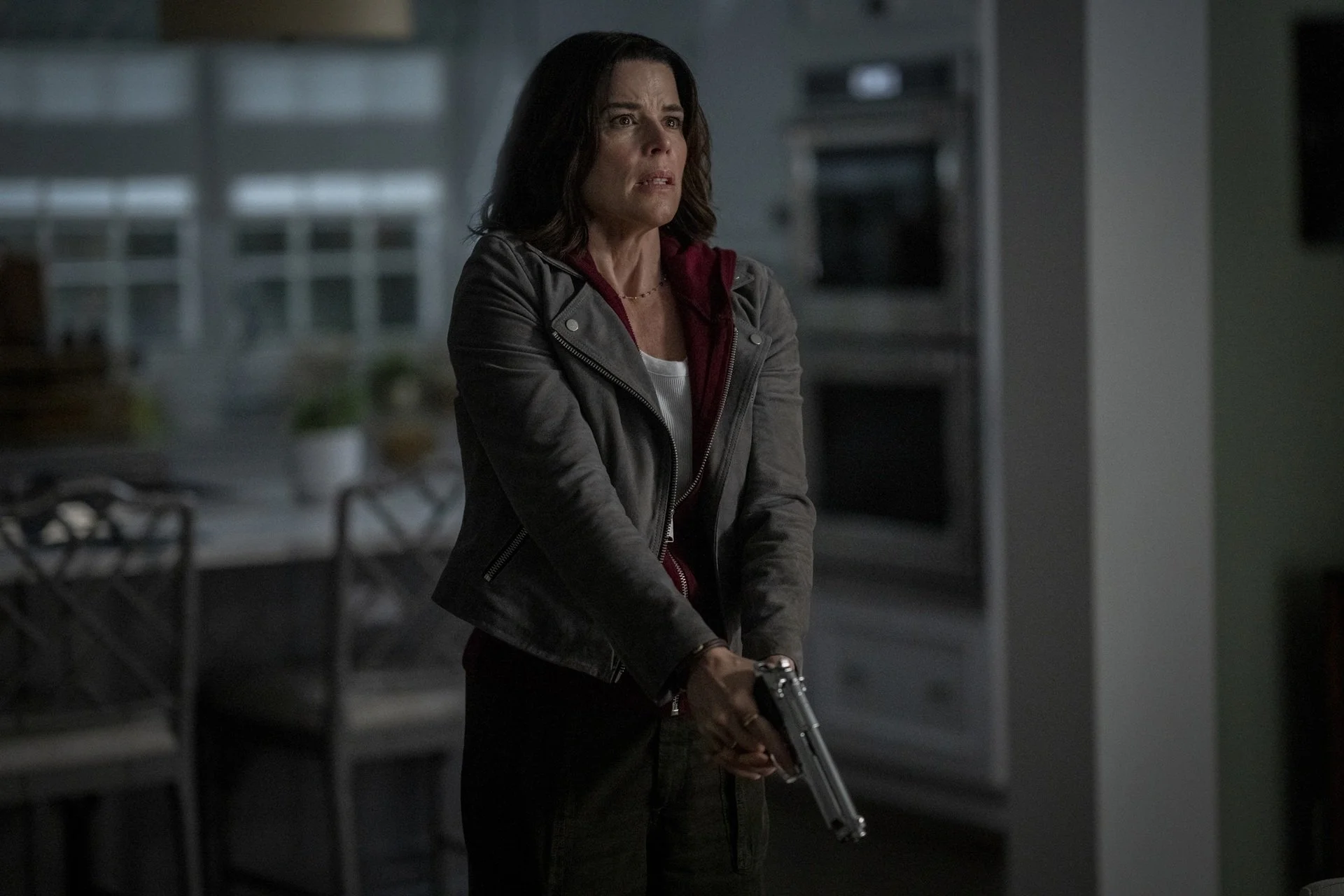
Maybe I’m an insane person brandishing a “THE END IS NEAR” sign, but everyone who loves movies should be immensely worried by what happened in front of and behind the camera here. People often lament the relationship of art and politics, but the truth is that they’re inextricably linked. Politicking behind the scenes is the reason that this movie exists in the first place, and it’s only a warning sign for things to come. Hollywood is kowtowing to the right wing in real time, just as it did in the McCarthy era. Paramount, Scream’s distributor, is owned by Larry Ellison, one of President Trump’s billionaire sycophants, who just recently made “conservative-friendly” changes at CBS, including the firing of The Late Show host Stephen Colbert. Make no mistake, these are the warning signs of history repeating itself.
Not only is Scream 7 a hopelessly desperate exercise in nostalgia-bait, targeting the lowest common denominator of Paramount Skydance shareholders and mindless superfans, but it’s another warning sign of what could be a new wave of McCarthyism. A movie being bad all on its own is one thing, but it’s another when it signals the encroachment of a Third Red Scare. There’s another universe where Melissa Barrera wasn’t unjustly fired for speaking out against an ongoing genocide, and it sucks how that universe isn’t the one we live in. What could’ve been a satisfying conclusion for the Carpenter sisters is instead a cynically hollow Hail Mary that singlehandedly tarnishes what, for nearly thirty years, was a perfect record for Scream.